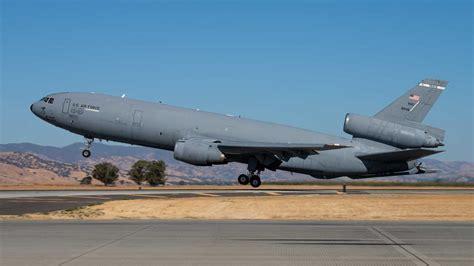
The US Air Force retired the KC-10 Extender in 2024, ending the career of one of the most capable tanker aircraft ever operated by the service. For more than four decades, the tri-engine tanker combined enormous fuel capacity, strategic airlift capability, and flexible refueling equipment in a single airframe. Its replacement, the Boeing KC-46A Pegasus, was supposed to represent a major technological leap into the future. Instead, by 2026, the Pegasus remained affected by serious technical deficiencies, costly refueling mishaps, and continuing redesign work.
The contrast is particularly striking because the KC-10 was not simply a larger version of the older KC-135 Stratotanker. It was conceived during the Cold War as a complete force multiplier capable of moving fuel, fighters, personnel, equipment, and cargo over long distances. Its ability to combine tanker and transport duties gave commanders considerable flexibility during major overseas deployments.
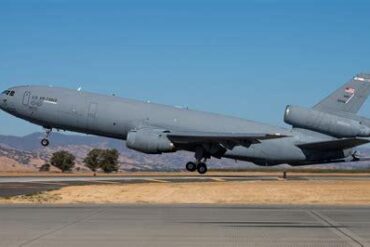
The final KC-10, tail number 79-1948, was officially retired on September 26, 2024. Its departure came after 43 years of service that included major operations in the Gulf, Balkans, Afghanistan, Iraq, and elsewhere. Yet the timing created an uncomfortable question for the Air Force: why retire such a mature and versatile platform while its intended successor was still struggling to deliver the reliability expected of a modern tanker?
The KC-10 Extender Was Built as a Cold War Force Multiplier
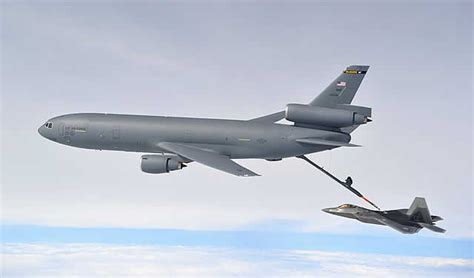
The McDonnell Douglas KC-10 Extender entered Air Force service in 1981 and was derived from the DC-10 widebody airliner. Its three powerful engines and wide fuselage gave it characteristics that made it unusually capable for a tanker. Rather than serving merely as a flying fuel station, the KC-10 could transport substantial numbers of personnel and large quantities of equipment while carrying enough fuel to support distant combat operations.
That philosophy reflected the strategic demands of the Cold War. The KC-135, based on the Boeing 707, had become indispensable but possessed a relatively narrow fuselage and more limited cargo capacity. Moving a fighter squadron across an ocean therefore required extensive tanker and transport coordination. The KC-10 was intended to simplify that problem by acting as a kind of airborne mothership.
The Extender could carry up to approximately 356,000 pounds of fuel while also transporting as much as 170,000 pounds of cargo. Its reinforced cargo floor allowed the Air Force to move equipment that would otherwise require dedicated airlift aircraft. This dual-role capability was one of the aircraft’s defining strengths and remained valuable long after the Cold War ended.
The tanker was also unusually flexible in aerial refueling. It could employ both a flying boom and hose-and-drogue systems, allowing it to support aircraft from different US military services without relying on a separate modification. That was particularly useful during joint operations involving Air Force, Navy, and Marine Corps aircraft.
From Desert Storm to Kabul, the KC-10 Proved Its Value
The KC-10’s operational record helped establish its reputation. During Operation Desert Storm, Extenders played an important role in the enormous buildup of American and coalition forces in Saudi Arabia. They transported personnel and cargo while simultaneously keeping combat aircraft supplied with fuel over long distances.
Its usefulness did not disappear after the Gulf War. KC-10s participated in Operation Allied Force during the conflict in Yugoslavia and later became regular participants in US operations across the Middle East. During Operations Enduring Freedom and Iraqi Freedom, the aircraft flew thousands of missions supporting fighters, bombers, transports, and other aircraft.
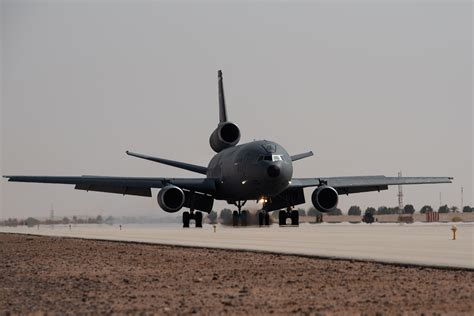
The Extender also contributed to homeland defense missions under Operation Noble Eagle. By the final years of its career, it remained an important part of the Air Force’s global mobility architecture rather than an aircraft surviving solely because of institutional inertia.
Perhaps one of its most significant late-career contributions came during Operation Allies Refuge in 2021. As the United States evacuated Afghanistan, KC-10s helped move people and equipment during one of the largest non-combatant evacuation operations in American history. The aircraft was therefore still performing strategically important missions only a few years before its retirement.
The KC-46 Pegasus Promised a New Generation of Capabilities
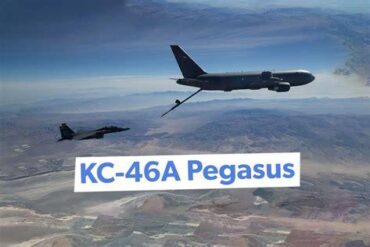
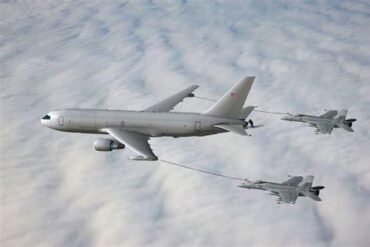
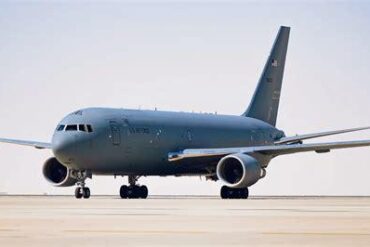
The KC-46A Pegasus was designed around a very different concept. Derived from the Boeing 767, it was intended not merely to replace aging tanker capacity but to introduce a more connected, survivable, and technologically advanced aircraft.
The Pegasus can carry approximately 212,299 pounds of fuel and up to 65,000 pounds of cargo. Those figures are substantially below the KC-10’s maximum fuel and cargo capacities, but the KC-46 was designed with other priorities in mind.
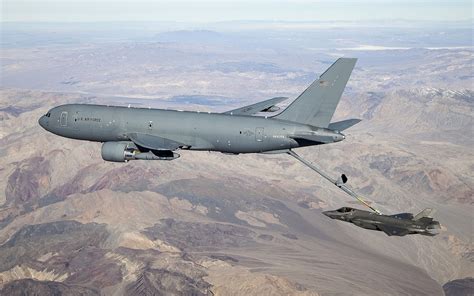
The aircraft incorporates improved defensive systems, electronic warfare capabilities, infrared countermeasures, and advanced communications intended to make it more useful in a contested environment. The Pegasus can also transmit and receive information across the battlefield, making it part tanker and part airborne communications node.
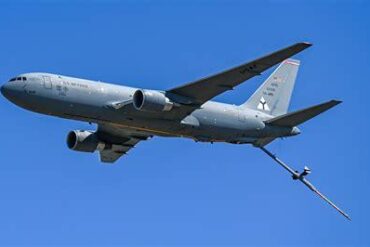
Its mission flexibility is significant. The KC-46 can conduct boom refueling while also supporting hose-and-drogue operations through wing-mounted systems. It is designed to carry more personnel than the KC-135 and provide expanded aeromedical evacuation capability. In a future conflict where tankers may operate closer to sophisticated enemy threats, the Pegasus’s survivability and networking features could become increasingly important.
Air Mobility Command formally certified the KC-46 for global combat deployment in September 2022. By 2026, the aircraft had accumulated more than 150,000 flight hours, while more than 100 examples had entered the Air Force inventory. A planned fleet of more than 250 aircraft would eventually make the Pegasus one of the most important tanker platforms in the US military.
The problem is that achieving that potential has proved much harder than designing the aircraft on paper.
KC-46 Refueling Mishaps Exposed a Serious Design Problem
One of the most damaging problems concerns the aircraft’s refueling boom. At least three serious rendezvous incidents involving KC-46 aircraft have been documented, with reported damage to receiving aircraft reaching tens of millions of dollars.
The issue centers on the boom’s actuator and the amount of force required during contact with a receiving aircraft. Older tankers such as the KC-135 provide more mechanical flexibility in the boom system, allowing the receiving aircraft to make relatively small movements without creating excessive loads.
The KC-46’s system has proven less forgiving. Aircraft such as the F-16 Fighting Falcon and A-10 Thunderbolt II, which are comparatively light, have encountered difficulties maintaining safe contact under certain conditions. In some cases, nozzle binding has caused the boom to become stuck in the receiver aircraft’s refueling receptacle.
That is more than an inconvenience. A failed connection during aerial refueling can rapidly become a major flight-safety event because two aircraft are physically connected while traveling hundreds of miles per hour.
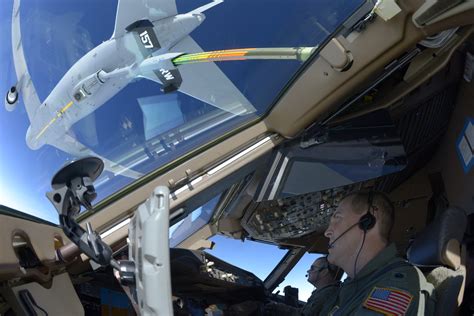
Research conducted in 2025 examined how boom stiffness and operator inputs could contribute to nozzle binding. Boeing has consequently been working on a redesigned telescope actuator intended to allow the boom to retract with less force. The objective is to make the system more tolerant during real-world refueling contacts.
The fact that such a fundamental part of a tanker requires substantial redesign is one reason the KC-46 program has generated so much concern.
The Remote Vision System Created Another Major Weakness
The KC-10 gave its boom operator a direct operating environment. The KC-46 instead uses a Remote Vision System, replacing the traditional rear-facing boom operator station with cameras and displays.
The concept was technologically ambitious. Cameras mounted beneath the aircraft provide a panoramic view, while the operator uses a large three-dimensional display designed to reproduce depth perception. In theory, the system should give operators a better view of multiple approaching aircraft and provide superior situational awareness.
The first-generation system did not consistently achieve that goal.
Strong sunlight could degrade image quality, while distortions under certain lighting conditions affected the operator’s perception of distance and depth. These limitations became particularly concerning during aerial refueling, where accurate visual information is essential.
The planned RVS 2.0 upgrade is intended to address these problems through substantially improved imaging technology. The new architecture includes 4K Ultra-HD video, advanced image processing, geometric calculations, and LiDAR-based distance measurement. Those improvements could eventually make the remote system considerably more effective.
But again, the Air Force is having to correct weaknesses in a core system after the aircraft has already entered operational service.
Why the Air Force Is Still Keeping the KC-135
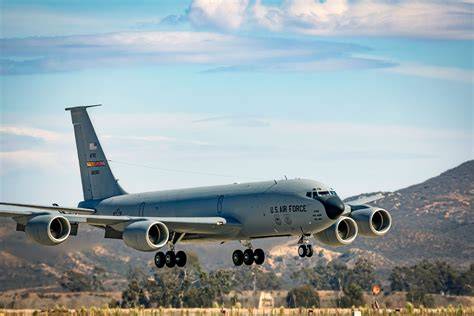
The problems with the Pegasus have had a direct effect on the older tanker fleet. The Air Force has continued operating the KC-135 Stratotanker beyond its previously expected retirement timeline because it needs sufficient tanker capacity while KC-46 deficiencies are addressed.
This creates an unusual situation. The aircraft that was supposed to be replaced is being retained because the replacement has not yet matured sufficiently to assume the entire burden.
The KC-135 is hardly a modern platform. Its origins date back to the 1950s, and the aircraft lacks many of the KC-46’s advanced communications, defensive systems, and sensor capabilities. Yet decades of operational experience have produced an exceptionally mature tanker.
That maturity matters. A proven aircraft with older technology can sometimes provide more dependable combat capability than a newer aircraft whose advanced systems remain under development.
Structural Problems Added to the KC-46 Program’s Burden
The refueling system and remote vision system are not the only concerns surrounding the Pegasus. Structural deficiencies, fuel-system leaks, and auxiliary power unit problems have added to the program’s difficulties.
Deliveries were paused in early 2025 after problems involving portions of the aircraft’s fuselage and wing structures emerged. Congress subsequently placed limits on funding while requiring progress toward correcting major Category One deficiencies.
The designation Category One deficiency is significant because it identifies problems that can affect mission accomplishment, safety, or other critical operational requirements. The accumulation of such deficiencies has made the transition from KC-10 and KC-135 aircraft more complicated than originally anticipated.
The financial consequences have also been substantial. The KC-46 is being produced under a firm fixed-price contract, meaning Boeing is responsible for many cost overruns. Boeing has reported billions of dollars in losses associated with the program, including a reported $565 million charge in the fourth quarter of 2025.
For the government, the arrangement limits exposure to additional production costs. For Boeing, however, repeated redesigns and quality problems create enormous financial pressure.
Why the KC-46 Is Still Not Simply a Bad Replacement
Calling the KC-46 a downgrade requires an important qualification. In raw capacity, the comparison is uncomfortable for the Pegasus. The KC-10 could carry dramatically more fuel and cargo, fly faster, and operate as a particularly capable strategic airlift platform.
The Pegasus, however, was never designed simply to reproduce the KC-10’s specifications. Its purpose is to create a more survivable and networked tanker for modern warfare.
A future conflict against a sophisticated adversary would expose tankers to threats that were less prominent during many KC-10 operations. Electronic warfare, long-range missiles, cyber threats, and increasingly complex battlespaces place a premium on communications, defensive systems, sensors, and information sharing.
That means the KC-46’s technological architecture could ultimately prove more relevant than its lower raw payload numbers. Its problem is that the aircraft must first become reliable enough for those advantages to matter consistently.
The Real Problem Is the Timing of the Transition
The central issue surrounding the KC-10 retirement is therefore not that the Air Force replaced a perfect aircraft with a useless one. The KC-10 was an exceptionally capable tanker, while the KC-46 represents a fundamentally different approach to aerial refueling.
The difficulty is the gap between the Pegasus’s promised future and its current condition.
The Air Force retired its final KC-10 in September 2024, but the KC-46 was still dealing with major deficiencies. Boeing was redesigning the boom actuator and working on RVS 2.0, while lawmakers were limiting procurement and the Air Force continued relying on KC-135s.
The result is a transition period in which the United States has retired a mature, extremely capable tanker before its replacement has fully demonstrated comparable reliability across every critical mission area.
The KC-10’s retirement was inevitable from an age and sustainment perspective. Its airframes had spent more than four decades in demanding service, and maintaining an aging tri-engine fleet was increasingly difficult. The Pegasus is also necessary for the future force. Its defensive technology, connectivity, and mission flexibility are intended for a battlefield very different from the one in which the KC-10 was conceived.
Yet the KC-10 Extender left behind an unusually high standard. Its combination of enormous fuel capacity, strategic airlift, dual refueling capability, and proven operational reliability made it far more than a conventional tanker.
The KC-46 may eventually justify the decision to replace it, particularly once its boom and remote vision deficiencies are resolved. Until then, however, the Air Force’s continued dependence on KC-135 aircraft illustrates the uncomfortable reality of the transition: the service retired one of its most capable tankers while its technologically advanced successor was still learning how to become the dependable workhorse it was designed to be.