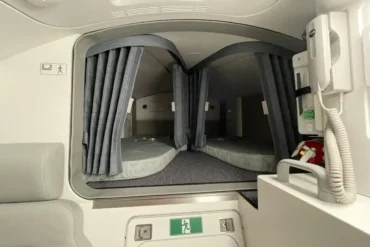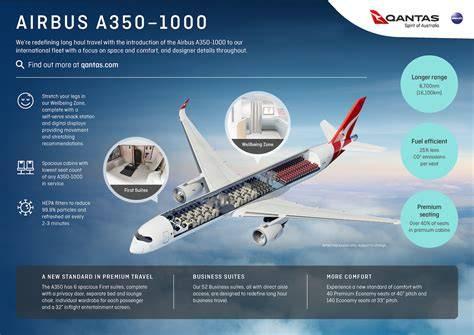
The numbers land like a misprint at first reading: more than 360 pilots and 1,200 cabin crew trained to fly a fleet of just 12 aircraft. In any ordinary long-haul operation, those totals would suggest something closer to twice the airframes. Qantas published them anyway because Project Sunrise is not an ordinary operation. The workforce commitment is the clearest public measure of what a 22-hour nonstop sector demands, and it exposes a truth the airline has spent years preparing for: flying daily from Sydney to London without a stop is a crew-management problem disguised as an aviation milestone.
Why 1,560 People Are Needed to Fly 12 Aircraft
Divided across the fleet, Qantas is committing to roughly 30 pilots and 100 cabin crew per airframe, against a conventional long-haul aircraft that might expect about half that ratio. The full Project Sunrise headcount tops 1,560 people for twelve frames, each configured with 238 seats. That figure is driven by the operating profile rather than the fleet size, and it holds across the opening routes to London and New York as well as whatever destinations follow.
The airline has been careful to describe the numbers as a destination, not a starting point. Both groups will be fully trained by the time the twelfth A350-1000ULR arrives, a milestone whose date depends on a delivery schedule that has already shifted several times. The workforce builds alongside the fleet, with every new aircraft pulling in another tranche of qualified crew. For the first London rotation Qantas needs only enough people to fly one daily service. For the full programme across London, New York and future additions, it needs all of them. Much of the scale also reflects strategy: Project Sunrise is the airline’s first attempt to make ultra-long-haul flying a core part of its network rather than a record-setting exception, and it sits inside a broader fleet renewal that moves Qantas from a predominantly Boeing long-haul operation toward a largely Airbus-based structure over the next decade.
The Physics Behind the Extraordinary Crew Ratio
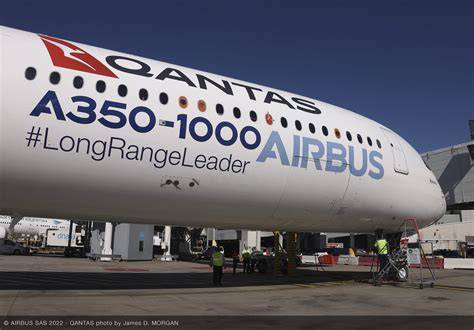
The A350-1000ULR carries an additional 5,283-gallon (20,000-litre) rear centre fuel tank that unlocks more than 9,942 miles (16,000 km) and up to 22 hours nonstop. Qantas describes the aircraft as purpose-built for that mission, and the crew numbers follow directly from it. A sector of that duration needs more pilots on the flight deck to share duties and to guarantee rest, and it needs longer recovery periods afterward than any conventional rotation allows, so the same crew cannot simply be rostered onto the next frequency. The gap compounds with every additional ultra-long-haul route, because a crew that has just flown 22 hours is unavailable for an extended window rather than ready for turnaround.
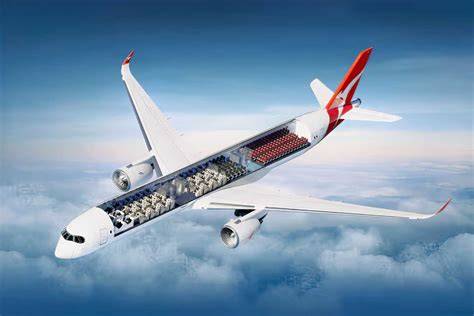
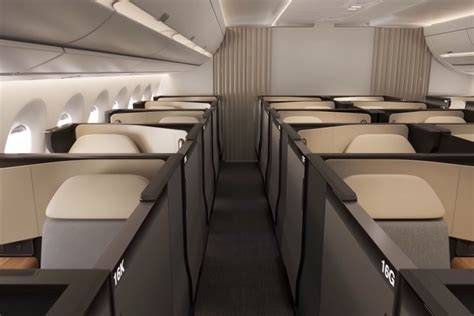
Cabin staffing is shaped the same way. Qantas has framed the operation around the science of ultra-long-haul travel. Group CEO Vanessa Hudson described the aircraft as representing a fundamentally different way to fly, citing the lighting, the meal service and a world-first Wellbeing Zone designed to help passengers manage flights of this length. The cabin holds 238 seats across four classes: 6 first, 52 business, 40 premium economy and 140 economy. A premium-heavy layout means more crew assigned per passenger, and a 22-hour cabin service requires relief and rest rotations that a twelve-hour sector never contemplates.
Fatigue Rules, CASA and the Regulatory Shadow
Flights of this duration sit outside the assumptions baked into standard duty limits, so Qantas has worked with the Civil Aviation Safety Authority on fatigue management for ultra-long-range flying. The airline has not published the details of how crew complements and duty periods are set for Project Sunrise, nor how crews will be based or how a pool of 360 pilots will be rostered across the network. Both gaps matter, because basing and rostering determine how many people a single daily London rotation actually consumes. What the published training figure reveals is expectation: Qantas anticipates a substantially larger crew burden per aircraft than its existing long-haul fleet carries, and the programme is engineered around that assumption rather than discovering it later.
Inside the Training Split Between Sydney and the United Kingdom
Training is already underway, and it is running on two tracks. Qantas pilots have begun work on Australia’s first A350 simulator, installed in Sydney ahead of the aircraft’s arrival, while a separate group has been sent to the United Kingdom to train with British Airways, which already operates the A350-1000 and can supply experience that does not yet exist in Australia. Running both in parallel lets Qantas build A350 competency before it owns a single airframe of its own.
The first intake comes from inside the existing fleet. A330 pilots make up the initial Project Sunrise cohort, and 40 of them are already converting to the A350 while continuing to fly their current aircraft. That arrangement keeps the long-haul network staffed during the transition instead of hollowing it out to seed a fleet that has not arrived.
Six Months Between Delivery and the Longest Route
Timing tightens every other constraint. The first A350-1000ULR is due in April 2027, and Sydney to London launches that October, leaving roughly six months between taking delivery and operating a revenue service on the longest route in the network. Reporting on the programme suggests the first aircraft will likely fly to New Zealand for training and crew familiarisation before entering scheduled ultra-long-haul service, giving crews time on the real aircraft over short sectors before they take it to London. Everything prior to that point happens in a simulator in Sydney or on another airline’s aircraft in the UK. Those short New Zealand sectors are not a formality; they are the first opportunity to validate cabin procedures, rest scheduling and departure and arrival flows on the actual airframe, with real weather, real passengers and real turnaround pressure.
From Wartime Double Sunrise to a 12-Aircraft Order
Project Sunrise borrows its name from the Double Sunrise endurance flights Qantas operated during the Second World War, a reference the airline has made explicitly when describing the programme. The modern version aims to connect Australia’s east coast nonstop to London and New York, routes no airline has operated without a stop. Qantas named the Airbus A350-1000 as its preferred aircraft in December 2019, with an extra fuel tank and a slightly increased maximum takeoff weight to deliver the required performance, and confirmed the firm 12-aircraft order in May 2022. In February 2024 the airline announced a delay of roughly six months, which Airbus attributed to the need to redesign the additional tank, moving delivery to mid-2026. Qantas’s August 2025 full-year result expected deliveries from October 2026; Airbus’s June 2026 programme update set first delivery for April 2027.
The Test Campaign That Decides Everything
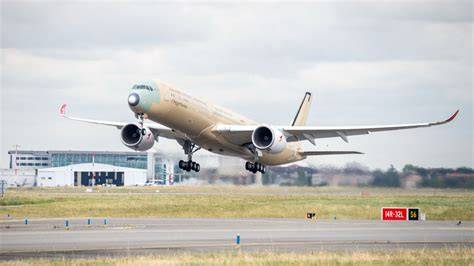
The aircraft has since demonstrated the capability the programme requires. The first A350-1000ULR made its maiden flight on 2 June 2026, flying for 3 hours 43 minutes over France. In July 2026, Airbus conducted two nonstop test flights between Toulouse and Melbourne, reported as a distance record for a commercial airliner. Qantas unveiled the aircraft at Toulouse on 17 June 2026, with the second airframe moving through an eight-week testing and certification programme. Those flights matter beyond the headlines because they validated the modified fuel system and the extended-range systems that distinguish the ULR from a standard A350-1000 across a real mission profile rather than in a laboratory. The certification campaign covering those changes is what stands between current flight testing and a delivered aircraft, and it remains the piece of the programme Qantas does not control.
The Network Still Expanding Behind the Crew Numbers
Qantas will launch daily nonstop Sydney to London service in October 2027, operating alongside the existing Perth to London and Sydney via Singapore to London services. Sydney to New York follows from mid-2028, which Hudson described as completing a vision the airline set out many years ago. Qantas confirmed Sydney to New York in September 2026, calling it the first ever nonstop commercial service between Australia and New York and a defining moment for Australia and the United States. The airline has indicated further Project Sunrise destinations are possible beyond London and New York, which would push crew requirements higher still, because each new ultra-long-haul route needs its own rostering coverage rather than borrowing slack from existing ones.
What the 1,560 Figure Really Signals
The headline comparison invites scepticism: more than 1,500 people trained for twelve aircraft sounds extravagant until the operating model is laid out. A daily London rotation is a continuous cycle, and a crew that spends the better part of a day airborne, then needs extended recovery, cannot be recycled into the next departure. Multiply that by the frequencies Qantas intends to run to London and New York, layer in simulator and line-training commitments for aircraft still arriving, and the ratio stops looking inflated. It starts looking like arithmetic. The airline has not published a date for the twelfth aircraft, and the workforce will follow the delivery schedule rather than lead it. What the numbers establish is that Qantas expects the training burden of Project Sunrise to be roughly double a conventional long-haul fleet’s, and that the gap widens with every route it adds.