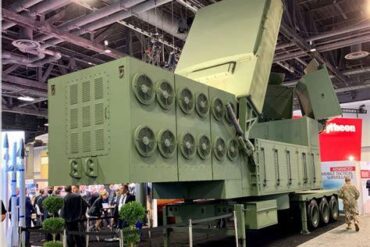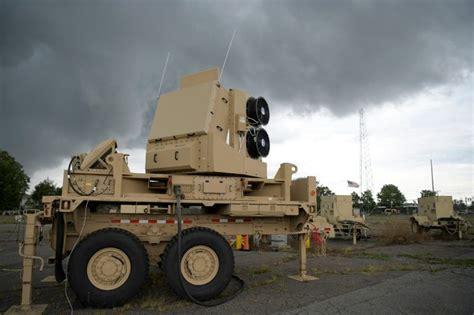
The U.S. Army has taken a decisive step in modernizing its air and missile defense architecture with the delivery of the first Sentinel A4 radar from Low-Rate Initial Production (LRIP) Lot 2, marking a transition from developmental promise to operational reality. Delivered by Lockheed Martin on February 2, 2026, the system arrived alongside the completion of Initial Operational Test and Evaluation (IOT&E) Phase I, signaling that the radar is now being assessed under realistic Army operational conditions rather than laboratory benchmarks.
This milestone arrives at a moment when air defense has become less about isolated interceptors and more about persistent sensing, rapid data sharing, and resilience under saturation attack. Modern threat environments blend low-observable cruise missiles, proliferating unmanned aircraft systems, rotary-wing platforms, fixed-wing aircraft, and indirect fire threats such as rockets, artillery, and mortars. The Sentinel A4 is designed to function at that crossroads, where detection speed and track quality determine whether layered defenses succeed or fail.
The LRIP 2 delivery is not symbolic hardware handover. It represents the first of 19 systems planned in this production lot, directly linking factory output to Army testing, training, and early fielding pathways. As these radars move through evaluation, the program is shaping the evidence base required for a full-rate production decision, where performance, interoperability, and availability matter as much as raw detection range.
From Sentinel A3 to A4: A Sensor Built for All-Azimuth Threats
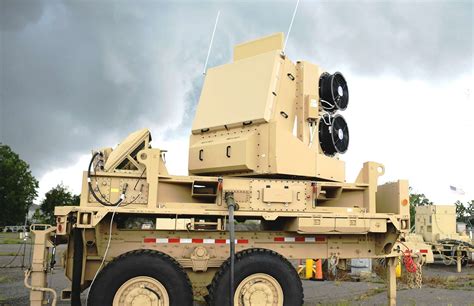
Sentinel A4 is intended to replace the fielded Sentinel A3, a radar designed in an era when threat vectors were more predictable. The defining leap forward is the A4’s 360-degree Active Electronically Scanned Array (AESA) architecture. Unlike mechanically rotated systems that can introduce sector gaps or latency, AESA technology allows the radar to search, track, and update targets continuously in all directions, even when multiple threat types appear simultaneously.
In practical operational terms, this means fewer blind spots and stronger resilience against low-altitude and terrain-masking approaches, a tactic commonly used by cruise missiles and small drones. Continuous coverage also supports more stable track formation, which is essential for cueing interceptors and coordinating engagements across short-range air defense units.
Lockheed Martin emphasizes that Sentinel A4 is designed for dense and contested electromagnetic environments, where clutter, civilian air traffic, and friendly platforms coexist with hostile systems. The radar’s signal processing and beam agility are intended to maintain detection fidelity without overwhelming operators or command systems with false tracks.
Interoperability as a Combat Requirement, Not a Feature
One of the most consequential outcomes of IOT&E Phase I is confirmation that Sentinel A4 successfully integrated with Forward Area Air Defense Command and Control (FAAD-C2). This integration is not a footnote. Modern air defense is fundamentally a networked problem, where sensors, shooters, and decision-makers must share a common operational picture in near real time.
By validating data exchange with FAAD-C2 during operational testing, Sentinel A4 demonstrates its role as a node within a wider command-and-control ecosystem, rather than a standalone sensor. Track data generated by the radar can be distributed rapidly to engagement systems, airspace managers, and higher headquarters, enabling coordinated responses to complex, multi-axis attacks.
The radar’s open-architecture design underpins this flexibility. As threat profiles evolve and new interceptors or effectors are introduced, the Army can adapt interfaces and software without redesigning the sensor itself. That adaptability is increasingly critical as adversaries compress warning times and exploit gaps between detection and engagement.
Countering the Full Spectrum: Air Breathing and Indirect Fire Threats
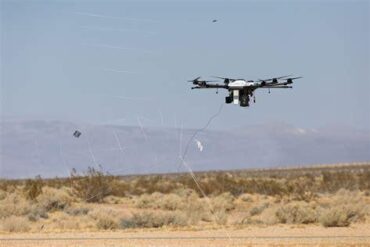
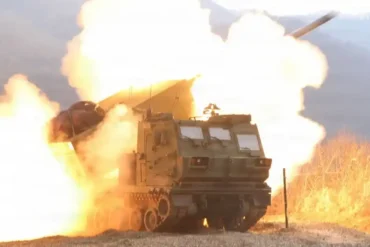
Sentinel A4’s mission set reflects the reality that defended locations are rarely challenged by a single class of threat. The radar is designed to detect and track cruise missiles, unmanned aircraft systems, helicopters, and fixed-wing aircraft, while also contributing to awareness of rockets, artillery, and mortars (RAM).
This dual relevance matters operationally. Adversaries often use indirect fire to disrupt operations, force relocations, or mask higher-value air attacks. A sensor that can contribute to both air surveillance and counter-indirect fire awareness strengthens force protection without multiplying logistics and training burdens.
The breadth of Sentinel A4’s coverage also supports expeditionary operations, where deployed units must defend command posts, logistics hubs, and airfields with limited sensor footprints. By consolidating multiple sensing roles into a single, networked radar layer, the Army gains efficiency without sacrificing coverage.
Operational Context: From Forward Areas to Homeland Defense
While Sentinel A4 is optimized for expeditionary force protection, its relevance extends into homeland security missions. Lockheed Martin has publicly linked the radar’s delivery to integration efforts supporting the National Capital Region, where continuous surveillance and dependable track quality are essential.
In these environments, the stakes are different but the requirements are similar: persistent 360-degree coverage, minimal downtime, and seamless integration with joint and interagency command networks. The radar’s ability to operate reliably amid congested airspace underscores why interoperability and availability are weighted so heavily during operational testing.
This dual-use framing also strengthens the program’s strategic value. A sensor that can defend forward forces and critical domestic infrastructure offers policymakers and planners a scalable investment rather than a niche capability.
LRIP 2 and the Road to Full-Rate Production
The delivery of the first LRIP 2 Sentinel A4 radar places the program squarely in its decision-shaping phase. As additional systems are delivered, the Army will continue evaluating not only detection performance, but also maintainability, training demands, software stability, and integration with existing units.
LRIP systems serve as the bridge between prototypes and fleet-wide fielding. Lessons learned during this phase often drive refinements that determine whether a program transitions smoothly into full-rate production or stalls under operational friction. For Sentinel A4, the successful completion of IOT&E Phase I suggests early confidence, but sustained performance across varied environments will ultimately define success.
A Sensor Layer for the Age of Saturation
The strategic importance of Sentinel A4 lies in its contribution to shortening the sensor-to-decision timeline. In an era where adversaries seek to overwhelm defenses with numbers, speed, and low observability, early detection and reliable tracking are decisive advantages.
By replacing the Sentinel A3 with a 360-degree AESA radar designed for multi-domain threats, the U.S. Army is reinforcing a defense posture shaped by compressed warning times and complex attack profiles. As LRIP deliveries continue and operational testing deepens, Sentinel A4 is positioned to become a common sensor layer underpinning both force protection abroad and priority defense missions at home.