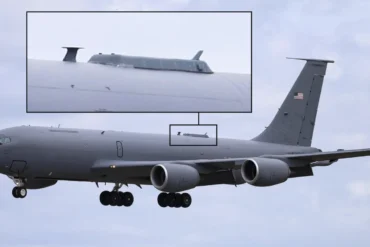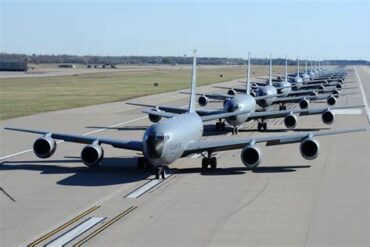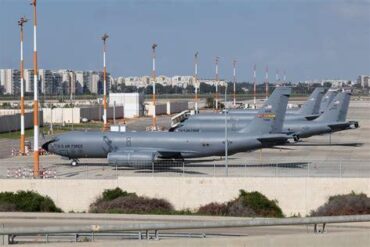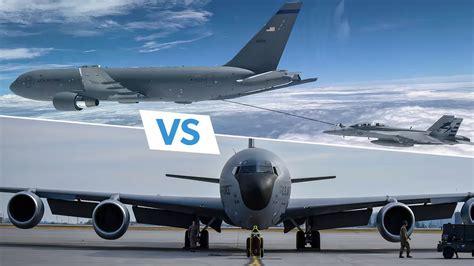
Modern warfare has transformed the skies into increasingly dangerous territory, and the United States Air Force is responding by preparing its most valuable support aircraft for a far more contested future. As missile technology advances and drones become cheaper, faster, and more numerous, even large aircraft operating far from the front lines are no longer immune from attack. That reality explains why the USAF is pursuing active defenses for its Boeing KC-46A Pegasus and KC-135 Stratotanker fleets.
Aerial refueling has long been one of the foundations of American military power. Tankers extend the range of fighters, bombers, intelligence aircraft, and transports, allowing operations to continue for hours or days without requiring nearby bases. Without these aircraft, the ability of the United States to project power across vast distances would be severely constrained. Protecting them has become a strategic necessity rather than a luxury.
For decades following the Cold War, the Air Force operated in relatively permissive environments. Enemies rarely possessed the capability to threaten large support aircraft operating outside immediate combat zones. That advantage has gradually disappeared. Advanced surface-to-air missiles, long-range interceptors, hypersonic weapons, and swarms of inexpensive drones are forcing military planners to reconsider assumptions that once seemed permanent.
The Strategic Importance of America’s Aerial Refueling Fleet
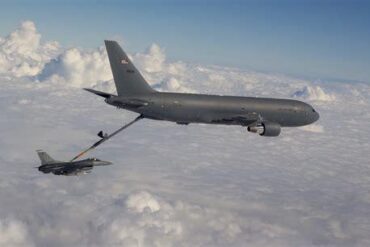
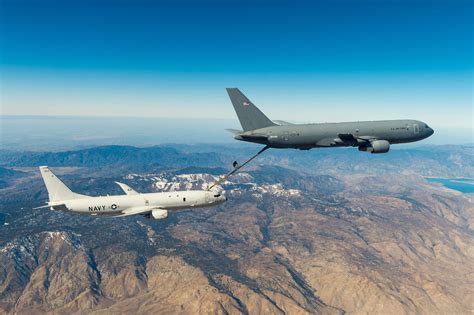
The United States maintains unmatched global reach largely because of its aerial refueling capabilities. Tankers enable fighters and bombers to strike distant targets without landing, support surveillance aircraft conducting extended patrols, and allow transport aircraft to rapidly deploy forces around the world.
During combat operations, refueling aircraft multiply the effectiveness of every other aircraft in the inventory. A single tanker can sustain multiple fighters or bombers during long-range missions, enabling continuous air campaigns and close air support operations. They effectively serve as airborne gas stations that keep entire combat formations operating far from their bases.
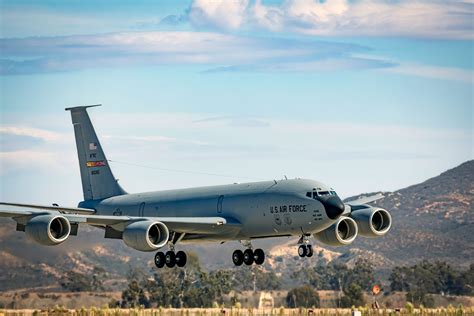
The Boeing KC-135 Stratotanker has formed the backbone of this capability since entering service in the late 1950s. Despite its age, the aircraft remains indispensable, with roughly 390 examples still operating. Depending on configuration, each aircraft can carry as much as 200,000 pounds of fuel.
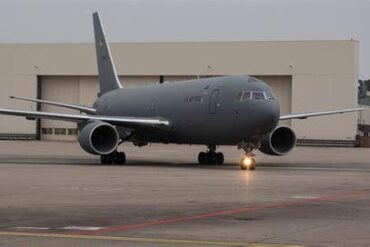
Complementing the veteran KC-135 is the newer Boeing KC-46A Pegasus. Equipped with modern avionics and advanced refueling systems, the Pegasus can carry approximately 212,000 pounds of fuel and transfer more than 1,200 gallons every minute through its boom system. Together, these aircraft form the foundation of American airpower.
Why Tankers Have Become Vulnerable Targets
Potential adversaries increasingly understand that destroying support aircraft can cripple military operations without engaging frontline fighters directly. Tankers are especially attractive targets because they are large, relatively slow, and lack the stealth characteristics of fifth-generation combat aircraft.
A successful attack against a tanker could simultaneously disrupt multiple strike packages. Fighters and bombers dependent on airborne refueling could lose their ability to reach targets or remain on station, dramatically reducing the tempo of military operations.
This vulnerability is amplified by technological changes. Missile systems now possess greater range, precision, and resistance to traditional countermeasures. Meanwhile, drones have emerged as inexpensive weapons capable of overwhelming defenses through sheer numbers.
These trends have transformed support aircraft from relatively safe assets into potential high-priority targets.
The Large Aircraft Survivability Systems Program
Recognizing these emerging dangers, the Air Force is investing heavily in the Large Aircraft Survivability Systems program, commonly known as LASS.
According to budget plans, the service requested approximately $68 million for research, development, testing, and evaluation during fiscal year 2027. Total investment through fiscal year 2031 is expected to exceed $508 million.
The program aims to create an integrated defensive architecture specifically tailored for large aircraft such as tankers and transports. Rather than relying on individual systems operating independently, LASS combines sensors, processors, and countermeasures into a unified defensive network.
The system is designed around three essential functions:
- Detect incoming threats.
- Identify which aircraft is being targeted.
- Select the most effective method to defeat the attack.
This layered approach allows aircraft crews to react automatically and rapidly against evolving threats.
Combining Sensors, Processors, and Countermeasures
The survivability architecture envisioned under LASS functions almost like an onboard bodyguard.
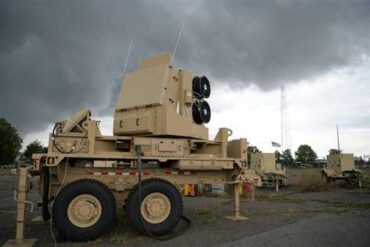
Multiple sensors continuously monitor the surrounding environment. These sensors search for radar emissions, missile launches, approaching drones, and other hostile signatures.
Powerful onboard processors analyze incoming data and determine which threats pose the greatest danger. Once a threat is identified, the system chooses the most suitable countermeasure.
Unlike older warning systems that merely alerted crews, the new architecture aims to actively defeat incoming weapons before they reach the aircraft.
Such automation is increasingly necessary because modern missile engagements unfold in seconds. Human reaction alone may no longer provide enough time for survival.
Electronic Warfare Provides the First Layer of Protection
One category of countermeasures falls under non-kinetic defenses, primarily electronic warfare.
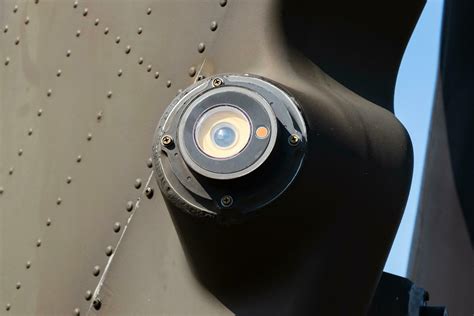
An example already used on some aircraft is the ALE-55 Fiber Optic Towed Decoy. Instead of trying to destroy an incoming missile physically, the system confuses it.
The decoy trails behind the aircraft and emits signals that deceive radar-guided weapons. It can jam enemy sensors, generate false targets, and lure missiles away from the aircraft itself. By presenting a more attractive target, the decoy increases the chances that hostile missiles will miss entirely.
Electronic warfare has become increasingly important because many modern missiles depend heavily on radar guidance. Disrupting that guidance can neutralize threats without expending ammunition.
These non-kinetic techniques are often less expensive and can engage multiple threats during a single mission.
The Miniature Self-Defense Munition Could Shoot Down Threats
Perhaps the most intriguing aspect of LASS involves kinetic defenses.
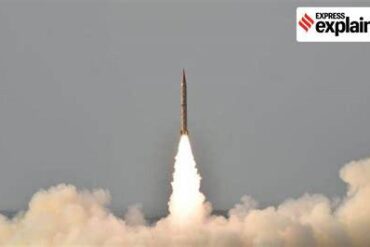
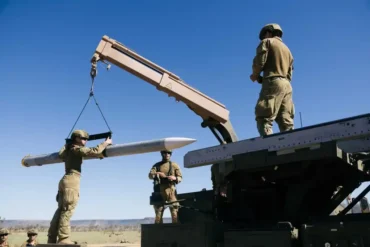
Air Force Research Laboratory engineers have been developing the Miniature Self-Defense Munition since approximately 2015. Unlike jammers or decoys, this weapon physically destroys incoming missiles or drones.
The missile measures slightly over three feet in length and uses a solid-fuel rocket motor for propulsion. It incorporates an affordable seeker to track hostile targets and intercept them before impact.
Raytheon Missile Systems received a contract valued at roughly $375 million to support research, development, and testing efforts associated with the project.
If successfully integrated, the system would effectively give tankers their own miniature missile shield.
Such a capability would represent a major shift in doctrine. Large support aircraft traditionally depended on escorts and distance for protection. Active interception introduces a completely new layer of survivability.
China and Peer Competition Are Driving New Requirements
Much of the urgency behind these upgrades stems from concerns regarding conflict with China.
American planners increasingly focus on scenarios involving Taiwan, the South China Sea, the Senkaku Islands, and disputed territories involving regional allies. Any large-scale conflict would require extensive tanker support to sustain combat operations across enormous distances.
China possesses one of the world’s largest missile inventories. Systems such as the DF-15, DF-16, DF-17, DF-21, DF-26, CJ-10, and CJ-100 provide the People’s Liberation Army with extensive strike capabilities reaching thousands of kilometers.
Military installations throughout the Pacific, including Guam, could face missile attacks early in a conflict. Tankers operating near combat zones would become essential for maintaining air operations if forward bases were damaged.
Chinese naval forces also field increasingly sophisticated guided-missile destroyers, while stealthy J-20 fighters present additional threats. Chinese planners understand that eliminating tankers could dramatically reduce the effectiveness of American airpower.
Lessons From Vietnam, Iraq, and Afghanistan
History demonstrates just how essential aerial refueling has become.
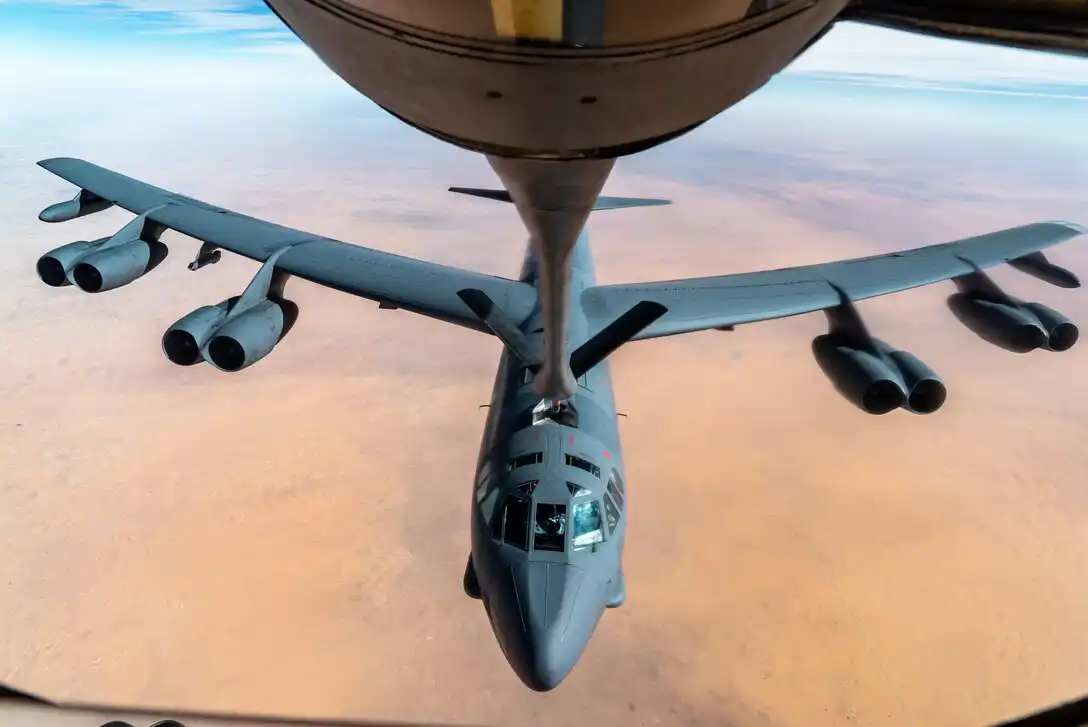
During Operation Arc Light in Vietnam, KC-135 aircraft supported B-52 bombing missions from Andersen Air Force Base to targets across Southeast Asia. The first missions in June 1965 involved thirty KC-135 tankers refueling twenty-seven bombers.
Decades later, tanker aircraft played equally important roles during conflicts in Iraq and Afghanistan.
By the conclusion of major operations in Afghanistan, Air Force tankers had transferred more than one billion pounds of fuel to over 42,000 aircraft across 13,000 sorties and accumulated approximately 96,000 flying hours.
During Operation Iraqi Freedom, Air Force tankers supplied roughly 68 percent of all aerial refueling capability during combat operations. Thousands of sorties and hundreds of thousands of pounds of fuel sustained the pace of coalition air campaigns.
Without these aircraft, many missions simply could not have occurred.
Protecting Tankers Means Protecting American Airpower
Since the end of the Cold War, American forces have become increasingly expeditionary. Most units remain based within the United States and rely on rapid deployment during crises.
Tankers make these deployments possible. They allow fighters, bombers, transports, and support aircraft to travel immense distances without stopping, preserving operational speed and flexibility.
Potential adversaries understand this dependency. Destroying tankers could isolate forces, interrupt air campaigns, slow reinforcements, and hinder evacuation efforts.
As missiles become more accurate and drones proliferate across battlefields, tanker survivability grows more critical. The Large Aircraft Survivability Systems program reflects the recognition that support aircraft can no longer rely solely on distance and escorts for protection.
The KC-46 Pegasus and the aging KC-135 Stratotanker remain among the most valuable assets in the American arsenal. Ensuring their survival means safeguarding the entire network of airpower they support. In future conflicts against technologically advanced adversaries, protecting the tankers may prove just as important as protecting the fighters they sustain.