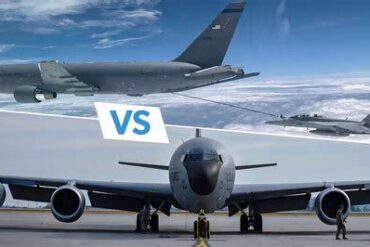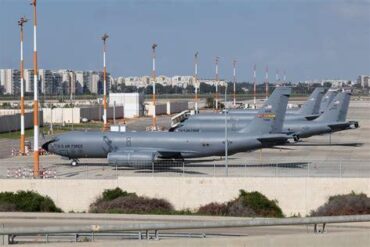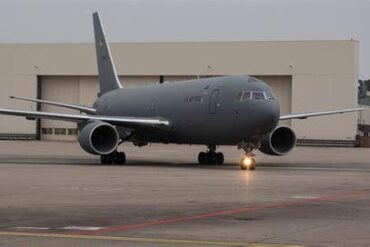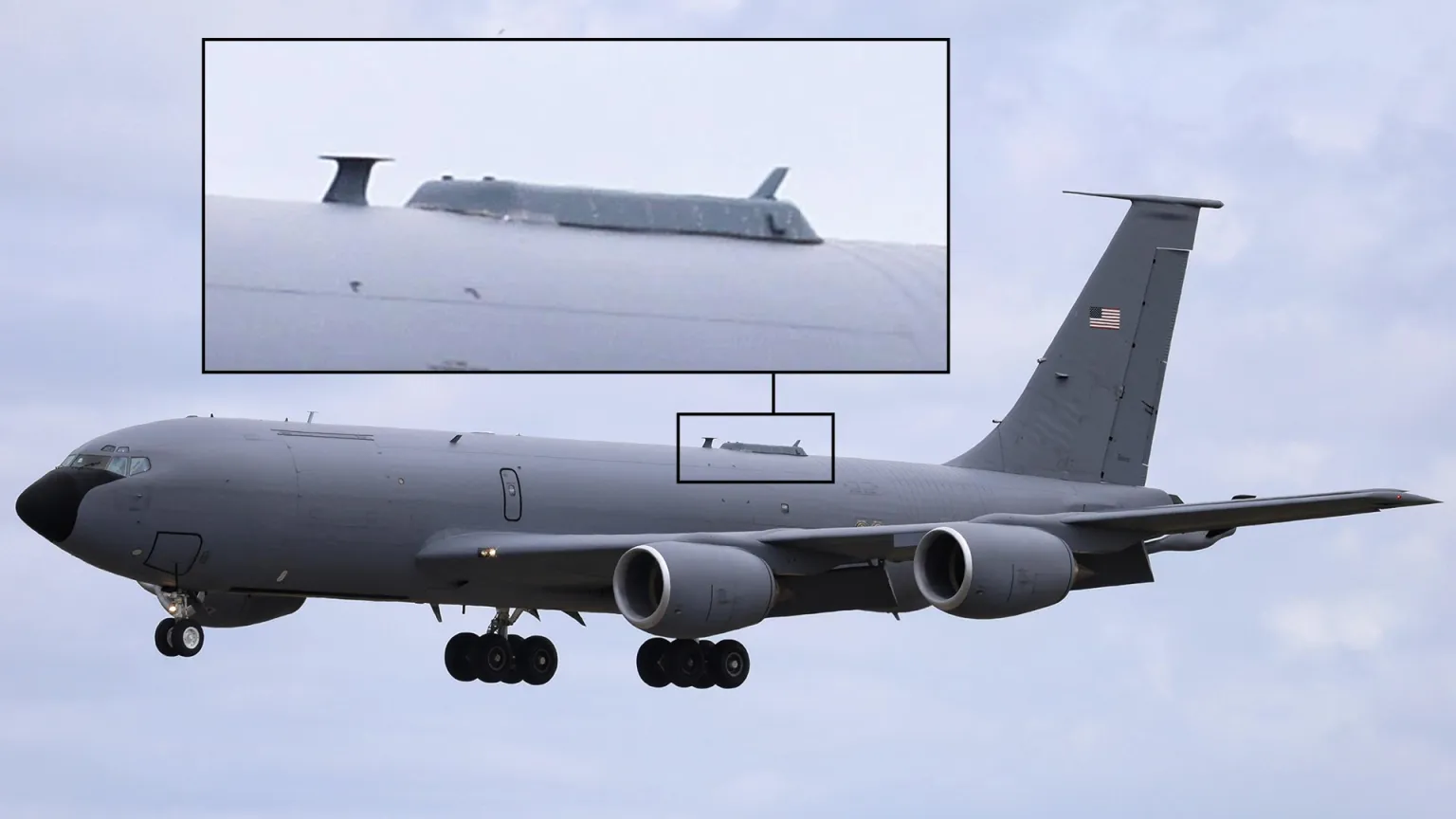
The sight of a Boeing KC-135R Stratotanker carrying a strange trapezoid-shaped antenna on its upper fuselage appears, at first glance, to be a routine communications upgrade. A 65-year-old aircraft receiving modern satellite equipment might seem like a simple effort to improve connectivity for crews flying long missions.
However, the reality is far more significant. The new antenna represents a major transformation in how the US Air Force views its aging tanker fleet. The KC-135 is no longer being treated only as a flying fuel station. Instead, it is becoming a critical communications bridge that connects stealth aircraft, satellites, sensors, and weapons systems across a modern battlefield.
The installation, spotted on a KC-135R at RAF Mildenhall in the United Kingdom, is believed to be linked to SpaceX Starshield, the government-focused version of the Starlink satellite network designed for military applications. While Starshield provides the high-bandwidth satellite connection, the larger purpose is to turn the Stratotanker into a resilient airborne network node capable of supporting future combat operations.
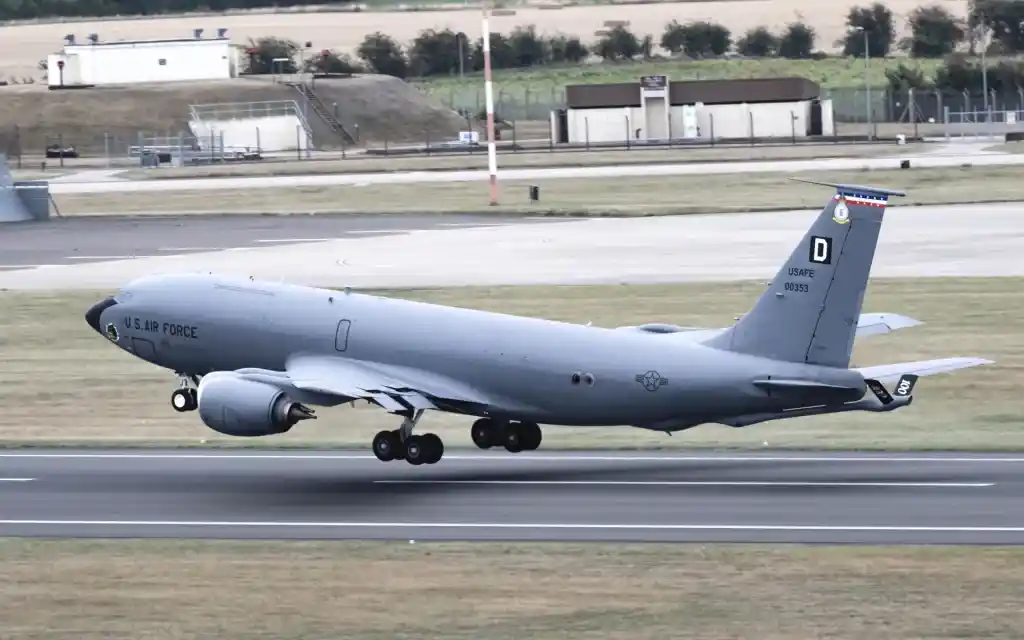
The upgrade reflects a fundamental shift in military aviation. Future conflicts will not be decided only by aircraft speed, stealth, or weapons range. They will depend heavily on who can collect, share, and act on information faster than an opponent. In this environment, the aircraft that can connect the battlefield may become just as important as the aircraft carrying the weapons.
The KC-135 Starshield Antenna Is About More Than Better Communications
The easiest assumption is that the new satellite antenna exists to give KC-135 crews improved internet access during long-duration missions. That interpretation, however, misses the strategic importance of the modification.
The Air Force’s goal is to integrate the KC-135 tanker into the broader joint kill chain. In military terminology, a kill chain describes the process of detecting a target, identifying it, deciding how to engage it, and delivering an effect. Modern warfare increasingly depends on reducing the time between those steps.
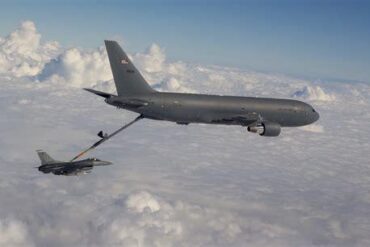
The KC-135 has traditionally played a supporting role by extending the range of fighters and bombers through aerial refueling. But future operations require support aircraft to do much more. They must exchange targeting information, connect different military networks, and provide communication pathways when traditional systems become unreliable.
The Air Force’s MAF Connectivity initiative reflects this changing mission. The program aims to allow mobility aircraft, including tankers, to connect directly with the wider battlespace by supporting logistics chains and combat networks.
The Starshield antenna is therefore not simply a passenger-style communications upgrade. It is part of a broader effort to transform air mobility aircraft into information-sharing platforms.
A tanker flying hundreds of miles away from enemy air defenses can provide something that many stealth aircraft cannot: a powerful communications relay that can remain connected without exposing the stealth aircraft itself.
This is especially important as the Air Force prepares for the operational introduction of the B-21 Raider stealth bomber.
Why The B-21 Raider Needs The KC-135 To Communicate
The B-21 Raider is designed around a central principle: minimizing its electromagnetic signature.
A stealth aircraft is not only difficult to see on radar. It must also carefully manage the signals it produces. Every radio transmission, radar emission, or electronic communication can potentially reveal its location to advanced enemy sensors.
For a bomber operating deep inside contested airspace, transmitting directly to satellites or distant command centers could create unnecessary risks.
This is where the upgraded KC-135 becomes valuable.
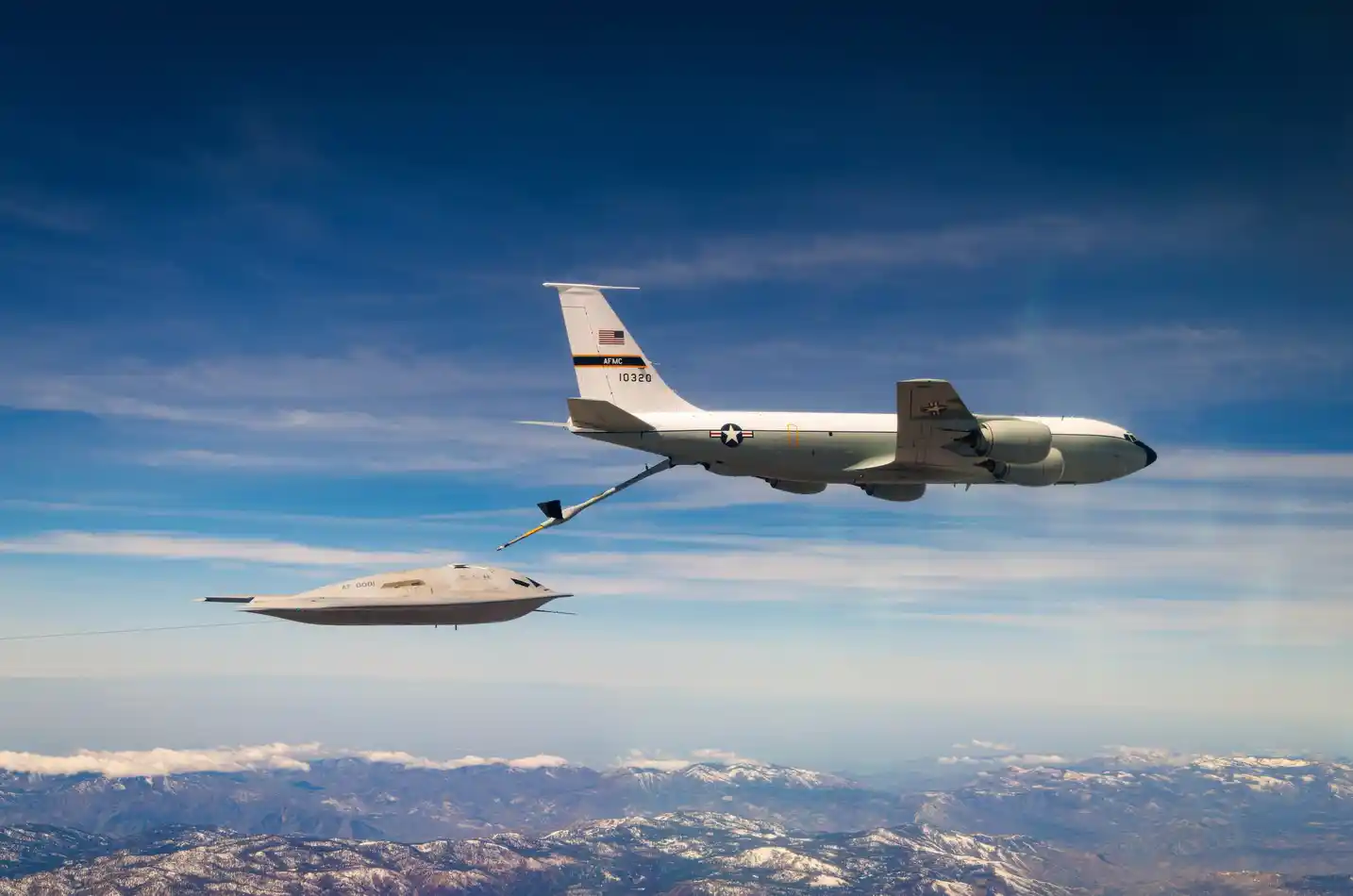
The tanker can operate as a communications intermediary. The B-21 can send information through a low-probability-of-intercept datalink to a nearby KC-135. The tanker then forwards that information through a high-powered satellite connection using Starshield or other available satellite networks.
The concept allows the stealth bomber to communicate without constantly broadcasting powerful signals over long distances.
The KC-135 effectively becomes the voice of the B-21.
This arrangement fits a broader trend in military aviation where aircraft are increasingly becoming nodes in a connected combat ecosystem rather than independent platforms. Fighters, bombers, unmanned systems, satellites, and command centers are expected to operate as a single network.
The aircraft that enables those connections could determine whether a military force maintains an advantage in a highly contested environment.
Starshield Is Only One Piece Of The Hybrid SATCOM Network
Although the Starshield antenna has attracted attention, the Air Force is not building its future communications architecture around a single satellite constellation.
A single network creates a vulnerability. An adversary with advanced electronic warfare capabilities could attempt to jam signals, disrupt communications, or interfere with satellite links.
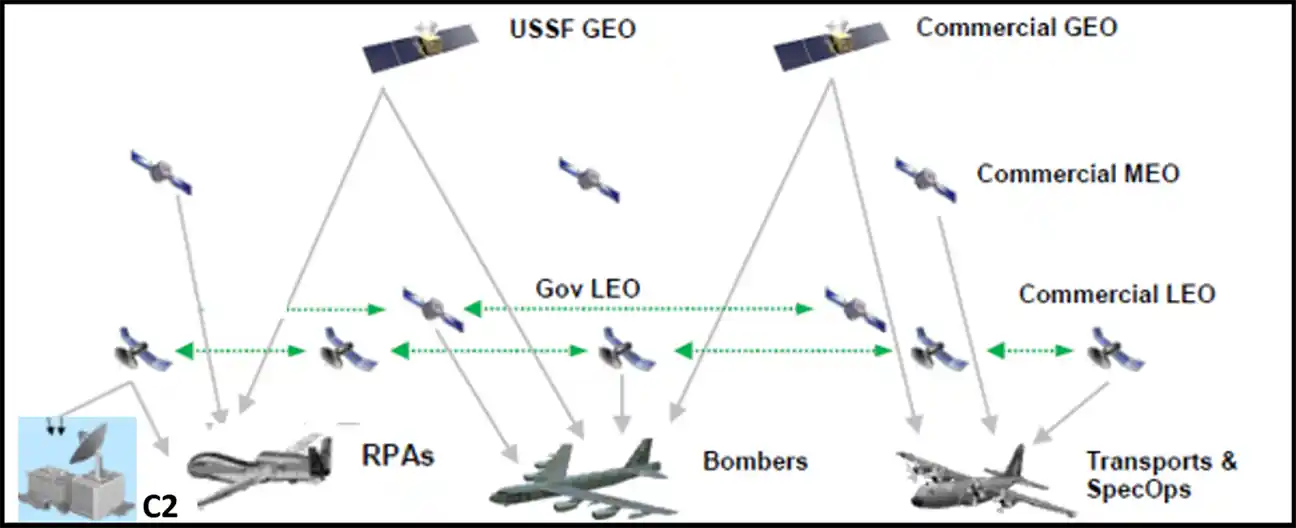
The answer is Hybrid SATCOM, a system designed to allow aircraft to connect across multiple satellite networks.
The Air Force Research Laboratory’s Global Lightning program has been developing this concept since 2018. The objective is to create flexible communications systems capable of switching between different military and commercial satellite constellations.
A KC-135 equipped with a hybrid terminal could potentially use Starshield when available, then transition to another satellite network if interference occurs.
The importance is not only the antenna hardware. The key technology is the software-defined radio and network management system that controls these connections.
Instead of relying on one communications pathway, the aircraft becomes part of a dynamic network capable of adapting during combat.
This approach mirrors the broader military move toward distributed systems. Rather than depending on a few large, easily targeted assets, future forces will rely on many connected platforms sharing information across multiple pathways.
How SpaceX Starshield Changes The Role Of An Aging Tanker
The KC-135 entered service in the late 1950s, an era when military aircraft were designed around very different requirements. At that time, the Stratotanker’s primary mission was simple: carry fuel and extend the range of combat aircraft.
Today, the aircraft is being adapted for a completely different battlefield.
The addition of Starshield technology shows how older airframes can gain new relevance through digital upgrades. The aircraft’s age is not necessarily its greatest weakness. Its size, endurance, and large fleet numbers make it attractive for new missions.
The KC-135 offers several advantages as an airborne communications platform.
It has substantial internal space for equipment. It can remain airborne for extended periods with aerial refueling support. Most importantly, the Air Force already operates a large fleet of these aircraft.
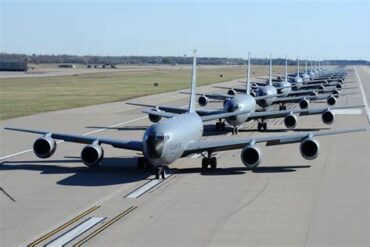
The United States still operates hundreds of KC-135s, and many are expected to remain active into the 2040s. Some aircraft could continue serving toward 2050.
Replacing such a large fleet quickly would be extremely expensive and time-consuming. Upgrading existing aircraft provides a faster path to expanding the Air Force’s network capabilities.
The result is an unusual combination: a Cold War-era aircraft supporting a sixth-generation stealth bomber.
The Six-Month Quick Reaction Capability Behind The Upgrade
One of the most notable aspects of the KC-135 Starshield effort is the speed at which the capability moved from concept to aircraft installation.
Traditional military acquisition programs often require years of development, testing, and certification. However, this project used a Quick Reaction Capability (QRC) approach.
The Air Force worked with Sierra Nevada Corporation through the Airlift/Tanker Open Mission Systems (ATOMS) effort. The goal was to rapidly integrate modern communications equipment using an open architecture approach.
According to program information, the capability was delivered within approximately six months, an unusually short timeline for a military aircraft modification involving satellite communications, software integration, and flight certification.
The rapid development demonstrates the urgency surrounding battlefield connectivity.
The transition from ATOMS toward MAF NEXUS indicates that the Air Force intends to move beyond prototype installations and develop a broader fleet capability.
The first visible KC-135 equipped with the antenna represents more than a technology demonstration. It signals that the Air Force is moving toward a future where mobility aircraft are integrated directly into combat networks.
Why Tanker Survivability Is Becoming More Important
Turning tankers into communication hubs creates a new challenge.
A KC-135 carrying critical battlefield data becomes a much more valuable target.
For decades, tankers operated behind the front lines because their main function was fuel delivery. In future conflicts against advanced opponents, that assumption may no longer be valid.
The same aircraft that connects a B-21 bomber to the wider battlespace could become a priority target for enemy aircraft, missiles, or electronic attacks.
That is why tanker modernization is extending beyond communications.
The Air Force is exploring additional defensive technologies, including improved situational awareness and potential active protection systems. The goal is to ensure tankers can survive closer to contested environments.
The Starshield connection also contributes to this defensive picture. A stronger satellite network can provide better access to threat information, helping aircraft understand the battlefield around them.
The tanker is becoming both a communications platform and an information consumer.
This represents a major change from the KC-135’s original Cold War mission.
The Future Of Air Warfare May Depend On Flying Network Nodes
The KC-135 Starshield modification reveals a broader transformation taking place across military aviation.
Modern warfare increasingly depends on connectivity. The most advanced aircraft in the world are limited if they cannot exchange information quickly and securely.
The B-21 Raider may provide unprecedented stealth capabilities, but stealth alone cannot win future conflicts. It requires a network that connects sensors, commanders, satellites, and weapons.
The KC-135 provides that connection.
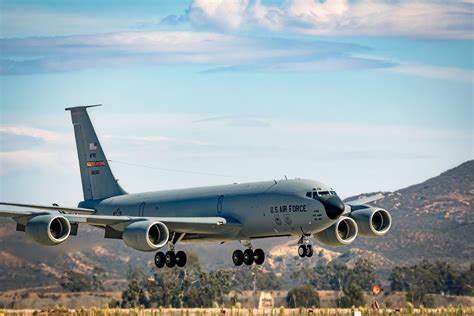
The irony is striking. An aircraft first delivered in 1957 may become a key communications partner for one of the most advanced bombers ever developed.
The reason is simple: the KC-135 has the characteristics needed for this mission. It is large, reliable, persistent, and available in significant numbers.
The Air Force does not necessarily need every aircraft to be new. It needs existing platforms to become smarter.
The Starshield antenna is a visible symbol of that philosophy.
A 65-Year-Old Aircraft Supporting A New Era Of Combat
The appearance of a Starshield-style antenna on a KC-135R is not just an example of an old aircraft receiving modern equipment. It represents a major doctrinal change in how the US Air Force views its tanker fleet.
The Stratotanker is evolving from a fuel provider into a battlefield connector.
Through Hybrid SATCOM, advanced satellite communications, and integration with future aircraft like the B-21 Raider, the KC-135 is being positioned as a critical link in America’s next-generation combat network.
The success of this vision will depend on how quickly the Air Force can upgrade aircraft, train crews, maintain systems, and protect these valuable network nodes.
But one thing is already clear: the future of air power will not belong only to the aircraft that fly the fastest or hide the best.
It will belong to the aircraft that keep everyone connected.