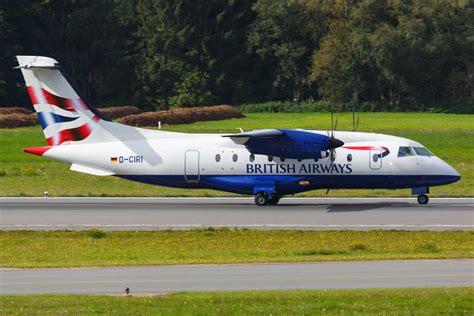
Regional aviation rarely grants second acts. Aircraft programs rise, peak, and fade into footnotes of aerospace history. Yet the 35-year-old Dornier 328 turboprop is defying that pattern. After first entering service in 1993, the aircraft is not only remembered—it is returning to production in a thoroughly modernized form known as the D328eco. This is not nostalgia engineering. It is a calculated response to market demand, sustainability pressure, and the enduring value of a design that was ahead of its time.
The revival is being led by Deutsche Aircraft, headquartered in Oberpfaffenhofen near Munich, the very region where the original Dornier lineage flourished. At the center of this effort is Chief Engineer Thomas Ahn, once part of the original 328 development team. That continuity matters. It signals that this program is less a reinvention and more an evolution—an aircraft reborn with three decades of operational insight and technological advancement embedded into its DNA.
Roughly 150 Dornier 328 aircraft remain in active service worldwide, a remarkable figure for a regional turboprop introduced during the early 1990s. Operators across Europe and North America continue to rely on its rugged short-field performance and reliability. The question is not why it is remembered. The real question is why now—why bring this aircraft back into production three decades later?
The Original Dornier 328: A Regional Aircraft Ahead of Its Time
When the Dornier 328 first flew in 1991, it disrupted expectations of what a 30-seat turboprop could be. Regional aircraft at the time were often viewed as slow, utilitarian commuters. The 328 arrived with a sleek, almost jet-like fuselage, a pressurized cabin offering enhanced passenger comfort, and a cruise speed of approximately 310 knots true airspeed (KTAS)—fast for its class.
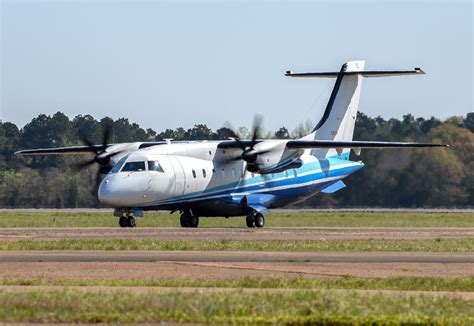
Its high-wing configuration and advanced aerodynamics allowed operations from short and semi-prepared runways, opening access to remote or constrained airfields. With a service ceiling reaching 31,000 feet, it flew above much of the weather that plagued smaller regional turboprops. The aircraft was powered by Pratt & Whitney Canada PW119 engines, known for reliability and efficiency in demanding environments.
Inside the cockpit, the 328 introduced a digital glass cockpit, a feature that was progressive for a turboprop in the early 1990s. For passengers, the cabin felt more like a downsized mainline jet than a commuter aircraft. Pressurization, sound insulation, and interior design created a surprisingly refined experience.
Despite these technical strengths, market forces were unforgiving. Economic headwinds and limited production capacity at Dornier resulted in around 220 aircraft produced, including approximately 110 D328JET variants that replaced turboprops with turbofan engines on the same airframe. The program was later absorbed into Fairchild Dornier, and production ultimately ceased. Yet the design itself never disappeared from relevance.
Why the Dornier 328 Never Truly Went Away
Aircraft programs usually fade when operational economics no longer make sense. The Dornier 328 resisted that fate. Its combination of short takeoff and landing (STOL) performance, rugged construction, and flexible cabin configurations made it adaptable across passenger, cargo, air ambulance, and special mission roles.
The platform’s certification in 85 countries ensured global accessibility. Operators valued its dispatch reliability and its ability to serve secondary airports that larger regional jets could not access efficiently. In markets where infrastructure remains limited, the 328 proved invaluable.
What truly preserved the aircraft’s legacy was structural robustness. The airframe offered modernization potential. Avionics could be updated. Interiors could be refurbished. Engines could be maintained with predictable lifecycle costs. In aerospace terms, the bones were strong. That matters.
The continued presence of roughly 150 active aircraft signaled something powerful to the market: demand for a high-performance 30- to 40-seat turboprop never vanished. It was simply underserved.
Deutsche Aircraft: Reclaiming German Regional Manufacturing
The reemergence of the 328 platform is not merely about one aircraft. It represents a broader ambition to restore Germany’s full aircraft manufacturing capability within the regional turboprop segment. Deutsche Aircraft has taken over the Type Certificate rights for the Dornier 328, giving it legal and technical authority to evolve the platform.
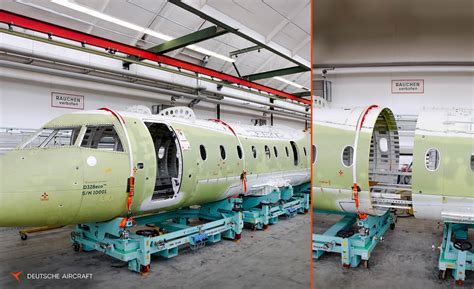
The company now employs more than 550 aviation experts from 40 nationalities, blending historic Dornier expertise with modern aerospace talent. Sustainability, collaboration, and technological openness are embedded into its corporate strategy. The D328eco is positioned not just as an aircraft, but as a statement: Europe intends to remain competitive in next-generation regional aviation.
The manufacturing site in Oberpfaffenhofen carries symbolic and practical weight. This is not outsourced legacy branding. It is a domestic production effort rooted in German engineering tradition while embracing digital design tools and advanced systems integration.
The D328eco: A Modern Turboprop Built for a Carbon-Constrained Future
The D328eco retains the recognizable silhouette of the original Dornier 328 but introduces substantial structural and performance upgrades. The fuselage has been stretched by approximately two meters, bringing total length to 23.31 meters (76 feet 5 inches) and increasing capacity to 40 passengers.
Power comes from Pratt & Whitney Canada PW127XT-S engines, delivering improved fuel efficiency, extended maintenance intervals, and enhanced climb performance. Cruise speed reaches approximately 324 knots, with a long-range cruise near 293 KTAS. Service ceiling is rated at 30,000 feet, slightly lower than the original but optimized for efficiency across typical regional mission profiles.
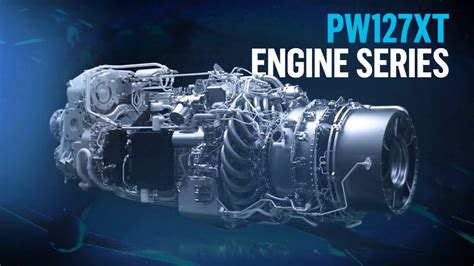
Fuel burn is projected at around 480 kilograms per hour at cruise, translating into meaningful reductions in operating costs. Maintenance costs are expected to decrease by up to 20% compared to earlier-generation aircraft in its class.
Yet performance metrics alone do not explain the revival. The defining feature of the D328eco is its commitment to sustainability. The aircraft is designed to operate on 100% Sustainable Aviation Fuel (SAF), including Power-to-Liquid (PtL) fuels. When using SAF-PtL, lifecycle CO₂ emissions can be reduced by up to 95% compared to conventional Jet-A1. Even on standard fuel, emissions are projected to be approximately 22% lower than its predecessor.
In an industry facing increasing regulatory and environmental scrutiny, that capability is not optional. It is strategic.
Short-Field Mastery and Operational Flexibility
Regional aviation is not dominated by long-haul glamour routes. It is defined by short sectors, remote communities, and infrastructure limitations. The D328eco addresses this reality with impressive field performance.
At maximum takeoff weight of 15,660 kilograms (34,524 pounds), the aircraft requires approximately 3,550 feet (1,082 meters) of runway. Under 70% load conditions, that figure drops to around 2,600 feet (800 meters). Landing distance at maximum landing weight is approximately 3,200 feet (965 meters).
These numbers matter in regions with constrained airports, mountainous terrain, or limited infrastructure investment. The high-wing design protects engines from debris on unpaved runways. Steep approach capability expands access to airports with complex terrain or noise-sensitive restrictions.
In practical terms, this means the D328eco can serve routes that regional jets cannot economically justify. It bridges the gap between turboprop ruggedness and jet-like passenger expectations.
Cabin Experience: Mainline Comfort in a 40-Seat Aircraft
Passenger perception influences airline fleet decisions more than raw performance tables. The D328eco aims to deliver a “mainline passenger experience” within a 40-seat configuration.
The cabin features a stand-up aisle, generous overhead luggage space, ergonomic seating, and acoustic improvements that reduce cabin noise. Faster boarding and servicing processes enable improved turnaround times, enhancing aircraft utilization rates for operators.
Regional travel often suffers from cramped layouts and minimal amenities. The D328eco seeks to eliminate that stigma. For airlines, this allows premium regional branding without deploying larger, less economical aircraft.
D328MR: The Multi-Role Expansion
Beyond commercial passenger service, Deutsche Aircraft is developing the D328MR (Multi-Role) variant. Built on the same modernized platform, this configuration extends the aircraft’s utility into government and humanitarian operations.
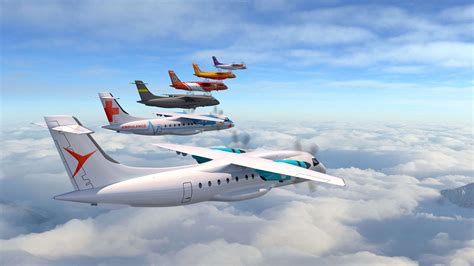
The D328MR can be configured for medical evacuation, search and rescue, surveillance, cargo transport, paratroop deployment, and VIP transport. In medevac configuration, it can fly nearly 2,200 nautical miles with eight patients and a full medical team. Surveillance roles can exceed eight hours of endurance, supporting extended time-on-station operations.
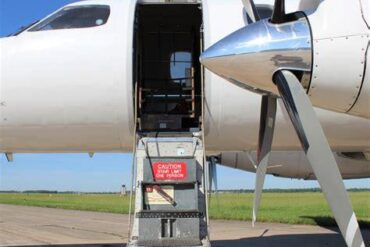
A large cargo door, rapid cabin reconfiguration capability, and unpaved runway compatibility enhance mission flexibility. For governments seeking cost-effective, fuel-efficient platforms with modern avionics and sustainable fuel compatibility, the D328MR presents a compelling solution.
Old Versus New: Evolution Rather Than Reinvention
The comparison between the original Dornier 328 and the D328eco highlights not replacement, but refinement.
The original carried 30–33 passengers; the new variant carries 40. Maximum takeoff weight increases from 13,990 kilograms to 15,660 kilograms. Cruise speed improves modestly, while fuel efficiency improves substantially. Advanced avionics, including the Garmin G5000 flight deck, bring the cockpit fully into the digital era.
Environmental performance represents the most dramatic leap. The original aircraft was not designed with decarbonization targets in mind. The D328eco is engineered around them.
Yet the aircraft retains its defining attributes: high-wing design, short-field capability, robust construction, and operational flexibility. That continuity reduces risk. Airlines are not betting on an unproven concept; they are investing in a matured architecture refined for modern constraints.
Strategic Timing: Why Now?
Three forces converge to explain the program’s revival.
First, the regional market between 30 and 50 seats remains underserved. Many aging turboprops are approaching retirement. Larger regional jets are often uneconomical on thinner routes.
Second, sustainability mandates are accelerating. Airlines require aircraft capable of operating on 100% SAF to meet long-term emissions targets.
Third, geopolitical and industrial considerations favor localized European manufacturing capability. Reviving the 328 platform supports domestic aerospace resilience.
Entry into service is currently targeted for late 2027. While firm orders have yet to be announced publicly, the positioning is clear: the D328eco is not competing on nostalgia. It competes on efficiency, environmental alignment, and operational versatility.
A Proven Design Ready for the Next Era
Aircraft that return to production after decades do so for a reason. The Dornier 328 turboprop demonstrated that intelligent engineering can outlast market turbulence. Its revival as the D328eco reflects the enduring value of balanced design—performance without excess, capability without complexity.
The aviation industry stands at a crossroads defined by decarbonization, cost discipline, and regional connectivity needs. In that environment, a 35-year-old design refined with modern engines, advanced avionics, and sustainable fuel compatibility becomes not an anachronism, but an answer.
The D328eco represents a rare synthesis: heritage engineering meeting contemporary necessity. In a sector often obsessed with clean-sheet innovation, this program proves that sometimes the future is built by refining what was already remarkably right.