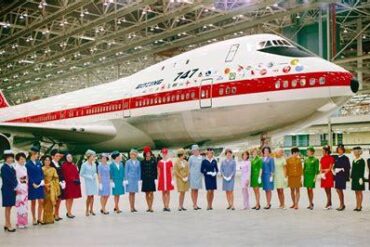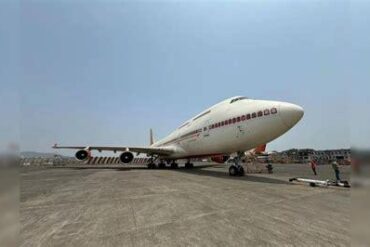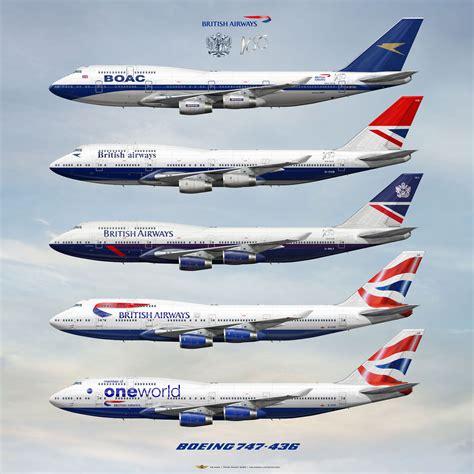
British Airways’ retirement of its Boeing 747-400 fleet in 2020 appeared to close the final chapter on one of commercial aviation’s most iconic aircraft. The airline accelerated the withdrawal of its remaining 31 jumbo jets during the pandemic, replacing them with newer, fuel-efficient twin-engine aircraft such as the Boeing 787 Dreamliner and Airbus A350. From a traditional airline economics perspective, the decision was flawless. Modern widebodies consume dramatically less fuel, produce fewer emissions, and require lower maintenance costs than aging four-engine aircraft.
Yet aviation economics in 2026 look very different from what planners expected when those aircraft were retired. Global aircraft shortages, manufacturing delays, constrained airport slots, and soaring premium demand have created a unique environment where the financial logic underpinning fleet planning is being rewritten. Under specific circumstances, the numbers suggest British Airways could theoretically justify bringing some of its retired Boeing 747-400s back into service.
The question is not whether the aircraft are technologically obsolete. They are. The real question is whether extraordinary market conditions can temporarily outweigh their operational disadvantages.
The Widebody Aircraft Shortage Reshaping Airline Strategy
For decades, airline fleet planning followed a predictable formula. Newer aircraft offered superior economics, making older jets increasingly difficult to justify. However, unprecedented delays at Boeing and Airbus have disrupted this model.
Aircraft deliveries have fallen behind schedule across the industry. Airlines that expected dozens of new long-haul aircraft are instead facing multi-year delays. Fleet renewal programs that once promised seamless transitions have become bottlenecks, forcing carriers to operate older aircraft longer than anticipated.
This shortage is especially painful at major international hubs such as London Heathrow. Unlike airports with room for expansion, Heathrow operates under strict slot constraints. Airlines cannot simply add more flights to meet demand. Every departure slot becomes an extremely valuable asset.
As a result, maximizing passenger capacity and revenue per slot has become more important than achieving the lowest possible operating cost per seat. When airlines cannot obtain additional aircraft and cannot increase flight frequencies, larger aircraft suddenly regain strategic relevance.
The financial impact is substantial. Every unavailable aircraft represents thousands of seats that cannot be sold. For premium-heavy routes where business travelers generate enormous yields, lost capacity can translate into millions of dollars in unrealized revenue.
Instead of asking which aircraft is most efficient, airlines increasingly face a different question: which aircraft can generate the most revenue with the resources currently available?
Why Reactivating a Boeing 747 Is Far More Complicated Than It Sounds
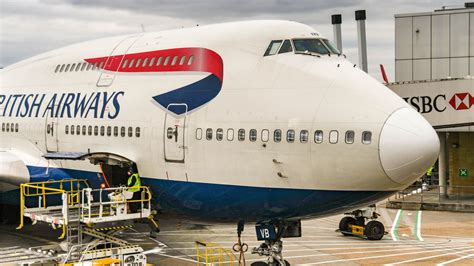
The romantic notion of pulling a Boeing 747 out of storage and returning it to passenger service overlooks the immense engineering effort involved.
British Airways distributed its retired fleet among storage facilities including Victorville, California, and Teruel, Spain. These locations offer dry climates that minimize corrosion and structural deterioration. While such environments preserve aircraft remarkably well, six years of inactivity still create significant technical challenges.
Every returning aircraft would require a comprehensive inspection and recertification process. Engineers would need to perform extensive structural examinations, verify airworthiness standards, replace deteriorated components, and overhaul critical systems.
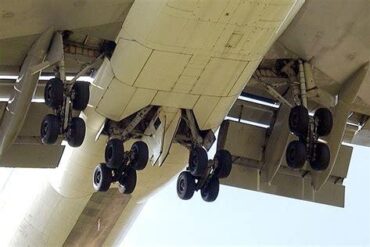
The most expensive aspect involves maintenance checks equivalent to heavy inspections. Hydraulic systems must be drained and rebuilt. Electrical networks require validation. Landing gear assemblies need complete overhauls. Thousands of seals, hoses, and synthetic components may require replacement after prolonged storage.
The challenge becomes even greater because the Boeing 747-400 is powered by four Rolls-Royce RB211 engines. Each engine would require detailed inspections, component replacements, and regulatory recertification before entering commercial service.
Consequently, reactivation costs would likely reach tens of millions of dollars across multiple aircraft. Any revival strategy must therefore generate enough revenue not only to cover higher operating costs but also to amortize significant upfront investment.
The aircraft cannot simply return to service. They must earn back their resurrection costs.
The Secret Weapon: British Airways’ Super High-J Configuration
The strongest argument for reviving British Airways’ Boeing 747-400 fleet lies not in the aircraft itself but in its cabin layout.
Unlike many airlines that configured their 747s for maximum passenger volume, British Airways operated several aircraft in a highly specialized premium-heavy arrangement known internally as the Super High-J configuration.
A conventional Boeing 747-400 can carry well over 400 passengers. British Airways intentionally reduced capacity to approximately 275 seats. This decision sacrificed economy seating in favor of significantly larger premium cabins.
The strategy targeted lucrative transatlantic markets where corporate travelers routinely pay several times more than leisure passengers.
Routes connecting London and New York represent perhaps the most valuable long-haul markets in aviation. Financial institutions, multinational corporations, legal firms, and consulting companies generate year-round demand for premium travel. For these passengers, schedule convenience often outweighs ticket price.
Under such circumstances, a business-class seat may generate revenue equivalent to numerous economy seats combined.
By dedicating vast sections of both the main deck and upper deck to premium accommodation, British Airways transformed the 747 into a high-yield revenue platform rather than a simple passenger transport vehicle.
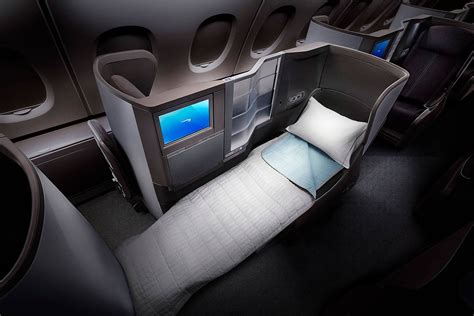
This distinction fundamentally changes the economics.
While modern aircraft are optimized for efficiency across mixed passenger segments, the Super High-J 747 was optimized for revenue concentration. Every premium seat carried disproportionate earning power.
That earning potential becomes critical when evaluating whether the aircraft could offset its higher operating expenses.
Calculating the Fuel Penalty
The greatest obstacle facing any Boeing 747 revival is fuel consumption.
A Boeing 747-400 typically burns approximately 3,800 gallons of fuel per hour during cruise. By comparison, an Airbus A350-1000 performing a similar mission consumes roughly 2,637 gallons per hour.
The difference is approximately 1,163 gallons every flight hour.
On a typical eight-hour transatlantic flight between London Heathrow and New York JFK, that translates into:
- 1,163 additional gallons per hour
- 8 flight hours
- 9,304 extra gallons consumed
Assuming a jet fuel price of $2.50 per gallon, the additional fuel cost becomes:
9,304 gallons × $2.50 = $23,260
That figure represents the extra fuel expense for a single crossing.
For a round-trip operation, the penalty doubles:
$23,260 × 2 = $46,520
Viewed in isolation, this cost appears devastating. Traditional airline analysis would immediately favor the A350.
However, fuel is only one component of airline economics.
The more important question becomes whether premium revenue can comfortably exceed this additional expense.
The Revenue Equation That Changes Everything
To understand the revival argument, consider a simplified revenue model.
Suppose British Airways operates a Super High-J Boeing 747 with dozens of additional premium seats compared with a modern twin-engine alternative.
If only 30 extra business-class seats are available and each generates an average fare premium of $2,000 over alternative seating arrangements, the aircraft earns:
30 × $2,000 = $60,000
That additional revenue exceeds the entire $46,520 round-trip fuel penalty.
In reality, premium fares on heavily traveled corporate routes can be significantly higher. Last-minute business travel often commands prices that dramatically surpass average ticket values.
As premium demand rises, the incremental revenue generated by additional business-class seats rapidly overwhelms the aircraft’s fuel disadvantage.
This is where conventional fleet economics begin to break down.
Normally, fuel efficiency determines competitiveness because airlines operate in balanced markets. During severe capacity shortages, however, the ability to sell more premium seats becomes more valuable than minimizing fuel consumption.
The revenue opportunity can eclipse the efficiency penalty.
The Hidden Advantage of Fully Depreciated Aircraft
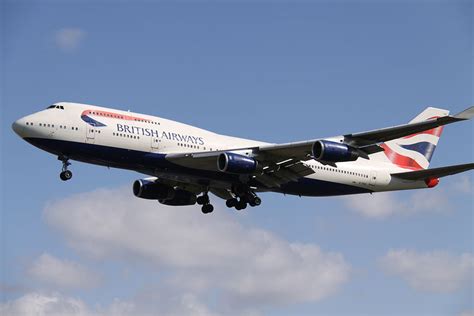
One of the most overlooked aspects of the Boeing 747 revival argument involves ownership costs.
A modern long-haul aircraft represents an enormous capital commitment. Leasing rates for new-generation widebody aircraft frequently range between $1.2 million and $1.5 million per month.
These payments continue regardless of utilization.
Whether an aircraft flies 400 hours monthly or sits idle due to maintenance, lease obligations remain fixed.
British Airways’ retired Boeing 747-400 fleet presents a completely different scenario.
The aircraft are fully depreciated. Their ownership costs are effectively zero. No monthly lease payments exist. No financing charges remain. The airline owns the assets outright.
This dramatically alters the financial equation.
Consider a midpoint lease cost of $1.3 million monthly for a new widebody aircraft.
Annualized, that equals:
$1.3 million × 12 = $15.6 million
A revived Boeing 747 avoids this expense entirely.
Even if higher fuel consumption increases operating costs, the absence of lease payments creates substantial financial flexibility. Some of the money saved through ownership can effectively subsidize higher fuel burn.
Under normal circumstances, airlines prioritize efficiency. During supply shortages, avoiding capital expenditures becomes equally important.
Why Heathrow Makes the Numbers More Attractive
Airport slot constraints further strengthen the argument.
At airports with abundant capacity, airlines can increase frequencies to accommodate demand. Heathrow offers no such luxury.
Every takeoff and landing slot is a scarce asset worth millions.
When slots cannot be expanded, airlines must maximize revenue generated per movement.
This environment favors larger aircraft.
A Boeing 747 carrying hundreds of passengers, including a large concentration of premium travelers, can generate more revenue from a single slot than smaller alternatives.
The economics become especially compelling on premium-focused routes where corporate demand remains strong.
Instead of evaluating revenue per seat, airlines begin evaluating revenue per slot.
Under that metric, the Boeing 747 performs surprisingly well.
The Critical Break-Even Window
Despite these advantages, the revival strategy faces an important limitation.
The economics only work if the aircraft remain operational long enough to recover reactivation costs.
Heavy maintenance inspections, engine recertification, component replacements, and crew retraining require substantial investment. Airlines would likely need a minimum operational period of two to three years to comfortably spread these expenses across sufficient flight activity.
If aircraft deliveries suddenly accelerate and replacement jets arrive sooner than expected, the economics deteriorate rapidly.
Conversely, if manufacturing delays persist throughout the decade, the business case becomes stronger.
The key variable is time.
A short-term capacity shortage does not justify reactivation. A prolonged shortage potentially does.
Could British Airways Actually Bring Back the Queen of the Skies?
The answer is surprisingly nuanced.
Under conventional airline economics, reviving the Boeing 747-400 makes little sense. Fuel consumption is too high, maintenance costs are too significant, and newer aircraft deliver superior efficiency.
Yet extraordinary market conditions create extraordinary possibilities.
When premium demand is exceptionally strong, airport slots are constrained, aircraft deliveries remain delayed, and ownership costs approach zero, the financial math changes dramatically.
British Airways’ unique Super High-J configuration strengthens the argument even further because the aircraft was specifically designed to maximize premium revenue rather than passenger volume.
The additional revenue generated by high-yield business travelers can potentially absorb the substantial fuel penalty. Meanwhile, the absence of multimillion-dollar monthly lease payments provides a financial cushion unavailable to operators relying solely on new aircraft.
Ultimately, the Boeing 747’s return would not represent a rejection of modern fleet strategy. It would be a temporary response to an unprecedented supply crisis. The long-term future of commercial aviation unquestionably belongs to highly efficient twin-engine aircraft.
However, as long as aircraft shortages persist and premium demand remains robust, the numbers reveal a fascinating reality: under the right conditions, British Airways’ retired Boeing 747-400 fleet could still generate profits powerful enough to justify bringing the Queen of the Skies back into service.