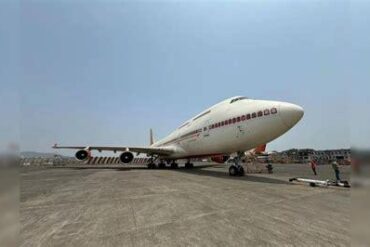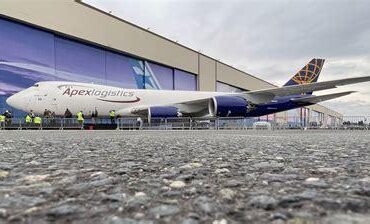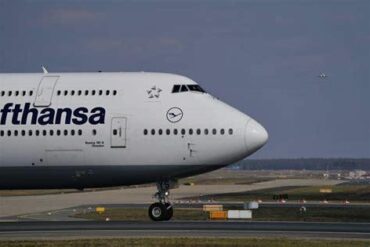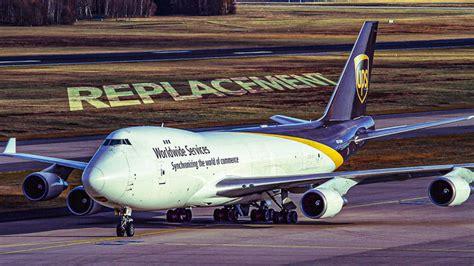
The Boeing 747 did not merely transport cargo; it defined the architecture of modern air freight. With its unmistakable upper-deck hump and cavernous fuselage, the aircraft became synonymous with intercontinental logistics power. For decades, the Boeing 747 freighter formed the backbone of global supply chains, carrying everything from pharmaceuticals and perishables to aircraft engines and industrial machinery. Yet as the aviation industry pivots toward efficiency, sustainability, and economic resilience, even this legendary quadjet is gradually yielding its throne.
The transition away from the 747 is not a matter of nostalgia but necessity. Aging airframes, rising fuel costs, tightening emissions standards, and operational complexity have reshaped the economics of cargo aviation. Airlines are now replacing the 747 with highly efficient twin-engine widebodies that deliver similar payload capability with dramatically lower operating costs. This shift marks one of the most significant structural changes in the air cargo industry since the jet age began.
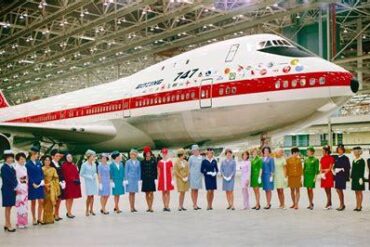
Understanding what replaces the 747 requires first appreciating the scale of what it achieved. The aircraft entered service in 1970 as the world’s first widebody airliner, originally conceived for both passenger and military transport applications. Although it lost the U.S. Air Force heavy-lift competition to the Lockheed C-5 Galaxy, Boeing’s decision to commercialize the design proved transformative. Pan American World Airways became the launch customer, and the rest is aviation history.
The Engineering Legacy of the Boeing 747 Freighter
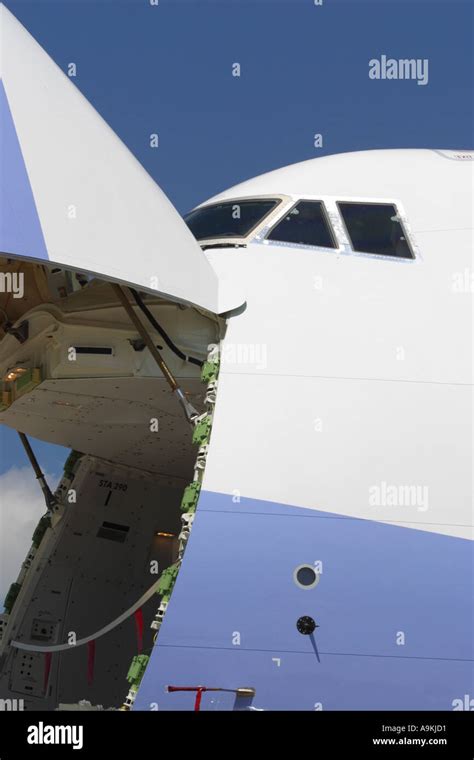
The 747’s dominance in cargo fleets stemmed from structural ambition. The aircraft’s wide fuselage allowed for two aisles and unmatched palletized freight capacity. Its distinctive nose-loading door, enabled by the cockpit’s elevated placement, permitted direct loading of oversized cargo that no competing widebody could easily accommodate. This feature alone cemented the aircraft’s role in heavy logistics, including aerospace components, oil industry equipment, and humanitarian relief supplies.
The Boeing 747-400F, one of the most prolific freighter variants, delivered a maximum takeoff weight nearing 987,000 pounds and a range of approximately 7,730 nautical miles. Powered by engines producing over 50,000 pounds of thrust each, the quadjet was a marvel of brute force and aerodynamic refinement. Its 37.5-degree swept wing enabled efficient cruise at 504 knots, while redundant hydraulic systems enhanced reliability across long-haul sectors.
But power has a price. Four engines mean four overhaul cycles, four fuel streams, and exponentially higher maintenance complexity compared to twinjets. When oil prices fluctuate or environmental regulations tighten, those extra engines become financial liabilities.
Why the 747 Is Leaving Cargo Fleets
The gradual retirement of the 747 from cargo fleets is driven by economic logic rather than technological obsolescence. The aircraft remains capable. What has changed is the balance sheet.
A modern twin-engine freighter such as the Boeing 777F burns approximately 30% less fuel than the 747-400F while carrying nearly comparable payload. That difference translates into millions of dollars in annual savings for large operators. In an industry operating on thin margins and volatile demand cycles, fuel efficiency is not a luxury; it is survival.
Maintenance economics compound the issue. Twinjets halve engine-related inspection and overhaul costs. Modern avionics reduce downtime. Composite materials decrease structural fatigue and corrosion. Fleet commonality with passenger aircraft further reduces pilot training and spare parts inventories. As passenger 747 fleets disappear, maintaining dedicated infrastructure solely for freighter operations becomes increasingly impractical.
Environmental pressures also accelerate the shift. Newer aircraft offer lower carbon emissions and reduced noise footprints, critical in an era of stricter regulatory scrutiny and airport slot limitations. Sustainability is no longer branding rhetoric; it directly influences route access and operating permissions.
The Boeing 777F: The Primary Successor
If the 747 was the monarch of the four-engine era, the Boeing 777F is the reigning champion of twinjet cargo aviation. Introduced in 2009, the 777F capitalized on the proven 777 passenger platform, delivering heavy-lift capability with vastly improved efficiency.
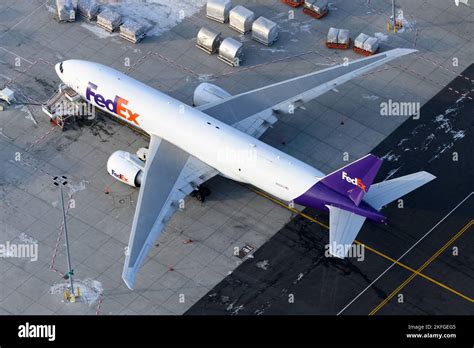
The 777F measures 209 feet in length with a wingspan of 212 feet seven inches and a maximum takeoff weight of 766,800 pounds. While slightly smaller than the 747-400F, its payload capacity remains competitive, and its 4,970-nautical-mile range covers the majority of global freight lanes. Its service ceiling of 43,100 feet matches the 747, preserving operational flexibility across diverse route structures.
FedEx Express, Qatar Airways Cargo, Emirates SkyCargo, Lufthansa Cargo, and Air France-KLM Cargo have integrated the 777F as a central fleet pillar. The aircraft’s reliability and lower fuel burn create a powerful economic argument, particularly for high-frequency transcontinental and intercontinental operations.
Operationally, the 777F benefits from flight deck commonality with passenger 777 variants. Airlines operating both can cross-utilize pilots and maintenance resources, reducing overhead. The aircraft also aligns with modern cargo demand patterns, which increasingly favor frequency and network flexibility over sheer maximum payload per flight.
The Boeing 777-8F: The Next Evolution
The forthcoming Boeing 777-8F builds upon this success. Designed as the cargo variant of the 777X family, it incorporates composite wings, folding wingtips, and next-generation GE9X engines. These enhancements promise extended range and improved payload efficiency compared to the 777F.
For operators seeking a near one-for-one replacement for the 747-400F in long-haul heavy freight roles, the 777-8F represents a compelling bridge between legacy capacity and modern economics. It preserves high-volume capability while retaining the twin-engine efficiency paradigm that defines contemporary fleet planning.
Airbus A350F: Europe’s Strategic Countermove
Airbus did not ignore the vacuum left by the 747. The Airbus A350F, formally launched in 2021, represents a direct challenge to Boeing’s cargo dominance. Based on the A350 passenger platform, the freighter variant emphasizes lightweight composite construction, advanced aerodynamics, and next-generation fuel efficiency.
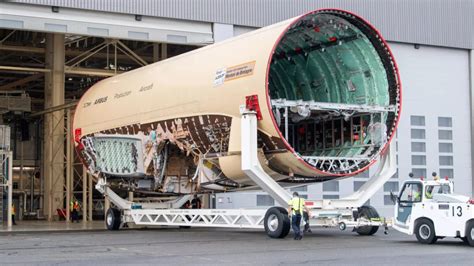
The A350F measures 219 feet two inches in length, with a wingspan of 212 feet five inches and a maximum takeoff weight of 703,275 pounds. Its projected range of 4,700 nautical miles and cruise speed of 485 knots position it squarely within the long-haul freight market. Airbus claims superior fuel burn performance compared to the 777F, alongside reduced emissions and lower noise levels.
The aircraft is expected to enter service later this decade, with CMA CGM Air Cargo poised to become its launch operator. Major cargo carriers including Air France-KLM Cargo, Cathay Cargo, Etihad Cargo, and Silk Way West Airlines have placed orders, signaling strong market confidence.
Composite fuselage panels and wings reduce structural weight while improving durability against corrosion. Advanced avionics enhance flight management efficiency. In short, the A350F embodies a design philosophy oriented around sustainability and long-term operating economics.
Other Players Reshaping the Cargo Landscape
While the 777F and A350F dominate heavy-freight replacement discussions, other aircraft contribute to the 747’s gradual exit.
The Airbus A330-200F and passenger-to-freighter (P2F) conversions of the A330 family serve mid-range routes with strong payload efficiency. These aircraft do not match the 747’s maximum lift capacity but excel in regional and transcontinental networks where frequency matters more than absolute volume.
Converted Boeing 767 freighters also fill capacity gaps, particularly for integrators such as UPS and FedEx. Their economics make sense for medium-haul routes, though they operate below the payload threshold historically associated with the 747.
The broader pattern is unmistakable: cargo operators increasingly prefer diversified fleets optimized by mission profile rather than relying on a single ultra-large platform.
Structural Shifts in Cargo Strategy
The retirement of the 747 coincides with structural changes in global freight demand. E-commerce growth has altered shipment patterns, emphasizing speed and distributed network design. Rather than concentrating freight onto fewer mega-capacity flights, operators often deploy more frequent services with slightly smaller aircraft.
Twinjets enable this flexibility. They operate profitably at lower load factors compared to quadjets, reducing financial exposure during demand volatility. Airlines can scale capacity incrementally rather than committing to massive payload blocks.
Furthermore, environmental accountability has entered executive boardrooms. Airlines face mounting pressure to reduce carbon intensity per tonne-kilometer. New-generation twinjets align more closely with corporate sustainability targets and emerging regulatory frameworks.
The End of an Era Without a Direct Replica
No aircraft replicates the 747 in exact form. Its nose-loading capability and sheer volumetric capacity remain unmatched in certain niche applications. Specialized cargo such as outsized aerospace components may still rely on aging 747 freighters or alternative heavy-lift aircraft like the Antonov An-124.
However, commercial aviation rarely rewards sentimentality. Efficiency, reliability, and adaptability determine survival. The twinjet revolution reflects aerodynamic advances, materials science breakthroughs, and improved engine reliability standards that make two engines sufficient for missions once deemed the exclusive domain of four.
The transition also illustrates the maturation of extended-range twin-engine operational performance standards, commonly known as ETOPS. Decades ago, long overwater routes demanded four engines for redundancy. Today’s twinjets achieve equal or superior safety margins with fewer powerplants, reshaping fleet economics permanently.
A Market Redefined by Efficiency
As of 2025, hundreds of 747 freighters remain active, particularly with operators such as Atlas Air. Yet the production line has closed, and new deliveries now belong to twin-engine successors. The 777F continues to dominate near-term fleet replacements, while the A350F and 777-8F represent the next generation of cargo platforms.
This transformation reflects a broader aviation truth: technological evolution rarely announces itself with fireworks. It unfolds through spreadsheets, fuel calculations, regulatory updates, and incremental fleet decisions. Over time, those decisions reshape the skyline of every major cargo hub.
The silhouette of the hump-backed 747 once symbolized intercontinental reach and industrial confidence. Today, sleeker twinjets assume that role with quieter engines and lighter composite wings. The global freight network remains as vital as ever, but its machinery has become leaner, smarter, and more economically disciplined.
The Boeing 747 will endure in aviation lore as the aircraft that democratized long-haul travel and industrialized global cargo transport. Its successors do not imitate its grandeur; they refine its mission. In replacing the 747, the industry has not diminished its legacy but distilled it into a new generation of aircraft engineered for efficiency, sustainability, and resilience in a relentlessly competitive world.