The backbone of domestic aviation in the United States is not built on sprawling widebody jets crossing oceans, but on the relentless efficiency of narrowbody aircraft. These single-aisle workhorses quietly power thousands of daily departures, stitching together cities, economies, and travelers with remarkable precision. In 2026, a select group of airlines has turned narrowbody operations into a strategic art form, scaling their fleets to extraordinary sizes while refining how each aircraft type fits into a broader network vision.
Across the industry, fleet size is more than just a number—it’s a reflection of route strategy, operational philosophy, and long-term investment decisions. The five largest narrowbody operators in the United States have each approached this challenge differently, balancing aircraft diversity, cost efficiency, and passenger experience. Some have embraced simplicity, while others thrive on complexity. The result is a fascinating landscape where scale meets specialization.
What makes this ranking especially compelling is how close the competition has become. The difference between first and third place is narrower than ever, and each airline is actively reshaping its fleet with new-generation aircraft like the Airbus A321neo and Boeing 737 MAX family. Beneath the surface, these fleet decisions are quietly redefining everything from ticket pricing to route availability.
5. Alaska Airlines: Precision and Simplicity with an All-Boeing Identity
Alaska Airlines may sit at the bottom of this top-five ranking, but its 337-aircraft narrowbody fleet represents one of the most disciplined and focused strategies in the industry. Built almost entirely around the Boeing 737, Alaska has deliberately chosen simplicity over diversification—and it shows in its operational consistency.
The airline’s fleet is dominated by 737-900ER and 737 MAX 9 aircraft, which together form the core of its medium-capacity operations. These jets are ideally suited for the carrier’s West Coast-heavy network, connecting cities like Seattle, Portland, and Los Angeles to destinations across North America. Smaller subfleets of 737-800s, 737-700s, and 737 MAX 8s provide additional flexibility, allowing Alaska to fine-tune capacity without overcomplicating maintenance or training.
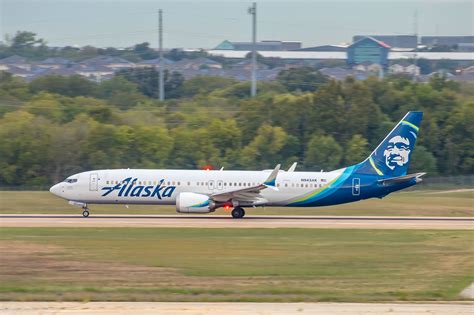
What truly sets Alaska apart is its unwavering commitment to a single-manufacturer fleet philosophy. After gradually phasing out Airbus aircraft following its merger-era transitions, the airline has streamlined pilot training, spare parts logistics, and maintenance procedures. This focus translates into tangible benefits: fewer delays, lower costs, and a more predictable passenger experience.
Beyond its mainline fleet, Alaska’s regional arm, Horizon Air, operates Embraer E175 jets that feed traffic into its hubs. While technically outside the narrowbody category, these aircraft play a crucial supporting role, ensuring that even smaller markets remain connected to Alaska’s broader network.
In a world where bigger often means better, Alaska demonstrates that clarity of strategy can rival sheer scale.
4. Southwest Airlines: The Power of a Single Aircraft Type
Few airlines in the world are as synonymous with a single aircraft as Southwest Airlines is with the Boeing 737. With an astonishing 800 narrowbody aircraft, Southwest doesn’t just operate one of the largest fleets in the United States—it commands the largest 737 fleet on the planet.
This uniformity is no accident. Southwest’s entire business model is built around fleet commonality, enabling unparalleled efficiency in crew scheduling, maintenance, and operations. Whether it’s a 737-700 or a 737 MAX 8, pilots can transition seamlessly between aircraft, minimizing downtime and maximizing utilization.

The fleet itself tells a story of transition. The 737 MAX 8, with over 300 aircraft in service, represents the airline’s future—modern, fuel-efficient, and optimized for higher passenger comfort. Meanwhile, the aging 737-700 fleet, averaging nearly two decades old, is gradually being retired. These smaller jets have long been essential for lower-demand routes, but their replacement by the anticipated 737 MAX 7 signals a new era.
Complementing these are nearly 200 737-800 aircraft, which strike a balance between capacity and efficiency. Together, these variants allow Southwest to maintain its high-frequency, point-to-point network while adapting to fluctuating demand.
The brilliance of Southwest’s approach lies in its simplicity. By avoiding fleet fragmentation, the airline achieves operational resilience and cost leadership that few competitors can match. It’s a reminder that sometimes, doing one thing exceptionally well beats doing many things adequately.
3. Delta Air Lines: Mastering Diversity in Narrowbody Operations
Delta Air Lines takes a radically different approach. With 817 narrowbody aircraft spanning multiple families, Delta has built the most diverse single-aisle fleet in the United States—and arguably the most versatile.
From the compact Airbus A220 to the larger Boeing 757, Delta’s fleet covers an extraordinary range of capacities and mission profiles. This diversity allows the airline to match aircraft size precisely to route demand, optimizing both load factors and profitability.

The Airbus A321 and Boeing 737 fleets form the backbone of Delta’s domestic operations, handling high-frequency routes between major hubs like Atlanta, Detroit, and New York. Meanwhile, the A220 has emerged as a quiet star, offering exceptional passenger comfort and fuel efficiency on thinner routes.
What’s particularly intriguing is Delta’s willingness to retain older aircraft. Jets like the Boeing 717 and Airbus A320, despite their age, continue to serve shorter routes where their economics remain viable. This pragmatic approach allows Delta to extract maximum value from its assets while gradually introducing newer models.
Delta is also pushing the boundaries of what narrowbodies can do. Its premium-configured A321neo aircraft, featuring lie-flat seats, are redefining transcontinental travel. Suddenly, flying coast-to-coast on a single-aisle jet doesn’t feel like a compromise—it feels intentional.
In Delta’s hands, fleet diversity isn’t a liability—it’s a competitive advantage rooted in precision and adaptability.
2. United Airlines: Scale Meets Innovation in a Global Network
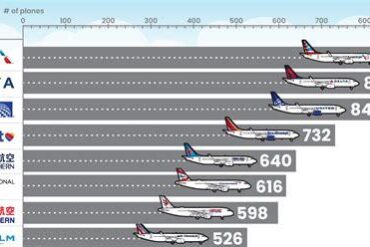
United Airlines operates 860 narrowbody aircraft, making it one of the most formidable players in the U.S. aviation landscape. But what truly distinguishes United is how it leverages this fleet across both domestic and international markets.
Its narrowbody lineup is split between a substantial Airbus A320 family fleet and an even larger collection of Boeing 737 variants. With nearly 600 737s, United relies heavily on Boeing’s workhorse to sustain its vast network, particularly from hubs like Chicago O’Hare, Newark, and Denver.
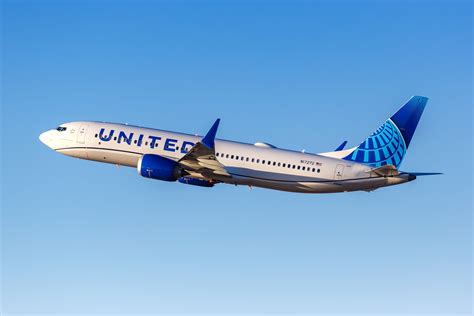
The airline’s investment in the Airbus A321neo marks a significant shift toward modernization. These aircraft, among the newest in United’s fleet, offer improved fuel efficiency and enhanced passenger amenities. More notably, United is introducing premium-heavy configurations under its “Coastliner” concept, bringing long-haul comfort to domestic routes.
United’s ambitions extend even further with the upcoming A321XLR, a game-changing aircraft capable of transatlantic flights. This opens the door to thinner international routes that would be uneconomical with widebody jets, effectively blurring the line between short-haul and long-haul operations.
Another unique aspect of United’s narrowbody strategy is its Pacific network. With 737 bases in Guam, the airline uses these aircraft to connect remote destinations across Asia and Oceania—routes that demand both range and reliability.
By combining sheer scale with forward-looking investments, United has created a fleet that is not only massive but also strategically future-proof.
1. American Airlines: The Undisputed Leader in Narrowbody Dominance
At the top of the ranking stands American Airlines, commanding an extraordinary 884 narrowbody aircraft. This immense fleet cements its position as the largest narrowbody operator in the United States—and one of the most influential globally.
American’s fleet is notably Airbus-heavy, with more than half of its narrowbodies coming from the A320 family. The Airbus A321, in particular, plays a central role, with over 300 aircraft serving as the backbone of its domestic network. These jets are a common sight at hubs like Phoenix and Philadelphia, where their capacity and efficiency shine.
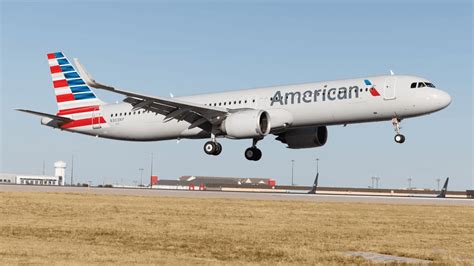
On the Boeing side, American operates large numbers of 737-800 and 737 MAX 8 aircraft, both configured with consistent cabin layouts that simplify the passenger experience. This dual-manufacturer strategy provides flexibility, allowing the airline to deploy the right aircraft based on route demand and operational considerations.
What truly elevates American’s fleet strategy is its embrace of innovation. The introduction of the Airbus A321XLR represents a bold step forward, enabling long-haul routes with a narrowbody aircraft. From transcontinental services to transatlantic flights, these jets are redefining the boundaries of single-aisle travel.
American has also experimented with premium-heavy configurations, such as the now-evolving A321T subfleet, which brought widebody-style luxury to domestic routes. While these aircraft are being phased into more standardized layouts, they highlight the airline’s willingness to push the envelope.
With unmatched scale and a clear vision for the future, American Airlines doesn’t just lead—it sets the pace for the entire industry.
The Strategic Battle Behind the Numbers
Beneath the surface of these fleet sizes lies a deeper narrative about how airlines compete. Narrowbody aircraft are no longer just short-haul tools; they are strategic assets capable of reshaping networks, opening new routes, and enhancing passenger experiences.
Airlines like Southwest prove the power of simplicity and consistency, while Delta showcases the benefits of diversity and precision. United bridges domestic and international markets with innovation, and American leverages sheer scale to dominate key routes. Alaska, meanwhile, demonstrates that a focused approach can still carve out a strong position in a highly competitive field.
As new aircraft technologies continue to emerge, the gap between narrowbody and widebody capabilities will only shrink. Longer ranges, better fuel efficiency, and improved cabin designs are transforming what passengers can expect from a single-aisle jet.
In this evolving landscape, one thing is certain: the airlines that master their narrowbody fleets will continue to shape the future of air travel in the United States—and far beyond.