Military strength is often measured by fighter jets, bombers, and advanced missile systems. Yet behind every deployment, humanitarian mission, overseas operation, and rapid-response contingency lies a less glamorous but equally decisive capability: airlift. Transport aircraft are the backbone of modern military logistics, enabling nations to move troops, armored vehicles, ammunition, humanitarian supplies, and strategic assets across continents in a matter of hours.
In the modern era, the ability to project power far beyond national borders depends heavily on transport fleets. An air force may possess hundreds of combat aircraft, but without a substantial transport arm, sustaining military operations abroad becomes extraordinarily difficult. This reality explains why the world’s largest military powers invest heavily in strategic and tactical airlift capabilities.
Comparing transport fleets, however, is more complicated than simply counting aircraft. Nations operate different classes of transports, ranging from massive strategic lifters capable of carrying tanks across oceans to smaller turboprop aircraft designed for regional logistics. Many tanker aircraft also perform transport missions, further blurring the distinction between categories. Nevertheless, when transport aircraft inventories are examined closely, a clear hierarchy emerges among the world’s leading air forces.
The United States stands far above every competitor, while Russia, China, and several major European powers form the next tier of global airlift capability.
Why Measuring Military Transport Fleets Is So Difficult
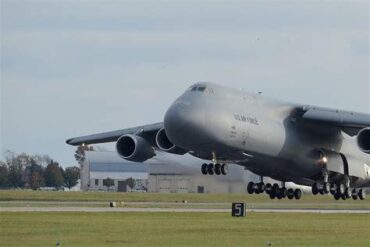
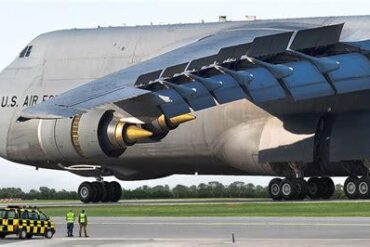
Ranking transport aircraft fleets is not as straightforward as counting fighter jets. Military transport inventories often contain aircraft of vastly different capabilities. A single Lockheed C-5M Super Galaxy can carry cargo loads that would require several smaller transports to match. Consequently, a fleet of fifty heavy transports may possess greater operational value than hundreds of light aircraft.
Another challenge involves transparency. Many countries do not publicly disclose accurate inventory numbers. Open-source analysts frequently rely on satellite imagery, procurement records, maintenance reports, and aircraft sightings to estimate fleet sizes. While these methods are often effective, they can mistakenly include aircraft that are grounded, stored, or awaiting repair.
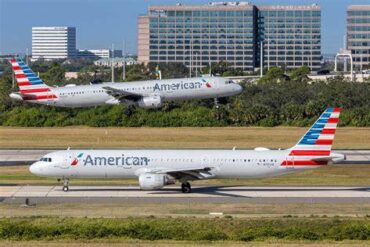
The distinction between military and civilian operators further complicates matters. Numerous governments rely on commercial aviation companies that maintain close relationships with military logistics networks. Aircraft may officially belong to private firms while routinely supporting national defense requirements. This arrangement is common across multiple regions and can significantly expand a country’s practical airlift capacity beyond officially reported military inventories.
Tanker aircraft present another challenge. Modern aerial refueling aircraft such as the KC-46 Pegasus, KC-135 Stratotanker, and Airbus A330 MRTT are not dedicated cargo planes, yet they regularly transport personnel and freight. Including or excluding these aircraft can dramatically alter transport fleet rankings.
The United States Air Force: The Unchallenged Global Leader
No military organization on earth possesses a transport fleet comparable to that of the United States Air Force. Its dominance extends not only in aircraft numbers but also in operational reach, cargo capacity, and global infrastructure.
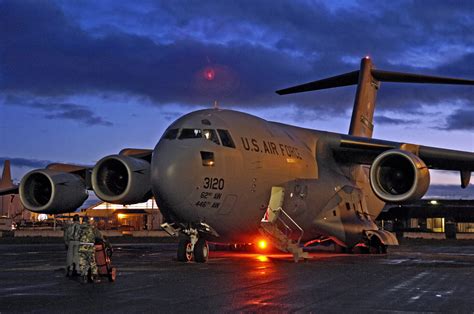
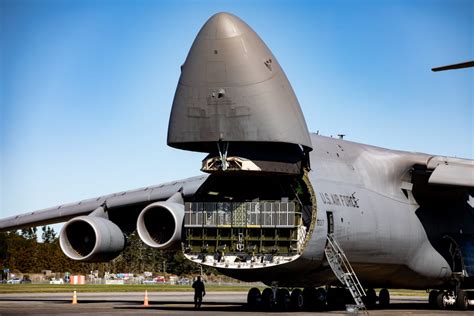
At the heart of American strategic airlift are two legendary aircraft: the Lockheed C-5M Super Galaxy and the Boeing C-17 Globemaster III. The USAF operates approximately 52 C-5Ms and around 222 C-17s, creating an unmatched heavy-lift capability capable of transporting tanks, helicopters, armored vehicles, and oversized cargo anywhere in the world.
The C-5M remains one of the largest military aircraft ever built. Its cavernous cargo hold allows it to carry loads that few other aircraft can accommodate. Meanwhile, the C-17 combines impressive payload capacity with the ability to operate from shorter and more austere airfields, making it indispensable during both military and humanitarian missions.
American transport aircraft are continuously active across multiple theaters. Flights routinely connect North America with Europe, the Middle East, East Asia, Africa, and South America. Unlike most nations, the United States maintains an extensive network of overseas bases that require constant logistical support.
A crucial advantage enjoyed by the USAF is its aerial refueling infrastructure. Most American strategic transports can receive fuel in flight, dramatically extending their operational range and allowing heavier payloads on long-distance missions. This capability gives the United States a level of strategic mobility unmatched by any rival.
When tanker aircraft are included, the gap becomes even larger. The USAF operates more than 300 KC-135 Stratotankers and roughly 100 KC-46 Pegasus aircraft, all of which possess significant cargo and passenger transport capabilities. Adding these aircraft effectively increases America’s transport fleet by hundreds of additional airframes.
Strategic Airlift: America’s Greatest Advantage
Strategic airlift refers to the movement of personnel and equipment over intercontinental distances. It is one of the most difficult military capabilities to build because it requires large aircraft, advanced logistics networks, trained crews, and substantial financial resources.
The United States has spent decades perfecting this capability. American transports can deploy forces almost anywhere on the globe with remarkable speed. Whether responding to natural disasters, reinforcing allies, evacuating civilians, or supporting combat operations, the USAF routinely demonstrates a level of responsiveness that no other air force can consistently match.
This global reach was evident during operations in Afghanistan, Iraq, Eastern Europe, and countless humanitarian missions worldwide. The ability to sustain military operations thousands of miles from home remains one of America’s defining strategic advantages.
Russia’s Large but Challenged Transport Fleet
Russia maintains the world’s second-largest strategic transport fleet, although significant questions surround its actual operational readiness.
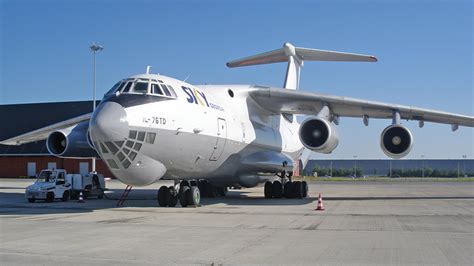
The backbone of Russian military airlift is the Ilyushin Il-76, a four-engine heavy transport that has served for decades as a workhorse of Soviet and Russian logistics. Current estimates suggest that approximately 130 transport-configured Il-76 aircraft remain in service.
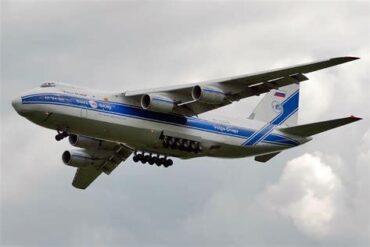
Supporting the Il-76 fleet is the massive Antonov An-124 Ruslan, one of the largest cargo aircraft ever produced. Although inventory figures vary, analysts generally estimate that only around 10 to 15 An-124s remain operational within Russian service.
On paper, Russia appears to possess impressive transport capacity. In reality, maintenance challenges, aging airframes, sanctions, and industrial limitations have created significant obstacles. Many aircraft reportedly require repairs or extensive modernization. As a result, nominal inventory numbers may overstate actual operational capability.
Russia’s transport ecosystem is also unusual because of its reliance on aircraft operated by organizations with close ties to government logistics networks. Some cargo carriers function in a gray area between civilian and military operations, making accurate fleet assessments difficult.
Despite these challenges, Russia continues to invest in new Il-76 production. The aircraft remains one of the few heavy strategic transports still being manufactured today. Moscow views transport aviation as a critical national capability and is actively seeking to offset losses and replace aging aircraft.
China’s Rapidly Growing Airlift Capability
China has transformed nearly every aspect of its military over the past two decades, and transport aviation is no exception.
Historically, the People’s Liberation Army Air Force relied heavily on imported Soviet-designed aircraft, particularly the Il-76. While these transports remain in service, China has increasingly shifted toward indigenous solutions.
The centerpiece of this modernization effort is the Xi’an Y-20. Entering service in 2016, the Y-20 represents China’s first domestically developed strategic transport aircraft. Analysts estimate that roughly 100 Y-20s are currently operational, alongside approximately 20 remaining Il-76 transports.
The Y-20 has become a symbol of China’s growing aerospace capabilities. Its development demonstrates Beijing’s determination to reduce dependence on foreign suppliers while expanding military self-sufficiency.
Despite impressive growth, China’s transport fleet remains smaller than those of the United States and Russia. This reflects China’s strategic priorities. Unlike Washington, Beijing maintains relatively few overseas military bases and possesses fewer global commitments requiring constant airlift support.
Nevertheless, the expansion of the Y-20 fleet suggests that China intends to strengthen its power-projection capabilities significantly. As aircraft production continues, the PLAAF’s transport capacity is expected to increase steadily throughout the coming decade.
Europe’s Airlift Backbone: The Airbus A400M Atlas
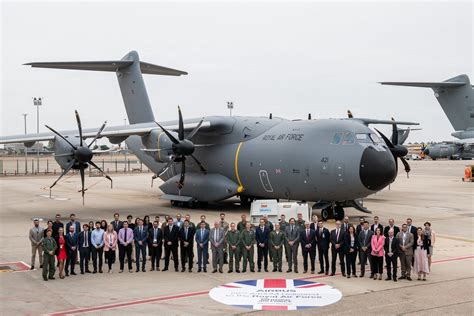
Europe’s leading air forces have increasingly standardized around a common transport platform: the Airbus A400M Atlas.
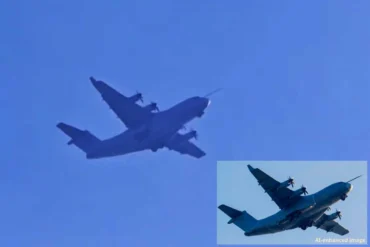
Designed to bridge the gap between tactical and strategic airlift, the A400M combines substantial payload capacity with the ability to operate from shorter runways. This flexibility has made it an attractive option for numerous European nations.
Germany is currently the largest A400M operator, fielding approximately 53 aircraft. France follows with around 25, while the United Kingdom operates roughly 22. Spain, Turkey, Belgium, and Luxembourg also maintain smaller fleets.
The A400M has become a cornerstone of European military logistics. Its ability to transport troops, vehicles, helicopters, and humanitarian supplies makes it suitable for a broad range of missions.
The Royal Air Force occupies a unique position within Europe because it remains the continent’s only national operator of the Boeing C-17 Globemaster III. The RAF’s fleet of eight C-17s provides Britain with strategic airlift capabilities beyond those offered by the A400M alone.
In addition, three multinational C-17s are operated under the Strategic Airlift Capability program, allowing participating nations access to heavy-lift resources that would otherwise be difficult to afford individually.
India and Other Significant Transport Operators
Outside the major powers, India possesses one of the world’s most capable military transport fleets.
The Indian Air Force operates a mix of 11 Boeing C-17 Globemaster III aircraft and approximately 17 Il-76 transports. This combination provides substantial strategic airlift capacity across South Asia and beyond.
India’s geographic position and security environment make transport aviation particularly important. Rapid movement of personnel and equipment across vast distances, including mountainous border regions, requires dependable airlift assets.
Several other nations maintain smaller but noteworthy strategic transport fleets. Australia, Canada, Qatar, Kuwait, and the United Arab Emirates all operate C-17 aircraft. Kazakhstan, Malaysia, and Indonesia have adopted the Airbus A400M. Numerous countries continue to operate Il-76 variants acquired over previous decades.
Although these fleets are relatively modest in size, they provide valuable strategic flexibility and contribute to coalition operations, humanitarian assistance missions, and regional security efforts.
The Crucial Role of Tactical Transport Aircraft
While strategic transports often receive the most attention, tactical airlifters form the foundation of military logistics worldwide.
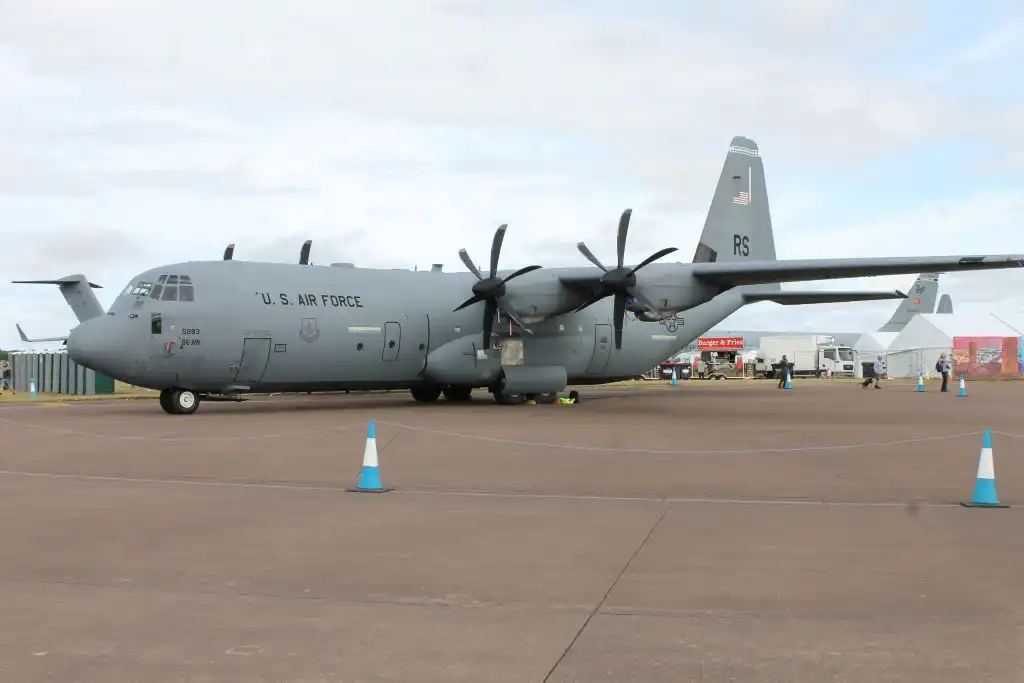
Aircraft such as the Lockheed C-130 Hercules, Airbus CN-235, Embraer C-390 Millennium, and various Antonov models perform the majority of routine military transport missions. These aircraft deliver supplies to remote locations, support airborne operations, evacuate casualties, and sustain forward-deployed forces.
The United States operates hundreds of C-130 variants across multiple military branches. The fleet includes both legacy Hercules aircraft and newer C-130J Super Hercules models, providing immense flexibility for tactical operations.
Russia similarly relies on a large inventory of Antonov transports. However, maintenance difficulties and aging fleets have raised concerns regarding long-term sustainability. Analysts increasingly point to replacement challenges that could affect future Russian transport capacity.
Tactical transports rarely generate headlines, yet they perform the day-to-day missions that keep military organizations functioning efficiently.
How Tanker Aircraft Change the Rankings
Including tanker aircraft dramatically reshapes the global transport landscape.
Modern tankers are essentially flying logistics platforms capable of transporting cargo, personnel, and equipment alongside their refueling mission. Aircraft such as the KC-46 Pegasus, KC-135 Stratotanker, Airbus A330 MRTT, and Il-78 significantly enhance national airlift capabilities.
No country benefits more from this dual-role capability than the United States. With over 400 tanker aircraft possessing transport functionality, America’s lead becomes overwhelming.
Other nations also gain substantial advantages. The United Kingdom operates Voyager MRTTs, France fields A330 MRTTs, and countries such as Saudi Arabia, Singapore, and Israel employ tanker fleets that contribute meaningfully to transport operations.
During major evacuations and humanitarian missions, these aircraft often serve alongside dedicated cargo transports, demonstrating their value as multipurpose assets.
The Global Airlift Hierarchy
Measured purely by transport aircraft numbers, the United States occupies a category of its own. Its combination of C-5Ms, C-17s, C-130s, and hundreds of tanker-transports creates an airlift network without equal.
Russia remains second in overall capacity, though questions about fleet readiness and modernization continue to influence assessments. China follows closely behind, driven by rapid Y-20 production and expanding strategic ambitions. Europe’s leading powers, particularly Germany, France, and the United Kingdom, maintain highly capable fleets centered around the Airbus A400M.
Ultimately, transport aircraft determine how quickly military power can move from one place to another. Fighters may dominate headlines and warships may symbolize national prestige, but airlift fleets provide the mobility that turns military potential into operational reality. In an era defined by rapid response, global commitments, and complex logistics, transport aviation remains one of the most important indicators of true military power.