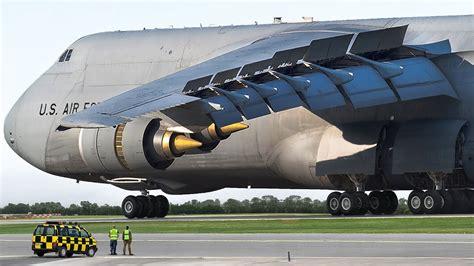
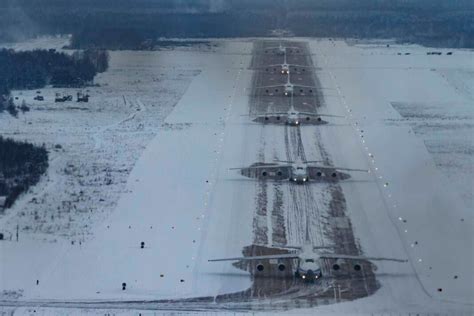
The Lockheed C-5 Galaxy is one of the most recognizable heavy airlifters ever built. It is enormous, unmistakable, and still strategically vital to the United States Air Force decades after its first flight in 1968. Yet one detail often surprises aviation observers: the aircraft has no winglets. In an era where modern airliners and many military transports wear upward-curved wingtips to reduce drag and save fuel, the Galaxy still flies with clean, traditional wing ends.
That absence is not an oversight. It is the result of engineering logic, historical timing, structural realities, and mission priorities. Winglets are useful tools, but they are not magic devices that automatically improve every airplane. On a giant aircraft like the C-5, the equation becomes more complicated.
To understand why the largest military transport aircraft in the United States never adopted winglets, it helps to look beyond appearance and into how aircraft are actually designed: every pound, every inch of span, and every mission requirement matters.
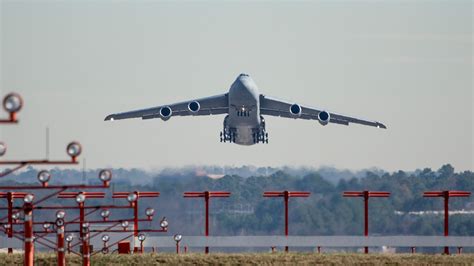
The C-5 Galaxy Was Designed Before Winglets Became Mainstream
The simplest explanation begins with timing. The C-5 Galaxy first flew on June 30, 1968. At that point, winglets were not yet standard aviation technology. NASA aerodynamicist Richard Whitcomb would later pioneer much of the research that proved how wingtip devices could reduce induced drag, but those breakthroughs matured in the 1970s and reached production aircraft years later.
By the time winglets became practical, the C-5 was already an operational aircraft with an established wing design, production system, maintenance ecosystem, and mission doctrine. Retrofitting a mature aircraft is far more difficult than adding a feature during clean-sheet development.
That timing matters because aircraft wings are not accessories bolted on like spoilers or cabin seats. They are highly stressed structures. Changing the tip of a wing changes loads across the entire wing.
A Giant Wing Already Solves Part of the Problem
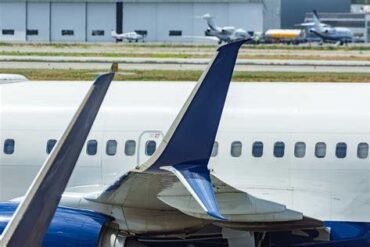
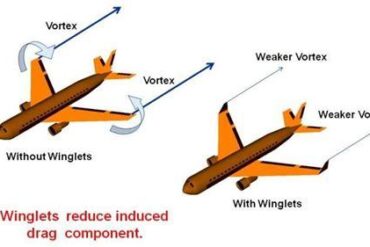
Winglets exist mainly to reduce induced drag, which is created by wingtip vortices. Designers can reduce that drag in two broad ways: make the wing more efficient with added span, or use wingtip devices that mimic some benefits of greater span.
The C-5 already has a wingspan of about 222 feet (67.9 meters). That is massive. A long wing naturally reduces induced drag better than a short wing because lift is distributed over a larger span.
In other words, the Galaxy already owns one of the most effective anti-drag tools available: a very large wing.
That means winglets would provide smaller marginal gains than they might on narrower-span aircraft. If an airplane already has substantial span, each additional aerodynamic improvement tends to deliver diminishing returns.
Winglets Add More Than Efficiency — They Add Loads
Winglets look elegant, but structurally they are demanding. When airflow pushes on a winglet, that force creates extra bending moment at the wingtip. The result is more stress traveling inward through the wing.
On a smaller aircraft, reinforcing the structure may be manageable. On a giant strategic airlifter carrying extreme payloads, reinforcement can become expensive, heavy, and operationally intrusive.
Every pound added to the wing structure is a pound that cannot be used for cargo, vehicles, equipment, or fuel. For a military transport whose purpose is moving heavy loads across continents, payload matters more than style points.
This is where commercial and military priorities diverge sharply. Airlines often accept modifications that save fuel over years of daily service. Military planners may prefer to preserve payload margin, reliability, and fleet availability.
The C-5 Already Uses Sophisticated Load Management
The Galaxy is not a crude old giant. It includes systems specifically intended to manage wing stress. One of the most interesting is the Active Load Distribution Control System (ALDCS), which helps reduce bending loads by adjusting control surfaces.
That means the aircraft already has a method of managing structural loads in flight. Introducing winglets would require engineers to re-evaluate how those added tip forces interact with an aircraft that already uses active load-management logic.
That is not impossible—but it is expensive, time-consuming, and certification-heavy. On an aging fleet, the return on investment becomes harder to justify.
Military Missions Reward Different Priorities Than Airlines
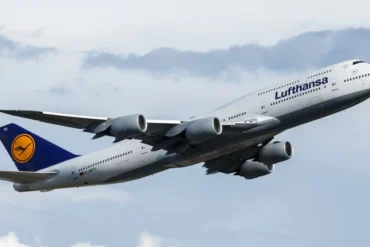
Winglets became common partly because commercial aviation relentlessly chases lower cost per seat-mile and cost per ton-mile. A small fuel burn reduction multiplied across thousands of annual flights can mean millions of dollars.
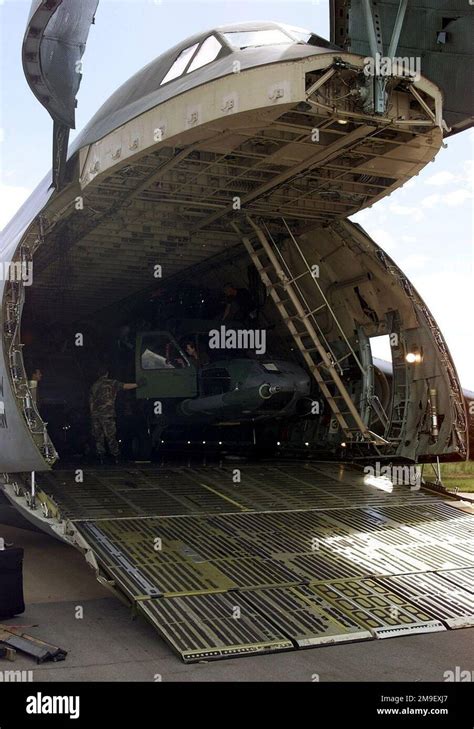
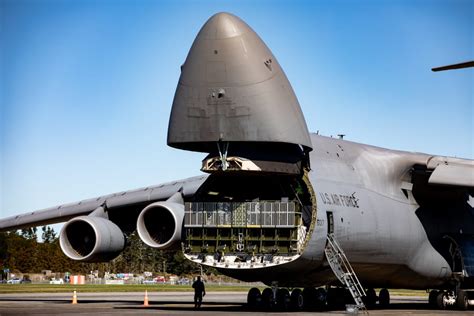
The C-5 does not operate like a domestic airline fleet. It performs strategic lift missions: oversized cargo, armored vehicles, helicopters, engines, humanitarian aid, and rapid global deployment.
Its value is measured less by pennies per mile and more by questions such as:
- Can it move outsized cargo quickly?
- Can it launch reliably when needed?
- Can it carry more payload farther?
- Can it remain available during crises?
If winglets save some fuel but complicate maintenance, reduce payload, or require long retrofit downtime, military decision-makers may choose differently than an airline CFO.
The C-17 Has Winglets — So Why Not the C-5?
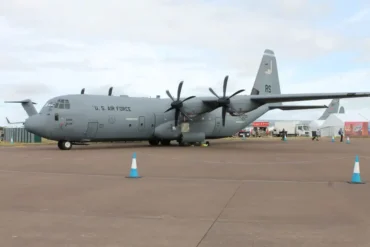
A common comparison is the Boeing C-17 Globemaster III, which does use winglets. That seems like proof the C-5 should have them too. But these aircraft were built for different eras and missions.
The C-17 first flew in 1991, long after winglet technology matured. Designers could integrate them from day one. It was also intended to combine strategic range with tactical performance, including shorter and rougher runways.
Its aerodynamic package reflects that mixed mission: modern wing design, efficient cruise characteristics, and strong low-speed performance.
The C-5, by contrast, was designed primarily as a strategic heavy hauler operating from substantial runways. It carries larger loads and prioritizes sheer capacity. The tradeoffs are different.
So the presence of winglets on the C-17 does not automatically mean they make sense for the C-5.
Engineers Did Study Winglets for the C-5
This was not ignored. Studies reportedly examined adding winglets to the upgraded C-5M Super Galaxy. Some analyses suggested range improvements in the neighborhood of 3%.
That is meaningful—but context matters.
A 3% gain sounds attractive until compared with the cost of structural redesign, integration, testing, maintenance updates, downtime, and fleet-wide retrofit execution. Then decision-makers ask a tougher question: Is there a better place to spend the money?
For the C-5 modernization program, one clear answer was engines.
Engines Delivered Bigger Gains Than Winglets
The Reliability Enhancement and Re-engining Program (RERP) transformed the fleet into the C-5M standard with modern GE CF6-80C2 engines and extensive systems upgrades.
Those changes delivered major benefits:
- More thrust
- Better climb performance
- Shorter takeoff distances
- Improved reliability
- Better dispatch readiness
- Reduced maintenance burden
Compared with that scale of improvement, winglets offered narrower gains. Budgets are finite, and aviation modernization always forces priorities. In practical terms, engines beat winglets.
Airport Limits That Shape Airliners Do Not Shape the C-5
Commercial airliners often use winglets because airports impose gate spacing and wingspan categories. Airlines cannot always make wings longer without creating airport compatibility problems.
Winglets become a clever workaround: gain some aerodynamic benefit vertically rather than horizontally.
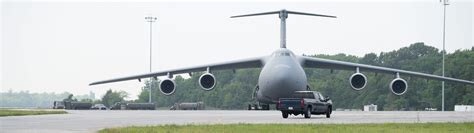
Military transports operate under different constraints. The C-5 commonly uses military bases and airfields where airline gate geometry is not the primary design driver. If future efficiency ever demanded span changes, the constraint environment would differ from that of crowded civilian terminals.
That reduces one of the strongest reasons winglets became so common on passenger jets.
Wake Turbulence Is Less of a Driver
Winglets can also help reduce the strength of wingtip vortices, which matter in busy commercial traffic flows. Stronger vortices can require greater spacing between aircraft, limiting runway throughput.
At congested civilian hubs, this matters.
The C-5 does not spend its life joining lines of narrowbody jets departing every ninety seconds. It often operates in military traffic patterns, special mission windows, or less congested environments. Wake management remains important, but it is not the same economic bottleneck.
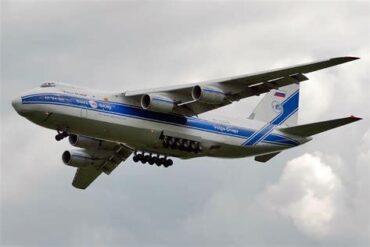
The Antonov An-124 Reached a Similar Conclusion
Another revealing comparison is the Antonov An-124 Ruslan, another giant Cold War-era heavy transport. It also lacks winglets.
Two rival aerospace traditions—American and Soviet/Ukrainian—produced enormous military airlifters with similar conclusions: big span, heavy payload, conventional tips.
That convergence suggests the decision was not accidental. It reflected the realities of designing giant cargo aircraft in that era.
Could the C-5 Ever Receive Winglets Now?
Technically, yes. Almost any aircraft can be modified if funding, engineering time, and strategic need align.
Practically, it appears unlikely. The fleet is aging, and long-term attention is increasingly focused on future airlift concepts, including the Next-Generation Airlift effort. When retirement horizons become visible, expensive structural retrofits become harder to justify.
Why invest heavily in wingtip devices for a mature fleet when those resources may be better spent on replacement capability?
The Real Lesson: Good Design Is About Tradeoffs
The lack of winglets on the C-5 Galaxy does not mean the aircraft is outdated or inefficient by default. It means aircraft design is never about one fashionable feature.
Winglets are valuable when they solve the right problem at the right cost. On the C-5, engineers faced a different equation:
- Already large wingspan
- High structural penalties
- Payload sensitivity
- Existing load-management systems
- Better modernization alternatives
- Military mission priorities over airline economics
Under those conditions, clean wingtips remained the smarter answer.
Final Verdict: Why the Largest US Military Transport Has No Winglets
The Lockheed C-5 Galaxy lacks winglets because it was born before the winglet era, already possesses a huge efficient wing, and would require costly structural changes for modest gains. When modernization dollars became available, engines and reliability upgrades delivered far greater returns.
So the answer is not that winglets would never work. It is that they were never the best investment.
That is classic aerospace engineering: not chasing trends, but choosing what matters most. And for the C-5, what mattered most was carrying massive loads around the world—exactly what it still does today.