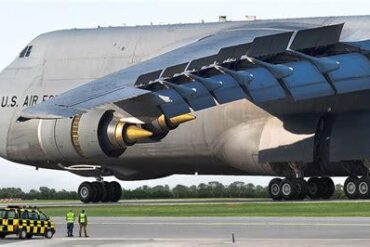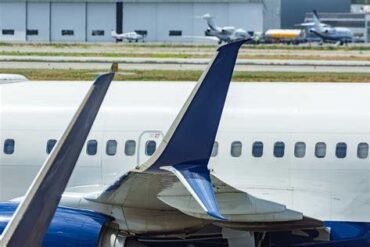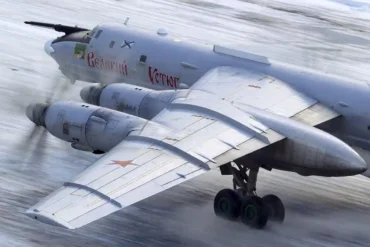
The absence of winglets on some of the fastest and most advanced commercial aircraft is not an oversight—it is a deliberate, highly optimized engineering decision. While winglets have become a familiar feature on modern airliners, symbolizing efficiency and innovation, their absence on aircraft like the Boeing 747-8 reveals a deeper truth about aerodynamics: the most elegant solutions often eliminate the need for visible fixes altogether.
To understand why, it is necessary to move beyond the surface-level assumption that winglets are always beneficial. In reality, aircraft design is a balancing act between aerodynamic efficiency, structural integrity, operational constraints, and mission profile. Winglets are just one tool in a much broader design toolkit—and for certain aircraft, they are not the best one.
The Boeing 747-8, one of the fastest large commercial aircraft in service, embodies this philosophy. Instead of relying on traditional winglets, it uses a more integrated aerodynamic approach that achieves superior efficiency in a cleaner, more refined way.
The Real Purpose of Winglets in Aircraft Design
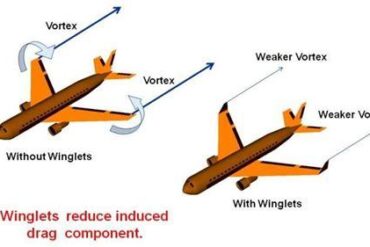
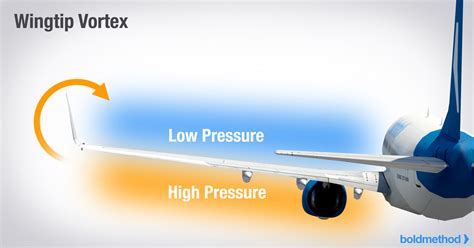
Winglets exist to solve a very specific aerodynamic problem: induced drag, which is an unavoidable consequence of generating lift. As an aircraft flies, high-pressure air beneath the wing naturally tries to move toward the low-pressure region above it. This movement creates swirling air currents at the wingtips known as wingtip vortices.
These vortices are not just visually dramatic—they represent lost energy. They tilt the lift vector slightly backward, effectively converting some useful lift into drag. Over long distances, this inefficiency translates into higher fuel consumption and reduced range.
Winglets mitigate this problem by acting as a vertical barrier that disrupts the formation of these vortices. By reshaping the airflow at the wingtip, they improve the lift-to-drag ratio, allowing aircraft to fly farther using less fuel.
However, this solution comes with trade-offs. Winglets add weight, increase structural loads at the wingtip, and can introduce additional drag at higher speeds. They are not a universal upgrade—they are a compromise shaped by constraints.
Why Winglets Are Not Always the Best Solution
It is tempting to think of winglets as a “free efficiency boost,” but that assumption quickly breaks down under closer scrutiny. From a purely aerodynamic standpoint, the most effective way to reduce induced drag is not to modify the wingtip—it is to extend the wing itself.
A longer wing distributes lift more evenly, reducing the pressure differential that causes vortices in the first place. This is why gliders, which are engineered for maximum efficiency, feature extremely long, slender wings rather than prominent winglets.
So why don’t all aircraft simply use longer wings?
The answer lies in the real world. Aircraft must operate within strict infrastructure limits, including airport gate sizes, taxiway clearances, and runway spacing. These constraints define maximum wingspan categories, such as Code E and Code F classifications used at major international airports.
Winglets emerged as a clever workaround. They provide some of the benefits of increased wingspan without actually increasing the aircraft’s footprint. For many aircraft, especially those designed to fit existing airport infrastructure, this makes them an ideal solution.
But when those constraints are relaxed—or when a new design allows for a larger wing—the logic changes completely.
The Boeing 747-8: A Clean-Sheet Wing Philosophy
The Boeing 747-8 represents a major evolution over its predecessor, the 747-400. Rather than refining the existing wing, Boeing engineers designed an almost entirely new one, optimized for modern performance requirements.
This new wing features:
- A greater wingspan (224 feet 7 inches / 68.4 meters)
- Redesigned airfoil profiles for improved lift distribution
- Advanced materials for better strength-to-weight efficiency
- A shift into Code F airport compatibility, allowing a larger design envelope
These changes allowed engineers to address induced drag at its source instead of relying on add-on devices.
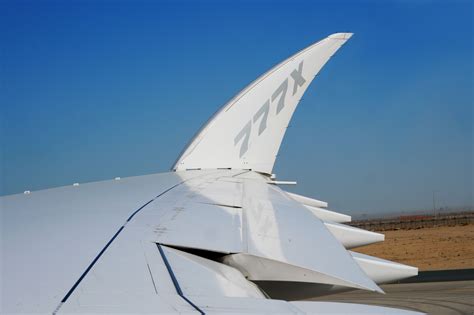
By increasing the wingspan and refining the wing shape, the 747-8 naturally produces less induced drag. This eliminates the need for traditional vertical winglets, resulting in a more aerodynamically efficient and visually streamlined design.
The outcome is not just theoretical. The aircraft achieves up to 16% better fuel efficiency compared to the 747-400, a remarkable improvement for a platform of its size.
Raked Wingtips: The Elegant Alternative to Winglets
Instead of winglets, the 747-8 uses raked wingtips—long, tapered extensions that sweep backward from the main wing. At first glance, they may appear subtle, but their impact on performance is profound.
Raked wingtips function by effectively increasing the aspect ratio of the wing, allowing airflow to transition more gradually off the tip. This reduces the intensity of wingtip vortices without introducing the abrupt geometry of a vertical structure.
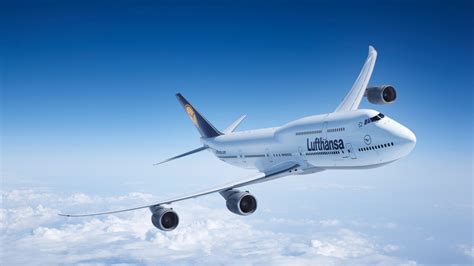
Unlike winglets, which redirect airflow upward, raked tips maintain a smooth, continuous aerodynamic surface. This reduces interference drag and creates a cleaner airflow pattern, particularly at high subsonic cruise speeds, where long-haul aircraft spend most of their time.
The result is an efficiency gain that is not only comparable to winglets—but often superior in the specific operating conditions of large, fast aircraft.
Speed Changes Everything: The High-Subsonic Advantage
One of the most overlooked factors in wingtip design is cruise speed. Winglets are highly effective at reducing induced drag, especially at lower speeds or during climb. However, as speed increases, another form of drag—parasite drag—becomes more significant.
Vertical structures like winglets can contribute to this type of drag, partially offsetting their benefits. For aircraft operating at high subsonic speeds, such as the 747-8, this trade-off becomes critical.
Raked wingtips, by contrast, are better suited to these conditions. Their horizontal extension minimizes additional drag while still reducing vortex strength. This makes them particularly effective for aircraft designed for long-haul, high-speed cruise efficiency.
In simple terms, winglets are excellent for certain missions—but not for all. At the upper end of commercial aviation performance, they can become less advantageous.
Structural Efficiency: The Hidden Engineering Challenge
Aerodynamics is only part of the story. Structural considerations play an equally important role in determining whether winglets are used.
Winglets act like vertical levers at the end of the wing, increasing bending moments at the wing root. This requires additional structural reinforcement, which adds weight and complexity. On a large aircraft, even small increases in structural weight can have significant implications for fuel efficiency and payload capacity.
Raked wingtips distribute loads more evenly along the wing because they extend horizontally rather than vertically. This reduces the stress concentration at the wing root and allows for a lighter, more efficient structure.
For an aircraft as large as the 747-8, this advantage is substantial. The design achieves aerodynamic gains without incurring the same structural penalties, making it a more holistic solution.
Why the 747-400 Needed Winglets
The earlier Boeing 747-400 tells a very different story. Introduced decades before the 747-8, it was constrained by older design parameters and stricter airport compatibility limits.
Its wing could not be significantly extended without major redesign and potential operational limitations. Winglets provided a practical way to improve efficiency within those constraints.
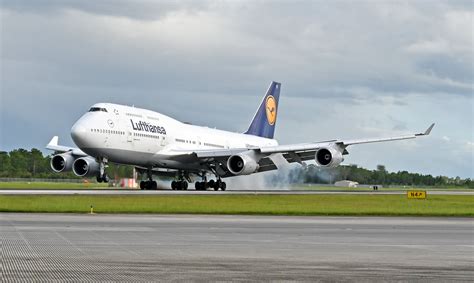
By adding winglets, Boeing was able to reduce induced drag and improve fuel efficiency without changing the aircraft’s overall footprint. At a time of rising fuel costs, this was a highly effective solution.
The key difference lies in design philosophy. The 747-400 used winglets as an add-on improvement, while the 747-8 integrates efficiency directly into the wing itself.
Airport Compatibility and the Freedom to Design Bigger Wings
One of the most decisive factors in the 747-8’s design was its classification as a Code F aircraft. This allowed it to operate at airports equipped to handle larger wingspans, such as Frankfurt, Hong Kong, and Dubai.
This shift gave engineers the freedom to prioritize aerodynamic performance over strict size limitations. Instead of squeezing efficiency into a constrained design, they could expand the wing and optimize it from the ground up.
This flexibility is not available to all aircraft. Many still rely on winglets because they must fit within tighter infrastructure limits. But when those limits are relaxed, the advantages of a longer, cleaner wing become undeniable.
A Broader Shift in Modern Aircraft Design
The evolution from winglets to raked wingtips reflects a broader trend in aerospace engineering: moving from incremental fixes to integrated optimization.
Advances in computational modeling, materials science, and aerodynamic analysis have enabled designers to create wings that inherently minimize drag. Rather than correcting inefficiencies after the fact, modern aircraft aim to eliminate them at the source.
This is why many newer widebody aircraft, including the Boeing 777 and 787 families, also favor raked wingtips or similar designs over traditional winglets.
The Final Answer: It’s About the Right Tool for the Mission
The reason the world’s fastest commercial aircraft often lack winglets is not because winglets are ineffective—it is because they are not always the optimal solution.
For large, long-range aircraft operating at high subsonic speeds, a combination of longer wings, refined airfoils, and raked wingtips provides a more efficient, structurally sound, and aerodynamically clean design.
Winglets remain valuable in many contexts, particularly where wingspan is limited. But when engineers have the freedom to design without those constraints, they often choose a different path—one that achieves better performance through integration rather than addition.
And that, perhaps, is the most satisfying answer of all: sometimes the best engineering solution is the one you don’t notice at first glance.