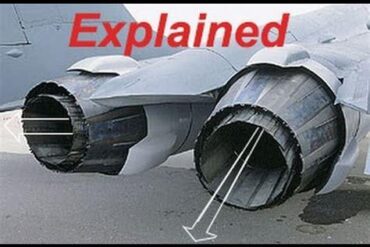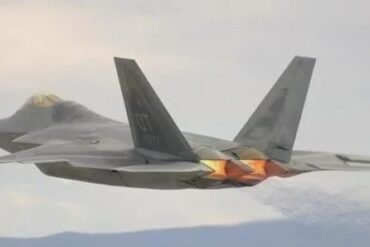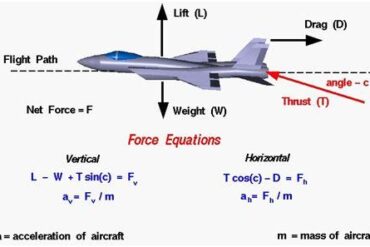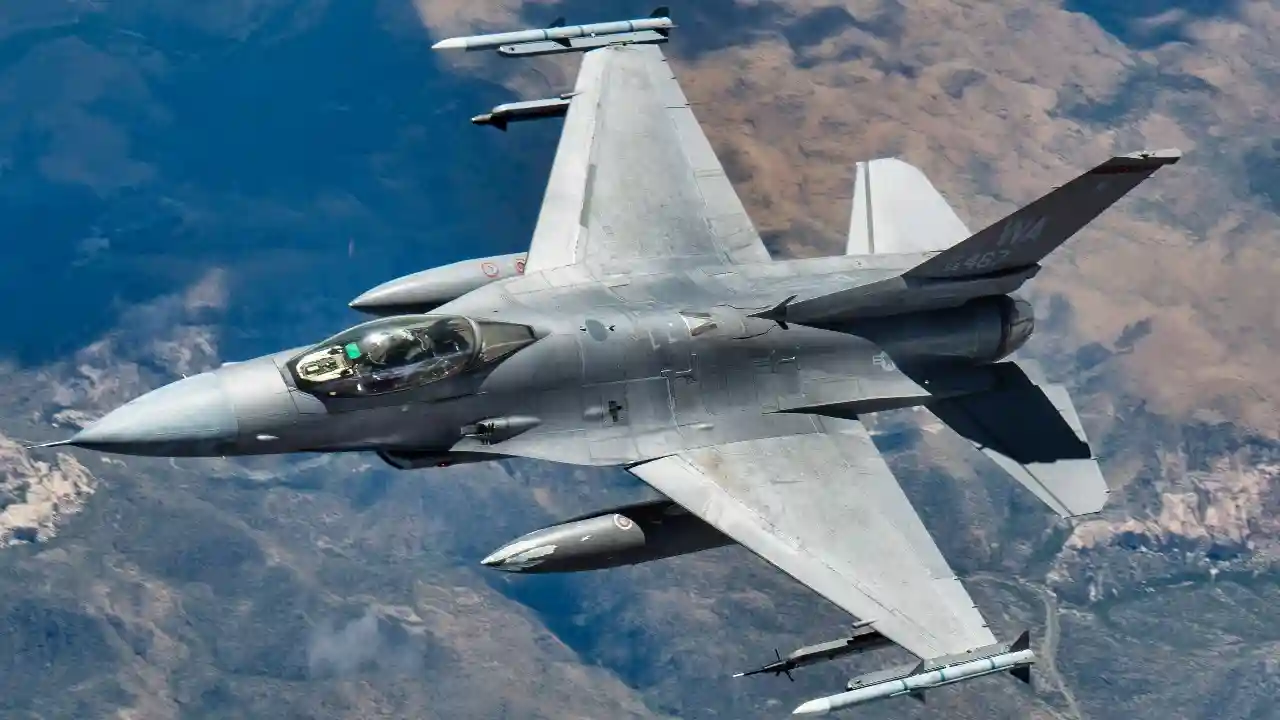
The F-16 Fighting Falcon, often called the “Viper,” stands as one of the most successful fighter aircraft ever built—not just in numbers, but in influence. With more than 4,600 units produced and still rolling off production lines decades after its first flight, it has shaped modern air combat in ways that extend far beyond its own airframe. Yet one question continues to surface among aviation enthusiasts and analysts alike: why doesn’t the world’s most produced fighter jet use thrust vectoring?
At first glance, the absence seems puzzling. After all, thrust vectoring has become synonymous with extreme agility, enabling aircraft like the F-22 Raptor to perform dramatic post-stall maneuvers. But the reality is far more nuanced. The F-16’s design philosophy, operational doctrine, and engineering trade-offs tell a story of precision, efficiency, and deliberate restraint rather than technological omission.
Understanding why the F-16 never adopted thrust vectoring requires stepping back into the era of its creation—a time when dogfights were brutal, lessons were fresh from Vietnam, and engineers were rethinking everything about fighter design.
The Lightweight Fighter Revolution and the Birth of the F-16
The F-16 emerged from the Lightweight Fighter (LWF) program in the early 1970s, driven by a radical idea: a fighter didn’t need to be bigger or more complex to be better—it needed to be smarter, lighter, and more maneuverable. Visionaries like John Boyd and Thomas Christie championed energy-maneuverability (E-M) theory, which emphasized sustaining energy in combat rather than relying on brute force or raw thrust.
The result was an aircraft that prioritized agility over everything else. Early concepts even downplayed heavy radar systems and missile loads, focusing instead on close-in dogfighting dominance. Pilots transitioning into the F-16 often described it as a revelation—an aircraft that felt less like a machine and more like an extension of their own body.
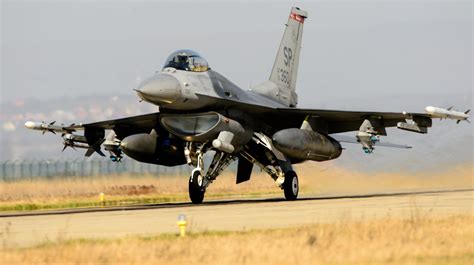
This philosophy shaped every aspect of the jet. The bubble canopy provided unmatched visibility, the side-stick controller revolutionized pilot input, and the aircraft’s lightweight structure ensured exceptional responsiveness. In this context, thrust vectoring wasn’t just absent—it was unnecessary.
Aerodynamics Over Mechanics: The Secret Behind the Viper’s Agility
Instead of relying on thrust vectoring, the F-16 achieved its legendary maneuverability through advanced aerodynamics and innovative stability design. One of its defining features is relaxed static stability (RSS)—a concept that deliberately makes the aircraft inherently unstable.
That might sound like a design flaw, but it’s actually a masterstroke. By placing the center of gravity near or behind the center of lift, the F-16 naturally wants to pitch upward. This instability allows it to change direction rapidly with minimal energy loss, giving it a decisive edge in dogfights.
Traditional aircraft require constant correction to maintain level flight, often generating extra drag. The F-16 flips that logic. Its fly-by-wire system continuously stabilizes the aircraft, allowing the pilot to unleash its natural agility only when needed.
The result?
- Sustained 9G maneuvering capability
- Exceptional turn rates
- Reduced drag during high-performance flight
In practical terms, the F-16 could outturn nearly every adversary of its era without needing the complexity of thrust vectoring.
Fly-By-Wire: The Quiet Revolution That Changed Everything
The F-16 wasn’t just agile—it was digitally revolutionary. It became the first production fighter to feature a fully integrated fly-by-wire (FBW) system, replacing mechanical linkages with electronic controls.
This innovation allowed engineers to push the aircraft’s design into territory that would have been unflyable for a human pilot alone. The flight computer constantly interprets pilot inputs, ensuring stability while maximizing performance.
The side-stick controller further enhanced this relationship. Unlike traditional sticks, it measures force rather than movement, allowing precise control even under extreme G-forces. At 9Gs, when a pilot’s arm effectively weighs nine times more than usual, this design becomes more than convenient—it becomes essential.
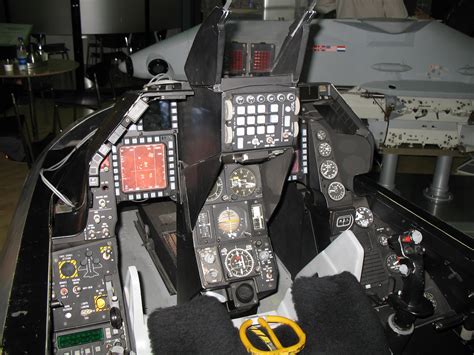
Together, these technologies created an aircraft that didn’t need thrust vectoring because it already operated at the cutting edge of controllable instability.
The Thrust Vectoring Experiment: Tested, Proven, Rejected
It’s not as if thrust vectoring was ignored. In fact, the F-16 became a testbed for some of the most advanced thrust vectoring experiments ever conducted.
The Multi-Axis Thrust Vectoring (MATV) program and the modified NF-16D VISTA (later X-62A) demonstrated astonishing capabilities. These aircraft could reach angles of attack up to 86 degrees, with brief excursions approaching 180 degrees—essentially allowing controlled backward flight.
In close-range engagements, these modified F-16s proved devastatingly effective. They could outmaneuver standard fighters in ways that seemed almost physics-defying.
But there was a catch—and it was a big one.
Energy Bleed: The Hidden Cost of Supermaneuverability
Thrust vectoring enables spectacular maneuvers, but it comes at a price: energy loss. When an aircraft performs extreme post-stall maneuvers, it rapidly bleeds off speed, leaving it vulnerable.
In a real combat scenario, this can turn a fighter into a “sitting duck” if the maneuver doesn’t result in an immediate kill. Modern air combat increasingly favors speed, positioning, and beyond-visual-range (BVR) engagements, where maintaining energy is far more valuable than executing dramatic aerial tricks.
The F-16’s design philosophy aligns perfectly with this reality. Its strength lies in sustaining energy, not sacrificing it for momentary positional advantage.
From a strategic standpoint, adding thrust vectoring would have introduced:
- Increased weight
- Higher maintenance complexity
- Reduced efficiency
- Marginal real-world combat benefit
In other words, it would have compromised the very qualities that made the F-16 exceptional.
Doctrine Shift: Why Dogfights Aren’t What They Used to Be
When the F-16 was conceived, dogfighting was still central to air combat. But over time, the emphasis shifted toward long-range engagements, advanced sensors, and networked warfare.
Missile technology improved dramatically, reducing the likelihood of close-in engagements where thrust vectoring might shine. Modern fighters rely on:
- Advanced radar systems
- Data link networking
- Stealth capabilities
- Electronic warfare suites
In this environment, the ability to perform a post-stall cobra maneuver is far less valuable than the ability to detect, track, and engage an enemy before being seen.
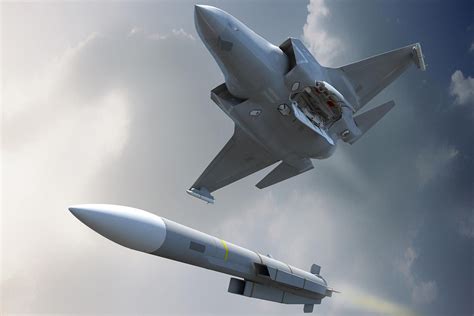
The F-16 adapted accordingly. Instead of chasing extreme agility upgrades, it evolved into a multirole platform with improved avionics, expanded payload capacity, and enhanced survivability.
The Engineering Trade-Off: Simplicity vs Complexity
One of the most underrated aspects of the F-16’s success is its engineering efficiency. Adding thrust vectoring would have complicated an aircraft designed to be affordable, maintainable, and widely exportable.
The Viper’s global success—serving in dozens of air forces—depends heavily on its cost-effectiveness and reliability. Thrust vectoring systems require:
- Specialized maintenance
- More complex engine designs
- Higher operational costs
For many operators, these trade-offs simply don’t make sense. The F-16 delivers 90% of the capability at a fraction of the complexity, which is exactly why it remains in such high demand.
From Viper to Raptor: Where Thrust Vectoring Truly Belongs
While the F-16 never adopted thrust vectoring, its technological legacy made it possible. The lessons learned from programs like MATV directly influenced the development of the F-22 Raptor.
Unlike the F-16, the F-22 was designed from the ground up to integrate:
- Stealth shaping
- Supercruise capability
- Thrust vectoring
The Raptor uses two-dimensional thrust vectoring nozzles to enhance maneuverability without compromising its stealth profile. Combined with its already unstable aerodynamic design, this allows it to perform maneuvers that are simply unattainable for non-vectoring aircraft.
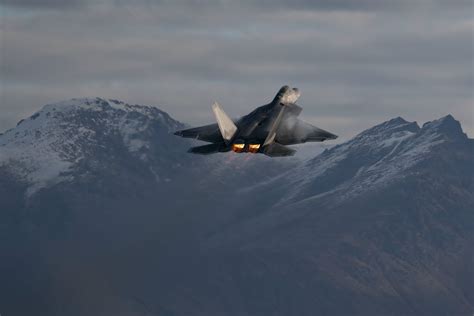
But here’s the key difference: the F-22 was built for air superiority in a high-end conflict, where cost and complexity are secondary concerns. The F-16, by contrast, was built to be versatile, scalable, and globally deployable.
The Enduring Logic: Why the F-16 Still Doesn’t Need It
Even today, as the F-16 faces stealth fighters and advanced adversaries, thrust vectoring remains absent—and for good reason. Modern upgrades focus on:
- Active electronically scanned array (AESA) radars
- Improved electronic warfare systems
- Enhanced data connectivity
- Low observability refinements
These improvements align with how air combat is actually fought in the 21st century. The priority is no longer out-turning an opponent, but out-thinking and out-networking them.
The F-16 continues to thrive because it adapts intelligently rather than chasing every technological trend. Its design already delivers exceptional maneuverability within a practical combat envelope, making thrust vectoring an unnecessary addition rather than a missing feature.
A Fighter That Got It Right the First Time
There’s a certain elegance in the F-16’s story. It didn’t become the world’s most produced fighter by accident—it earned that title through clarity of purpose and disciplined engineering.
Thrust vectoring is undeniably impressive, but it represents a different philosophy of air combat—one that prioritizes extreme maneuverability at the edge of aerodynamic limits. The F-16 chose a different path: balanced performance, energy efficiency, and pilot-centric control.
And decades later, that choice still holds up.
The absence of thrust vectoring isn’t a limitation. It’s a reminder that in aviation, as in life, more technology doesn’t always mean better outcomes. Sometimes, the smartest move is knowing exactly what you don’t need—and building something exceptional without it.