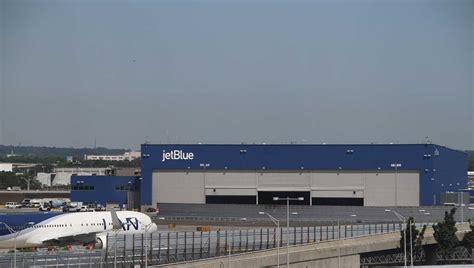
JetBlue’s withdrawal from Long Beach Airport was not a sudden retreat or a pandemic-only casualty. It was the endpoint of a slow-burning conflict where local politics, regulatory rigidity, economics, and network strategy all collided. For nearly twenty years, Long Beach served as JetBlue’s West Coast foothold—a rare coastal base that once promised growth, loyalty, and a distinctive alternative to Los Angeles International Airport. What ultimately broke that relationship reveals far more about the limits of airport governance than about JetBlue’s appetite for competition.
Long Beach Airport is beloved by its neighbors precisely because it does not behave like a major airport. It is small, walkable, and fiercely protected by one of the strictest noise ordinances in the United States. Those protections, however, came with trade-offs. As JetBlue evolved from a scrappy low-cost carrier into a hybrid airline chasing premium revenue and international reach, Long Beach remained frozen in a model designed to resist change. Over time, that mismatch became impossible to ignore.
The exit in 2020 was framed as a consolidation move during COVID-19, but the groundwork had been laid years earlier. Decisions made by the Long Beach City Council, pressure from neighborhood groups, and a hardline interpretation of local rules steadily eroded JetBlue’s ability to operate profitably. By the time demand collapsed in early 2020, the airline had already concluded that Long Beach could no longer support its long-term ambitions.
A Promising West Coast Base That Slowly Lost Its Shine
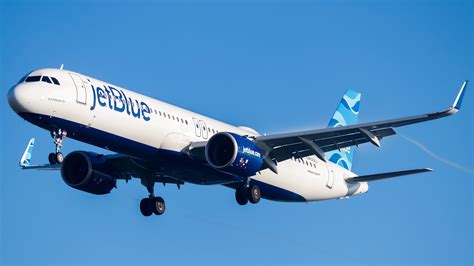
When JetBlue first arrived at Long Beach in 2001, the airport was an ideal fit. It offered lower fees than LAX, less congestion, and a loyal local customer base eager for affordable fares. JetBlue quickly became the dominant carrier, building a network of domestic routes that connected Southern California to the rest of the country. For years, Long Beach was JetBlue’s largest West Coast operation and a rare example of a small airport punching above its weight.
But aviation economics rarely stand still. As JetBlue matured, its cost structure rose, and its strategy shifted toward higher-yield passengers, premium cabins, and international flying. Long Beach, by design, resisted all three. The airport’s slot cap limited growth. Its curfew restricted scheduling flexibility. Its lack of customs facilities blocked international routes altogether. What once felt like a friendly home gradually became a strategic cage.
The Customs Facility Vote That Changed Everything
The turning point came in 2017, when the Long Beach City Council voted overwhelmingly against constructing a modest international customs facility. JetBlue had planned to use Long Beach as a launchpad for flights to Mexico and Central America, routes with strong leisure demand and significantly better margins than short-haul domestic flying. Studies commissioned by the city itself showed the facility would pay for itself through new revenue and tourism.
Despite those findings, the council voted eight to one to kill the project. Opposition was driven largely by fears—bigger aircraft, nighttime operations, environmental harm—even though the airport’s own analysis found little evidence those outcomes would materialize. For JetBlue’s leadership, the message was unmistakable: Long Beach was not interested in evolving with its largest airline tenant.
From that moment, JetBlue began reassessing its future at the airport. The customs vote did not force an immediate exit, but it removed the single most important lever JetBlue needed to improve profitability at Long Beach.
Community Resistance and the Politics of No Growth
Long Beach’s airport policy is deeply shaped by local activism. Neighborhood groups near the airport have long opposed anything resembling expansion, viewing stability—not growth—as success. Organizations such as the Long Beach Small Aircraft Noise Reduction Group exert consistent pressure on city leaders, pushing for tighter enforcement of noise rules and resisting even incremental change.
This political environment made compromise nearly impossible. City officials were acutely aware that relaxing any airport restriction risked lawsuits or, worse, the loss of local control under federal law. As a result, decisions consistently favored preserving the status quo, even when economic studies suggested expansion could be managed without harming residents.
For JetBlue, this translated into a sense that every operational challenge would be met with resistance rather than collaboration.
The Curfew That Cost Millions
Long Beach’s nightly curfew—from 10:00 PM to 7:00 AM—is among the strictest in the country. While it predates JetBlue, the airline quickly became its most frequent violator, largely because of long-haul flights from the East Coast where delays cascade across the national airspace system.
JetBlue argued that many late arrivals were caused by air traffic control delays beyond its control, but Long Beach required extensive documentation for any exemption. In practice, obtaining formal FAA letters for each incident was cumbersome and often unrealistic. The city refused to offer blanket relief, even for nationally driven delays, citing the need to protect the integrity of its noise ordinance.
In 2017 alone, JetBlue paid more than $1.2 million in curfew fines. The city later doubled penalties to $6,000 per violation and eliminated grace periods entirely. What might seem like a manageable nuisance on paper became a persistent financial and operational drain, reinforcing the sense that Long Beach was an unforgiving environment for a growing network airline.
A Grandfathered Ordinance No One Wanted to Touch
Part of Long Beach’s inflexibility stems from history. Its noise ordinance is grandfathered under the 1990 Airport Noise and Capacity Act, making it one of the few in the country with legally protected local control. City leaders feared that granting frequent exemptions—even for federally caused delays—could be interpreted as weakening the ordinance, potentially inviting FAA intervention.
From a legal standpoint, that caution was understandable. From an airline’s perspective, it created a zero-margin-for-error operating environment. JetBlue found itself penalized not for strategic decisions, but for the unpredictable realities of national air traffic flow.
Slot Squatting Accusations and Forced Retreat
As JetBlue’s schedule at Long Beach shrank, tensions escalated. City officials accused the airline of “slot squatting”—holding unused flight slots to block competitors. In response, Long Beach imposed stricter “use it or lose it” rules, requiring airlines to operate at least 70% of their allocated slots.
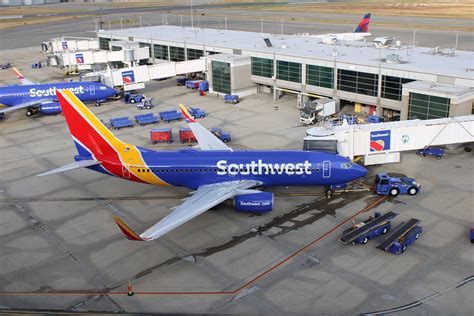
By 2019, JetBlue could not meet those thresholds, in part because it was already reducing service amid mounting constraints. Rather than have slots forcibly reclaimed, JetBlue voluntarily surrendered nearly one-third of them. Those slots were quickly redistributed to Southwest, Delta, and Hawaiian Airlines, effectively dismantling JetBlue’s long-standing dominance at the airport.
JetBlue labeled the move discriminatory, arguing it was retaliation for the customs facility dispute. Regardless of intent, the result was clear: JetBlue no longer controlled its own destiny at Long Beach.
An Airport That No Longer Made Economic Sense
Even before COVID-19, Long Beach was underperforming relative to JetBlue’s broader network. Fares were generally lower than at nearby airports, and competition—especially from Southwest—kept yields compressed. The airport’s route structure skewed heavily toward short-haul, leisure-heavy markets, offering limited access to the premium travelers JetBlue increasingly relied on.
JetBlue had once imagined Long Beach as a mini-hub, but slot limits and the absence of international connectivity made that impossible. Aircraft utilization suffered, network flexibility vanished, and costs crept upward. What remained was a base that worked well for a 2005 JetBlue, not a 2020 one.
COVID-19 as the Final Catalyst, Not the Cause
When the pandemic slashed demand in early 2020, airlines everywhere were forced to make hard choices. For JetBlue, Long Beach was already on borrowed time. The crisis merely accelerated a decision that had been quietly forming for years.
Consolidating operations at Los Angeles International Airport allowed JetBlue to simplify planning, redeploy aircraft more efficiently, and focus resources where they could generate the strongest returns. Long Beach, constrained and politically fraught, did not survive that triage.
Why Los Angeles International Airport Was the Logical Next Step
Unlike Long Beach, LAX operates 24 hours a day, eliminating curfew penalties and scheduling gymnastics. It offers full customs and immigration facilities, enabling JetBlue to finally launch the international routes it had long envisioned. It is also the world’s largest origin-and-destination market, providing access to a vast pool of travelers willing to pay for premium service.
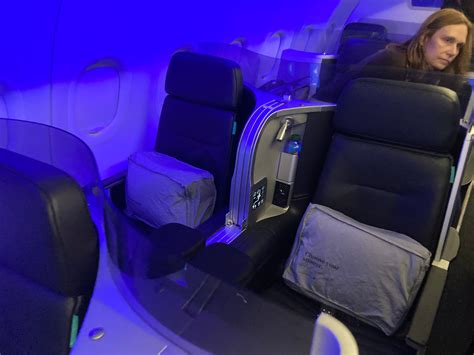
At LAX, JetBlue could expand its acclaimed Mint premium cabin, compete directly on transcontinental business routes, and integrate Southern California into its broader network strategy. The airport’s scale and flexibility aligned with JetBlue’s evolution into a carrier balancing low fares with high-end offerings.
A Strategic Exit That Was Years in the Making
JetBlue’s departure from Long Beach was not a failure of demand or brand loyalty. It was the consequence of an airport governance model fundamentally resistant to airline evolution. Long Beach succeeded in protecting its community from unchecked growth, but in doing so, it also signaled that major network carriers would face hard limits on what they could achieve there.
For JetBlue, the choice became stark: remain constrained in a shrinking role, or move into a competitive but opportunity-rich environment that matched its ambitions. The airline chose growth, flexibility, and strategic coherence over nostalgia.
Long Beach did not lose JetBlue overnight. It lost JetBlue one decision at a time—each vote, fine, and restriction reinforcing the reality that the partnership had reached its natural end.