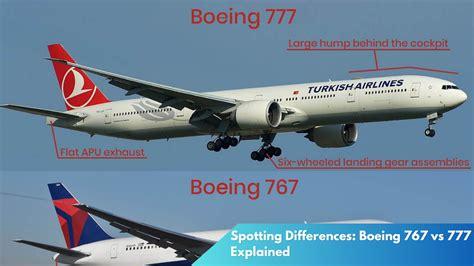
More than forty years after its first flight in 1981, the Boeing 767 continues to carve contrails across international skies with a persistence few commercial aircraft can match. In an industry defined by relentless technological turnover, where airframes often peak within two decades, the 767 has demonstrated an unusual form of staying power. Its endurance is not a matter of nostalgia or institutional inertia. It is the outcome of deliberate design choices, balanced performance characteristics, and an adaptability that has allowed the aircraft to migrate across missions without losing relevance.
When the 767 entered service with United Airlines in September 1982, it arrived at a pivotal moment in aviation history. Airlines were recalibrating their long-haul strategies in response to fuel volatility, deregulation, and evolving passenger demand. Widebody aircraft such as the Boeing 747 and McDonnell Douglas DC-10 had opened the long-distance era, but they were often too large and costly for emerging medium-density routes. The 767 was engineered to solve precisely that operational gap.
Rather than pursue brute size or radical experimentation, Boeing pursued balance. The aircraft combined the comfort and cargo capacity of a widebody with the efficiency of a twin-engine platform. That combination would quietly reshape airline economics and ultimately extend the aircraft’s service life far beyond original expectations.

A Purpose-Built Widebody for a Changing Airline Industry
The 767 was conceived as a mid-sized, long-range aircraft optimized for efficiency rather than spectacle. Its twin-engine configuration was central to its economic proposition. At a time when long-haul flying was dominated by three- and four-engine aircraft, a twin-engine widebody capable of crossing oceans represented both technical confidence and financial pragmatism.
Early variants such as the 767-200 offered a range of roughly 3,800 to 4,000 nautical miles, sufficient for transcontinental missions. The introduction of the 767-200ER expanded that reach beyond 6,000 nautical miles, enabling direct transatlantic routes with fewer passengers than previously required. Airlines could now connect secondary cities without funneling travelers exclusively through mega-hubs.
The stretched 767-300 and 767-300ER further refined this flexibility. With near-6,000-nautical-mile capability in extended-range form, carriers gained a tool for high-demand international services without stepping into the financial commitment of much larger aircraft. Even the later 767-400ER, designed for higher-capacity missions, retained significant long-haul performance.
This balance of capacity and range accelerated the industry’s gradual shift toward point-to-point flying. Instead of concentrating traffic exclusively in major hubs, airlines could profitably serve thinner long-haul routes. The 767 did not merely adapt to that model; it helped enable it.
ETOPS Certification and the Confidence of Twin-Engine Oceanic Flight
One of the most consequential factors in the Boeing 767’s longevity lies in its role in advancing ETOPS—Extended-range Twin-engine Operational Performance Standards. ETOPS certification permits twin-engine aircraft to operate long overwater routes at significant distances from diversion airports, provided stringent reliability benchmarks are met.
In the early 1980s, skepticism lingered about whether two engines were sufficient for extended oceanic missions. The 767 proved that they were. Through rigorous testing and demonstrated reliability, it gained ETOPS approval and helped normalize twin-engine transoceanic operations. This milestone reshaped fleet planning worldwide.
The practical result was cost efficiency. Two engines mean lower maintenance burdens, reduced fuel consumption relative to tri- and quad-engine aircraft, and simplified systems architecture. The 767’s success under ETOPS did more than validate its own design. It established industry-wide confidence that paved the way for later twin-engine widebodies such as the Boeing 777 and 787.
Operational reliability reinforced this reputation. Dispatch reliability approaching 99 percent allowed airlines to plan schedules with precision. In commercial aviation, predictability is a form of currency. An aircraft that departs on time, consistently, is an asset that compounds value over decades.
Engineering That Aged Gracefully
Aircraft longevity is often a function of structural foresight. The 767’s fuselage cross-section, wing design, and systems architecture were engineered with margin—room for growth, upgrades, and evolving missions. It was neither overbuilt nor fragile. It was calibrated.
The wing’s aerodynamic efficiency allowed incremental performance improvements through engine upgrades and avionics refinements. Over the years, more advanced versions of the General Electric CF6, Pratt & Whitney PW4000, and Rolls-Royce RB211 engines enhanced reliability and fuel burn without fundamentally altering the airframe.
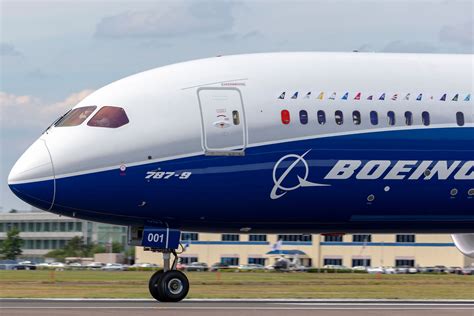
Unlike aircraft designed around a narrow mission profile, the 767 retained versatility. It could be configured for high-density leisure routes, premium-heavy transatlantic services, or balanced two-class international operations. This elasticity delayed obsolescence. When passenger airlines gradually replaced early examples with newer-generation jets, the aircraft did not become redundant. It simply shifted roles.
The Cargo Conversion Revolution
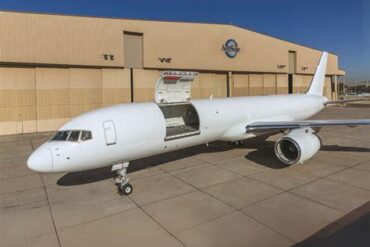
The most decisive chapter in the Boeing 767 longevity story is its transformation into a dominant cargo platform. As passenger carriers retired aging airframes, freight operators recognized an opportunity. The 767 possessed characteristics uniquely suited to logistics operations.
Its fuselage cross-section accommodates standard cargo pallets and containers efficiently. The floor structure is robust, allowing the carriage of dense freight with minimal structural modification. These attributes reduced conversion complexity and cost.
Passenger-to-freighter conversions became economically compelling. Converting a used 767 costs significantly less than acquiring a new-production widebody freighter, yet delivers decades of additional service life. For operators such as FedEx Express, UPS Airlines, and Amazon Air, this calculus was irresistible.
By the mid-2020s, nearly two-thirds of the global 767 fleet consisted of freighters. The aircraft emerged as one of the world’s most prolific medium-widebody cargo platforms, bridging the gap between narrowbody express aircraft and larger intercontinental freighters.
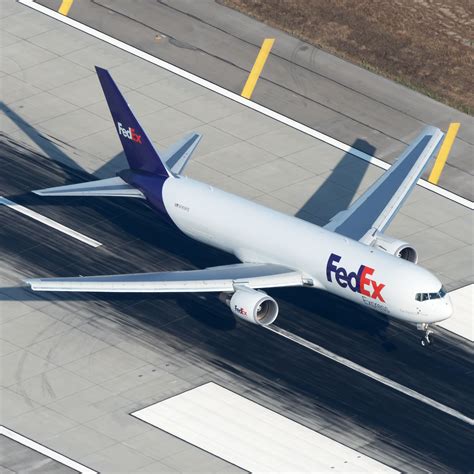
The rise of global e-commerce amplified this relevance. Time-sensitive shipments demand reliability, predictable maintenance, and efficient turnaround times. The 767’s mature support ecosystem and proven systems architecture aligned perfectly with these priorities. In cargo service, technological novelty often matters less than dispatch consistency and structural durability.
Economic Logic in a World of Newer Aircraft
It is true that newer widebodies such as the Boeing 787 offer superior fuel efficiency. Yet aircraft economics extend beyond fuel burn. Acquisition cost, capital structure, maintenance forecasting, and utilization rates all shape viability.
Many 767s operating today are fully depreciated assets. Without heavy financing obligations, operators can absorb moderate fuel disadvantages while benefiting from low ownership costs. For cargo carriers in particular, this trade-off remains rational.
Maintenance predictability further strengthens the equation. After four decades of operation, maintenance intervals, component lifecycles, and structural inspection programs are well understood. Operators can model long-term costs with remarkable accuracy. Financial certainty has value equal to technological advancement.
Production longevity reflects this logic. The 767 accumulated more than 1,400 orders and over 1,350 deliveries, with limited production continuing into the 2020s. Few aircraft families maintain assembly lines so long after their introduction.
A Deep Global Support Ecosystem
Aircraft endure when infrastructure supports them. Over four decades, the 767 has cultivated a vast global maintenance and parts network. Spare components are abundant. Repair procedures are standardized. Certified facilities span continents.
This ecosystem reduces downtime and operational risk. Airlines and cargo operators can source parts quickly and train technicians on mature systems with extensive documentation. In an industry facing workforce shortages and training bottlenecks, familiarity becomes a strategic advantage.
A frequently overlooked factor is cockpit and systems commonality with the Boeing 757. The two aircraft share avionics philosophy and flight deck design principles. Pilots transitioning between them require reduced training relative to entirely distinct platforms. For operators flying both types, this interoperability lowers training expenses and simplifies crew scheduling.
The result is an aircraft family embedded within a broader operational architecture rather than isolated from it. Embedded systems tend to survive longer than standalone ones.
Military and Government Derivatives Extend the Legacy
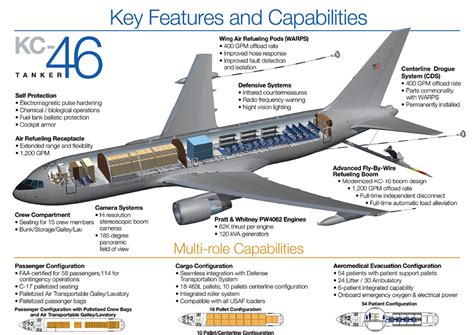
The 767’s adaptability extends beyond commercial aviation. Its airframe serves as the foundation for the KC-46 Pegasus, a modern aerial refueling and transport aircraft operated by the United States Air Force and other international customers. Military procurement prioritizes durability, range, and upgrade potential over cabin aesthetics. The 767 platform meets those criteria.
Government and military programs operate on multi-decade timelines. Their commitment ensures sustained production, supply chain continuity, and engineering support. This institutional backing reinforces the broader viability of the aircraft family.
As more than 60 KC-46 aircraft enter service with continued deliveries planned, the 767 platform secures relevance well into the 2030s and beyond. Military adaptation often acts as a second life for commercial airframes. In the 767’s case, it is a parallel evolution that strengthens the entire ecosystem.
A Study in Strategic Moderation
The Boeing 767 was never the largest, fastest, or most technologically radical aircraft of its era. Its longevity stems from something subtler: strategic moderation. It balanced size with efficiency, range with economics, and innovation with reliability.
Aircraft that chase extremes often age quickly. Those calibrated for versatility endure. The 767’s original mission—efficient, medium-capacity long-haul travel—proved durable because global air travel demand itself diversified rather than consolidating.
Its transformation into a cargo mainstay and military platform was not an accident but a consequence of structural resilience and thoughtful engineering margins. Each evolutionary step reinforced the next.
Today, as aviation accelerates toward composite structures, advanced avionics, and alternative propulsion concepts, the Boeing 767 remains aloft not as a relic but as a working asset. Its presence in freight hubs, international terminals, and military bases demonstrates that longevity in aviation is rarely about novelty. It is about adaptability, economic logic, and the quiet power of a design that leaves room for reinvention.
In an industry defined by progress, the 767 illustrates a paradox: sometimes the most enduring innovation is balance itself.