Air travel has changed dramatically over the past decade, and few developments illustrate this transformation better than the rise of premium economy. Once considered a minor upgrade with little more than extra legroom, the cabin has evolved into one of the most strategically important products in commercial aviation. Airlines now treat premium economy as a distinct travel class that bridges the gap between economy and business class while offering travelers significantly improved comfort.
Over the last ten years, the aviation industry has reshaped premium economy through better seating, enhanced onboard service, expanded fleet integration, and strategic pricing models. At the same time, shifting traveler expectations and corporate travel policies have fueled demand for a product that balances comfort and affordability. The result is a cabin class that now plays a central role in airline profitability and passenger satisfaction.
Today, premium economy is no longer a niche experiment. Instead, it has become a global standard across long-haul fleets and increasingly influences how airlines design their aircraft cabins. From seat engineering to revenue strategy, the transformation of this travel class reveals a broader shift in how airlines think about passenger experience.
From Experimental Upgrade To Global Cabin Standard
In the early years of premium economy, the concept lacked consistency. Airlines experimented with various configurations, branding strategies, and service levels, which often left passengers unsure of what they were actually purchasing. Some carriers simply offered extra-legroom seats in the front rows of economy, while others attempted to build a more refined cabin environment.
One of the earliest pioneers of the concept was EVA Air, which introduced what it called “Evergreen Deluxe Class” in the early 1990s. The airline recognized that a significant portion of travelers wanted more comfort but could not justify the cost of business class. Shortly afterward, Virgin Atlantic helped popularize the idea by developing a more clearly defined premium cabin.
Despite these early innovations, adoption remained uneven throughout the 2000s. Many airlines hesitated to invest heavily in the cabin, partly because the industry was still recovering from economic downturns and fluctuating fuel prices. As a result, premium economy offerings varied widely between carriers, with differences in seat design, meal service, baggage allowances, and boarding privileges.
The turning point came in the late 2010s when major international airlines began standardizing the product. Carriers such as British Airways, Qantas, and Lufthansa introduced clearly defined premium economy cabins with consistent seating configurations, dedicated service elements, and recognizable branding. This standardization transformed passenger expectations and allowed airlines to position the product as a true travel class rather than a simple seat upgrade.
By the early 2020s, premium economy had become a core feature of long-haul travel, appearing across fleets worldwide. Even airlines that had historically resisted the concept eventually embraced it. Emirates, long known for its luxury-focused cabins, introduced premium economy across aircraft like the Airbus A380, confirming that the cabin had become an essential component of modern airline strategy.
The Economics Behind Premium Economy Growth
The rapid expansion of premium economy is closely tied to airline economics. Airlines operate in an industry where every square meter of cabin space must generate maximum revenue, and premium economy has proven to be an exceptionally effective solution.
Traditional cabin structures created a massive pricing gap between economy and business class. While economy fares were affordable for most travelers, business class prices often remained several times higher. This left a large segment of passengers willing to pay more for comfort but unwilling to spend thousands of dollars for premium luxury.
Premium economy effectively fills this gap. On most airlines, fares typically range between 1.5 and 3 times the price of standard economy, making the upgrade attainable for many travelers while still delivering strong revenue returns for airlines.
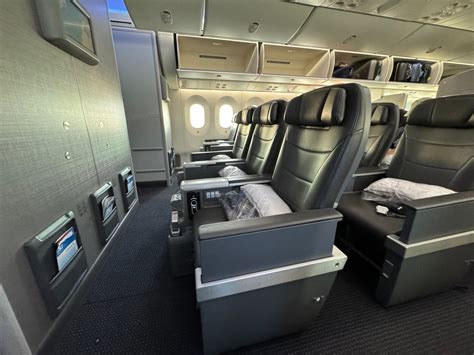
From a spatial perspective, premium economy seats require more room than economy but far less than business class suites. This allows airlines to generate significantly higher revenue per passenger without sacrificing large portions of the aircraft cabin.
For example, replacing a few rows of economy seating with premium economy can increase revenue substantially, especially on long-haul routes where travelers place greater value on comfort. This economic advantage has led airlines to rethink their cabin layouts, often reducing standard economy capacity while expanding premium segments.
The strategy aligns with a broader industry focus on yield management, where airlines maximize profitability by offering multiple pricing tiers that cater to different traveler budgets. Premium economy has become one of the most effective tools in this strategy because it appeals to both value-conscious business travelers and leisure passengers seeking greater comfort.
A Major Leap In Seat Design And Passenger Comfort
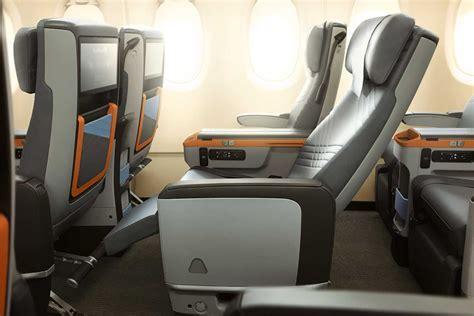
Perhaps the most visible transformation in premium economy has occurred in the physical design of the cabin itself. What once consisted of slightly larger economy seats has evolved into a carefully engineered travel environment focused on long-haul comfort.
Modern premium economy seats typically offer 38 to 40 inches of pitch, compared to roughly 31 inches in economy class. The seats are also wider, providing additional shoulder space that significantly improves comfort during long flights.
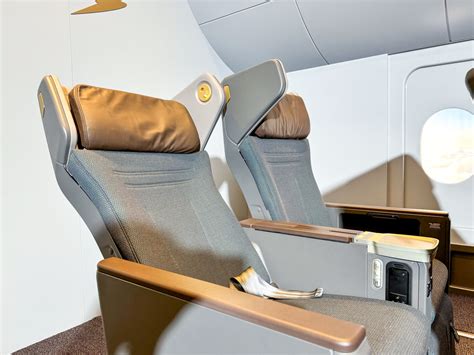
Seat engineering has become increasingly sophisticated, with airlines incorporating features such as:
- Adjustable headrests with side wings
- Integrated calf rests and footrests
- Deeper seat recline
- Ergonomic cushioning designed for long flights
- Larger personal entertainment screens
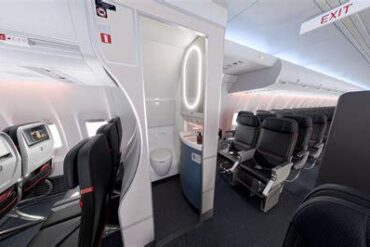
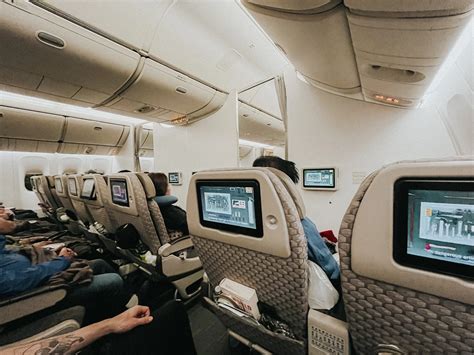
Cabin layouts have also changed to create a more spacious environment. On wide-body aircraft, premium economy sections often feature configurations like 2-4-2 seating, compared with the denser 3-4-3 layout common in economy cabins. Fewer seats per row create a quieter, less crowded atmosphere that immediately feels more relaxed.
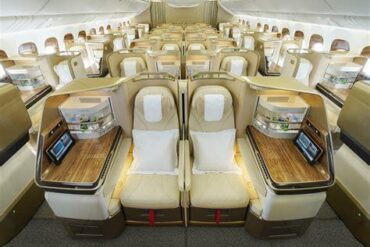
Airlines have also invested heavily in materials and cabin aesthetics. Upholstery fabrics, lighting, and cabin finishes now mirror elements of business class design, reinforcing the sense that premium economy offers a meaningful upgrade rather than a minor improvement.
Enhanced Onboard Service And Amenities
The evolution of premium economy is not limited to seating. Airlines have significantly upgraded the service experience, transforming the cabin into a product that feels closer to a simplified business class.
Meals are one of the most noticeable improvements. Instead of standard economy trays, many airlines now serve premium economy meals on ceramic dishes with metal cutlery, often featuring higher-quality ingredients and curated menu options.
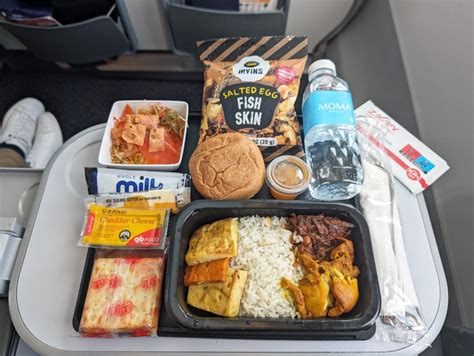
Carriers such as Singapore Airlines, Lufthansa, and British Airways have introduced premium beverage selections that may include wine pairings, craft beer options, or specialty cocktails. These enhancements create a dining experience that stands apart from economy class while remaining less elaborate than business class catering.
Additional service upgrades frequently include:
- Amenity kits containing travel essentials
- Noise-reducing headphones
- Dedicated cabin crew attention
- Priority check-in and boarding
- Increased baggage allowances
These elements collectively reinforce the perception that premium economy is a distinct travel class. Passengers are not merely buying extra legroom; they are purchasing a more comfortable and elevated journey from airport check-in to arrival.
Expansion Across Aircraft And Global Routes
A decade ago, premium economy appeared primarily on long-haul wide-body aircraft operating intercontinental routes. Airlines initially believed the cabin made the most sense on flights lasting eight hours or more, where additional comfort could significantly improve passenger experience.
Today, premium economy has expanded across fleets worldwide. Modern aircraft such as the Airbus A350 and Boeing 787 Dreamliner are commonly delivered with premium economy cabins included in their standard configuration.
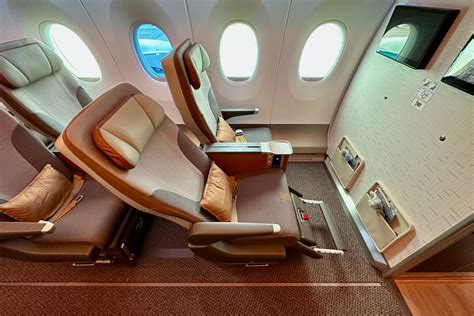
This integration has accelerated the growth of the cabin because airlines no longer need to retrofit aircraft after delivery. Instead, premium economy is built directly into the aircraft design, ensuring consistent passenger experience across fleets.
Retrofitting programs have also played a major role. Many airlines have upgraded older aircraft to include premium economy sections, aligning them with newer fleet standards.
Interestingly, the concept is beginning to influence medium-haul travel as well. Aircraft like the Airbus A321LR and Airbus A321XLR, which can operate transcontinental and transatlantic routes, allow airlines to experiment with enhanced seating tiers that resemble premium economy even on narrower aircraft.
Some carriers, including JetBlue, have introduced hybrid products that combine extra-legroom seating with bundled services such as early boarding, improved meals, and priority baggage handling. These offerings reflect growing confidence that travelers are willing to pay for comfort even on flights lasting only a few hours.
Changing Passenger Expectations And Travel Behavior
The rise of premium economy also reflects deeper changes in how people approach air travel. Over the past decade, passengers have become more conscious of personal space, comfort, and in-flight wellbeing.
Long-haul flights have grown increasingly common as global travel networks expand. At the same time, economy cabins have become denser on many aircraft, making the difference between standard and premium seating more noticeable.
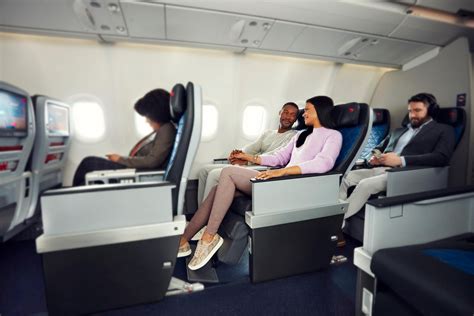
Travelers who previously tolerated cramped seating now seek alternatives that offer greater comfort without dramatically increasing travel costs. Premium economy provides precisely that balance.
Corporate travel policies have also shifted significantly. Following economic pressures and the disruption of the COVID-19 pandemic, many companies reduced budgets for business class travel. Employees who once flew in lie-flat seats are now encouraged to book premium economy instead.
This shift has produced a steady stream of business travelers who value comfort but must operate within tighter financial limits. Premium economy allows them to maintain productivity and rest during flights while still meeting corporate cost guidelines.
Leisure travel trends have further accelerated demand. Many passengers now prioritize “affordable luxury,” choosing to upgrade selectively for important journeys such as vacations, honeymoons, or milestone celebrations. Premium economy fits this philosophy perfectly, offering a noticeable upgrade without the steep cost associated with premium cabins.
How Premium Economy Reshaped Airline Cabin Hierarchies
The growth of premium economy has had profound implications for other cabin classes, particularly first class. Over the past decade, many airlines have reduced or eliminated traditional international first-class cabins.
The reason is simple: ultra-luxury travel represents a relatively small market, while mid-tier premium products attract far broader demand.
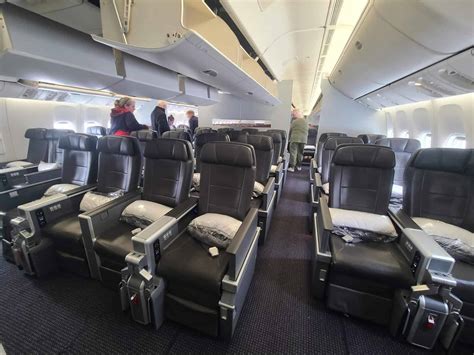
Airlines such as American Airlines and United Airlines have redirected resources toward expanding business class suites and premium economy seating instead of maintaining large first-class cabins. This allows them to serve more passengers across multiple price levels while maximizing aircraft profitability.
At the same time, business class has evolved dramatically. Modern business cabins now feature fully lie-flat seats, direct aisle access, and private suites, offering levels of comfort that once defined first class. In many ways, business class has absorbed much of the traditional first-class experience.
Premium economy complements this structure by acting as a bridge between economy and business class. The result is a more balanced cabin hierarchy that allows airlines to serve travelers with varying budgets and expectations.
Instead of a simple two-tier system of economy and business class, modern aircraft now feature multiple travel layers, each designed to capture a different segment of the market.
The Future Of Premium Economy In Global Aviation
As airlines continue refining their cabin strategies, premium economy appears poised to grow even further. Aircraft manufacturers are designing interiors with increasingly flexible layouts that allow airlines to expand mid-tier cabins without sacrificing efficiency.
At the same time, seat manufacturers are experimenting with new ergonomic designs, improved materials, and enhanced privacy features that may push premium economy even closer to business class comfort.
Passenger expectations are also unlikely to reverse. Travelers have become accustomed to having multiple cabin choices, and many now see premium economy as the ideal balance between price and comfort.
In the broader context of aviation economics, the cabin represents a rare alignment between passenger demand and airline profitability. It offers meaningful improvements in comfort while allowing airlines to generate higher revenue without dramatically increasing operational complexity.
Over the past decade, premium economy has evolved from a tentative experiment into one of the most important innovations in commercial aviation. As airlines continue adapting to changing travel patterns, this once modest cabin upgrade will likely remain a central pillar of airline strategy for years to come.