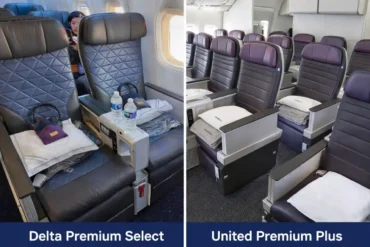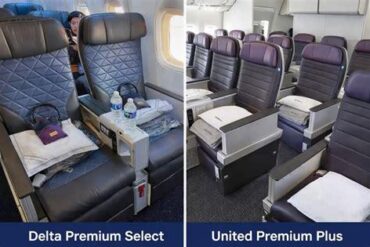
Delta Air Lines’ introduction of Premium Select marked a pivotal shift not only in the carrier’s onboard product hierarchy but also in how U.S. airlines approached the rapidly maturing premium economy segment. To understand when Delta Premium Select was introduced—and why it mattered—it is essential to place the product within a broader historical, commercial, and strategic context that reshaped long-haul travel in the late 2010s.
The concept of premium economy itself was no longer experimental by the time Delta entered the space. First launched by EVA Air in the early 1990s, the cabin had gradually evolved from a niche concept into a mainstream revenue driver. By the mid-2010s, nearly every major European and Asian full-service airline had already embraced premium economy as a distinct, monetized cabin. What lagged behind was the United States, where legacy carriers historically relied on economy-plus seating and business class to bridge the pricing gap.
Delta’s move into premium economy was therefore not just about adding a new seat—it was about redefining cabin segmentation, capturing a more profitable traveler demographic, and future-proofing its widebody fleet against changing passenger expectations.
The Official Introduction: Delta Premium Select Debuts in 2017
Delta Air Lines officially introduced Delta Premium Select in late 2017, coinciding with the delivery of its first Airbus A350-900 aircraft. This moment represented a major inflection point in Delta’s product evolution. Unlike incremental upgrades seen in previous years, Premium Select debuted as a fully realized, purpose-built cabin, positioned clearly between Delta Comfort+ and Delta One.
The timing was deliberate. Delta had spent years investing heavily in its brand, operational reliability, and premium perception. By 2017, the airline was consistently ranked among the most profitable global carriers, with a customer base increasingly willing to pay for comfort upgrades—especially on long-haul flights. Introducing Premium Select allowed Delta to monetize that willingness without cannibalizing its flagship Delta One business class.
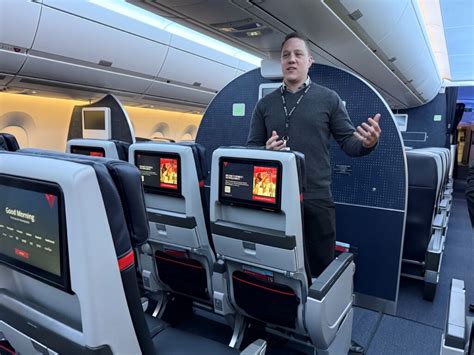
Crucially, Delta did not test the concept cautiously. The inaugural A350-900 entered service with 48 Premium Select seats, a notably larger cabin than those introduced by competitors at the time. This bold capacity allocation signaled Delta’s confidence that premium economy would not merely supplement revenue—it would become a cornerstone of long-haul profitability.
What Made Delta Premium Select a True Premium Economy Product
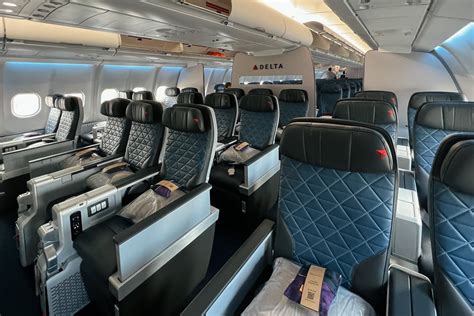
From its inception, Delta Premium Select was designed to be materially different from standard economy seating, not a lightly enhanced variant. While the experience remained closer to economy than business class, the improvements were substantial enough to justify a meaningful fare premium.
Passengers in Premium Select benefit from 38 inches of seat pitch, noticeably wider seats, increased recline, and enhanced leg and foot rests. The cabin uses the Collins Aerospace MiQ seat, a model widely adopted across the industry for premium economy due to its ergonomic design and long-haul comfort profile. Larger personal screens, upgraded soft-touch materials, and improved storage further reinforce the sense of separation from economy.
Beyond the seat itself, Delta layered in service enhancements that aligned with premium expectations. These include upgraded meal presentation, premium amenity kits on long-haul routes, enhanced bedding elements, and dedicated cabin service. The result is a product that feels intentionally curated rather than opportunistically upsold.
Fleet Expansion: How Premium Select Rolled Out Across Delta’s Aircraft
Following its 2017 debut on the Airbus A350-900, Delta moved quickly to expand Premium Select across its widebody fleet. In 2018, the airline retrofitted its Boeing 777-200ER and 777-200LR aircraft, each receiving 48 Premium Select seats—mirroring the A350’s generous configuration.
This expansion was more than cosmetic. Retrofitting older aircraft represented a substantial capital investment, underscoring Delta’s belief that premium economy demand was durable rather than cyclical. It also allowed Delta to standardize its international experience, reducing variability across routes and aircraft types.
By 2019, Premium Select began appearing on newly delivered Airbus A330-900neo aircraft, factory-fitted with 28 seats. That same year, Delta initiated a comprehensive refurbishment of its Boeing 767-400ER fleet, introducing 20 Premium Select seats per aircraft alongside updated Delta One cabins.
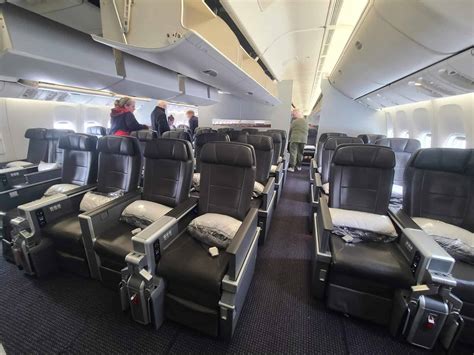
The rollout continued through 2021, when Delta completed Premium Select installations on its Airbus A330-200 and A330-300 fleets, each featuring 21 seats. Simultaneously, the airline began installing Premium Select on its aging Boeing 767-300ERs, adding 18 seats per aircraft. Although a handful of these jets remain unmodified, they are nearing retirement and represent the final exceptions.
Cabin Strategy: Why Delta Went Bigger Than Its Competitors
When Delta introduced Premium Select, it became the second U.S. airline to launch a true premium economy cabin, following American Airlines’ 2016 debut on the Boeing 787-9. However, Delta’s approach differed sharply in scale and ambition.
American’s initial premium economy cabins were relatively small, often comprising just 21 to 28 seats. United Airlines, which launched Premium Plus in 2019, followed a similarly conservative strategy. Delta, by contrast, consistently allocated larger square footage to Premium Select, particularly on flagship aircraft like the A350 and 777.
This decision reflects a deeper strategic insight. Delta recognized that premium economy travelers—especially those categorized as “premium leisure” passengers—were growing faster than traditional corporate business travelers. These customers are willing to pay significantly more than economy fares for comfort, yet remain price-sensitive compared to business-class passengers. Premium Select sits precisely at that intersection.
The Economics Behind Premium Select’s Success
Premium economy has emerged as one of the most profitable cabins on a per-square-foot basis for many airlines, and Delta is no exception. While Premium Select seats generate lower yields than Delta One on an individual basis, they occupy less space and allow for higher density without compromising passenger satisfaction.
At the same time, ongoing trends have made standard economy less attractive. Seat pitch reductions, narrower armrests, and higher load factors have increased passenger discomfort on long-haul flights. Premium Select offers a compelling escape from those constraints while remaining financially accessible.
For Delta, Premium Select also acts as a revenue bridge, capturing passengers who might otherwise fly economy—or even choose a competitor—if business class pricing feels out of reach.
Premium Select Beyond Long-Haul: Transcontinental Expansion
Delta’s commitment to Premium Select extends beyond traditional international routes. As part of its premium transcontinental strategy, the airline has deployed Premium Select on select high-yield domestic routes, particularly between New York (JFK) and Los Angeles or San Francisco.
These flights, often operated by Boeing 767-300ER aircraft, cater to entertainment, technology, and financial travelers who value comfort but may not always book Delta One. By offering Premium Select, Delta creates an intermediate option that enhances choice while maximizing cabin monetization.
Looking ahead, Delta plans to replace its premium-configured Boeing 757-200s with a new Airbus A321neo subfleet, internally designated 3NF. These aircraft will feature lie-flat Delta One seats alongside 12 Premium Select seats, further cementing the cabin’s role across both domestic and international premium markets.
How Delta Premium Select Compares to American and United
Within the competitive U.S. landscape, Delta Premium Select stands out for its consistent availability, larger cabin sizes, and early adoption. While American Airlines was technically first to market, its premium economy footprint expanded gradually. United Airlines followed later, launching Premium Plus in 2019.
All three carriers rely on the Collins MiQ seat, ensuring baseline parity in hard product design. However, Delta differentiates itself through cabin density choices, service consistency, and network deployment. On many routes, Delta simply offers more premium economy seats, increasing upgrade availability and revenue capture.
As competitors now expand their own premium economy offerings—such as American’s new 32-seat cabins on incoming Boeing 787-9s—Delta’s early and aggressive strategy appears increasingly prescient.
Why the 2017 Launch Still Matters Today
The question “When did Delta Air Lines introduce Premium Select?” has a simple factual answer: late 2017. Yet the significance of that moment extends far beyond a single date. The introduction of Premium Select marked Delta’s transition from incremental comfort upgrades to holistic cabin design, aligned with evolving passenger psychology and long-term profitability.
By committing early, investing heavily, and scaling quickly, Delta transformed premium economy from an ancillary product into a core pillar of its global offering. Today, Premium Select is no longer new—but it remains one of the most strategically important cabins in Delta’s fleet, shaping how millions of passengers experience long-haul travel.
In an era where comfort, value, and flexibility define airline choice, Delta Premium Select stands as a clear example of how timing, execution, and strategic clarity can redefine an entire segment of air travel.