The development of winglet technology has transformed the commercial aviation industry, bringing significant improvements in fuel efficiency and aerodynamic performance. However, one of the most controversial chapters in this technological evolution centers around allegations that Airbus appropriated proprietary blended winglet designs developed in partnership between Boeing and Aviation Partners. The legal and technical conflict, while ultimately settled financially, raised pressing questions about intellectual property, innovation timelines, and the intense rivalry between two aerospace giants.
Winglets, small vertical or angled extensions at aircraft wingtips, began appearing in earnest during the 1980s, catalyzed by earlier research and performance data collected from smaller aircraft. NASA’s Spinoff program documented the pioneering use of enhanced wingtips that paved the way for mainstream adoption. Their purpose was clear: reduce drag caused by wingtip vortices—circular airflows formed where high-pressure air below the wing meets low-pressure air above.
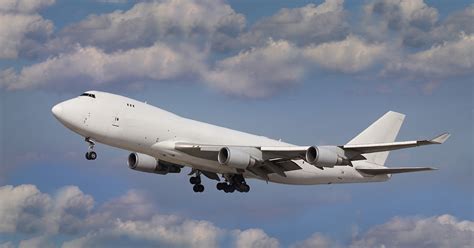
The impact of these vortices was not minor. They contributed to substantial fuel inefficiencies, making drag-reducing modifications highly valuable to cost-conscious commercial operators. By the late 1980s, the Boeing 747-400 and McDonnell Douglas MD-11 became the first large commercial jets to adopt winglet technology, showing measurable operational savings.
Boeing and Aviation Partners: Blended Winglets Born from Innovation
Boeing launched its Next Generation 737 program in 1993, an effort to revitalize the popular airframe while staying competitive with the Airbus A320. A few years earlier, Aviation Partners, an aerodynamic design firm, began collaborating with Boeing on an idea that would reshape aircraft wingtips: blended winglets. Unlike older fence-style designs, these winglets offered a smoother transition between the wing and the tip extension, minimizing interference drag and delivering better fuel economy.
Initial tests on private jets led to broader testing on commercial aircraft. By 1997, Boeing began trialing blended winglets on the 737, setting the foundation for mass adoption across the airline industry. In 1998, Southwest Airlines took delivery of the first 737 Next Generation model, and by 2000, Boeing allowed operators to retrofit blended winglets or order new aircraft with them pre-installed.
The results were profound. A single Southwest 737-700 fitted with blended winglets could save approximately 100,000 gallons of fuel per year, marking a significant economic incentive for large fleet operators.
Airbus’s Early Adoption of Wingtip Fences
In contrast to Boeing’s emphasis on blended winglets, Airbus chose a different aerodynamic route for its early narrowbody aircraft. The A320 series, which debuted before Boeing’s Next Gen 737, featured wingtip fences—small vertical surfaces placed at wingtips to redirect airflow and reduce vortex formation. While less effective than blended designs, they offered measurable efficiency improvements.
These wingtip fences became standard across most Airbus models, including the A300, A310, and later, the A380. The design choice was driven by the performance requirements and fuel economics of the time, particularly during the 1990s, when oil prices were relatively stable and airlines had less pressure to invest in performance modifications.
The Sharklet Scandal: Innovation or Infringement?
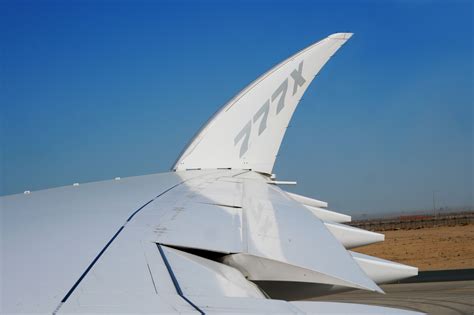
In 2008, Airbus approached Aviation Partners to explore the potential for integrating blended winglet technology into its A320 family aircraft. Initial flight tests yielded underwhelming results, but a subsequent test involving a JetBlue A320 demonstrated improved performance, reinvigorating interest in the design. What followed was the unveiling of the Airbus Sharklet—a new wingtip modification that bore an uncanny resemblance to Aviation Partners’ patented blended winglets.
This announcement did not go unnoticed. Aviation Partners filed a lawsuit, alleging that Airbus copied their intellectual property without authorization, sparking one of aviation’s most significant legal battles over aerodynamic technology. The dispute highlighted the murky intersection of innovation and patent protection, particularly in industries where design optimization often converges on similar aerodynamic solutions.
While the lawsuit was eventually settled, the terms remained confidential, with Airbus paying an undisclosed amount to Aviation Partners. Importantly, the settlement allowed Airbus to continue production and deployment of Sharklets, solidifying the modification as a mainstay of its A320 family.
Industry Shift and the Rise of Winglet Retrofits
The early 2000s saw a seismic shift in the aviation industry’s approach to fuel efficiency. The September 11 attacks in 2001, followed by subsequent fuel price surges, altered the economic calculus for many airlines. Retrofitting older aircraft with winglets became a financially justifiable strategy.
Airbus’s earlier reliance on wingtip fences began to show limitations in this high-fuel-cost environment. Though initially hesitant, Airbus acknowledged the superior performance metrics of blended designs and pivoted accordingly. This delayed but strategic shift allowed Airbus to reenter the winglet innovation race with Sharklets by 2012.
Meanwhile, Boeing continued to innovate. The Split Scimitar Winglets, introduced on 737s, and the Advanced Technology winglets on the 737 MAX represent a further evolution of the blended winglet concept. These designs added downward-facing fins or additional contours to reduce drag even further, demonstrating Boeing’s commitment to iterative aerodynamic enhancement.

Performance Metrics: Sharklets vs. Blended Winglets
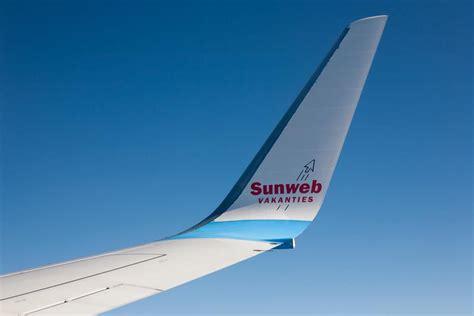
The dimension and aerodynamic impact of Airbus Sharklets and Boeing’s blended winglets are nearly identical. Both measure around 8 feet 2 inches in height, tailored to the flight profiles of narrowbody jets. On average, these modifications reduce fuel consumption by 4% to 6%, a substantial figure when multiplied across thousands of flights per aircraft annually.
Though similar in size and function, the distinction lies primarily in origin. Boeing and Aviation Partners co-developed their winglets based on rigorous testing and patent protections, while Airbus’s Sharklets, though legally cleared, came under suspicion due to timing, design resemblance, and collaborative test history.
Application in Widebody Aircraft
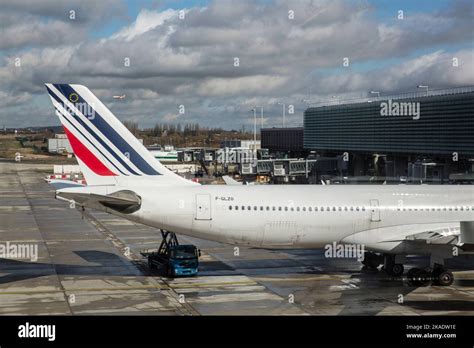
Winglet technology has not remained confined to narrowbody jets. In widebody aircraft, winglet forms vary significantly. The Boeing 747-400, the first widebody to utilize winglets, featured angled upward extensions, setting a precedent. Airbus’s A330 and A340 models adopted canted winglets, and later designs like the A350 and A330neo transitioned toward shorter, curved winglets.
The 767, though older, has also benefited from retrofits using blended winglets, showcasing the technology’s versatility across different airframes and mission profiles.
The Verdict: Innovation, Convergence, or Contention?
The legal and technical saga between Airbus and Boeing over winglet technology underscores a broader reality in aerospace: aerodynamic efficiency is a competitive, high-stakes arena, where parallel innovation can quickly evolve into contentious litigation.
Airbus’s initial reliance on wingtip fences gave way to blended designs only after Boeing had commercially proven their superiority. The proximity of Airbus’s Sharklet launch to Aviation Partners’ test data and collaboration raised red flags, even if legal resolution allowed both parties to move forward.
In hindsight, the dispute was less about outright theft and more about aggressive catch-up strategies, opportunistic design convergence, and the grey zones that lie between aerodynamic engineering and proprietary technology. Airbus may have walked a legal tightrope, but the outcome accelerated winglet adoption industry-wide.
Looking Ahead: The Future of Wingtip Innovation
Today, both Airbus and Boeing continue to refine winglet and wingtip technologies. These modifications are no longer just about efficiency—they now play a role in emissions reduction goals, airspace performance, and the operational economics of global aviation.
From NASA experiments in the 1970s to billion-dollar lawsuits in the 2000s, winglet technology represents more than just an aerodynamic enhancement. It encapsulates the fierce competition, complex engineering, and legal tensions that define the modern aerospace industry. Whether Airbus stole the idea or not, the skies have been permanently reshaped by the sharp rise of the winglet.