The rapid evolution of drone technology has transformed the landscape of aerial systems, offering commercial users unprecedented capabilities that were once confined to military or governmental use. Today, we witness a surge in high-performance drones that blend sophisticated engineering with user-centric design, pushing the envelope of what is possible for civilian and enterprise applications. Among the standout contenders in this domain, DJI’s Matrice series, the Quantum Systems Vector, and the groundbreaking FlyCart 30 command attention, setting new benchmarks for functionality, precision, and adaptability.
DJI remains at the forefront of this revolution. The DJI Matrice 350 RTK, a flagship in the commercial drone sector, exemplifies advanced craftsmanship. This aerial powerhouse is engineered with multi-sensor payloads, offering features like photogrammetry, LiDAR scanning, and AI-powered autonomous operations. What distinguishes the Matrice 350 is its P1 camera system, a beast in the world of photogrammetry, delivering pinpoint accuracy crucial for surveying and mapping tasks. Boasting an IP55 weather-resistant rating, extended flight time exceeding 55 minutes, and advanced obstacle sensing in six directions, the Matrice 350 stands out as a robust, mission-ready UAV for critical industries like construction, agriculture, and public safety.
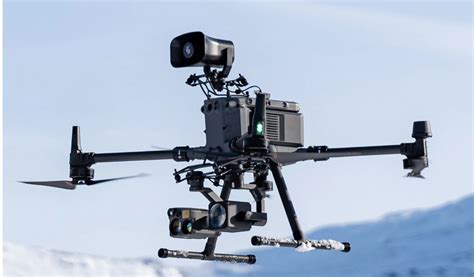
Another formidable entrant is the DJI Matrice 30T, a drone that masterfully integrates a thermal imaging sensor, a laser rangefinder, and a high-resolution zoom camera. Its versatility shines in search and rescue operations, infrastructure inspections, and disaster response, where precision and reliability are paramount. The Matrice 30T’s compact design belies its impressive performance: it features a 41-minute maximum flight time, IP55 protection rating, and seamless integration with DJI FlightHub 2, enabling real-time data sharing and fleet coordination. DJI’s consistent innovation in this line has culminated in the Matrice 4T, an even more refined version offering superior data fidelity, enhanced AI, and the introduction of the Dock 3—a revolutionary charging and deployment station that automates takeoff and landing even in adverse weather conditions.
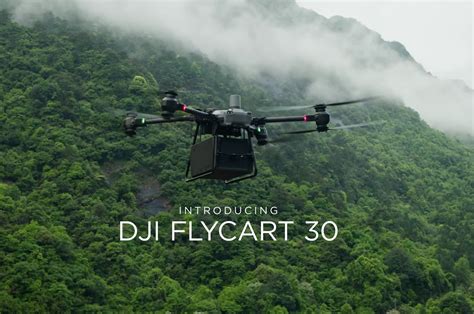
For those prioritizing delivery and logistics, the DJI FlyCart 30 presents a paradigm shift. This heavy-lift drone is purpose-built for cargo transport, boasting a payload capacity of 30 kg (66 lbs) and dual battery systems that ensure safety and reliability across longer distances. The FlyCart 30 excels in scenarios where conventional delivery vehicles struggle, such as remote or rugged terrains, offering a viable solution for medical supply deliveries, construction material transport, and other critical missions.
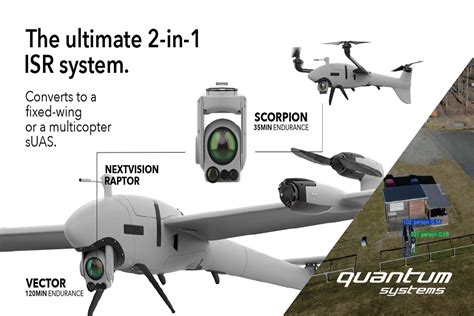
Venturing beyond DJI’s stable, the Quantum Systems Vector exemplifies cutting-edge aerial reconnaissance. Designed for long-range mapping and surveillance, the Vector merges the versatility of a fixed-wing drone with the vertical takeoff and landing (VTOL) capability of multirotors. It delivers exceptional endurance—over 120 minutes of flight time—and autonomous mission execution, making it a prime choice for defense contractors, geological surveys, and environmental monitoring. With AI-supported image analysis and flexible payload integration, the Vector not only extends operational reach but also enhances the quality and granularity of aerial data.
When discussing commercially available advanced drones, it’s essential to contextualize their use cases. For instance, the Matrice 350 RTK and Matrice 30T are unrivaled in industrial inspection and emergency response, where precision and durability are non-negotiable. Conversely, the FlyCart 30 addresses logistical challenges, while the Quantum Systems Vector dominates in long-range surveillance and data acquisition. Each of these platforms is engineered with a distinct mission profile in mind, underscoring the necessity of aligning drone selection with operational objectives.
While many enthusiasts await the release of the DJI Mavic 4, the current Mavic 3 remains a benchmark in the realm of aerial photography and videography. It features a dual-camera system with a Hasselblad sensor that produces stunning 5.1K video and high-fidelity stills, catering primarily to creative professionals and media production teams. Although it doesn’t match the Matrice or Vector lines in industrial capability, its portability, ease of use, and image quality keep it at the forefront of consumer-grade UAVs.
What distinguishes today’s most advanced drones isn’t merely raw power or payload capacity—it’s the integration of AI, autonomous navigation, real-time data processing, and multi-environment adaptability. Features like obstacle avoidance, intelligent flight planning, remote fleet management, and secure data transmission have redefined how businesses deploy drone technology, enabling more efficient, safe, and insightful operations across industries.
In evaluating the most sophisticated drone available to commercial users, one must weigh factors such as payload flexibility, endurance, environmental resilience, data precision, and support ecosystem. DJI’s Matrice series, particularly the 350 RTK and 30T, remain unrivaled for their blend of rugged design and intelligent systems. Meanwhile, the FlyCart 30 carves out a new niche for cargo transport, and the Quantum Systems Vector offers unmatched endurance and reconnaissance capabilities, making it a leader in its class.
Ultimately, the choice of drone should be guided by mission-specific requirements and the need for reliable, scalable performance. As drone technology continues to evolve, we can expect even more powerful tools to enter the market, pushing the boundaries of what is possible in commercial UAV operations.