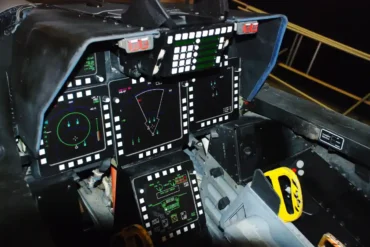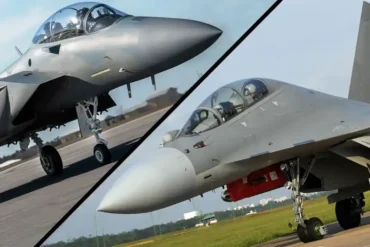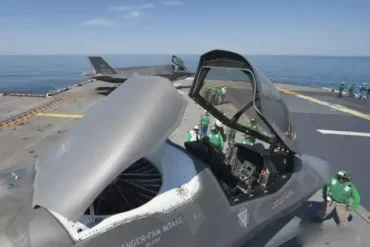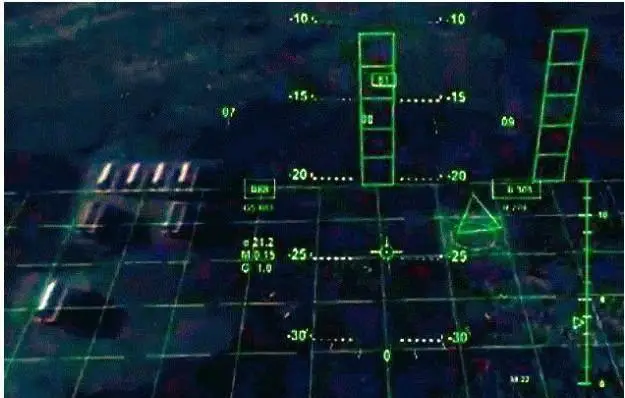
The F-35 Lightning II, developed by Lockheed Martin, is renowned for its unmatched fifth-generation fighter capabilities, and at the core of this technological superiority lies its revolutionary Distributed Aperture System (DAS). Officially designated AN/AAQ-37, the DAS is not just an upgrade in sensor technology—it fundamentally transforms how pilots perceive and interact with the modern battlefield. Leveraging a multi-sensor fusion architecture, the DAS enhances situational awareness, threat detection, and mission survivability far beyond the limits of traditional avionics systems.
This comprehensive overview examines the intricate architecture, operational capabilities, battlefield integration, and strategic value of the F-35 DAS, underscoring its role as a pivotal enabler in 21st-century aerial dominance.
Architecture and Design Principles of the F-35 DAS
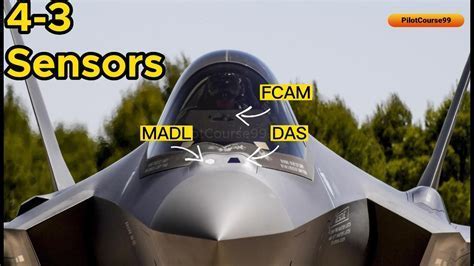
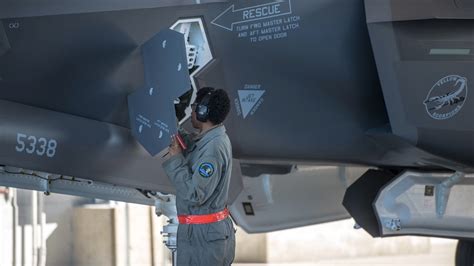
At the heart of the DAS is a constellation of six high-resolution mid-wave infrared (MWIR) sensors, strategically mounted around the F-35’s fuselage—specifically on the nose, underbody, and wingtips. This configuration ensures 360-degree spherical coverage, allowing the aircraft to detect, track, and image targets from all directions in real time without mechanical movement.
Each sensor operates independently yet transmits raw infrared data via high-speed fiber-optic links to the Integrated Core Processor (ICP)—a centralized computing unit responsible for aggregating the data. This sensor fusion process converts disjointed infrared inputs into a coherent, real-time panoramic thermal image, giving the pilot an unmatched view of the entire battlespace.
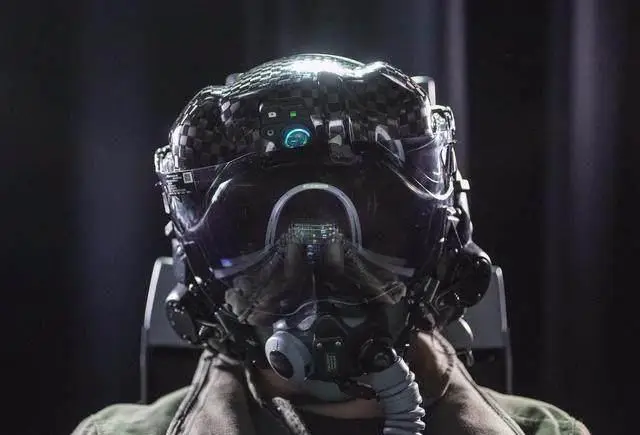
What sets DAS apart from legacy systems is not just the passive detection capability but its seamless integration with the Helmet-Mounted Display System (HMDS). Pilots effectively gain x-ray vision, able to look “through” the aircraft’s frame, as if the fuselage were transparent. This immersive view significantly shortens decision loops in combat.
Core Functional Capabilities
The DAS is engineered with a suite of mission-critical functionalities designed to provide proactive threat detection and environmental awareness.
Missile Launch Detection and Countermeasure Integration
The DAS continuously scans for infrared signatures of missile launches, automatically differentiating threats from non-hostile emissions. Upon detection, the system classifies the missile type, trajectory, and proximity. It then initiates countermeasure protocols, which may include flares, Directed Infrared Counter Measures (DIRCM), or evasion alerts via the Electronic Warfare (EW) suite.
Automatic Target Acquisition and Tracking
The system’s capacity to lock onto aerial and terrestrial heat sources enables the continuous tracking of enemy aircraft, ground-based air defense units, and mobile launch platforms. This is especially effective in Beyond Visual Range (BVR) combat scenarios, where early acquisition of adversaries confers decisive advantage.
Advanced Night Vision and Environmental Penetration
Unlike conventional NVGs (night vision goggles), which suffer from tunnel vision and ambient light dependence, the DAS provides full panoramic infrared imaging regardless of time or weather. This proves invaluable during no-light missions, urban warfare, and dust-obscured environments such as desert operations or battlefield smoke.
By projecting this imagery into the HMDS, the DAS eradicates blind spots, empowering the pilot with complete environmental cognition during aggressive maneuvers or covert ingress.
Strategic Advantages on the Modern Battlefield
Unmatched Situational Awareness
The DAS offers omnidirectional detection without requiring manual input or sensor reorientation. This contrasts starkly with legacy systems, which required manual pointing or fixed fields of view. Pilots no longer need to scan or reposition the aircraft to search for threats—the system continuously processes and presents threats from all angles autonomously.
Reduced Pilot Workload through Automation
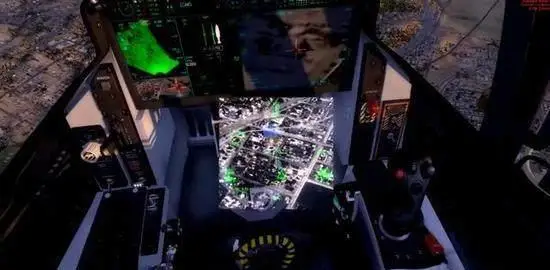
Advanced AI-driven algorithms embedded in the ICP allow the DAS to function with minimal pilot interaction. It autonomously assesses threat vectors, prioritizes alerts, and suggests optimized countermeasures. This drastically reduces cognitive load and frees the pilot to focus on mission objectives.
Fusion with Multispectral Sensor Suite
DAS is not an isolated system. It operates in harmony with the AN/APG-81 AESA radar, Electro-Optical Targeting System (EOTS), and the EW package, forming a unified sensor fusion framework. The result is a multi-domain awareness engine, capable of fusing radar, thermal, optical, and electronic intelligence into a single, comprehensive threat picture.
This interoperability allows rapid switching between air-to-air, air-to-ground, and EW roles, giving F-35 pilots unmatched flexibility in complex missions.
Tactical Applications in Combat Scenarios
Air Superiority Missions
During air-to-air engagements, the DAS enables pre-emptive target acquisition, ensuring pilots “see first, shoot first.” Its seamless coordination with AIM-120 AMRAAM missiles allows for lock-on after launch, even when the target is behind the aircraft. In simulated Red Flag exercises, F-35s equipped with DAS achieved kill ratios exceeding 20:1, underscoring its lethal effectiveness.
Precision Ground Support Operations
In close air support (CAS) or deep strike roles, DAS facilitates rapid ground target identification, particularly of high-heat signatures like enemy artillery positions, rocket launchers, or missile silos. This complements laser-guided systems when visual confirmation is compromised.
Enhanced Survivability in Denied Environments
In contested zones with heavy radar jamming or electromagnetic interference, the passive nature of DAS ensures the F-35 can operate undetected. Its non-emissive detection capabilities make it ideal for Suppression of Enemy Air Defenses (SEAD) missions. DAS data also helps direct stealth approaches, reducing radar cross-section exposure.
Current Limitations and Ongoing Challenges
Despite its game-changing capabilities, the DAS is not without technological constraints:
- Ground Target Identification Variability: While effective against high-heat emitters, DAS struggles with low-emission or thermally shielded targets, such as camouflaged tanks or cold bunkers. Supplementing with Synthetic Aperture Radar (SAR) or Ground Moving Target Indicators (GMTI) becomes necessary.
- High Computational Load: The data bandwidth requirements from six continuous video streams place immense pressure on the Integrated Core Processor. This demands continuous software optimization and hardware scaling, especially as AI-based processing becomes standard.
Global Recognition and Operational Deployment
The DAS has received widespread validation from partner nations participating in the F-35 Joint Strike Fighter program. Countries such as Israel, the United Kingdom, Japan, and Australia have all cited the DAS as a key enabler in their respective operational doctrines.
In 2021, Israeli F-35s used DAS feeds in multinational surveillance missions, feeding real-time thermal data to allied command centers. The UK Royal Air Force has trained exclusively using HMDS-DAS integration scenarios, emphasizing night intercepts and low-visibility target engagement.
Conclusion
The F-35 Distributed Aperture System (DAS) represents a paradigm shift in airborne situational awareness and multi-role combat readiness. By integrating infrared detection, automated data fusion, and 360-degree vision into a unified system, the DAS equips pilots with a sixth sense on the modern battlefield. As aerial threats become faster and more unpredictable, the DAS ensures that the F-35 remains a step ahead of the adversary, combining tactical intelligence with sensor fusion superiority.
While future iterations will continue to address its ground detection and processing challenges, the current system already redefines how fighter pilots engage, evade, and endure in multidomain conflicts. In a world where speed and awareness determine survival, the DAS offers both in unprecedented measure.
FAQs about the F-35 DAS
How does the F-35 DAS differ from traditional night vision systems?
Unlike traditional night vision goggles, which offer a limited field of view and depend on ambient light, the DAS delivers 360-degree thermal imaging in complete darkness. It projects this directly into the pilot’s HMDS, eliminating the need for external devices and enhancing depth perception.
Can the DAS detect stealth aircraft or hypersonic missiles?
While DAS is highly effective against infrared-emitting threats, detecting low-signature stealth aircraft depends on their thermal footprint. Hypersonic missiles, due to intense heat during flight, can typically be identified, tracked, and countered using DAS-guided defensive protocols.
Is the DAS vulnerable to electronic warfare or jamming?
No. The DAS is a passive system, meaning it does not emit detectable signals like radar. This makes it inherently resistant to electronic jamming or anti-radiation attacks, enhancing survivability in high-threat environments.