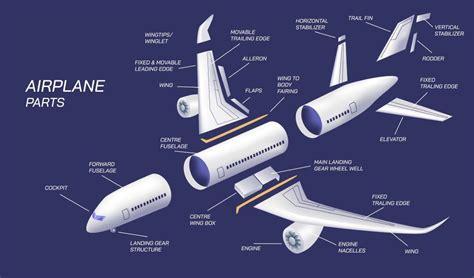
Modern aircraft manufacturing operates on a scale that makes one particular supply-chain problem seem almost absurd: a component worth only $10 can potentially delay an aircraft worth $200 million. The mathematics look ridiculous until we examine how a modern airplane is actually built. An aircraft is not simply assembled from a collection of expensive parts. It is the final product of thousands of components, certifications, production processes, software systems, specialized tools, and suppliers spread across multiple countries.
That complexity creates an unusual vulnerability. A manufacturer may have the fuselage, wings, engines, avionics, landing gear, interiors, and thousands of other components ready, yet still be unable to deliver the finished aircraft because one inexpensive item has not arrived. The problem is not the financial value of the missing component. It is the fact that the component may occupy a critical position in the aircraft’s production sequence.
This is becoming particularly important as commercial aviation experiences extraordinary demand. Airlines continue placing large orders for new aircraft, while manufacturers face capacity constraints, labor challenges, supplier shortages, and increasingly complicated international logistics. At the same time, modern aircraft programs depend on vast networks of specialized companies that may extend through four or more supplier tiers. Somewhere deep inside that network could be a small manufacturer producing a seemingly insignificant part that has become indispensable to a multimillion-dollar production program.
The $10 Component Problem in Aircraft Manufacturing
The central problem is visibility. Major aircraft manufacturers generally have detailed relationships with their most important suppliers, but those tier-one companies themselves depend on additional suppliers. A tier-two supplier may purchase materials from a tier-three manufacturer, which could rely on a specialized tier-four company operating thousands of miles away.
That fourth-tier supplier may manufacture a component worth only a few dollars. Yet if the component is required before final assembly or certification can be completed, its importance becomes vastly greater than its purchase price suggests. The aircraft manufacturer does not necessarily have a direct commercial relationship with the company producing it, making the vulnerability particularly difficult to identify.
This was the point highlighted by Anupam Singhal, President of Manufacturing at Tata Consultancy Services, during discussions around the Farnborough Airshow. The example of a tier-four supplier in the Middle East producing a $10 component illustrates a fundamental weakness in conventional supply-chain management. The aircraft manufacturer can effectively discover that an inexpensive part is critical only when the part stops arriving.
At that moment, the economics change completely. A manufacturer may have millions of dollars tied up in an aircraft sitting on a production line or awaiting completion. Workers, factory space, logistics capacity, testing schedules, and customer delivery commitments can all be affected by a shortage that originated with a tiny supplier. The $10 component becomes a million-dollar problem because its absence blocks an entire production system.
Why One Small Part Can Stop a Large Aircraft
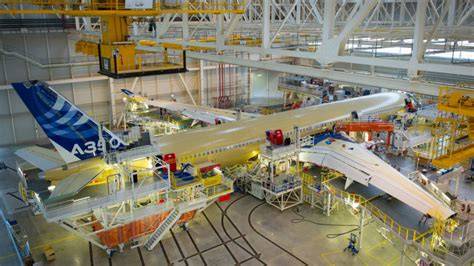
An aircraft factory operates according to carefully coordinated production sequences. Components do not simply arrive whenever they are available and wait indefinitely for someone to install them. Thousands of tasks are scheduled around one another, with tooling, labor, transportation, inspections, and testing arranged according to planned milestones.
If a required component is missing at the wrong moment, the manufacturer may have several options, but none is necessarily simple. The production team could delay the relevant installation, move the aircraft to another stage, reorder work, search for an alternative supplier, or wait for the original component to arrive. Each solution can create additional costs and scheduling complications.
The situation becomes even more difficult when the missing item is subject to strict aerospace certification requirements. Manufacturers cannot simply replace a flight-critical component with another part because it looks similar or performs a broadly equivalent function. Aircraft parts must satisfy defined engineering, quality, traceability, and regulatory requirements.
Consequently, a missing low-cost component can create a bottleneck that cannot be solved by spending more money immediately. The manufacturer may have to locate the original part, accelerate transportation, investigate the supplier’s production problem, or complete additional engineering and quality checks before an alternative can be considered.
The Hidden Complexity of Global Aircraft Supply Chains
The modern aerospace supply chain is effectively a global industrial web. A single aircraft program can involve thousands of suppliers producing everything from major structural assemblies to fasteners, electrical components, sensors, interior fittings, specialized materials, and manufacturing equipment.
The geographic distribution of these suppliers creates another layer of risk. A company may have an apparently healthy primary supplier network while remaining exposed to problems occurring much deeper in the chain. Geopolitical instability, natural disasters, transportation disruptions, energy shortages, labor disputes, sanctions, cyber incidents, and factory shutdowns can all affect a supplier that the aircraft manufacturer does not directly monitor.
Distance also matters. If a small component must travel several thousand miles before reaching a final assembly facility, transportation becomes part of the manufacturing equation. A two-week factory shutdown at the supplier can become a much longer disruption if shipping capacity is limited or customs procedures add additional delays.
Traditional spreadsheets and periodic supplier reports are poorly suited to this environment. They can show what happened yesterday, but they may not reveal what is likely to happen next month. By the time a procurement team learns that a lower-tier supplier has a serious production problem, the aircraft schedule may already be under pressure.
Aircraft Demand Is Making the Problem Worse
The vulnerability of these supply chains matters even more because aircraft demand remains exceptionally strong. Airlines are seeking fuel-efficient aircraft to replace older fleets, expand international networks, and prepare for long-term passenger growth. Meanwhile, manufacturers are attempting to increase production while working through substantial order backlogs.
This creates a difficult industrial equation. Demand is not the primary problem; manufacturing throughput is.
When production capacity is constrained, every missing component becomes more consequential. A factory cannot easily absorb disruptions when its schedule is already operating close to maximum capacity. If an aircraft is delayed, another aircraft may not simply move forward without consequences because the production system is interconnected.
Backlogs can therefore amplify relatively small disruptions. An aircraft delayed by one missing component may occupy factory space longer than planned. That can interfere with subsequent production activities, while employees and equipment must be rescheduled around the delayed aircraft. The original shortage then produces a series of secondary effects.
For manufacturers facing years of accumulated orders, improving production resilience is therefore not merely about building larger factories. It is about understanding every dependency inside those factories and the supplier network supporting them.
Digital Twins Could Reveal the Bottleneck Before It Happens
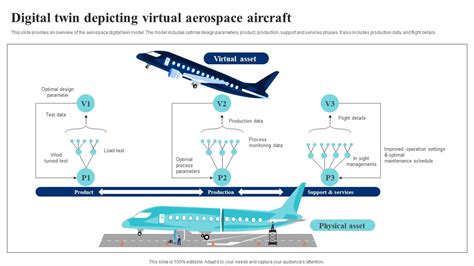
One of the most promising solutions is the use of digital twins and advanced supply-chain modeling. A digital twin can create a dynamic virtual representation of a physical system, allowing manufacturers to examine how changes in one part of the network could affect the rest.
Applied to aerospace production, this approach could map relationships between aircraft programs, suppliers, transportation routes, inventory levels, production schedules, and individual components. Instead of discovering that a supplier is critical after a shortage occurs, manufacturers could identify the dependency in advance.
Imagine that a small supplier responsible for a low-cost component experiences a two-week factory shutdown. A sophisticated digital model could simulate the consequences before the shutdown actually occurs. It could determine which aircraft would be affected, when existing inventory would run out, and which delivery commitments would be placed at risk.
The same technology could examine transportation disruptions. A shipping bottleneck thousands of miles from the final assembly line might appear insignificant when viewed in isolation. In a connected digital model, however, its consequences could become immediately visible.
Artificial Intelligence Adds Predictive Power
Digital mapping becomes considerably more powerful when combined with artificial intelligence. Modern aerospace manufacturing generates enormous quantities of information, including procurement records, supplier performance data, inventory movements, production telemetry, maintenance information, logistics updates, and quality records.
Humans can analyze this information, but the scale makes it difficult to recognize every emerging pattern. AI systems can examine large datasets rapidly and identify relationships that might otherwise remain hidden.
For example, an AI system could potentially recognize that several seemingly unrelated indicators point toward a future shortage. A supplier’s production rate might be declining, transportation times could be increasing, inventory buffers may be shrinking, and another customer could suddenly be competing for the same component. Individually, none of these signals necessarily represents a crisis. Together, they could indicate that a production interruption is approaching.
This is where the philosophy described by Singhal becomes important. AI is not necessarily intended to replace engineers or supply-chain specialists. It can augment them. The technology can process information quickly and highlight potential risks, while experienced professionals remain responsible for evaluating those warnings and making operational decisions.
That human role is especially important in aviation because manufacturing decisions are inseparable from safety, certification, engineering judgment, and regulatory requirements. An algorithm can identify an anomaly. An engineer must determine what the anomaly means.
From Reactive Manufacturing to Predictive Resilience
The traditional approach to supply-chain management often becomes reactive. A supplier misses a shipment, procurement teams investigate, managers search for alternatives, and production planners attempt to minimize the resulting damage.
A resilient aerospace manufacturing system aims to reverse that sequence. Instead of waiting for a shortage, it continuously evaluates the network for signs of vulnerability. The objective is to identify the $10 component before it becomes the $200 million problem.
That requires more than simply purchasing additional inventory. Stockpiling every component would be prohibitively expensive and could create its own logistical complications. Manufacturers need to understand which components represent genuine production risks and which have readily available alternatives.
Supplier mapping can help establish those priorities. A manufacturer may discover that one inexpensive component has a single qualified supplier, a long manufacturing lead time, and no practical substitute. That component deserves considerably more attention than its price would suggest.
The key metric is therefore not simply component cost. It is production criticality.
Robotics and Physical AI on the Factory Floor
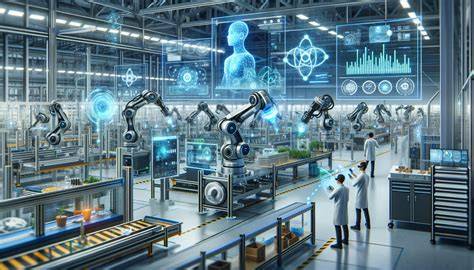
The transformation extends beyond software. Aerospace manufacturers are also examining robotics, advanced sensing systems, and physical AI to improve factory operations. These technologies can support workers by performing repetitive, physically demanding, or hazardous tasks while collecting information about the manufacturing environment.
Initiatives involving companies such as Tata Consultancy Services and Google Cloud demonstrate the broader direction of industrial technology. Experimental environments can allow manufacturers to evaluate robotics and AI systems before deploying them across complex production facilities.
For aerospace manufacturers, the value is not necessarily a futuristic factory filled with autonomous machines. The more practical objective is a human-plus-AI operating model in which technology improves visibility, consistency, safety, and responsiveness while skilled workers retain control over critical decisions.
That distinction matters because aerospace production involves an unusually high level of precision. A robotic system can repeat an operation consistently, while sensors can detect deviations that might be difficult for a human to notice. Yet human engineers remain essential when a problem requires interpretation, judgment, or certification.
Why Supply-Chain Visibility Is Becoming an Aircraft Manufacturing Priority
The $10 component example exposes a broader truth about modern aircraft production: the weakest point in a complex manufacturing system may be far removed from the most visible part of that system.
Airlines see finished aircraft. Investors see production rates and order backlogs. Passengers see airplanes arriving at airports. Yet beneath that visible product lies a network containing thousands of companies and millions of individual transactions.
The future of aerospace manufacturing will therefore depend partly on how effectively manufacturers can connect those layers. Supplier databases, logistics platforms, digital twins, AI analytics, and factory-floor systems need to work together rather than operate as isolated information silos.
Manufacturers that achieve this visibility should be better positioned to anticipate disruptions, protect production schedules, and manage rapidly changing conditions. Those that fail to identify hidden dependencies may continue discovering expensive problems only after the assembly line has already stopped.
The Real Cost of a $10 Part
The striking lesson is not that a $10 component is somehow worth $200 million. It is that value in an interconnected manufacturing system is determined by dependency, not price.
A small part can become critical when there is no approved substitute, no alternative supplier, insufficient inventory, or no practical way to complete the next production step without it. Once that dependency exists, the cost of the component itself becomes almost irrelevant.
That is why the aerospace industry’s supply-chain challenge cannot be solved simply by increasing production rates. Manufacturers must also understand the hidden architecture supporting those rates. Every supplier, every dependency, every transportation route, and every critical component matters.
As aircraft demand continues to outpace manufacturing capacity, resilience will become an increasingly important competitive advantage. The manufacturers that can see beyond their immediate suppliers and understand the deeper layers of their industrial ecosystems will have a better chance of keeping production moving.
Ultimately, the story of the $10 component is a lesson in modern aerospace itself. A $200 million aircraft is not merely an enormous machine assembled from enormous parts. It is the final expression of an incredibly intricate network. When one tiny link breaks, the entire chain can feel it. The solution is not to underestimate the small parts, but to understand them before they become the reason a multimillion-dollar aircraft cannot leave the factory.