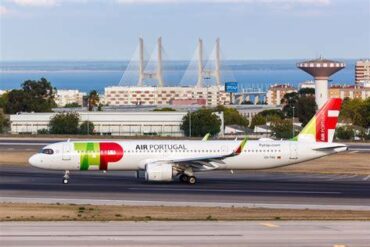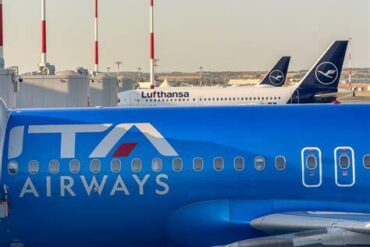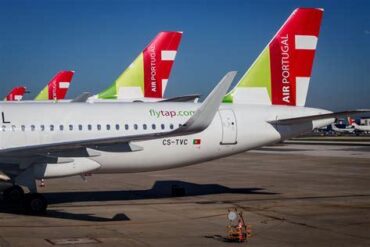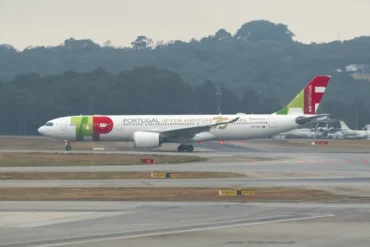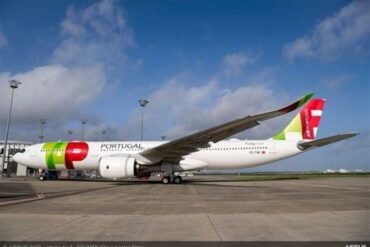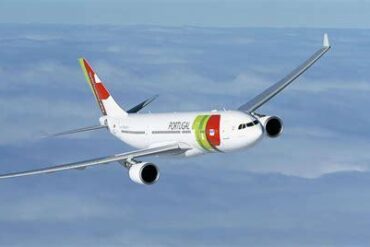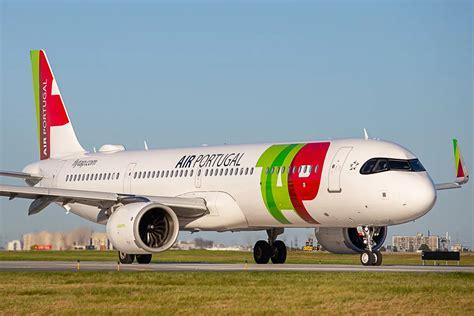
Lufthansa Group has emerged victorious in the battle for TAP Air Portugal, defeating Air France-KLM to secure a 44.9% stake in the Portuguese flag carrier. The two aviation giants were the only bidders in a contest that has drawn intense scrutiny across Europe, marking a decisive step toward the privatization of Portugal’s state-owned airline. While the deal has been agreed, it still requires approval from the European Union, leaving the final chapter of this saga yet to be written.
Lufthansa’s Winning Bid and the €1.2 Billion Prize
The Lufthansa Group captured victory with an offer valued at €1.2 billion ($1.3 billion), a figure that Portuguese Prime Minister Luís Montenegro confirmed exceeded Air France-KLM’s bid by a striking 16%. The margin of victory was not marginal but emphatic, signaling Lufthansa’s determination to plant its flag firmly in Iberian soil. For a group that has long coveted a foothold in the Portuguese market, the win represents the culmination of years of strategic patience.
Speaking at the World Aviation Festival, TAP CEO Luís Rodrigues framed the deal as a gateway to opportunity, explaining it would allow the airline to “access a larger pool of resources at better value.” His optimism reflects a broader belief within TAP that alignment with Lufthansa unlocks scale, purchasing power, and network synergies that standalone operation simply could not deliver.
Government Control Retained Through a Strategic Transition
The deal does not sever the Portuguese government’s grip on its national carrier. Lisbon will regain a majority stake, with a further 5% set aside specifically for airline employees to purchase. This carefully calibrated structure preserves public influence while opening the door to private capital and expertise. Full privatization is projected for 2028, a timeline that gives both parties room to manage the transition without destabilizing operations.
Infrastructure Minister Miguel Pinto Luz has pointed to Lufthansa’s ambitious fleet commitments as evidence of the deal’s long-term promise. According to the minister, the German group has pledged to grow TAP’s fleet to 117 jets by 2035, expanding to 130 aircraft thereafter. That kind of capital commitment could transform Lisbon, Porto, the Azores, and Madeira into far more connected nodes on the European aviation map.
Analysts Question Whether Lufthansa Can Afford Its Ambition
Not everyone is convinced the marriage makes financial sense. Analysts have raised pointed questions about whether Lufthansa Group possesses the capital to honor its pledges, given the group’s own well-documented financial strains. Lufthansa has committed to centralizing operations and lifting operating profit to 8-10% between 2028 and 2030 — a target that seems difficult to reconcile with absorbing a funding-intensive airline.
Aviation analyst John Strickland, in remarks obtained by Reuters, captured the skepticism bluntly: “Lufthansa is still struggling financially. Lufthansa Deutsche Airlines, as the largest part of the group, is still losing money. It has to get its own house in order.” That assessment cuts to the heart of the concern — Lufthansa is buying growth while still repairing its core.
Why Portugal Matters to Lufthansa’s European Empire
Lufthansa Group has assembled an impressive portfolio of European flag carriers over the years, absorbing Austrian Airlines, ITA Airways, and SWISS into its orbit. Yet Portugal remained conspicuously absent from that collection. Lisbon’s strategic location, its deep ties to Brazil and Lusophone Africa, and its growing transatlantic traffic make TAP a genuinely distinctive asset rather than a redundant one.
The group’s confidence rests on that gap. Where Air France-KLM might have folded TAP into an existing Iberian strategy, Lufthansa can offer Portugal something it has never had: a fresh sphere of influence and a hub that complements rather than duplicates its existing network. TAP and the government alike believe this alignment will deliver long-term sustainability, investment, and expanded connectivity.
A Privatization Story Decades in the Making
This is far from Portugal’s first attempt to sell TAP. Previous efforts foundered in 1998 and 2015, with the most recent push launched in 2024, when Lisbon sought to offload a 66% stake. The 2015 episode proved especially turbulent, when the government sold a 61% share to the Atlantic Gateway consortium, led by partners David Neeleman and Humberto Pedrosa.
That deal guaranteed Portugal would remain the airline’s main hub for 30 years and committed the consortium to purchasing 53 new Airbus jets, including 14 A330s and 39 A320s. The privatized era was short-lived, however. A new left-leaning government took power and, in February 2016, renegotiated terms to restore a controlling government share while preserving a 45% stake for Atlantic Gateway. The fallout lingered for a decade, culminating in November 2025, when police raided TAP as part of a corruption probe tied to an Airbus leasing arrangement connected to that privatization.
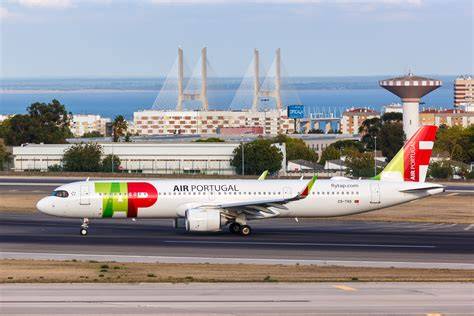
Against that troubled history, the Lufthansa deal represents both redemption and risk — a chance to finally resolve TAP’s ownership question, and a wager that Europe’s largest aviation group can succeed where previous attempts collapsed under political and legal pressure.