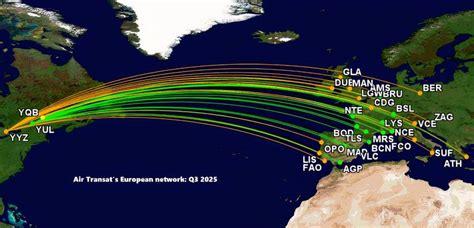
Canadian leisure airline Air Transat is no stranger to seasonal, niche, and diaspora-driven routes—but in July 2026, it reasserts its presence on the transatlantic stage with an eclectic mix of rare European destinations served just once per week. This move marks not only a strategy rooted in selective frequency but also a calculated response to shifting demand patterns, underserved travel corridors, and diaspora dynamics. With just four routes operating weekly, Air Transat is crafting a transatlantic mosaic that prioritizes connection over frequency.
Despite operating at an average of five weekly flights across 40 European routes in peak season, these once-a-week operations stand out. They are not merely logistical outliers but symbolic of Air Transat’s agility in adapting to niche travel demands. In a landscape dominated by high-frequency corridors, these singular services offer a glimpse into the airline’s long-term vision: serving the overlooked without oversaturation.

Quebec City to Nantes: Reintroducing a French Connection
On June 2, 2026, Air Transat will launch a weekly seasonal route between Quebec City and Nantes, deploying its fuel-efficient Airbus A321LR. This isn’t just a new service—it’s a diplomatic reconnection of two French-speaking cultural hubs. Nantes, nestled in western France’s Loire Valley, appeals directly to Francophone Canadians seeking leisure and familial ties.
This route enters a competitive yet cooperative field. Air Canada is also launching Montreal–Nantes service in the same season. While Montreal hosts a more sizable Francophone population, Air Transat’s Quebec City focus emphasizes regional decentralization, offering a valuable international gateway for eastern Quebec. The A321LR’s range and lower operating costs make it ideal for such lean, focused service. The weekly schedule balances operational efficiency with strong seasonality from June through early October.
Toronto to Tirana: A High-Risk, High-Reward Albanian Venture
Another standout is the Toronto–Tirana route, launching June 18 on the widebody Airbus A330-200. With just 17 round-trip flights scheduled through October 8, this operation is nothing short of experimental—but not without precedent. Much like the successful Toronto–Lamezia Terme route, Tirana’s market is driven heavily by diaspora travel.
Over 240,000 passengers flew between North America and Albania in the 12 months preceding October 2025, yet no nonstop flights currently exist. Tirana’s popularity among Albanian-Americans and Albanian-Canadians, as well as its rising appeal as a European tourist destination, forms the backbone of this venture.
The outbound service departs Thursdays at 10:00 PM local time from Toronto, arriving in Tirana by 1:00 PM the following day. Return flights depart Fridays at 3:00 PM and land back in Toronto at 7:15 PM. The aircraft remains on the ground in Albania for over 26 hours, a rare but cost-effective practice that allows the same crew to complete the round trip.

What makes this route so bold is the thin margin for error. The 332-seat A330-200 offers over 11,000 round-trip seats for the season, and yield per seat is expected to be low, given the nature of VFR (visiting friends and relatives) traffic. However, should the route resonate as Lamezia Terme has, the investment could be richly rewarded in brand loyalty and underserved market penetration.
Quebec City to Marseille: A Nostalgic Revival
On May 23, Air Transat reintroduces a Quebec City–Marseille connection, another seasonal weekly flight that revives a route last operated in 2013 with the now-retired Airbus A310-300. Operating with the narrowbody long-range A321LR, this route caters to a blend of leisure and heritage tourism.
Marseille, France’s bustling Mediterranean port city, shares strong historical and cultural links with Quebec’s Francophone community. As with Nantes, this route offers a streamlined travel solution without the need to connect through larger hubs like Montreal or Paris. The frequency may be minimal, but its strategic placement from May through October maximizes seasonal demand and minimizes exposure to off-peak risk.
Toronto to Lamezia Terme: Serving Canada’s Southern Italian Heart
By far the most entrenched of the four is the Toronto–Lamezia Terme service, which has run annually since 2009. Operating from June 10 to October 14 with just 19 round trips, this route serves the deep-rooted Italian-Canadian diaspora. Over 450,000 Italian Canadians reside in Greater Toronto, many tracing their ancestry to Calabria and southern Italy.

High seat load factors underscore its enduring viability. Despite limited frequency, demand remains robust, driven by multi-generational family travel, heritage tourism, and emotional ties. While legacy carriers have come and gone on this route, Air Transat has persisted, securing a loyal customer base that returns year after year.
The Bigger Picture: A Network of Selectivity
While these four routes attract attention for their weekly frequency, they are not isolated anomalies. Air Transat’s European strategy includes other low-frequency operations, such as Montreal–Keflavik and Montreal–Valencia, both operating twice weekly. The Keflavik route, debuting June 16, marks Air Transat’s first foray into Iceland, using the A321neo for optimal range and cost efficiency.
Valencia, launched in 2025, returns with expanded service in 2026—an indicator that even low-frequency beginnings can blossom into fuller operations. Flights resume as early as February 21 and extend until October 23, tripling previous frequencies. The 199-seat A321LR remains the aircraft of choice.
The message is clear: Air Transat is cultivating a brand of intentional connectivity, leveraging fleet flexibility and market intuition. Instead of chasing volume, it chases relevance. It crafts a boutique European footprint that aligns with diaspora movement, regional travel patterns, and emergent tourism trends.
Conclusion: A Quiet Boldness in the Skies
In an industry dominated by daily flights and competitive churn, Air Transat’s weekly European services are defiant outliers. They are nuanced expressions of market understanding, community alignment, and seasonal tact. Far from being symbolic novelties, these routes anchor a strategy that values precision over presence.
As the summer of 2026 approaches, all eyes will not be on the busiest routes—but perhaps they should be on these singular journeys. They reveal more than just flight schedules. They reveal a philosophy of serving where it matters most—quietly, weekly, and brilliantly.