Iberia’s expansion across the Atlantic is entering a historic phase as the carrier prepares to operate 100 weekly flights from Madrid to the United States and Canada next summer. This unprecedented growth reflects a strategic strengthening of its North American presence, propelled by new destinations, revived long-dormant routes, and the continued rollout of the Airbus A321XLR.
Iberia’s North American Strategy Accelerates
Iberia’s North American operation has evolved into one of the fastest-growing transatlantic portfolios among European legacy carriers. The airline’s choice to restore service to Toronto—after nearly three decades—and launch a brand-new route to Newark underscores a deliberate strategy: widen connectivity, capitalize on underserved markets, and reduce reliance on congested hubs such as New York JFK.
These developments position Iberia as the tenth-largest European airline serving the U.S. and Canada for summer 2026, rising three spots in a single year based solely on Madrid operations. Barcelona’s long-haul market remains under Level’s management, yet Level aircraft and crews continue to operate under Iberia’s umbrella. The Madrid-focused strategy allows Iberia to consolidate its growth where it holds maximum operational control.
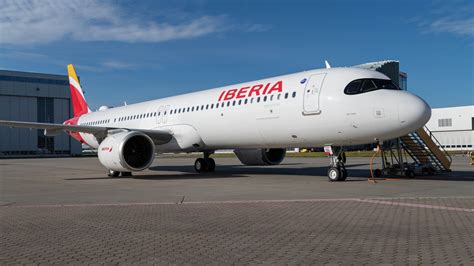
Twelve Essential Routes Linking Madrid to the U.S. and Canada
The network now includes 11 U.S. routes and one Canadian, creating a wide-reach transatlantic platform anchored in key business and leisure markets. Recent additions such as Dallas/Fort Worth and Washington Dulles have been complemented by newer launches, including Orlando, with Philadelphia reported as the next likely destination.
In March 2026, Iberia will inaugurate service to Newark, leveraging the high-efficiency Airbus A321XLR. This aircraft offers the agility required for slot-constrained regions, and its range supports Iberia’s long narrow-body transatlantic ambitions. By June 2026, Toronto rejoins the network, also operated by the XLR. Despite concerns raised by Air Canada about peak-summer heat affecting aircraft performance, Iberia plans for consistent XLR operations.
A Detailed Look at Iberia’s July 2026 Frequencies
The airline’s summer 2026 schedule highlights its strongest North American commitment ever. Boston, Miami, and New York—three longstanding pillars—will each support heavy frequencies, with triple daily service to the Greater New York City region when Newark flights begin. Several destinations will see daily operations, including Chicago, Dallas/Fort Worth, Los Angeles, Newark, and Washington Dulles.

The Role of the A321XLR in Iberia’s Growth
Much of the airline’s expansion hinges on the Airbus A321XLR, a long-range narrow-body aircraft that has redefined Iberia’s transatlantic economics. As the launch customer, Iberia has embraced the model early, building competitive routes where traditional widebodies may not be viable. By July 2026, the A321XLR will account for 40% of all U.S.–Canada frequencies, doubling its share from the previous year.
This type allows Iberia to:
- Enter high-demand yet slot-restricted destinations such as Newark.
- Restore routes long considered too thin for widebody service, including Toronto.
- Add frequencies in markets where daily service strengthens loyalty and relevance.
A Record-Breaking Summer: 100 Weekly Transatlantic Flights
Cirium Diio data confirms that Iberia will operate 100 weekly departures from Madrid to North America next July. This represents a 23% year-over-year increase from the 81 flights scheduled for July 2025. Compared with July 2019—the last pre-pandemic summer—the growth is striking: 57 weekly flights expanded to 100, an increase of 75%.
Even with this surge, Iberia represents just under 2% of all Europe–U.S./Canada flights, but its influence doubles when focusing only on European carriers. The trajectory reflects a long-term strategic bet on transatlantic travel demand, network diversification, and improved fleet efficiency.
Dallas/Fort Worth: Iberia’s Most Challenging U.S. Route
While overall U.S. performance remains strong, data from the U.S. Department of Transportation shows that Dallas/Fort Worth has struggled with lower seat occupancy. Iberia recorded a 79% load factor, compared with an 87% systemwide U.S. average and American Airlines’ 92% on the same city pair.
However, the story gains nuance when examining connection patterns. Approximately 45% of Iberia’s Dallas passengers connect onward through Madrid. The top flows include cities in Spain, followed by Italy, France, Portugal, and Switzerland. The single most-linked city pair is Dallas–Barcelona, showing how Iberia’s Madrid hub serves as a southern European gateway even for Spain’s rival major city.
Iberia’s Position in the Future Transatlantic Landscape
The momentum behind Iberia’s U.S. and Canadian expansion demonstrates a broader evolution in European–North American connectivity. Iberia leverages its geographically strategic hub, a modernizing fleet, and strong alliance partnerships to reinforce its relevance in the competitive transatlantic market.
As the airline pushes into 2026 with expanded frequencies, revived routes, and the ongoing adoption of the A321XLR, its transatlantic narrative points toward sustained growth. Travelers across the U.S. and Canada can expect more nonstop choices to Spain, while Iberia secures a firmer foothold in one of the world’s most influential long-haul markets.