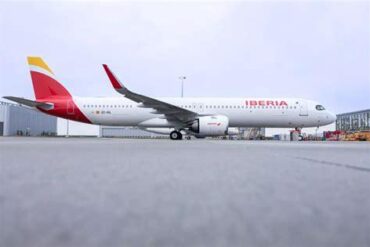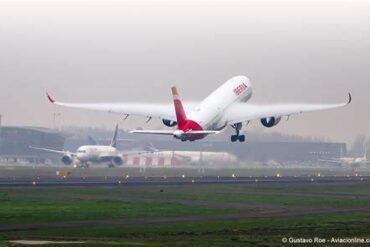
Iberia has officially returned to Canada with the launch of nonstop flights between Madrid-Barajas Airport and Toronto Pearson International Airport, introducing a new nine-hour transatlantic service operated by the Airbus A321XLR. The route, inaugurated on June 13, represents far more than a simple expansion. It signals a major shift in how airlines are approaching long-haul growth, relying on smaller and more efficient aircraft rather than traditional widebody jets.
The new connection restores Iberia’s presence in Canada after an absence of more than three decades. It also places the Spanish carrier back into one of North America’s most important international markets. Throughout the summer season, the airline plans to operate five flights per week and provide approximately 37,000 seats between Spain and Canada. The launch highlights the increasing role of long-range narrowbody aircraft in reshaping international aviation.
Passengers departing Madrid leave around midday and arrive in Toronto during the afternoon. Return flights from Canada are scheduled in the evening, allowing travelers to arrive in Spain the following morning. This timing maximizes connections through Madrid, Iberia’s largest hub, where passengers can continue to destinations throughout Southern Europe, Africa, and Latin America.
After decades away from the Canadian market, Toronto now becomes Iberia’s only destination in the country and an important addition to its growing North American network.
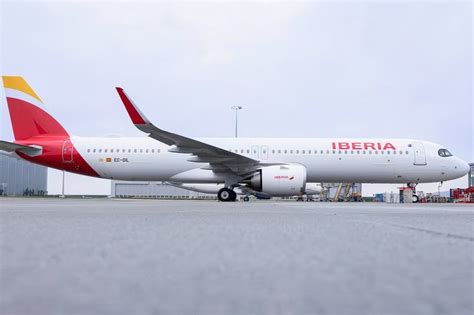
Toronto Becomes Iberia’s Sole Canadian Gateway
Although the route covers approximately 3,775 miles (6,075 kilometers), it is not among the longest destinations in Iberia’s Airbus A321XLR network. Nevertheless, the westbound journey approaches nine hours, making it one of the more remarkable narrowbody operations currently flying across the Atlantic.
Unlike many airlines that rely on larger aircraft for transatlantic services, Iberia has chosen a different strategy. Air Canada serves the same market with widebody aircraft such as the Boeing 787-9 Dreamliner and Airbus A330-300, both capable of carrying close to 300 passengers. Iberia’s Airbus A321XLR, by contrast, accommodates only 182 travelers.
This reduced capacity gives the airline greater flexibility. Rather than committing hundreds of seats on every flight, Iberia can gradually build demand while maintaining frequent service. The smaller aircraft also reduces financial exposure and allows the company to enter markets that might not justify daily widebody operations.
According to Iberia executives, the route demonstrates how innovation can bring new opportunities for both leisure and business travelers while opening previously underserved markets.
Iberia’s Airbus A321XLR Network Reveals A Flexible Expansion Strategy
Toronto sits near the middle of Iberia’s growing Airbus A321XLR network. Schedule data through the end of 2026 reveals that Boston is the carrier’s busiest destination for the type, with approximately 290 one-way flights planned. San Juan, Washington Dulles, New York JFK, Newark, Recife, and Fortaleza also receive substantial service.
Toronto is expected to receive around 96 one-way flights during the same period. While not among the largest destinations, it illustrates how Iberia is balancing different types of demand across its network.
Some routes focus heavily on business traffic, particularly destinations such as Boston, Washington, and New York. Others cater to leisure travelers and passengers visiting friends and relatives in the Caribbean and Brazil. This diversified approach allows the airline to maximize the aircraft’s capabilities while spreading commercial risk across multiple regions.
The longest destinations in the A321XLR network currently include Santo Domingo, which stretches approximately 4,162 miles, followed by San Juan and Recife. Toronto falls comfortably within the aircraft’s operational range, giving Iberia significant scheduling flexibility.
Why The Airbus A321XLR Is Transforming Long-Haul Aviation
The Airbus A321XLR itself is becoming one of the industry’s most significant developments. Iberia became the launch operator for the aircraft, placing itself at the forefront of a new generation of long-range narrowbody operations.
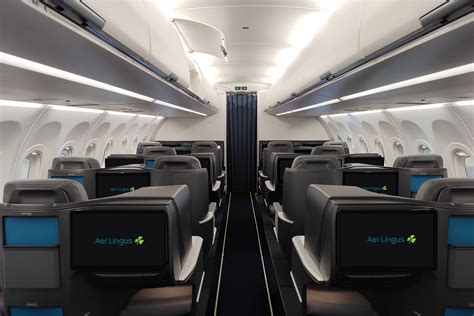
Its cabin features 182 seats, including 14 fully lie-flat business class seats with direct aisle access and 168 economy seats. Airbus also redesigned the overhead storage bins, increasing luggage capacity by approximately 60 percent compared with earlier versions of the A321 family. These improvements allow the aircraft to offer comfort levels that more closely resemble those of larger widebody aircraft.
For passengers, the experience differs from traditional long-haul travel. Instead of flying aboard massive twin-aisle jets, travelers can now enjoy transatlantic services on a smaller aircraft while still receiving premium amenities and modern cabin features.
More importantly, airlines gain an entirely new level of flexibility. Markets that previously could not support widebody aircraft can now become economically viable thanks to the lower operating costs of the A321XLR.
Fuel Efficiency Gives Airlines A Powerful Economic Advantage
The economic case behind the Airbus A321XLR explains why airlines around the world have shown strong interest in the aircraft.
Iberia estimates that the type can reduce fuel consumption by as much as 40 percent compared with older-generation aircraft. Actual savings vary depending on route conditions and configurations, but the efficiency advantages are substantial.
Instead of needing an aircraft with nearly 300 seats, airlines can support international routes with around 180 passengers. This lowers fuel costs, reduces operational risk, and makes it easier to launch service in developing markets.
The aircraft effectively bridges the gap between narrowbody and widebody operations. Routes once considered too thin for larger aircraft can now become profitable, allowing carriers to explore destinations that were previously inaccessible from a commercial standpoint.
More Than A New Route, Toronto Represents A Broader Vision
The addition of Toronto reflects Iberia’s wider ambitions across North America. By the end of 2026, the airline expects to operate more than 170 weekly flights connecting Spain with destinations across the United States, Canada, and Cuba. These operations will provide more than 2.2 million annual seats.
Toronto’s importance extends beyond the Canadian market itself. The city strengthens Madrid’s position as a global connecting hub and demonstrates how smaller long-range aircraft are changing the economics of international travel.
What once seemed unconventional—crossing the Atlantic on a single-aisle aircraft for nearly nine hours—is rapidly becoming part of mainstream airline strategy. The Airbus A321XLR allows carriers to expand with unprecedented flexibility, lower costs, and reduced risk.
For Iberia, the Toronto launch represents more than the return to Canada after thirty years. It serves as another example of how the next generation of aircraft is reshaping long-haul aviation and redefining the future of global route networks.