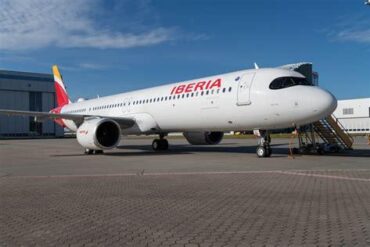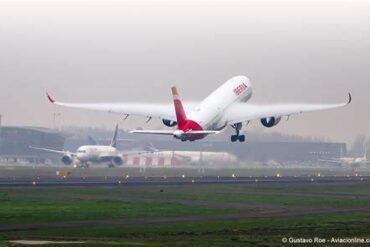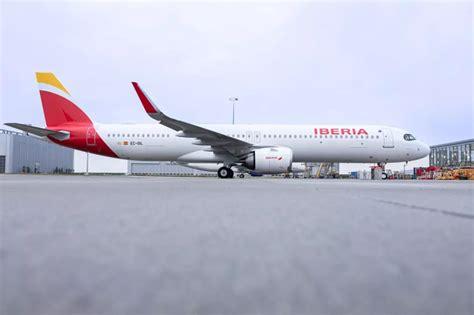
Iberia has made a bold leap into the future of long-haul air travel with the official launch of its Airbus A321XLR service between Madrid and Santo Domingo, a move that both breaks operational distance records and reshapes the airline’s approach to transatlantic efficiency. The introduction of the A321XLR on this route—previously served by the widebody A330—signals a strategic transformation as the Spanish flag carrier pivots toward fuel-efficient narrowbody aircraft capable of handling intercontinental distances with exceptional economy.
The inaugural service, set for October 2, 2025, positions the Madrid–Santo Domingo leg as Iberia’s longest route by distance using the A321XLR, clocking in at 3,617 nautical miles (6,699 kilometers). While the aircraft won’t hold the record for block time, it will undeniably redefine what narrowbody aircraft can achieve in terms of range, comfort, and cost-effectiveness.
Strategic Shift from Widebody to Single-Aisle Long-Haul
Historically, Iberia has relied heavily on widebody aircraft such as the Airbus A330-300 for its transatlantic operations. These aircraft provided the scale and cabin real estate needed to serve high-demand routes. But the adoption of the A321XLR introduces a new paradigm. The A321XLR offers a leaner, greener, and more targeted solution, particularly suited to shoulder seasons and emerging city-pairs where demand may not yet justify a widebody deployment.
The switch from the nine-weekly A330 service to a twice-weekly A321XLR offering initially may appear to be a reduction in capacity. However, it is a calculated adjustment, aligning aircraft type with demand while maintaining connectivity. This approach also ensures fleet flexibility—particularly vital during maintenance cycles or periods of softer demand.
Optimized Schedule with Minimal Time Trade-Offs
Despite being a narrowbody, the A321XLR maintains a competitive block time. The Madrid-to-Santo Domingo leg is scheduled at 8 hours and 55 minutes, a marginal five-minute increase over the A330-300’s 8 hours and 50 minutes. The return segment matches the A330’s timing precisely at 8 hours and 20 minutes, demonstrating the efficiency of this new-generation aircraft.
A321XLR Schedule (October 2–23, 2025):
- Madrid to Santo Domingo: 15:50 – 18:45 (8h 55m)
- Santo Domingo to Madrid: 20:15 – 10:50+1 (8h 20m)
The service will operate on Thursdays and Sundays, totaling seven round trips within the initial launch window. While Iberia has yet to confirm additional A321XLR flights beyond October, the door remains open should passenger demand prove robust.
Aircraft Specifications and Cabin Configuration
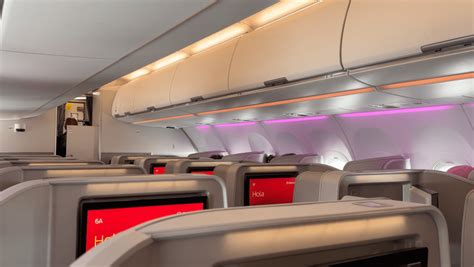
The Airbus A321XLR—XLR standing for “Extra Long Range”—represents the latest evolution in the A320neo family. Iberia’s current A321XLR fleet includes three aircraft, each meticulously configured to cater to both business and leisure travelers. The cabins accommodate 182 passengers, divided into:
- 14 Business Class seats, featuring lie-flat recliners, upgraded privacy, and premium meal service
- 168 Economy Class seats, designed with optimized legroom and modern inflight entertainment options
While Airbus advertises the A321XLR’s maximum range as 4,700 nautical miles (8,704 km), operational realities such as payload and weather often temper that figure. For Iberia, the aircraft’s practical range sits at 3,920 nautical miles (7,960 km)—still an exceptional achievement that covers the vast majority of transatlantic destinations.
Expansion of Iberia’s Transatlantic Reach
The deployment of the A321XLR to Santo Domingo is not an isolated experiment. Rather, it forms part of a broader fleet strategy designed to tap into new or underserved long-haul markets with optimal efficiency. Iberia has outlined a bold roadmap for the A321XLR, with plans to serve several destinations across the Americas.
Upcoming and current A321XLR routes include:
- Madrid to San Juan, Puerto Rico: 3,448 nm – Daily from September 13
- Madrid to Recife, Brazil: 3,386 nm – Five times weekly from December 13
- Madrid to Washington D.C., USA: 3,316 nm – Currently daily
- Madrid to Fortaleza, Brazil: 3,272 nm – Four times weekly from January 19
- Madrid to New York, USA: 3,119 nm – Three times weekly starting October 26
- Madrid to Boston, USA: 2,963 nm – Currently double daily
These routes highlight the aircraft’s versatility and Iberia’s intention to transform its long-haul model. With the A321XLR, the airline can enter niche markets, increase frequency on mid-volume city pairs, and reduce the environmental footprint of intercontinental travel.
Operational and Environmental Efficiency
One of the standout advantages of the A321XLR is its remarkable fuel efficiency, achieved through optimized aerodynamics, next-generation engines, and advanced wing technology. This results in 30% lower fuel burn per seat compared to previous-generation aircraft like the A340. For Iberia, this not only translates to significant cost savings, but also aligns with its environmental commitments, reducing emissions on routes that previously relied on heavier, more fuel-intensive jets.
Moreover, the A321XLR’s reduced noise profile makes it more community-friendly for airports with stringent environmental regulations. These operational gains make it an attractive option for future route expansions to secondary airports in the Americas and beyond.
Passenger Experience on Board the A321XLR
Despite its single-aisle configuration, the A321XLR is designed to deliver a widebody experience in a narrowbody shell. Iberia’s interior design philosophy focuses on comfort, privacy, and digital connectivity. Passengers can expect:
- High-speed inflight Wi-Fi across all classes
- Individual seatback entertainment systems
- Mood lighting and quieter cabins for improved comfort
- Redesigned galleys and lavatories to optimize cabin space
For business travelers, the availability of lie-flat seats on a narrowbody is a significant leap forward. It enables premium passengers to enjoy transatlantic comfort without compromise, while economy travelers benefit from the aircraft’s newer cabin and quieter inflight environment.
The Bigger Picture: Future of Iberia’s Fleet and Strategy
The introduction of the A321XLR is just the beginning of a comprehensive modernization strategy at Iberia. By mid-2026, the airline plans to significantly grow its XLR fleet, enabling broader deployment across its network. These new aircraft will supplement, not entirely replace, the widebody fleet, allowing Iberia to tailor aircraft type to route profitability and demand elasticity.
This dual-fleet strategy will also help Iberia maintain agility in a post-pandemic air travel environment where route performance and environmental scrutiny are more important than ever. The A321XLR’s lower trip cost per flight leg gives Iberia the freedom to explore new markets or reinstate paused routes without the risk associated with larger aircraft.
Conclusion: A New Chapter in Long-Haul Aviation
The launch of the A321XLR service between Madrid and Santo Domingo marks a watershed moment for Iberia and the broader airline industry. It showcases how narrowbody aircraft, once confined to short-haul regional routes, are now fully capable of crossing oceans with efficiency, comfort, and reliability.
As Iberia continues to refine its long-haul strategy with this game-changing aircraft, passengers can expect more flexible schedules, modern cabins, and sustainable travel options. The Santo Domingo route may be the first chapter, but it is certainly not the last. With more A321XLRs joining the fleet, the future of long-haul travel is lighter, smarter, and more connected than ever before.