Spanish flag carrier Iberia is exploring the possibility of launching new nonstop flights between Madrid-Barajas Airport (MAD) and four major US cities as the airline continues expanding its transatlantic network. A recently circulated route planning map suggests that Iberia is evaluating potential services to Atlanta, Detroit, Seattle, and Las Vegas, although no routes have been officially confirmed or announced.
The possible additions highlight Iberia’s growing confidence in the strength of the Spain-US travel market. The airline has transformed Madrid into one of Europe’s most important connecting hubs, using its geographic position to link passengers from North America with destinations across Southern Europe, Latin America, and North Africa.
The proposed routes would represent another step in Iberia’s long-term strategy of expanding beyond its traditional US gateways. Instead of concentrating only on established East Coast markets, the airline appears to be considering a broader network that combines business demand, leisure travel, and strategic partnerships.

Four Proposed Cities Reveal Iberia’s Changing US Market Approach
The four cities identified in Iberia’s planning materials each represent a different opportunity. Atlanta and Detroit are particularly interesting because both airports serve as major hubs for Delta Air Lines, one of the largest global carriers. Entering these markets would place Iberia directly into competitive territory, requiring the airline to attract passengers through Madrid’s connectivity, Spanish tourism demand, and premium long-haul services.
Atlanta’s position as one of the world’s busiest airports gives it significant potential. The city serves as a major business center and transportation hub for the southeastern United States, while also generating strong international travel demand. A Madrid-Atlanta route could appeal to corporate travelers, Spanish visitors, and passengers connecting onward throughout Europe.
Detroit offers another unique opportunity. The metropolitan area has strong industrial ties with Europe, particularly through the automotive sector and international business relationships. A direct Iberia service could strengthen connections between Spain and Michigan while providing another option for travelers who currently rely on connecting flights.
Seattle represents a different strategic direction. The Pacific Northwest has become an increasingly important international market, supported by technology companies, tourism growth, and expanding global business links. A Madrid-Seattle route could benefit from connections through Alaska Airlines, Iberia’s fellow oneworld alliance member, allowing passengers to continue beyond Seattle to destinations across the western United States and Alaska.
Las Vegas would focus more heavily on leisure demand. The Nevada city is one of the world’s most recognized tourism destinations, attracting millions of visitors every year from Europe and beyond. A nonstop Madrid-Las Vegas flight would give Spanish travelers easier access to one of America’s most popular vacation destinations while bringing more European visitors directly to Nevada.
Iberia Expands Its Existing North American Network
The evaluation of new routes comes as Iberia is already increasing its North American presence significantly. During the first week of August 2026, the airline plans to operate 99 weekly departures between Madrid and destinations in the United States, Canada, and Puerto Rico. This represents a 21% increase compared with the 82 weekly departures scheduled during the same period one year earlier.
The expansion demonstrates Iberia’s confidence that demand for transatlantic travel will remain strong despite intense competition from European, American, and Middle Eastern airlines. The carrier has steadily developed Madrid into a major alternative gateway for passengers traveling between North America and Europe.
Iberia’s strongest US market remains the New York region, where the airline plans extensive service to both John F. Kennedy International Airport (JFK) and Newark Liberty International Airport (EWR). Miami is also a key destination, receiving twice-daily service during the peak summer period, reflecting the strong travel links between Spain and Florida.
Boston, San Juan, Los Angeles, Chicago, Washington-Dulles, Dallas-Fort Worth, and San Francisco also form important parts of Iberia’s North American network. This diverse route structure allows the airline to serve multiple passenger segments, including leisure travelers, business customers, and international connections.
Madrid Becomes a More Powerful Transatlantic Hub
Iberia’s growth in North America is closely connected to Madrid’s increasing importance as a global aviation hub. Unlike some European airports that rely heavily on local demand, Madrid benefits from its ability to connect passengers between continents.
Travelers from US cities can use Iberia’s Madrid hub to continue toward destinations throughout Spain, including Barcelona, Seville, and Valencia, while also accessing Latin American markets such as Mexico, Argentina, Chile, Colombia, and Brazil.
This connecting strength gives Iberia an advantage when entering new US markets. A nonstop route does not depend only on passengers traveling between two cities; it can also attract connecting travelers who value convenient access to a wider international network.
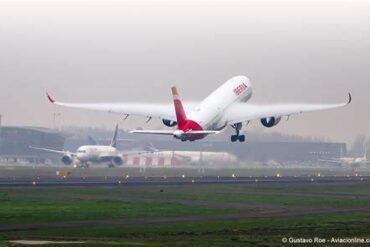
The airline’s fleet expansion and long-haul aircraft strategy also support future growth. Modern aircraft such as the Airbus A350 provide greater efficiency and passenger comfort, making it easier for Iberia to operate longer routes while managing operating costs.
Route Plans Provide Insight but Do Not Guarantee Launches
Although the proposed destinations have attracted attention, the planning map does not confirm that these flights will begin operations. Airlines regularly analyze potential routes before making final decisions, sometimes evaluating markets years before launching service.
Several factors influence whether a new international route becomes reality. Iberia must consider aircraft availability, airport slot access, expected passenger demand, competition from other airlines, operating costs, and seasonal travel patterns.
However, the appearance of Atlanta, Detroit, Seattle, and Las Vegas on Iberia’s planning materials provides valuable insight into where the airline sees future opportunities. The choices suggest a balanced expansion strategy that includes major business centers, alliance-supported markets, and high-demand leisure destinations.
Iberia’s US Expansion Shows Long-Term Confidence
With nearly 100 weekly North American departures planned for summer 2026, Iberia is clearly strengthening its position in the transatlantic market. The possible addition of four new US cities would further expand the airline’s reach and reinforce Madrid’s role as a global aviation gateway.
While passengers will have to wait for official announcements before booking flights to Atlanta, Detroit, Seattle, or Las Vegas, the potential routes demonstrate Iberia’s ambition. The airline is not simply maintaining its existing network; it is actively searching for new opportunities in one of the world’s most competitive aviation markets.