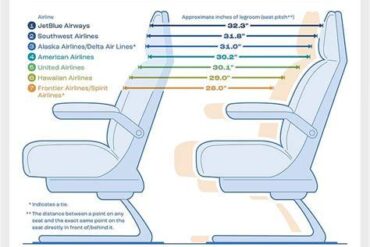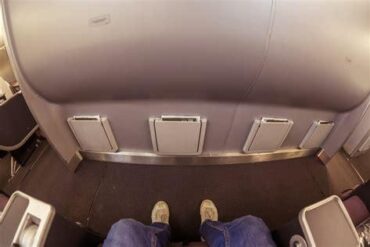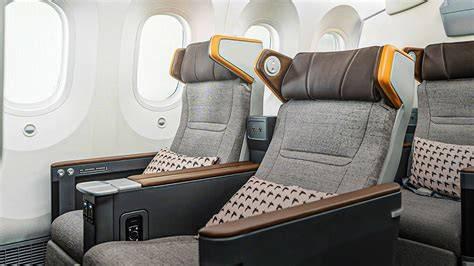
Economy class has spent three decades being quietly squeezed. Seat pitch — the distance from any point on one seat to the same point on the seat behind it — has drifted downward across most of the world’s fleet, settling at a global norm of 31 to 32 inches. That figure matters more than any brochure rendering, because it is the number that decides whether your knees touch the seatback in front of you for eleven hours over the Pacific. Yet a handful of carriers have refused to follow the densification playbook. Japan Airlines and All Nippon Airways lead the world at 34 inches (86.4 cm) of pitch across much of their long-haul economy cabins, joined at the top by Emirates on its Airbus A380 fleet. Behind them sits a second tier — Korean Air, JetBlue, Cathay Pacific, Singapore Airlines, and Qantas — that still delivers meaningfully more room than the American and European mainstream. Understanding who those airlines are, why they held the line, and what their seats actually feel like is the difference between tolerating a long-haul flight and arriving able to function.
Why Seat Pitch Collapsed Across the Global Fleet
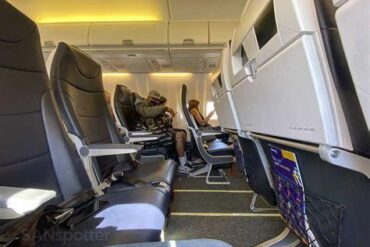
The economics of economy class are brutally simple, and they explain almost everything about the cabin you sit in. Reducing the space between rows by a single inch can allow an airline to install an entire extra row of seats on a narrowbody jet. Multiply that row across a fleet flying thousands of departures a year and the revenue gain runs into millions of dollars annually. Ultra-low-cost carriers pushed the frontier furthest: Ryanair operates with as little as 28 inches of pitch, a figure that would have been unthinkable on a legacy carrier two decades ago. Full-service airlines, forced to compete on base fare against those operators, responded by trimming pitch to keep their entry-level tickets credible. The result is a market where the industry standard sits at 31 to 32 inches, and where a passenger choosing the cheapest fare on a comparison site has, in effect, voted for the densest cabin available.
Modern seat engineering softened the blow without reversing it. Slim-back seats built from molded composites and thinner padding reclaim knee room that older, bulkier frames consumed, and manufacturers argue that a well-designed 31-inch seat can feel comparable to a 34-inch seat of an earlier generation. There is truth in that, but it is a partial truth. Measured distance is still measured distance, and the passenger who has spent nine hours behind a reclined seatback knows the difference between clever packaging and genuine space.
Japan Airlines and ANA: The World’s Generous Outliers
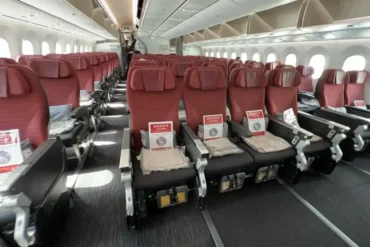
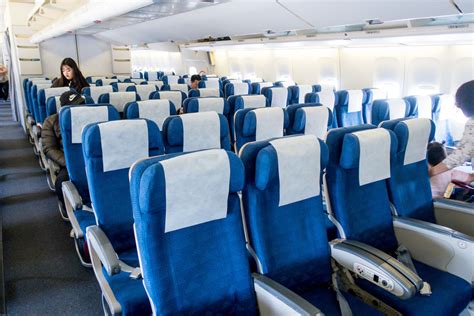
No airline has defended economy class legroom more stubbornly than Japan Airlines, and its motivation is strategic rather than sentimental. JAL has repeatedly won recognition for the Best Economy Class Seat precisely because it rejected the industry’s densification trend outright. Its “Sky Wider” strategy configures Boeing 787 Dreamliners in a 2-4-2 layout, where the aircraft is ordinarily fitted with a 3-3-3 cabin. That single seat per row difference is transformative: the nine-abreast configuration shaves width and pitch from every seat to squeeze in the extra passenger, while the eight-abreast cabin returns that space to the people already on board. JAL compounds the advantage with a slim seatback design that carves out additional knee room without thinning the cushion to the point of discomfort, so the seat delivers more usable space than the raw numbers alone suggest.
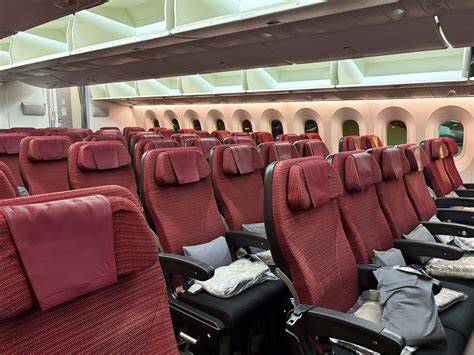
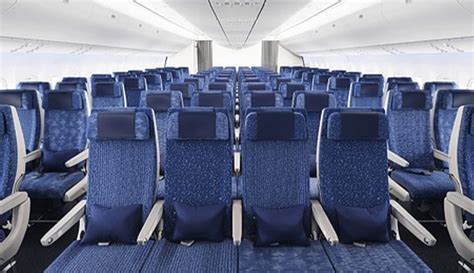
All Nippon Airways matches its domestic rival almost seat for seat, and the competitive dynamic between the two carriers is a large part of why Japanese economy class remains so comfortable. ANA has standardized a 34-inch pitch across much of its long-haul fleet, including the Boeing 777-300ER and 787-9, treating it as a baseline expectation rather than a premium upsell. The airline is going further in the summer of 2026, introducing newly designed Recaro seats on its long-haul 787-9 aircraft that add roughly one inch (2.5 cm) of knee space and deliver 1.5 times more recline than the previous generation — a range of up to seven inches, among the deepest in economy class anywhere in the world. For a passenger flying Tokyo to Los Angeles or Frankfurt, that combination of pitch and recline is not a marginal upgrade; it is the difference between sleeping and merely enduring.
The cultural logic behind this is often described through Omotenashi, the Japanese principle of anticipating a guest’s needs and serving them with meticulous care. That philosophy extends past the meal service and into the physical product. JAL’s repeated wins for best economy seat are treated internally as a source of institutional pride and a genuine marketing asset, which means the seat is not the first line item cut when fuel prices rise.
Emirates, Korean Air, and the Widebody Advantage
Emirates reaches the same 34-inch benchmark on its Airbus A380 fleet, and the aircraft itself explains part of the achievement. The A380’s vast floor area gives the airline latitude that a 787 or A350 operator simply does not have, allowing a genuinely generous pitch while still filling the main deck profitably. For travelers who specifically prioritize legroom in the back of the plane, the A380 is therefore a routing worth seeking out rather than an incidental detail.
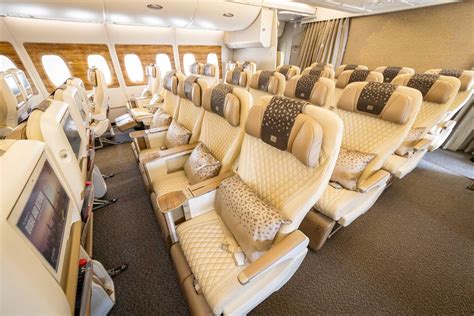
Korean Air occupies a slightly different position, offering 33 to 34 inches depending on aircraft and route, and it demonstrates that generous pitch is not exclusively a feature of brand-new cabins. Korean Air delivers up to 34 inches on older widebodies including the Boeing 747 and 777, a reminder that the space you get is a commercial decision rather than a function of aircraft age. An older jet fitted at 34 inches is more comfortable in economy than a brand-new one fitted at 31, regardless of how modern the lighting or entertainment screen happens to be.
JetBlue and the American Legroom Race
The United States is the world’s largest and most competitive air travel market, and it competes almost entirely on seat count rather than comfort — with one deliberate exception. JetBlue built its identity around the opposite strategy, offering more legroom than its domestic rivals as a structural differentiator rather than a seasonal promotion. The airline flies an all-Airbus A320 and A321 fleet configured with fewer rows than competitors, which allows a standard 32 to 34 inches of pitch across the economy cabin. That is meaningfully more than the 30 to 31 inches typical of rival narrowbodies and, notably, of many widebodies flying domestic and transatlantic routes. JetBlue’s advantage in the hard product extends beyond pitch to seatback entertainment screens and free high-speed Wi-Fi across the fleet, which together make the pitch advantage part of a coherent comfort proposition rather than an isolated statistic.
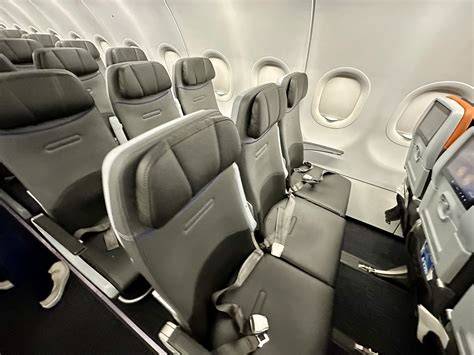
Behind JetBlue, the American field compresses quickly. Southwest Airlines offers 31.8 inches, Delta Air Lines and Alaska Airlines sit at 31 inches, and the gap between them and the leaders is only a couple of inches on paper. In practice those inches do real work over a six-hour transcontinental flight. Delta’s reputation rests on network breadth and operational reliability rather than seat generosity, while Alaska pairs a similar footprint with consistently strong marks for its soft product. Southwest long traded on low fares and free checked bags, though its free-service model has shifted this year — a reminder that the value equation in economy class is never static.
Cathay Pacific, Singapore Airlines, and the Strong Middle Tier
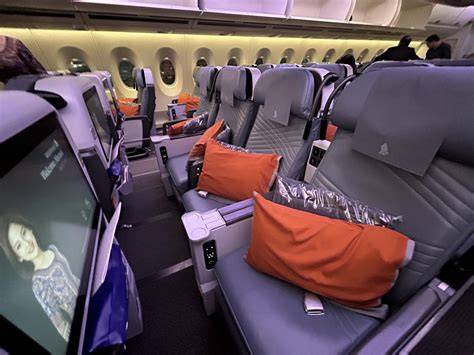
Cathay Pacific, Singapore Airlines, and Qantas occupy the most interesting territory in the global ranking. Each offers 32 inches of pitch — a full inch or more above the American standard and comfortably ahead of European short-haul norms — but all three fall just short of the Japanese benchmark. The reason is structural: these carriers operate nine seats per row on most of their widebodies, compared with the eight per row that gives JAL and ANA their extra width and pitch. Nine-abreast long-haul economy is perfectly comfortable by contemporary standards, but it is a compromise that the Japanese carriers have chosen not to make.
Where the middle tier decisively outperforms American and European operators is everything surrounding the seat. Cathay Pacific, Singapore Airlines, and Qantas operate with a service philosophy that treats complimentary hot meals, quality amenity kits, and attentive cabin crew as baseline expectations on long-haul routes rather than optional extras. A 32-inch seat on Singapore Airlines flying to London is a materially different experience from a 32-inch seat on a domestic-oriented carrier, because the hard product is only half of what determines how a twelve-hour flight feels.
The Cautionary Tale of “More Room Throughout Coach”
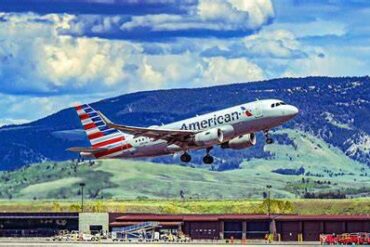
The most instructive chapter in the history of economy legroom belongs to American Airlines, and it explains why the world’s cabins look the way they do today. In February 2000, the airline launched a $70 million initiative called “More Room Throughout Coach,” a genuinely radical attempt to differentiate itself by improving comfort for every economy passenger rather than only those in first or business class. American stripped approximately 7,200 seats from its 707-aircraft fleet — a 6.4% reduction in total coach capacity — removing two rows, or roughly 12 to 16 seats, from most aircraft. The payoff was a seat pitch of 34 to 35 inches (86.4 to 88.9 cm) throughout the entire coach cabin, marketed directly at travelers tired of being packed in and unable to open a laptop once the seat in front reclined.
Passengers loved it. Thousands wrote letters of appreciation. It was also a financial failure, scrapped entirely by 2004. American discovered that it could not command even a $10 fare premium over competitors for the extra room, and instead of gaining customers it lost market share to low-cost carriers that kept their cabins densely packed and their fares lower. The initiative also collided with the industry downturn after the September 11 attacks, a broad economic recession, and sharply rising fuel costs. Airline executives still cite the episode in 2026 as the core reason economy cabins remain tight: passengers consistently say they want more legroom, and consistently decline to pay for it when the fare comparison is on screen.
What Actually Determines Your Comfort in 2026
Regulation offers no floor to fall back on. The FAA and its international counterparts mandate no minimum seat size or pitch, so the space you receive is entirely a commercial choice made by the carrier. Airlines earn their strongest margins in business and first class, configure economy largely to cover operating costs, and then design extra-legroom and premium economy products specifically to capture the passengers most willing to pay for space. That structure makes the outliers genuinely valuable: when Japan Airlines, ANA, and Emirates hold 34 inches as a standard rather than an upsell, they are absorbing a revenue sacrifice their competitors have declined to make.
The practical takeaways for booking are concrete. On transpacific routes, JAL’s 2-4-2 Dreamliner configuration and ANA’s incoming Recaro seats with seven inches of recline represent the best economy hard product in the world. On Gulf routes, an A380 with Emirates is worth a connection. In the United States, JetBlue is the only major carrier whose standard economy pitch consistently clears 32 inches. And on the strong middle tier — Cathay Pacific, Singapore Airlines, Qantas, and Korean Air — the seat is respectable and the service around it is excellent, which matters when the flight runs longer than twelve hours. Legroom is the one variable in economy class that airlines cannot fake with better lighting or a newer entertainment screen, and in 2026 the carriers listed above are the ones still willing to sell it.