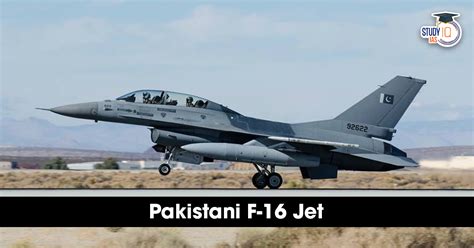
A New Lease on Life for Pakistan’s F-16s
In a bold yet calculated move, the United States has approved a $686 million sustainment package to extend the operational life of Pakistan’s F-16 fighter jets well into the 2040s. This announcement, delivered to Congress on December 8, 2025, signals a commitment to continued engagement with a long-standing but often controversial ally.
The upgrade, led by Lockheed Martin and involving giants like Raytheon, Northrop Grumman, and L3Harris, is not about expanding capabilities with cutting-edge weapons or acquiring next-generation aircraft. Rather, it’s about ensuring the Cold War-era F-16s remain airworthy and interoperable in allied combat environments. At the heart of this effort is the integration of 92 Link-16 tactical data link systems, enabling real-time digital battlefield awareness between platforms and allied forces.
Yet, what’s conspicuously missing from the package tells us far more about Washington’s strategic calculus than what’s included.
No Link 22: A Calculated Denial
Despite the extensive upgrades, Pakistan will not be granted access to Link 22, NATO’s most advanced, jam-resistant, beyond-line-of-sight data link. This technology, co-developed by the seven members of the NATO Improved Link Eleven (NILE) program — Canada, France, Germany, Italy, Spain, the United Kingdom, and the United States — remains closely held.
Link 22 represents the pinnacle of secure air combat networking. It dramatically improves bandwidth, jam resistance, and data transmission range over Link 16, offering true beyond-line-of-sight capability through HF skywave transmission. This allows connectivity up to 1,000 nautical miles, even across mountainous or oceanic barriers.
By excluding Pakistan from this elite circle, the U.S. is drawing a clear line between allies it trusts with its most sensitive digital warfare architecture and those it does not.
Link 16: Tactical Interoperability With Constraints
The Link 16 system, now over 30 years old, is a reliable but aging digital radio standard used across most Western platforms. It facilitates real-time sharing of friendly positions, fuel status, weapon loadouts, and — with clearance — even hostile tracking data. It is commonly found in aircraft like the F-16, Eurofighter Typhoon, Rafale, and E-3 Sentry AWACS.
However, Link 16 has critical limitations:
- Its omnidirectional transmissions make it easier to detect and jam.
- It has limited bandwidth unsuitable for the information-heavy demands of fifth-generation warfare.
- It lacks robust beyond-line-of-sight performance.
As a result, while Pakistan’s upgraded F-16s will now be interoperable with U.S. and CENTCOM forces during joint training or counterterrorism missions, they will not benefit from the stealth-optimized, high-throughput, or anti-jam capabilities afforded by Link 22 or the Multifunction Advanced Data Link (MADL) used by the F-35.
Trust Reserved for the Few
Access to Link 22 is not determined by defense spending or need — it is about deep military trust, intelligence alignment, and treaty obligations. Currently, only seven nations possess and operationally integrate Link 22:
- United States
- United Kingdom
- France
- Germany
- Canada
- Spain
- Italy
These countries not only share encrypted communications standards but are tightly bound through mutual defense treaties, NATO commitments, and Five Eyes intelligence agreements. Pakistan, despite being a Major Non-NATO Ally, does not enjoy the same level of institutional trust.
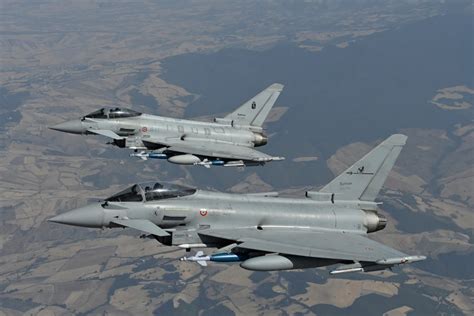
There is no indication that the U.S. is prepared to risk exposing the advanced electronic warfare secrets embedded in Link 22 to partners whose internal security protocols, geopolitical alignment, and long-term stability remain under scrutiny.
Strategic Balancing Act in South Asia
The timing and scope of the F-16 upgrade has raised eyebrows in New Delhi, which views any U.S.-Pakistan defense cooperation through a lens of regional rivalry. While the U.S. has clarified that the deal “will not alter the basic military balance in the region,” concerns persist over the deterrence value of these refurbished fighters.
Indian Air Force (IAF) veteran Squadron Leader Vijainder Thakur (retd) stated, “This package will most certainly allow the PAF to maintain its deterrence capability against the IAF.” However, he emphasized it would not significantly shift the regional power dynamics.
Air Vice Marshal Pranay Sinha (retd) echoed this view, calling the deal more of an “irritant” than a game-changer, given the IAF’s superior numbers and technology.
Yet, geopolitics often trumps tactical calculation. Pakistan’s strategic location — serving as a gateway to Afghanistan, Central Asia, and the Middle East — remains of enduring importance to Washington. The country has historically played a pivotal role in supporting U.S. operations in the region, especially during the Afghan war and counterterrorism campaigns.
Commercial and Political Underpinnings
Arms deals are rarely free from political influence or economic incentives. The U.S. has a vested interest in maintaining the viability of its global defense industrial base. Supporting the F-16 fleet globally — including those in Turkey, Taiwan, Egypt, and Pakistan — ensures a steady demand for spares, upgrades, and logistical services.
Group Captain Johnson Chacko, KC (retd) aptly summarized, “Arms transactions worldwide are business-oriented—money matters. The U.S. has supplied F-16s to Pakistan, so it is honor-bound to maintain them.”
Moreover, a pro-Pakistan lobby in Washington, benefiting from various aid and commercial deals, continues to advocate for sustaining defense ties. This lobby often operates within the corridors of influence across Congress, defense contractors, and diaspora networks.
Information Dominance: The Next Battlefield
Modern warfare is no longer decided by just the number of jets or missile range — it is dominated by information speed, clarity, and fusion. In this new paradigm, possessing high-end aircraft is only part of the equation. The ability to fuse data from satellites, drones, and electronic sensors in real time, then share that data securely across a combat network, is the real force multiplier.
The Chinese J-20 and Russian Su-57, both fifth-generation fighters, are pushing their own indigenous data link technologies to challenge the Western lead in this domain. Chinese platforms, with links like XS-3 and DTS-03, are already assessed by some experts to outperform Link 16 in both resilience and throughput.
By restricting Link 22 access, the U.S. is protecting the core of its information warfare advantage — its ability to see first, decide first, and strike first in a rapidly evolving battlespace.
Conclusion: A Strategic Handshake, Not a Hug
The recent upgrade for Pakistan’s F-16s is not a blank check for advanced capabilities, but rather a calculated move to ensure flight safety, sustained deterrence, and operational compatibility within select mission profiles.
By denying access to Link 22, Washington signals that while Pakistan remains a useful partner, it does not yet meet the threshold of a trusted ally in the age of information-dominant warfare.
This approach allows the U.S. to thread the needle — maintaining influence in South Asia, placating defense contractors, and ensuring Pakistan’s military doesn’t fall into disrepair — all without compromising the crown jewels of its digital battlefield architecture.