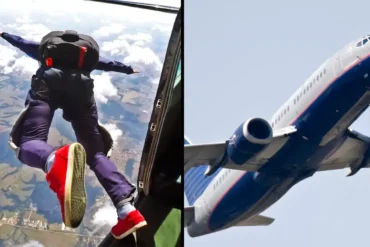
Commercial aviation has achieved remarkable safety standards over the past century, yet one question continues to intrigue travelers: why are passengers never issued parachutes? While parachutes have a long history and are synonymous with survival, the realities of modern airline operations make them impractical and potentially dangerous. The absence of passenger parachutes is not an oversight but the result of engineering, physics, and decades of experience.
The safety demonstrations before takeoff cover oxygen masks, emergency exits, and life jackets, but they never mention parachutes. Although parachutes have saved countless lives since the early days of aviation, commercial airliners operate in conditions vastly different from those encountered by military crews or trained skydivers. At cruising altitude, the environment outside the cabin is hostile enough to turn a jump into a near-certain disaster.
Most airliners cruise between 35,000 and 40,000 feet. At those heights, temperatures can plunge below minus 50 degrees Celsius, while the atmosphere contains too little oxygen to sustain consciousness without specialized equipment. Even before considering the parachute itself, simply surviving exposure to such conditions presents a major challenge.
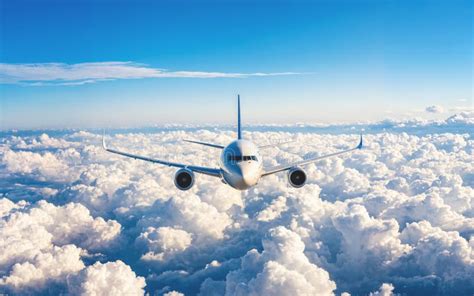
Extreme Altitudes and High-Speed Airflow Make Passenger Jumps Impossible
Commercial aircraft routinely travel at speeds exceeding 500 mph. Opening a door at cruise altitude is impossible because cabin pressure creates enormous force against it. Even if the aircraft descended and depressurized, the violent airflow outside the fuselage would create dangerous conditions for untrained passengers.
Skydivers spend many hours learning body positioning, emergency procedures, and landing techniques. Expecting hundreds of travelers, including children and elderly passengers, to rapidly equip parachutes and safely exit an aircraft during a crisis is unrealistic. Confusion and panic would likely produce more casualties than the emergency itself.
The logistical challenge alone is overwhelming. Every seat would require storage space for bulky parachutes, while additional weight would increase fuel consumption and operating costs. More importantly, passengers would require extensive instruction before every flight, significantly complicating airline operations.
Historical Incidents Demonstrate Why Staying Onboard Is Safer
One notable example occurred on June 24, 1982, when a British Airways Boeing 747 unknowingly entered a volcanic ash cloud. The ash caused all four engines to fail, and the aircraft descended roughly 25,000 feet before the crew managed to restart the engines and successfully land. The incident demonstrated how emergencies that initially appear catastrophic can still end with everyone surviving aboard the aircraft.
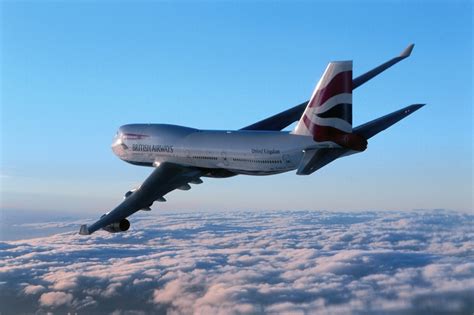
Had passengers attempted to parachute from the aircraft, hundreds of people could have been scattered across the ocean without any guarantee of survival. Remaining inside the airplane gave pilots the opportunity to recover the situation and deliver everyone safely to the ground.
Even accidents occurring at lower altitudes offer little time for organized evacuations through the sky. Many aviation emergencies develop within seconds, leaving no opportunity to distribute parachutes and coordinate hundreds of individual jumps.
Modern Airliners Prioritize Prevention Instead of Escape
Today’s commercial aircraft are among the safest machines ever built. Redundant systems, sophisticated navigation technologies, highly trained crews, and rigorous maintenance standards significantly reduce the likelihood of catastrophic failures.
Engineers have explored concepts such as whole-airframe parachutes similar to those used on smaller Cirrus aircraft. However, scaling such systems for massive airliners presents enormous technical challenges involving weight, structural loads, and deployment reliability.
For commercial passengers, the safest place during an emergency remains inside the airplane. Rather than relying on individual parachutes, modern aviation focuses on preventing accidents and ensuring aircraft can withstand and recover from unexpected situations. That approach has made flying the safest form of transportation in the modern world.