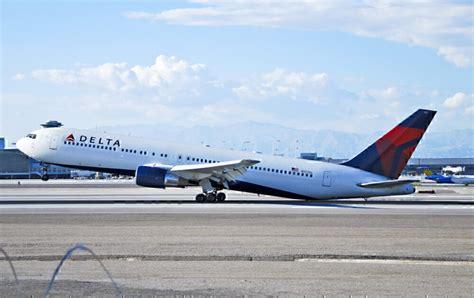
Commercial aviation is obsessed with margins—safety margins, performance margins, and financial margins—and few events sit at the uncomfortable intersection of all three quite like an aircraft tail strike. In 2024, Boeing quietly filed a patent that shines a spotlight on this persistent operational risk, proposing an automated tail strike detection system designed to identify ground contact events in real time. The filing does not announce a finished product, nor does it promise immediate certification, but it offers something arguably more revealing: a clear look at how one of the world’s largest aircraft manufacturers is thinking about safety, efficiency, and data-driven decision-making in the next generation of commercial jets.
Tail strikes are rare enough that most passengers will never experience one, yet common enough that airlines, regulators, and manufacturers treat them with deep respect. When the tail of an aircraft contacts the runway during takeoff, landing, or a rejected takeoff, the consequences can range from superficial abrasion to hidden structural damage that demands extensive inspection. The challenge has always been certainty. Was there contact, or just a hard rotation? Did the crew feel it, or did vibration mask the event? Boeing’s patent aims squarely at removing that ambiguity by replacing post-flight guesswork with automated detection and recorded evidence.
Understanding why this matters requires a closer look at what tail strikes are, why they happen, and why they continue to haunt airline operations despite decades of improved training and flight control technology.
A tail strike occurs when the rear fuselage or tail skid of an aircraft makes contact with the runway surface. This most commonly happens during takeoff rotation, when pilots raise the nose to achieve lift, but it can also occur during landing, go-arounds, or aborted takeoffs. The physics are unforgiving. Aircraft are designed with specific tail clearance angles, and exceeding those angles—even briefly—can result in ground contact. Longer aircraft, particularly stretched widebodies, are inherently more vulnerable because their tails sit closer to the ground during rotation.
The Boeing 777-300ER and Boeing 747-8, among the longest commercial aircraft flying today, illustrate this challenge clearly. Their impressive length delivers efficiency and capacity, but it also reduces the margin for error during critical phases of flight. Environmental factors such as gusty winds, wind shear, runway slope, or improper loading can further complicate pitch control, increasing the risk of an excessive nose-up attitude.
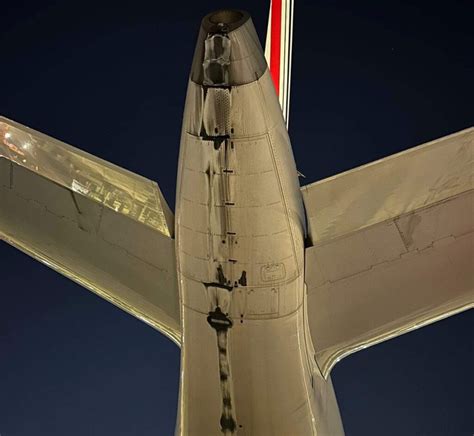
What makes tail strikes especially problematic is that not all of them announce themselves dramatically. A minor scrape may produce no obvious sound or sensation in the cockpit. Crew members may suspect contact, but suspicion alone is enough to trigger a conservative response. Airlines typically ground the aircraft until a thorough inspection can confirm whether damage occurred, because even seemingly minor tail contact can compromise the pressurized structure of the fuselage.
The operational cost of this uncertainty is substantial. When a tail strike is suspected, maintenance teams may need to open access panels, inspect internal structural members, and examine pressure bulkheads deep within the aft fuselage. These inspections are time-consuming and labor-intensive, often keeping an aircraft out of service for hours or even days. For airlines operating tight schedules, the ripple effects can include delays, cancellations, and costly aircraft substitutions.
Beyond cost and disruption lies the deeper concern of structural integrity. Aviation history offers sobering reminders of what can happen when tail strike damage is not properly identified or repaired. The most infamous example remains Japan Airlines Flight 123. In 1978, the Boeing 747 involved suffered a tail strike during landing, damaging its rear pressure bulkhead. The immediate incident was survivable, but the subsequent repair was carried out incorrectly, leaving a latent structural flaw. Seven years later, that weakness led to explosive decompression and loss of control, killing 520 of the 524 people onboard in the deadliest single-aircraft accident in aviation history.
A similarly haunting case is China Airlines Flight 611, which disintegrated in midair over the Taiwan Strait in 2002. The root cause traced back to a tail strike that occurred more than two decades earlier at Hong Kong’s old Kai Tak Airport. Although the aircraft was repaired and returned to service, investigators later found that the repair did not meet structural requirements. Over thousands of pressurization cycles, metal fatigue accumulated until the fuselage finally failed catastrophically. These tragedies underline why the industry treats tail strikes with near-zero tolerance and why accurate detection is so critical.
Against this backdrop, Boeing’s patent takes on added significance. The proposed system is not a simple sensor bolted onto the tail. Instead, it describes a multi-layered detection architecture that combines data from several sources to determine whether a tail strike has occurred. Accelerometers placed near the aft fuselage monitor sudden changes in acceleration or load, while other inputs such as pitch angle, vertical speed, and landing gear status provide crucial context.
This contextual approach is key. Aircraft experience vibration routinely, especially on uneven runways or during firm landings, and a system that cries wolf too often would quickly lose credibility. Boeing’s design emphasizes distinguishing the unique signature of a true tail strike from normal operational loads. By correlating sensor data with aircraft attitude and flight phase, the system aims to reduce false positives while maintaining sensitivity to genuine contact events.
Detection, however, is only half the story. The patent also outlines how tail strike information could be used operationally. In the cockpit, pilots could receive a clear, unambiguous indication that ground contact has occurred. This matters most during high-workload moments, when uncertainty adds stress and decision-making time is limited. A definitive alert allows crews to follow established procedures confidently rather than debating whether an inspection is necessary.
On the ground, the benefits multiply. The system could automatically log event data, including estimated impact severity and aircraft attitude at the moment of contact. Maintenance teams would have access to this information before the aircraft even reaches the gate, allowing them to plan inspections more efficiently. In cases where no tail strike is detected, airlines could avoid unnecessary groundings altogether, saving time and money without compromising safety.
It is important to recognize what a patent is—and what it is not. Filing a patent does not guarantee that the technology will appear on future aircraft, let alone receive certification from regulators. Patents are often exploratory, staking intellectual territory and signaling areas of active research. Even so, they provide valuable insight into a manufacturer’s priorities. In this case, Boeing is clearly investing thought into automation, data fusion, and operational certainty, themes that align closely with broader trends in aviation safety.
If such a system were to reach production, its implications would extend beyond immediate cost savings. Over time, aggregated tail strike data could reveal patterns related to airport design, weather conditions, or specific operational practices. Airlines could use these insights to refine training programs, adjust procedures, or collaborate with airports to mitigate risk factors. In this sense, automated detection becomes not just a reactive tool but a proactive safety asset.
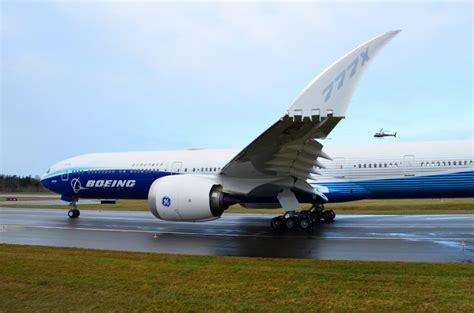
The potential beneficiaries include Boeing’s newest and most ambitious programs. The Boeing 777X, for example, represents the next evolution of the long-haul twin-engine widebody. Designed to succeed the 777-300ER, it features new composite wings with folding wingtips, massive GE9X engines, and a focus on fuel efficiency and passenger comfort. Its size and performance envelope make it precisely the kind of aircraft that could benefit from enhanced tail strike awareness.
The 777X program has been anything but smooth. Originally expected to enter service around 2020, it has faced repeated delays due to engineering challenges, certification scrutiny, and production issues. By late 2025, Boeing had pushed its expected entry into service to 2027, taking a multibillion-dollar charge against the program in the process. Despite these setbacks, airline interest remains strong, with major carriers such as Emirates, Qatar Airways, and Cathay Pacific maintaining significant orders.
For airlines, the appeal of technologies like automated tail strike detection lies in their ability to quietly remove friction from daily operations. Tail strikes may represent a small fraction of total incidents, but their downstream effects are disproportionately large. Every avoided inspection, every prevented delay, and every confidently cleared aircraft contributes to smoother schedules and better asset utilization. From a safety perspective, anything that reduces the chance of undetected structural damage is a clear win.
At a philosophical level, Boeing’s patent reflects a broader shift in aviation toward evidence-based certainty. The industry has long relied on human reporting supplemented by mechanical inspection. Increasingly, sensors, algorithms, and integrated systems are stepping in to provide objective data at the moment events occur. This does not replace pilot skill or maintenance expertise; it enhances them by removing doubt and sharpening focus.
Whether Boeing’s tail strike detection system ultimately reaches the flight line remains to be seen. Certification hurdles, cost considerations, and competing priorities will all play a role. Yet the idea itself feels inevitable. In an era where aircraft generate vast streams of real-time data, leaving something as consequential as a tail strike to post-flight inference seems increasingly anachronistic.
Tail strikes will never disappear entirely. Aircraft geometry, weather, and human factors ensure that the risk will always exist at the margins of performance. What can change is how the industry responds. By transforming an ambiguous event into a clearly identified occurrence, technology like the system outlined in Boeing’s patent has the potential to make aviation not just safer, but smarter. In a world where safety gains are often incremental and hard-won, that quiet improvement may prove to be its most meaningful contribution.