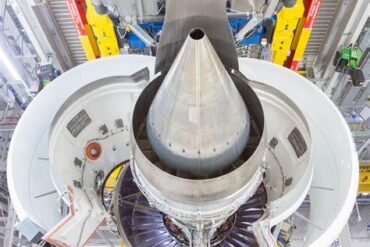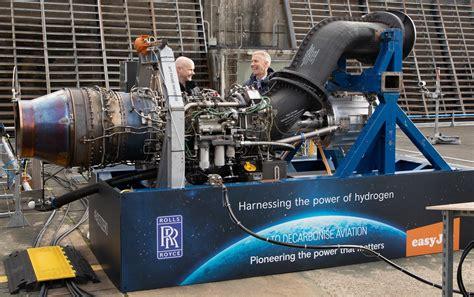
The aviation industry stands at a decisive crossroads, where technological ambition meets environmental urgency. For over a century, propulsion systems have evolved incrementally—from piston engines to turbojets and high-bypass turbofans—each step unlocking new efficiencies but still tethered to fossil fuels. Today, that paradigm is being challenged. At the center of this transformation is Rolls-Royce, a name synonymous with engineering excellence, now pushing the boundaries of what powers flight with its newly patented hydrogen combustion system.
This patent is more than a technical document; it is a strategic signal. It reveals how one of the world’s most influential engine manufacturers envisions a future where hydrogen-powered aviation could become viable—not just as a concept, but as a scalable solution. The implications stretch far beyond engineering, touching economics, infrastructure, and the very design of aircraft.
The question is no longer whether aviation will change, but how fast—and whether hydrogen can truly deliver on its promise.
Rolls-Royce’s Hydrogen Engine Patent: A Radical Rethink of Fuel Systems
At the heart of Rolls-Royce’s innovation lies a deceptively simple idea: make hydrogen combustion stable, efficient, and practical. The challenge, however, is anything but simple.
Hydrogen, particularly in its liquid form, must be stored at an extreme temperature of -253°C, making it one of the most difficult fuels to handle in aviation. Traditional fuel systems are not designed for such conditions, and introducing hydrogen into a gas turbine presents a cascade of engineering challenges—from fuel delivery to combustion control.
Rolls-Royce’s patented system tackles this head-on with an elegant solution. It introduces a self-sustaining fuel architecture that preconditions hydrogen before it enters the combustion chamber. A portion of the hydrogen is diverted into an auxiliary combustor, where it is burned to generate heat. This heat is then used to warm the remaining hydrogen fuel, ensuring it reaches the engine at a temperature suitable for stable combustion.
The brilliance of this design lies in its circular efficiency. Instead of relying on external heating systems, the engine effectively uses its own fuel to prepare itself, creating a closed-loop system that enhances reliability while reducing complexity.
This approach could mark a turning point in hydrogen propulsion, addressing one of the most persistent barriers to its adoption.
Why Hydrogen Combustion Is So Difficult—and So Valuable
Hydrogen is often described as the ultimate clean fuel, but in aviation, it behaves more like a double-edged sword.
On one hand, hydrogen combustion produces no carbon dioxide emissions, releasing only water vapor. This positions it as a powerful tool in the industry’s push toward net-zero emissions by 2050. On the other hand, hydrogen introduces a set of challenges that are fundamentally different from conventional jet fuel.
Its low energy density by volume means that aircraft must carry significantly larger fuel tanks to achieve comparable range. This is not a minor inconvenience—it forces a complete rethink of aircraft design, from fuselage shape to payload capacity. Meanwhile, its high reactivity complicates combustion, requiring precise control to avoid instability or inefficiency.
Rolls-Royce’s patented system directly addresses these issues by stabilizing the combustion process and improving fuel handling. By preheating hydrogen, the system reduces the risk of uneven combustion and enhances energy release, making it more suitable for use in gas turbine engines.
The value of solving these challenges cannot be overstated. If hydrogen combustion becomes practical, it could allow airlines to retain the familiar architecture of jet engines while dramatically reducing emissions—a far less disruptive transition than fully electric propulsion.
Small Aircraft First: The Realistic Path to Hydrogen Flight
Despite the excitement surrounding hydrogen, its path into commercial aviation will not begin with large, long-haul aircraft. Instead, the technology is expected to debut in smaller, regional platforms, where its limitations are more manageable.
Rolls-Royce itself acknowledges this trajectory. The company is targeting the mid-2030s for hydrogen-powered engines capable of serving small to mid-size aircraft, particularly in short-haul markets. These aircraft, typically seating between 30 and 100 passengers, require less fuel and operate over shorter distances—conditions that align well with hydrogen’s current constraints.
This phased approach reflects a broader industry consensus. Before hydrogen can scale, it must prove itself in controlled environments where technical risks are lower and operational flexibility is higher.

Programs across the industry reinforce this direction. Companies like ZeroAvia and H2FLY are already advancing hydrogen-electric systems for regional aircraft, with entry-into-service targets as early as the late 2020s. Rolls-Royce’s combustion-based approach adds another dimension to this ecosystem, offering a potentially more powerful alternative for specific applications.
The early adoption of hydrogen in regional aviation could serve as a critical proving ground, generating the data and confidence needed to expand its use.
Hydrogen vs. Electric vs. SAF: A Three-Way Race for Aviation’s Future
The future of aviation fuel is not a single-path story—it is a competitive landscape where hydrogen, electric propulsion, and sustainable aviation fuels (SAF) are all vying for dominance.
Hydrogen stands out for its zero-emission potential, particularly when used in fuel cells. Electric propulsion offers unmatched efficiency but is limited by battery energy density, making it suitable only for short-range flights. SAF, meanwhile, provides a near-term solution by working within existing infrastructure, but it does not eliminate emissions entirely.
In this context, Rolls-Royce’s hydrogen combustion system occupies a unique position. It bridges the gap between traditional jet engines and next-generation fuels, enabling a transition that leverages existing expertise while moving toward cleaner energy.
However, the likely outcome is not a single winner. Instead, aviation is expected to adopt a hybrid ecosystem, where different technologies serve different segments of the market. Short-haul flights may lean toward hydrogen or electric solutions, while long-haul operations continue to rely on SAF-enhanced turbofan engines.
This diversified approach reflects the complexity of aviation itself—an industry where one size rarely fits all.
Infrastructure: The Hidden Barrier to Hydrogen Adoption
Even the most advanced engine technology cannot succeed without the infrastructure to support it. In the case of hydrogen, this is perhaps the greatest challenge of all.
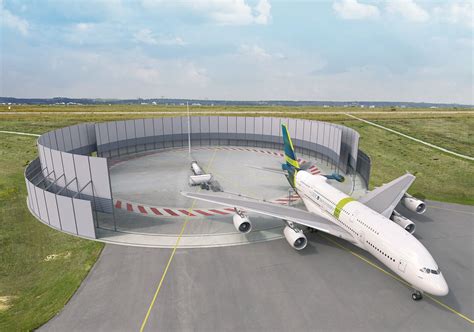
Producing, storing, and distributing hydrogen at scale requires massive investment. Airports would need to install cryogenic storage facilities, specialized refueling systems, and safety protocols tailored to hydrogen’s unique properties. Meanwhile, global hydrogen production remains limited, with much of it derived from carbon-intensive processes.
The concept of green hydrogen—produced using renewable energy—offers a pathway to true sustainability. Yet it is currently expensive and scarce. While projections suggest costs could fall to $1.50–$2 per kilogram by 2035, achieving this will demand a dramatic expansion of renewable energy capacity and hydrogen production facilities.
This creates a classic chicken-and-egg problem. Airlines are hesitant to invest in hydrogen aircraft without infrastructure, while energy providers are reluctant to build infrastructure without clear demand.
Rolls-Royce’s patent does not solve this dilemma directly, but it strengthens the case for hydrogen by demonstrating that engine technology is advancing toward feasibility.
Setbacks and Skepticism: Why the Industry Remains Divided
Not everyone is convinced that hydrogen will become the cornerstone of aviation’s future. Recent developments highlight the uncertainty surrounding its adoption.
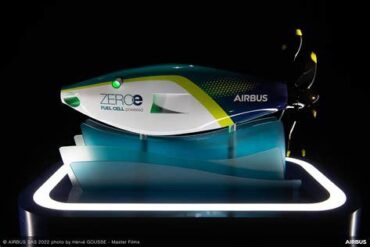
Airbus, a major proponent of hydrogen through its ZEROe program, has delayed its timeline and scaled back testing plans. This decision underscores the technical and economic hurdles that remain unresolved. Designing an aircraft around hydrogen requires more than new engines—it demands entirely new airframes, supply chains, and regulatory frameworks.
Skeptics point to hydrogen’s volume disadvantage as a fundamental limitation. To achieve the same range as conventional aircraft, hydrogen-powered planes may need to sacrifice either passenger capacity or cargo space. For airlines operating on tight margins, such trade-offs are difficult to justify.
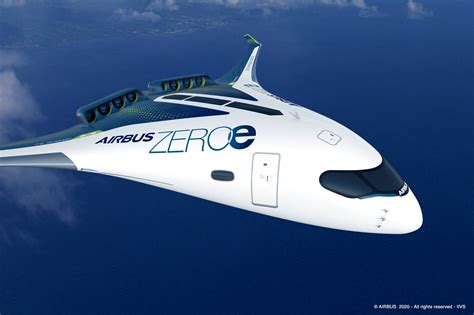
Rolls-Royce itself has acknowledged these challenges, particularly for widebody, long-haul aircraft. The company suggests that hydrogen combustion is more likely to remain confined to shorter routes, at least in the foreseeable future.
This realism does not diminish hydrogen’s potential—it simply places it within a broader context where multiple solutions must coexist.
Can Hydrogen Power Large Airliners? The Ultimate Question
The prospect of hydrogen-powered long-haul flights captures the imagination, but it also exposes the limits of current technology.
To power a large airliner, hydrogen would require substantially larger fuel tanks, fundamentally altering aircraft design. Concepts such as blended-wing bodies and expanded fuselages have been proposed, but these remain in experimental stages.
The trade-offs are stark. Increased fuel volume could reduce passenger capacity, while additional structural requirements might offset efficiency gains. Airlines would need to rethink route economics, fleet planning, and even ticket pricing.
Yet, history suggests that aviation thrives on overcoming such challenges. The transition from propeller-driven aircraft to jet engines once seemed equally daunting, yet it reshaped the industry in just a few decades.
Hydrogen may follow a similar trajectory—gradual at first, then transformative.
Rolls-Royce’s Strategic Vision: Innovation as a Long Game
Rolls-Royce’s hydrogen patent is not an isolated effort; it is part of a broader, long-term strategy that spans decades of research and collaboration. The company is actively involved in initiatives such as Clean Aviation and the CAVENDISH project, working alongside governments, research institutions, and industry partners to advance hydrogen technology.
This collaborative approach reflects the scale of the challenge. No single company can build the hydrogen aviation ecosystem alone. Success will require coordinated investment, regulatory alignment, and technological breakthroughs across multiple sectors.
What sets Rolls-Royce apart is its willingness to explore multiple pathways simultaneously—from hydrogen combustion to fuel cells and hybrid systems. This flexibility increases the likelihood that at least one approach will achieve commercial viability.
The Future of Aviation: Evolution, Not Revolution
The narrative of hydrogen aviation is often framed as a dramatic revolution, but the reality is more nuanced. Change in aviation tends to be incremental, layered, and deeply interconnected.
Rolls-Royce’s hydrogen engine patent represents a significant خطوة forward, but it is one piece of a much larger puzzle. The future will likely see a gradual integration of hydrogen technologies, starting with niche applications and expanding as infrastructure and economics evolve.
What is clear is that the status quo cannot continue. Environmental pressures, regulatory demands, and shifting market expectations are forcing the industry to rethink its foundations.
Hydrogen offers a compelling vision—cleaner skies, quieter engines, and a reduced carbon footprint. Whether it becomes the dominant fuel or a complementary solution, its influence on aviation’s future is already undeniable.
And as Rolls-Royce’s latest innovation shows, the race to define that future is well underway.