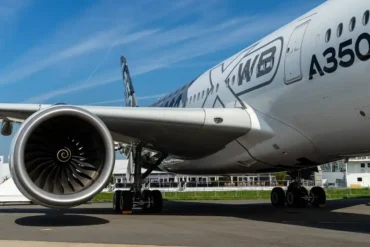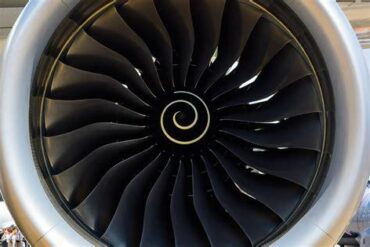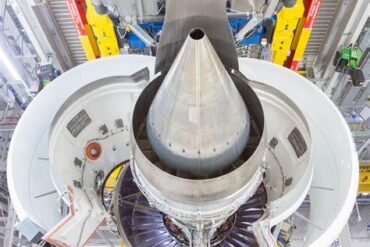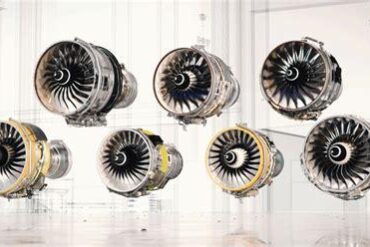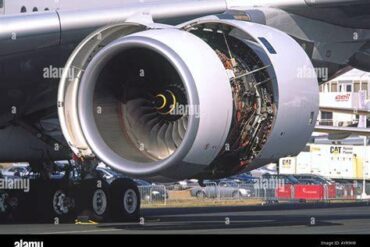
Modern aviation runs on a brutal equation: fuel efficiency equals survival. Airlines measure success not only in passengers carried or routes opened, but in grams of fuel burned per seat kilometer. Within that equation, aircraft engines sit at the center of a technological arms race that has lasted decades. Every incremental improvement in efficiency can translate into millions of dollars saved over an aircraft’s lifetime. In that fiercely competitive arena, the Rolls-Royce Trent XWB-84 EP has emerged as a remarkable outlier—an engine whose efficiency has forced competitors, including GE Aerospace, to pay close attention.
The Trent XWB-84 EP did not arrive with theatrical fanfare or headline-grabbing thrust numbers. Instead, it delivered something far more valuable to airlines: unmatched operational efficiency in the large widebody category. Designed exclusively for the Airbus A350-900, the engine represents the culmination of decades of refinement in Rolls-Royce’s three-shaft turbofan architecture, a design philosophy that separates it from most competing engines.
In practical terms, the engine burns significantly less fuel than earlier widebody engines, while producing fewer emissions and operating with exceptional reliability. For airlines facing volatile fuel prices and increasing environmental scrutiny, that combination makes the Trent XWB family one of the most attractive propulsion systems currently flying.
The Evolution Toward the Trent XWB-84 EP
The story begins with the original Trent XWB-84, introduced as the primary powerplant for the Airbus A350 when the aircraft entered service in 2015. The “84” refers to its 84,000 pounds of maximum takeoff thrust, a level carefully chosen to match the A350-900’s performance requirements.
From the beginning, the engine distinguished itself through efficiency rather than brute force. Its high pressure ratio of roughly 50:1—a measure of how much the compressor squeezes incoming air before combustion—was among the highest ever achieved in a commercial turbofan at the time. Higher pressure ratios allow engines to extract more energy from fuel, translating directly into lower fuel consumption and reduced carbon emissions.
Airlines quickly recognized the advantage. The A350 paired with the Trent XWB became one of the most fuel-efficient long-haul combinations ever deployed, offering around 15% lower fuel burn compared with earlier generation widebody engines.
Yet Rolls-Royce engineers were not satisfied with that achievement. Aviation history shows that engines rarely remain static; incremental improvements accumulate like evolutionary steps. The result of that philosophy was the Trent XWB-84 EP, where EP stands for Enhanced Performance.
Subtle Engineering Changes With Massive Real-World Impact
At first glance, the Enhanced Performance version appears almost identical to its predecessor. The external architecture remains familiar, and the thrust rating stays essentially the same. But inside the engine, several targeted upgrades quietly shift the efficiency equation.
Engineers introduced lighter materials, refined aerodynamic shapes inside the compressor and turbine stages, and improved cooling technologies that allow components to operate at higher temperatures without sacrificing durability. Higher operating temperatures improve thermodynamic efficiency, which means the engine extracts more usable energy from the same quantity of fuel.
One of the most intriguing upgrades involves the increased use of ceramic matrix composites (CMCs). These advanced materials are lighter than traditional metal alloys and can withstand extremely high temperatures. By incorporating them into key turbine components, Rolls-Royce reduced weight and improved thermal performance simultaneously.
The result of these upgrades is deceptively modest on paper: about a 1% reduction in fuel burn compared to the original Trent XWB-84.
In the world of aviation engineering, however, a one-percent improvement is anything but trivial. Over the lifespan of a widebody aircraft flying thousands of long-haul flights, that tiny percentage translates into millions of dollars saved in fuel costs and thousands of tons of CO₂ emissions avoided.
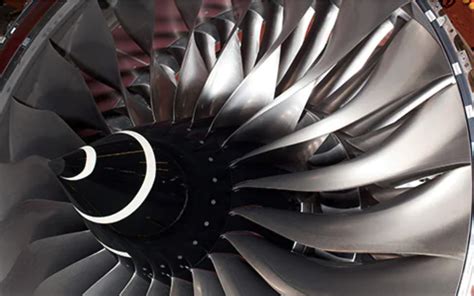
The Power of the Three-Shaft Engine Architecture
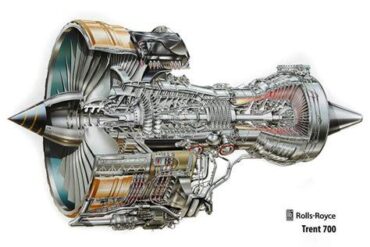
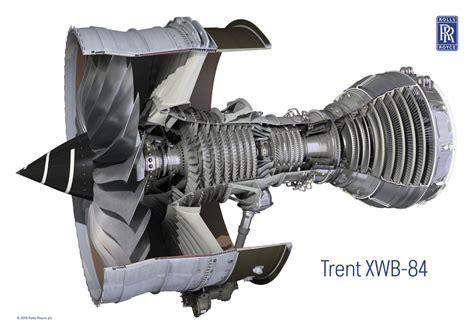
One of the reasons the Trent XWB performs so efficiently lies in a design concept that Rolls-Royce has championed for decades: the three-shaft turbofan.
Most large turbofan engines use two shafts—a high-pressure spool and a low-pressure spool. Rolls-Royce engines add a third rotating system called the intermediate-pressure spool. This extra layer allows engineers to optimize the rotational speeds of different compressor and turbine sections more precisely.
Imagine three separate gear sets in a complex machine rather than two. Each component can spin at its ideal speed, improving overall aerodynamic efficiency and reducing wasted energy.
This architecture gives the Trent XWB several advantages:
- Improved compressor efficiency across multiple stages
- Better thermal management within the turbine system
- Lower mechanical stress, enhancing durability
- Greater flexibility in optimizing airflow dynamics
In long-haul aviation, where aircraft spend many hours cruising at high altitude, even small efficiency gains compound dramatically. The three-shaft system essentially allows the engine to fine-tune its performance across the entire flight envelope.
How the Engine Powers the Airbus A350-900
The success of the Trent XWB cannot be separated from the aircraft it powers. The Airbus A350-900 was designed around efficiency from the ground up, incorporating lightweight carbon-fiber structures, advanced aerodynamics, and modern flight systems.
Since entering commercial service in January 2015 with Qatar Airways, the A350 has grown into one of the most popular long-haul aircraft in the world. Airlines value it not only for its operating economics but also for its passenger comfort features, including higher cabin humidity, lower noise levels, and larger windows.
More than 590 A350-900 aircraft have been delivered globally, and the fleet continues to expand.
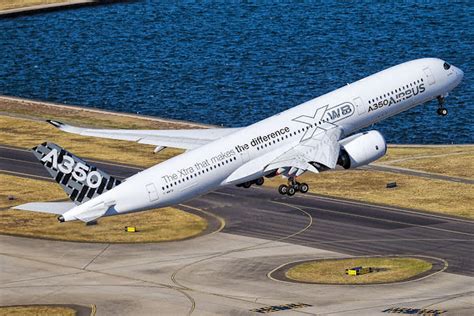
Among the largest operators is Singapore Airlines, which deploys dozens of A350s across its global network. The airline also operates a specialized variant, the A350-900ULR (Ultra Long Range), capable of performing some of the longest commercial flights on Earth.
One of these flights stretches from Singapore Changi Airport to New York’s JFK Airport, a journey lasting nearly 19 hours. Such extreme missions demand engines that combine reliability, efficiency, and endurance, traits the Trent XWB has consistently demonstrated.
The Quiet Rivalry With GE Aerospace
Every technological leap in aviation triggers a reaction from competitors. In the large turbofan market, Rolls-Royce’s main rival is GE Aerospace, a company responsible for some of the most powerful engines ever built.
GE’s flagship in the new generation of widebody engines is the GE9X, developed to power Boeing’s next-generation 777X aircraft.
On paper, the GE9X is a titan. Its 105,000 pounds of thrust makes it the most powerful commercial aircraft engine ever created. The fan diameter measures an astonishing 134 inches, larger than the fuselage of some regional jets.
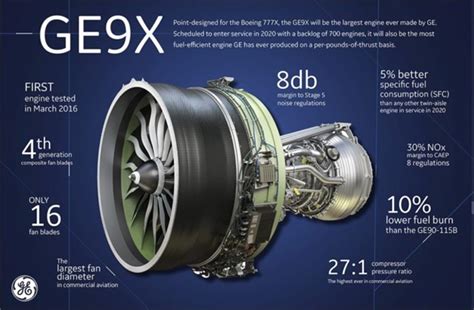
The engine also incorporates several major innovations:
- Composite fan blades that reduce weight while maintaining strength
- A 10:1 bypass ratio, allowing more air to flow around the core for improved efficiency
- Advanced materials capable of handling extreme combustion temperatures
- Reduced noise and lower emissions compared with earlier engines
From a raw power perspective, the GE9X clearly dominates. Large aircraft like the Boeing 777-9 require enormous thrust to lift their heavier frames and large passenger loads.
Yet the rivalry becomes interesting when efficiency enters the conversation.
Efficiency Versus Raw Power
The Trent XWB-84 EP and the GE9X represent two slightly different engineering philosophies.
The GE9X is designed to propel a much larger aircraft, carrying hundreds of passengers across intercontinental distances. Its enormous thrust output is necessary for the Boeing 777X’s size and payload capacity.
The Trent XWB-84 EP, meanwhile, powers a somewhat smaller aircraft but squeezes astonishing efficiency from every drop of fuel. When analysts examine fuel burn per passenger, the A350 and its Trent engines perform extraordinarily well.
This difference explains why the engine has caught the attention of industry observers—and why competitors keep a careful eye on it.
In aviation economics, efficiency often matters more than sheer power. Airlines prefer aircraft that minimize operating costs while maintaining reliability. If a slightly smaller aircraft can achieve similar route performance with lower fuel consumption, it becomes extremely attractive to fleet planners.
Why the Trent XWB’s Efficiency Matters So Much
The global airline industry consumes hundreds of billions of liters of jet fuel every year. Fuel alone can account for 20–30% of an airline’s total operating costs. That reality turns every percentage improvement in efficiency into a financial game-changer.
Consider a simplified scenario.
If an airline operating dozens of long-haul aircraft reduces fuel burn by 1%, the cumulative savings over decades of operation can reach tens of millions of dollars. Multiply that across entire global fleets and the economic impact becomes staggering.
Environmental pressures add another layer to the equation. Governments and regulators increasingly demand reductions in aviation emissions. Engines like the Trent XWB-84 EP help airlines meet these targets without sacrificing performance.
This is where the strategic pressure emerges for competitors. If one manufacturer consistently delivers engines with superior efficiency, airlines may gravitate toward aircraft that use those engines, influencing long-term market dynamics.
The Delayed Arrival of the Boeing 777X
Another factor shaping this rivalry is timing.
The Boeing 777X, the aircraft designed around the GE9X engine, has experienced multiple development delays. Originally expected to enter service around 2020, the program has faced technical challenges and certification hurdles. Current projections place its first commercial flights around 2027.
That extended timeline has given Airbus and Rolls-Royce an unusual advantage. The A350 and the Trent XWB family have enjoyed years of operational maturity while the 777X remains in development.

The 777X does introduce fascinating innovations, including folding wingtips that extend during flight for better aerodynamic efficiency while retracting on the ground to fit existing airport gates. The aircraft will likely become a formidable competitor once it enters service.
But for now, the A350-Trent combination continues to accumulate flight hours and real-world data, reinforcing its reputation for reliability and efficiency.
Airlines Watching the Efficiency Race Closely
Airlines rarely choose aircraft based on a single factor. Fleet planning involves balancing capacity, range, maintenance costs, and route strategy. Yet engines remain one of the most critical pieces of that puzzle.
For carriers operating ultra-long routes—such as Singapore Airlines, Qatar Airways, and Emirates—engine performance directly influences profitability. A highly efficient engine allows airlines to open new routes, extend existing ones, or operate flights with thinner margins.
That capability becomes particularly important in a world where aviation demand continues to expand while environmental constraints tighten.
A Technological Chess Match in the Sky
The rivalry between Rolls-Royce and GE Aerospace resembles a long chess match played across decades of engineering development. Each move—a new turbine material, a more efficient compressor stage, a redesigned fan blade—shifts the strategic balance slightly.
The Trent XWB-84 EP represents one of those subtle but meaningful moves. It may not dominate headlines with record-breaking thrust, yet its relentless focus on efficiency pushes the entire industry forward.
In aviation, the most impressive achievements are often not the loudest or largest machines. Sometimes the real revolution hides in incremental improvements—tiny percentage gains that compound over thousands of flights.
For airlines, passengers, and the environment alike, engines like the Trent XWB demonstrate that the future of aviation will likely be defined not by raw power alone, but by the relentless pursuit of smarter, cleaner, and more efficient propulsion.