Rolls-Royce occupies a peculiar and powerful niche in aviation. It does not chase volume for volume’s sake, nor does it scatter its bets across every aircraft category. Instead, it has focused relentlessly on the widebody segment, where endurance, efficiency, and long-term reliability decide winners over decades rather than quarters. When asking what is Rolls-Royce’s most popular engine, the answer is not a single number but a story shaped by technology, airline economics, and timing. Popularity here means trust earned over millions of flight hours, not just orders signed on paper.
To understand that popularity, it helps to discard the instinct to crown the newest or most powerful engine as the automatic champion. Aviation history is filled with technically brilliant machines that never achieved widespread adoption. Rolls-Royce’s success comes from engines that airlines keep choosing, year after year, for routes that punish machinery and margins alike. This is where the conversation naturally narrows to the Trent engine family, a lineage that has come to define modern long-haul flight.
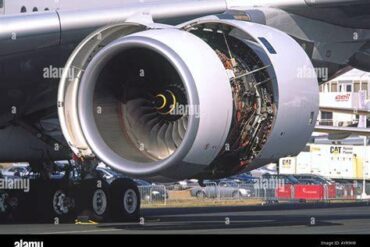
Within that family, one engine stands out not because it is the most advanced today, but because it has quietly done its job better and longer than almost any competitor in its class. The Trent 700 has become the backbone of global Airbus A330 fleets, embedding itself so deeply into airline operations that replacing it is often more disruptive than keeping it. That kind of loyalty is the purest form of popularity in aviation.
The concept of popularity in aircraft engines is slippery. It can mean total units built, total flight hours accumulated, or dominance on a specific aircraft type. By raw historical production, no jet engine can touch the Rolls-Royce Merlin, a piston engine built in wartime volumes that reshaped aviation history. Yet in the jet age, especially in commercial service, the metrics shift. Airlines care about time on wing, maintenance predictability, and fuel burn measured across decades of operation. By those standards, the Trent 700 emerges as the most widely used and trusted Rolls-Royce civil engine ever built.
Defining Popularity in the Jet Age
In modern commercial aviation, an engine’s popularity is inseparable from the aircraft it powers. Rolls-Royce engines are rarely generic solutions bolted onto multiple airframes. They are deeply integrated systems, designed around a specific aircraft’s aerodynamics, mission profile, and operational environment. This means an engine’s success rises and falls with the fortunes of its host aircraft.
The Airbus A330 is central to this story. Introduced as a long-range twin-engine workhorse, the A330 found favor with airlines looking for flexibility rather than headline-grabbing range. It could serve dense regional routes, long-haul leisure markets, and later cargo and military roles. The Trent 700 arrived at exactly the right moment, offering a compelling balance of thrust, efficiency, and durability. Airlines responded by selecting it in overwhelming numbers, giving Rolls-Royce roughly 60% market share on the A330 platform.
That share matters more than it might sound. Unlike sole-source engines that benefit from exclusivity, the Trent 700 competed directly with alternatives from General Electric and Pratt & Whitney. Every sale was contested, every performance metric scrutinized. Winning that battle repeatedly over three decades is why the Trent 700’s popularity carries particular weight.
The Engineering Philosophy Behind the Trent 700
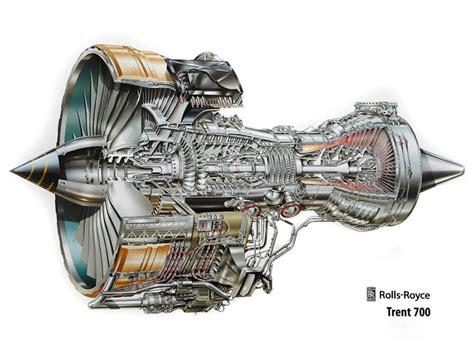
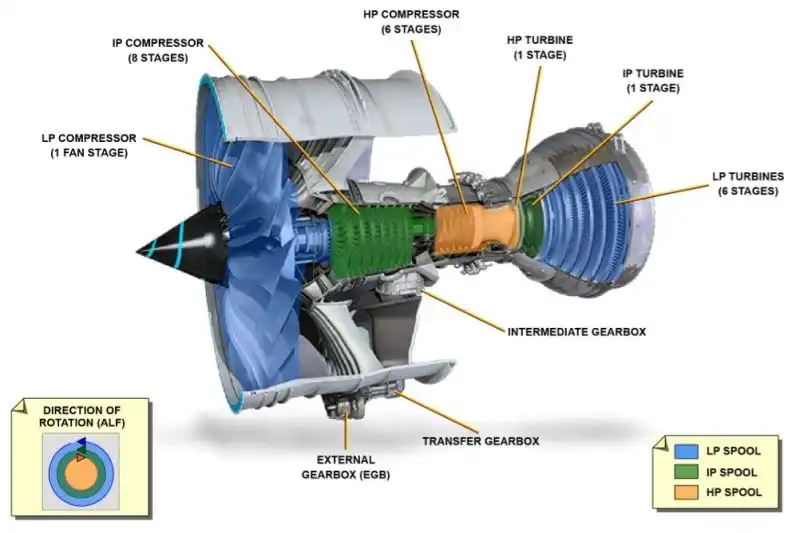
At the heart of the Trent 700’s appeal is Rolls-Royce’s three-spool architecture, a design philosophy that separates the engine into three independently rotating shafts. This allows each compressor and turbine stage to operate at its optimal speed, improving efficiency and reducing mechanical stress. While more complex than two-spool designs, it delivers smoother operation and better performance across a wide range of conditions.
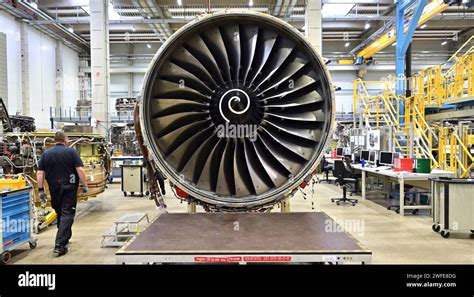
For airlines, this translated into exceptional on-wing reliability. Engines stayed attached to aircraft longer between overhauls, reducing costly downtime. Over time, the Trent 700 accumulated more than 60 million flight hours, a figure that reflects not just widespread use but consistent trust. Airlines rarely keep engines they do not believe in for that long.
The engine’s adaptability further reinforced its position. Beyond passenger A330s, the Trent 700 was selected to power the Airbus A330 MRTT military tanker and later adapted for the BelugaXL transport aircraft. Few commercial engines achieve that kind of cross-sector relevance, and each new role extended the engine’s production life and installed base.
Why the Trent XWB Is Redefining Modern Popularity
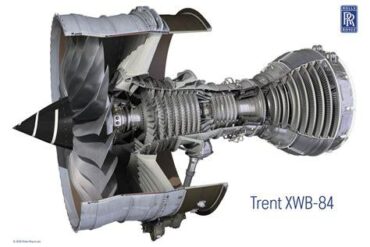
While the Trent 700 dominates by longevity, the Trent XWB represents the future-facing definition of popularity. Designed exclusively for the Airbus A350, it is widely regarded as the most efficient large commercial jet engine ever built. Efficiency gains of around 15% compared to previous generations have made it irresistible to airlines grappling with fuel costs and emissions targets.
The Trent XWB’s rise has been rapid and decisive. With more than 1,800 engines delivered or on order, it is already the fastest-selling widebody engine in history. Unlike the Trent 700, its popularity is reinforced by a sole-source agreement, meaning every A350 delivered automatically adds two Trent XWBs to Rolls-Royce’s tally. Critics sometimes argue this inflates its success, but that view overlooks the fact that airlines willingly embraced the A350 largely because of its engine’s performance.
Technologically, the Trent XWB showcases advanced materials, refined aerodynamics, and digital health-monitoring systems that continuously assess engine condition. These systems allow predictive maintenance, identifying potential issues before they disrupt operations. For airlines, this capability is as valuable as raw fuel savings, turning data into dispatch reliability.
The Role of Lifecycle Economics
Popularity in aviation is ultimately an economic verdict. Engines are not purchased once; they are maintained, upgraded, and supported over decades. Rolls-Royce’s TotalCare service model has been instrumental in cementing the popularity of both the Trent 700 and Trent XWB. By offering predictable maintenance costs and comprehensive support, the company reduces financial uncertainty for airlines operating on thin margins.
This model worked particularly well for the Trent 700, whose mature design allowed Rolls-Royce to forecast maintenance needs with remarkable accuracy. Airlines could plan fleets years in advance, confident that engine costs would not suddenly spike. That predictability turned the Trent 700 into a conservative choice in an industry where conservatism often equals survival.
The Trent XWB benefits from the same philosophy, though its newer technology has faced tougher scrutiny in extreme environments. Airlines operating in hot, sandy regions have pushed Rolls-Royce to enhance durability packages, leading to substantial investment in upgrades. These improvements are part of what keeps the engine popular even as expectations rise.

Competition and Context in the Widebody Market
Understanding Rolls-Royce’s most popular engine also requires acknowledging what the company does not do. Unlike competitors, Rolls-Royce has no presence in the high-volume narrowbody market. Engines like the CFM LEAP or Pratt & Whitney GTF are produced in numbers exceeding ten thousand units, dwarfing any widebody engine by sheer volume.
Yet volume alone can be misleading. Widebody engines operate longer sectors, accumulate more flight hours per unit, and generate higher lifetime revenue. In this context, the Trent 700’s installed base represents an enormous operational footprint, even if its raw numbers are smaller than narrowbody counterparts. Rolls-Royce’s dominance of the widebody segment means that, on long-haul routes, its engines power a significant share of global traffic.
The contrast between the Trent 700 and Trent XWB also highlights a shift in what airlines value. The Trent 700 earned its popularity through competition and incremental improvement. The Trent XWB benefits from exclusivity but must continuously prove itself in service to maintain confidence. Both paths lead to popularity, but through different economic and technological landscapes.
Lessons From Challenges and Setbacks
No discussion of popularity would be complete without addressing setbacks. The Trent 1000, developed for the Boeing 787, encountered well-documented durability issues that disrupted airline operations. While these challenges did not dethrone the Trent 700’s reputation, they did influence how airlines evaluated newer Rolls-Royce engines.
Crucially, the lessons learned fed back into the Trent XWB and later variants like the Trent 7000. Improved materials, revised blade designs, and enhanced monitoring systems reflect a company adapting under pressure. Popularity in aviation is fragile, and maintaining it requires visible responsiveness to customer concerns.
The Trent 700’s enduring reputation has benefited from this contrast. Its maturity shields it from the scrutiny applied to newer engines, reinforcing the perception that it represents a known quantity in an uncertain industry. That perception continues to drive demand, even as newer aircraft enter service.
Historical Perspective: Why Timing Mattered
The Trent 700 did not become popular by accident. Its entry into service coincided with a period of explosive growth in global air travel. The late 1990s and early 2000s saw airlines expanding networks, liberalizing markets, and seeking aircraft that could serve multiple roles. The A330, powered predominantly by the Trent 700, fit that need perfectly.
As a result, the engine became ubiquitous across continents and business models. Legacy carriers, low-cost long-haul operators, and charter airlines all found value in the same powerplant. Over time, this ubiquity created a vast secondary market for spare engines and parts, further entrenching the Trent 700’s position.
Newer engines rarely enjoy that kind of organic spread. Sole-source agreements and tightly optimized fleets limit diversity, making today’s popularity more concentrated and less diffuse. This is why the Trent 700’s three decades of global presence still matter when measuring true popularity.
The Verdict: Most Popular by Any Meaningful Measure
So, what is Rolls-Royce’s most popular engine? In historical and operational terms, the answer remains the Trent 700. With over 2,000 units delivered, decades of service, and a dominant share of one of the most successful widebody aircraft ever built, it stands as the company’s defining commercial engine.
At the same time, the Trent XWB is rapidly redefining what popularity looks like in the modern era. Its efficiency, exclusivity, and growing order book suggest it may eventually surpass the Trent 700 in total numbers. When that happens, it will mark not just a смена of titles but a shift in how aviation measures success.
For now, the Trent 700’s legacy is secure. It represents a moment when engineering excellence, market timing, and airline trust aligned perfectly. In an industry obsessed with the next breakthrough, its continued relevance is a reminder that true popularity is earned slowly, flight by flight, over many years in the sky.