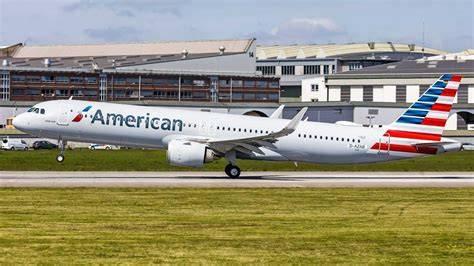
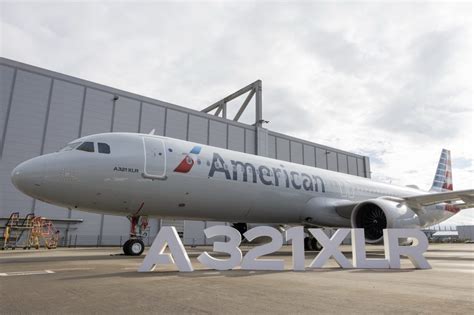
American Airlines is steadily expanding its Airbus A321XLR network, turning the long-range narrowbody into an important part of its strategy for thinner routes. Although the carrier currently has only seven A321XLRs in its fleet, its remaining 44 aircraft on order will eventually give American a fleet of 51 examples. Each aircraft is configured with just 155 seats across three cabins, allowing the airline to serve markets that may not generate enough demand for a larger widebody aircraft.
The A321XLR is particularly interesting because American is not limiting it to one type of mission. The aircraft can connect US hubs with European destinations while also operating premium-heavy domestic routes across the United States. According to Cirium data, American is either already flying or scheduled to fly the A321XLR on nine routes, creating a network that demonstrates how flexible the aircraft can be.
Philadelphia Becomes a Key Airbus A321XLR Base
Philadelphia International Airport is emerging as one of the most important bases for American Airlines’ A321XLR operations. The aircraft’s combination of long range, relatively low capacity, and premium seating makes it particularly well suited to Philadelphia’s transatlantic network, where some routes can be too thin for larger aircraft but still require substantial range.
The first of three Philadelphia routes is Philadelphia–Edinburgh, with daily A321XLR service scheduled to begin on October 24. The timing is significant because it coincides with the transition into the IATA Winter Schedule. American will then add Philadelphia–Lisbon from January 5 through February 24, 2027, before switching the aircraft to Philadelphia–Amsterdam from February 25 through March 20.
American has also been reshaping its Philadelphia operation to improve connectivity. The airline said its revised schedule would expand from six to seven coordinated arrival and departure banks, distributing flights more evenly throughout the day. That matters for the A321XLR because the aircraft’s value is not simply measured by its ability to fly long distances. Its usefulness also depends on how effectively passengers can connect into and out of those long-haul flights.
New York-JFK Offers the Most Versatile A321XLR Network
New York-JFK has arguably the most diverse selection of American Airlines A321XLR routes. The aircraft connects the airport with destinations in both Europe and California, demonstrating two very different uses for the same narrowbody platform.
American introduced the A321XLR internationally on the New York-JFK–Edinburgh route on March 8. The aircraft is scheduled to operate the route daily through October 23. From October 24, the A321XLR will instead serve New York-JFK–Barcelona, giving American another long-haul European route with the aircraft.
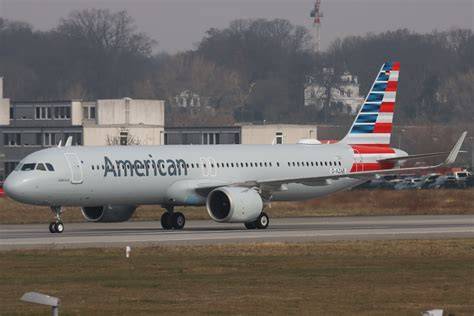
The Barcelona operation highlights the aircraft’s long-range capability. The scheduled eastbound overnight flight takes exactly eight hours, a demanding mission for a narrowbody but one that falls comfortably within the A321XLR’s intended role. For passengers, the aircraft’s three-class layout provides a more premium experience than the traditional high-density narrowbody configuration.
The aircraft is equally important on American’s premium transcontinental network. From JFK, the A321XLR operates to Los Angeles International Airport and is scheduled to serve San Francisco International Airport as well. American introduced the type on the JFK-LAX route in December, while flights to San Francisco are scheduled to begin September 9.
These routes show why the A321XLR could become especially valuable to American. The aircraft does not need to cross an ocean to justify its existence. On high-value transcontinental markets, its relatively small capacity can help the airline maintain frequent service while offering Business Class and Premium Economy alongside standard Economy seating.
American’s 155-Seat A321XLR Configuration
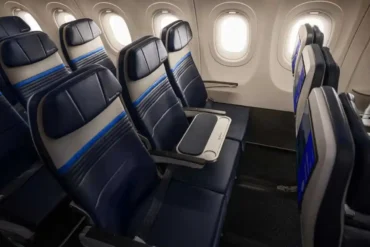
American Airlines has chosen a notably premium-oriented configuration for its A321XLR. The aircraft contains 20 Business Class seats, 12 Premium Economy seats, and 123 Economy seats, producing the total of 155 seats.
| Cabin | Seats |
|---|---|
| Business Class | 20 |
| Premium Economy | 12 |
| Economy | 123 |
| Total | 155 |
This configuration is central to American’s strategy. Rather than filling the aircraft with as many passengers as possible, the airline is preserving valuable premium capacity for routes where business and leisure travelers can support stronger yields.
Boston Adds a Different A321XLR Mission
Boston Logan International Airport represents another important part of American’s A321XLR strategy, although its initial network is more domestic than Philadelphia or JFK. American began operating the aircraft between Boston and Los Angeles twice daily at the beginning of July.
The frequency is scheduled to increase to three daily flights in October and then reach four daily flights from November. That escalation makes the route particularly significant because it demonstrates that American sees the A321XLR as more than an occasional long-haul aircraft.
American also plans to use the aircraft between Boston and Philadelphia daily from October 25 through April 5. Although this is a much shorter route, it illustrates the flexibility of a fleet type capable of moving between long-haul and high-value domestic assignments.
Nine Routes Show Why the A321XLR Matters to American
Taken together, American’s nine A321XLR routes reveal a clear strategy. Philadelphia provides transatlantic reach, JFK combines Europe with premium transcontinental flying, and Boston demonstrates the aircraft’s domestic flexibility.
The A321XLR’s appeal comes from this versatility. With only 155 seats, American can deploy the aircraft on routes where a larger widebody could create too much capacity. At the same time, its long range allows the airline to open international markets that previously required larger aircraft or were difficult to operate economically.
As American receives more of its 44 outstanding A321XLR orders, the network is likely to become considerably broader. The nine routes currently identified may therefore represent only the beginning of a much larger transformation in how the airline serves long, thin international and premium domestic markets.