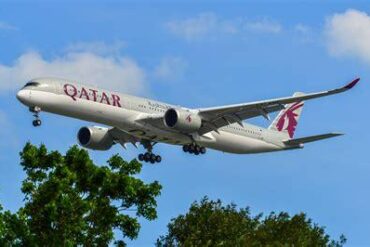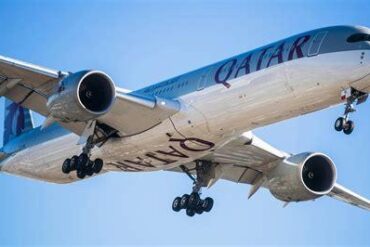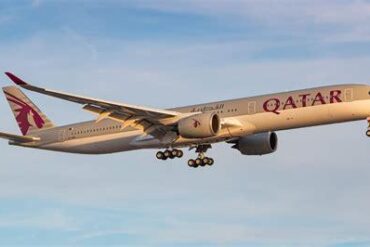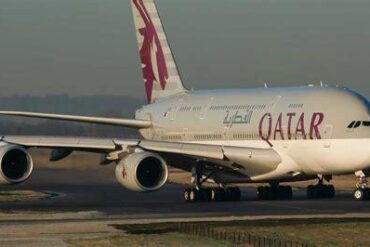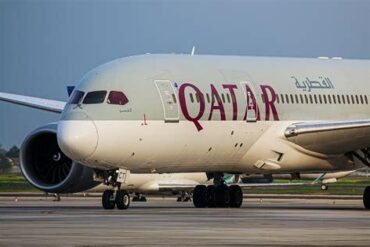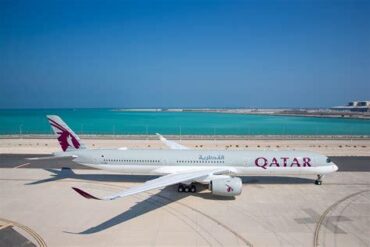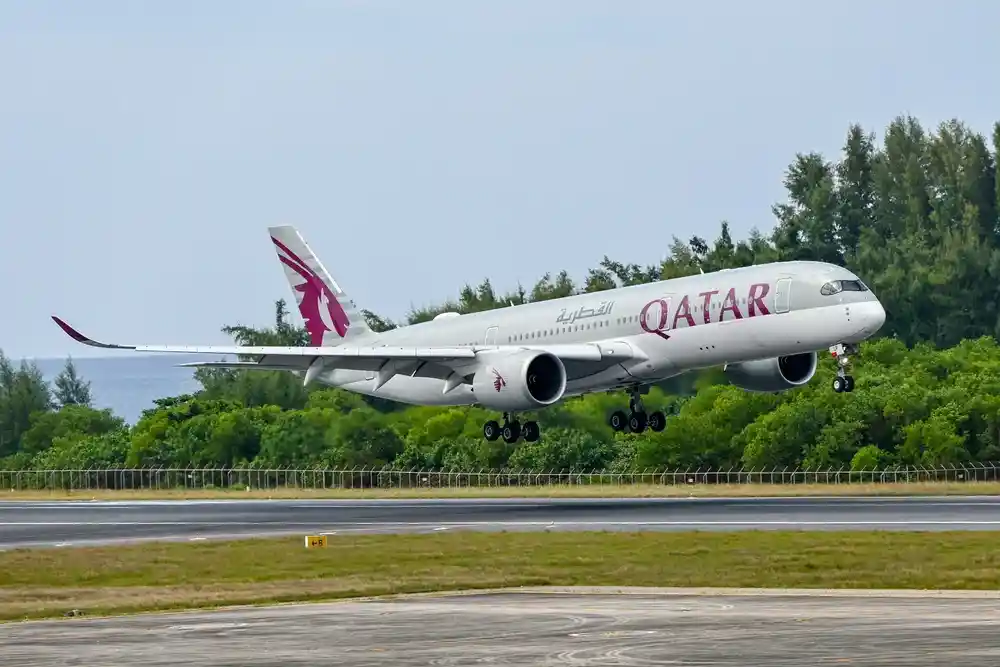
Qatar Airways continues to solidify its reputation as a global aviation powerhouse by deploying its Airbus A350-1000 aircraft across a diverse range of high-demand long-haul routes. As the launch customer and largest operator of the A350-1000, the Doha-based carrier strategically maximizes the aircraft’s blend of fuel efficiency, cabin comfort, and extended range across some of its most critical intercontinental connections.
From July through December 2025, Qatar Airways’ A350-1000 fleet is scheduled to serve 41 destinations worldwide, but only a select few routes will see the aircraft up to twice daily. These flagship routes represent the airline’s densest corridors for premium and long-range travel, and they underscore the importance of both capacity planning and network optimization in the post-pandemic aviation landscape.
Qatar Airways: The Largest Airbus A350-1000 Operator
Since receiving its first A350-1000 in February 2018, Qatar Airways has grown its fleet of the type to 24 aircraft, with the most recent delivery recorded in July 2023. Averaging just 5.6 years in age, these aircraft are among the most modern in operation globally and are configured in either 327-seat or 395-seat layouts. Depending on the mission profile, these configurations are tailored for routes demanding a blend of premium class service and dense economy seating.
The airline’s Qsuite Business Class, available on many A350-1000s, has been widely praised for its innovation and privacy, becoming a core product feature on high-yielding routes.
The 11 Most-Flown Routes: July–December 2025
Cirium Diio schedule data for the second half of 2025 reveals 11 routes where the A350-1000 will see at least 132 departures, or one daily roundtrip, with a few routes climbing to two daily frequencies. Leading the pack is the Doha to Dallas/Fort Worth route with 301 departures, followed closely by Miami and Bali/Denpasar, though the latter is only temporary.
The Key Routes and Frequencies
- Doha – Dallas/Fort Worth (DFW): Up to two daily, tapering to one in winter; 301 departures
- Doha – Miami (MIA): 10 weekly; 263 departures
- Doha – Bali/Denpasar (DPS): Twice daily for part of the summer; 234 departures
- Doha – Seoul Incheon (ICN): Eight weekly in summer; 201 departures
- Doha – Atlanta (ATL): Daily; 184 departures
- Doha – Houston (IAH): Daily; 184 departures
- Doha – Los Angeles (LAX): Daily; 184 departures (Qatar’s longest A350-1000 route in the US)
- Doha – San Francisco (SFO): Daily; 184 departures
- Doha – São Paulo (GRU): Daily; 184 departures
- Doha – Bengaluru (BLR): Five weekly; 132 departures
- Doha – Mumbai (BOM): Five weekly; 132 departures
These routes form the spine of Qatar’s global long-haul operation using the A350-1000, reflecting a deliberate strategy to deploy the aircraft on high-value business and leisure corridors, particularly across North America, South America, and Asia-Pacific.
Dallas/Fort Worth: Qatar Airways’ Top A350-1000 Market
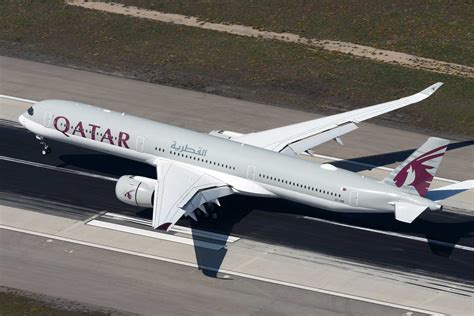
Topping the list, Dallas/Fort Worth (DFW) represents Qatar Airways’ strongest A350-1000 market by volume. Since its introduction on the route in June 2019, the aircraft has become a cornerstone of service between Doha and Texas. In summer 2025, DFW will see two daily A350-1000 flights, tapering to a daily service in the winter when the Boeing 777-200LR re-enters rotation.
Between April 2024 and March 2025, the route handled approximately 433,000 passengers, with a staggering load factor of 95%—the highest among all Qatar Airways’ US destinations. The top connecting cities via Doha were Hyderabad, Bengaluru, and Chennai, underscoring the link’s importance in bridging South Asia with the southern United States.
The exceptional demand and performance highlight not just the strategic relevance of the route but also the operational efficiency of the A350-1000 in this long-haul environment.
Farewell to Auckland: The A350-1000 Steps Aside
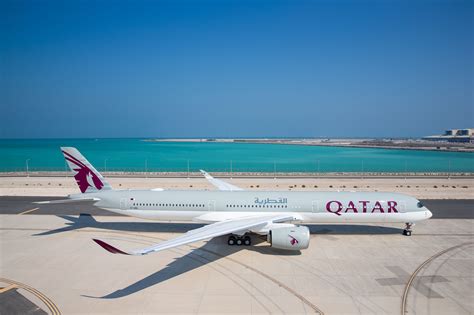
One of the most symbolic long-haul missions for Qatar Airways has been its Doha–Auckland service. Stretching 7,849 nautical miles (14,536 km) with block times of up to 17 hours and 20 minutes, it remains the airline’s longest scheduled flight. While the A350-1000 served this route between September 2023 and May 2025, it has since been replaced by the Boeing 777-200LR.
The A350-1000 variant used featured 46 Qsuites and 281 economy seats, a relatively premium-heavy layout that matched the high-yield nature of the route. However, payload constraints and operational efficiencies led to a shift back to the 777-200LR. This aircraft, with its 272-seat configuration and ultra-long-range credentials, is now a better match for the ultra-long-haul profile of this city pair.
Strategic A350-1000 Deployment: Balancing Reach and Revenue
The pattern of A350-1000 deployment across Qatar Airways’ network is anything but random. Instead, it reflects a nuanced blend of:
- Route length: The A350-1000 is favored for ultra-long sectors but not necessarily the longest, due to payload concerns.
- Premium demand: Routes with significant business-class demand, such as Atlanta, San Francisco, and Miami, often see consistent A350-1000 service.
- Fleet optimization: As more 777s and A350-900s re-enter service or get retrofitted, the A350-1000 can be selectively deployed for maximum return.
These decisions are supported by detailed route profitability analyses, historical performance data, and the flexibility to shift aircraft types seasonally based on load patterns and fuel economics.
Miami and Bali: Short-Lived but Significant Deployments
The Miami route, currently served 10 times weekly by the A350-1000, marks a key gateway for Qatar Airways into the southeastern US market. This link not only serves local traffic but also connects Latin American markets via Qatar’s codeshare and interline partners. Miami’s sustained double-digit weekly frequencies reflect its growing commercial value.
Meanwhile, Bali/Denpasar sees twice daily A350-1000 operations, but only for a limited time through October 25, 2025. This seasonal boost likely responds to high tourist demand and underscores Qatar’s tactic of dynamically deploying capacity where and when it’s needed. After this period, the A350-1000 will rotate off the route, potentially replaced by smaller widebody equipment.
The Broader Competitive Landscape
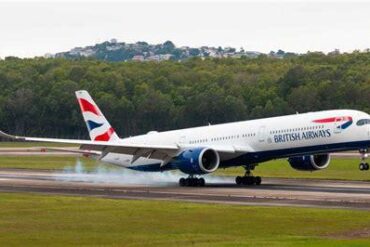
Qatar Airways is one of eight global airlines operating the Airbus A350-1000, a group that includes British Airways, Cathay Pacific, Etihad Airways, and Virgin Atlantic. What sets Qatar apart is its role as the launch operator and its uniquely high concentration of the type in active use.
By blending fleet strategy with network development, Qatar Airways continues to extract substantial commercial advantage from its A350-1000 investment. Each aircraft delivers lower per-seat fuel burn, advanced passenger comfort, and reduced noise emissions, all aligning with the airline’s sustainability goals and customer experience commitments.
Looking Ahead: Will More Routes See Double Daily A350-1000s?
With strong load factors and expanding international demand, Qatar Airways may well push further into two-daily A350-1000 frequencies on select routes. Dallas/Fort Worth has already proven it can absorb this capacity, and as fleet deliveries continue and older aircraft are retired, the A350-1000 will become an even more vital workhorse for the airline.
The decision to add or shift frequencies will hinge on bilateral agreements, slot availability, and emerging premium travel trends. With its central location and one-stop-to-everywhere model via Doha Hamad International Airport, Qatar Airways is positioned to continue leveraging the A350-1000 in ways few other airlines can match.
In the months to come, travelers flying between Asia, the Americas, and the Middle East will likely find themselves aboard this next-generation aircraft more frequently—especially on routes where demand, distance, and distinction intersect.