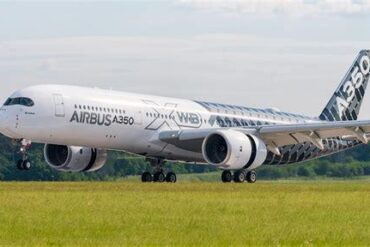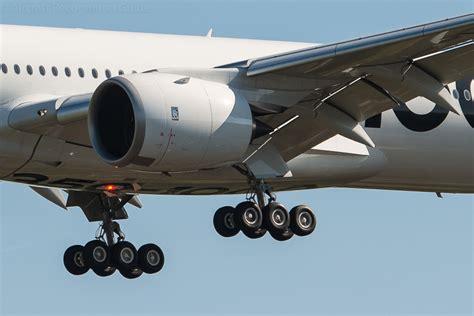
The Airbus A350 family represents one of the most sophisticated achievements in modern commercial aviation. Designed as Airbus’ answer to the Boeing 777 and the aging generation of long-haul widebody aircraft, the A350 combines advanced aerodynamics, carbon-fiber composite structures, and highly efficient engines to redefine long-distance travel. At first glance, the A350-900 and the A350-1000 appear almost identical, sharing the same distinctive cockpit “bandit mask,” elegantly curved wings, and cutting-edge Rolls-Royce engines.
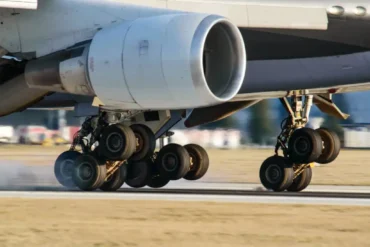
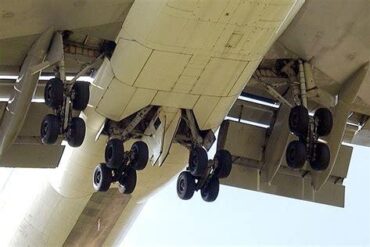
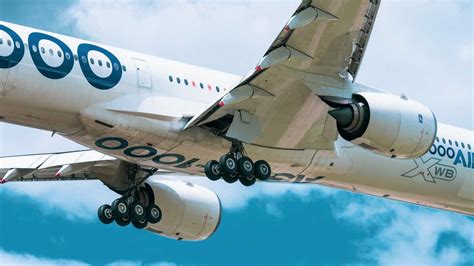
Yet beneath this visual similarity lies a crucial engineering difference that aviation enthusiasts and engineers immediately notice: the main landing gear configuration. The A350-900 sits on a two-axle bogie with four wheels, while the larger A350-1000 employs a three-axle bogie with six wheels on each main gear assembly. This seemingly minor change reflects a complex set of design decisions involving aircraft weight, runway infrastructure, braking performance, and structural stability.
Understanding why Airbus chose a six-wheel landing gear system for the A350-1000 requires exploring how aircraft scale as they grow larger. Increasing the size of an aircraft is not as simple as stretching the fuselage. Every additional passenger, gallon of fuel, and kilogram of cargo affects the entire structural ecosystem of the airplane—from wing loading and engine thrust to landing gear strength and runway impact. The landing gear, in particular, must safely manage enormous forces during takeoff, landing, and taxiing.
In essence, the extra pair of tires on the A350-1000 represents far more than a cosmetic difference. It is a carefully engineered response to physics, airport limitations, and the operational demands of modern long-haul aviation.
A Family of Aircraft Built for Different Missions
The Airbus A350 program was developed to cover multiple segments of the long-haul market. The A350-900 serves as the baseline model, optimized for airlines seeking a balance between passenger capacity, range, and operational efficiency. Meanwhile, the A350-1000 was designed as a larger, more powerful variant capable of competing directly with aircraft such as the Boeing 777-300ER.
Although both aircraft share the same basic architecture, the A350-1000 introduces several important changes beyond its longer fuselage. The aircraft is approximately seven meters longer than the A350-900, allowing airlines to accommodate dozens of additional passengers depending on cabin configuration. This stretch increases revenue potential on high-demand routes, but it also introduces significant engineering challenges.
The most critical difference lies in maximum takeoff weight (MTOW). The A350-900 typically operates with a maximum takeoff weight of around 283 tonnes, while the A350-1000 pushes that figure to roughly 322 tonnes. This nearly 40-tonne increase fundamentally alters the structural demands placed on the aircraft.
Every kilogram added to the aircraft must ultimately be supported by the landing gear during ground operations and landings. Without changes to the gear design, the forces generated during touchdown would exceed acceptable stress limits for both the aircraft and the runway beneath it.
For Airbus engineers, the solution was clear: the landing gear needed more wheels.
How Aircraft Weight Shapes Landing Gear Design
When a widebody aircraft touches down on a runway at around 140 knots, the landing gear absorbs immense impact forces. These forces are not only vertical but also involve complex combinations of bending loads, vibration, and forward momentum.
If the A350-1000 retained the same four-wheel bogie used by the A350-900, each individual tire would be required to support significantly more weight. This would lead to excessive ground pressure, increased structural stress, and reduced safety margins during heavy landings.
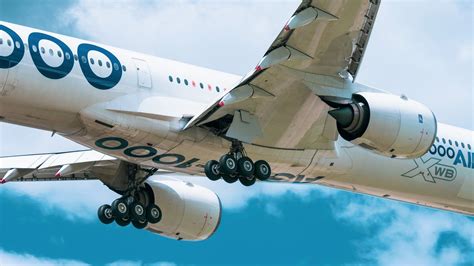
By adding a third axle and two additional wheels to each main landing gear unit, Airbus dramatically increased the number of contact points between the aircraft and the runway. Instead of spreading the aircraft’s weight across eight main wheels, the A350-1000 distributes it across twelve.
This expanded footprint produces several advantages:
- Reduced pressure exerted on each tire
- Lower stress on the landing gear struts
- Improved shock absorption during touchdown
- Greater stability during taxi and braking
In practical terms, the six-wheel configuration ensures that the enormous mass of the A350-1000 can be handled safely under all operating conditions, including fully loaded long-haul departures.
Runway Protection and Airport Compatibility
Airports are not built equally. Each runway is designed to support a specific amount of weight, measured using a system known as the Pavement Classification Number (PCN). If an aircraft concentrates too much weight onto a small area, it can damage the runway surface over time, leading to cracks, deformation, and costly repairs.
This factor played a critical role in the design of the A350-1000’s landing gear.
Without additional wheels, the heavier aircraft would impose excessive pressure on the runway during landing and taxi operations. Such pressure would restrict the aircraft to only the strongest runways in the world, limiting its operational flexibility.
By spreading the aircraft’s weight across six wheels per main gear assembly, Airbus ensured that the A350-1000 maintains acceptable runway loading levels. This allows the aircraft to operate at a wide range of international airports rather than being restricted to only the largest global hubs.
The additional wheels effectively protect airport infrastructure while simultaneously expanding the aircraft’s global route network potential. Airlines can deploy the A350-1000 on long-haul routes without worrying about whether destination airports can safely accommodate the aircraft’s weight.
Braking Power and Heat Dissipation
Landing a 300-tonne aircraft involves converting enormous kinetic energy into heat through the braking system. When an aircraft decelerates from landing speed, the brakes must absorb and dissipate energy equivalent to the explosive power of several kilograms of TNT.
The number of wheels on an aircraft directly affects its braking capacity.
The A350-900, with its four-wheel bogie, uses eight carbon brake units across the main landing gear. The A350-1000, thanks to its six-wheel configuration, carries twelve carbon brake assemblies.
This expanded braking system delivers two critical advantages. First, it provides greater stopping power, enabling the aircraft to decelerate safely on shorter runways or during high-weight landings. Second, it spreads the thermal load across more components, reducing the risk of overheating.
Brake temperatures on large aircraft can exceed 800°C after a heavy landing or rejected takeoff. With more brake units available, the heat is distributed more evenly, allowing the system to cool faster and reducing turnaround delays for airlines.
Structural Changes Inside the Aircraft
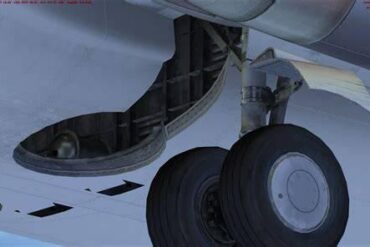
Accommodating a larger landing gear assembly required Airbus to make structural changes to the A350-1000’s airframe. One of the most significant modifications was the lengthening of the landing gear bay inside the fuselage.
The six-wheel bogie requires additional space to retract fully after takeoff. Engineers extended the gear bay by one fuselage frame, ensuring the gear could fold into the aircraft without interfering with cargo compartments or fuel systems.
This redesign represents one of the most important structural differences between the A350-900 and A350-1000. Although the aircraft share a common design language, the internal architecture of the larger variant was modified to accommodate the heavier landing gear system.
The landing gear itself, produced by Safran Landing Systems, also uses enhanced materials including high-strength steel alloys and titanium components. These materials provide the durability required to withstand the greater loads associated with the larger aircraft.
The Role of Fuselage Length and Leverage
Another factor influencing the landing gear design is the longer fuselage of the A350-1000. At approximately seven meters longer than the A350-900, the aircraft introduces greater leverage forces during takeoff rotation.
When the aircraft begins its takeoff roll and the nose lifts from the runway, the main landing gear acts as the pivot point. A longer fuselage means the tail section exerts more leverage against the landing gear structure.
Without additional reinforcement and support, these forces could introduce excessive stress or vibration. The six-wheel gear provides a wider and more stable base, allowing the aircraft to rotate smoothly during takeoff without destabilizing the structure.
This stability is particularly important for aircraft operating near their maximum weight, where aerodynamic and structural margins are carefully balanced.
Why the Landing Gear Looks Different in Flight
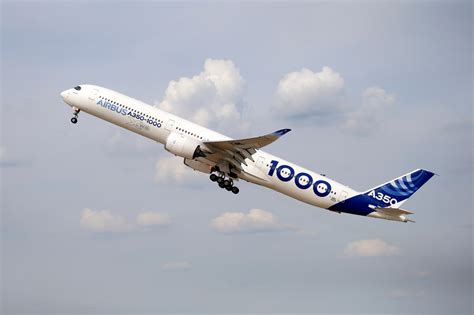
Observers often notice another visual difference between the two aircraft: the angle at which the landing gear hangs while extended.
On the A350-900, the four-wheel gear typically hangs with a slight forward tilt when the aircraft is airborne. The A350-1000’s six-wheel gear, however, tends to appear almost perfectly level.
This difference is intentional and relates to landing dynamics.
A level orientation allows all six wheels to contact the runway in a more synchronized sequence during touchdown. The result is a smoother landing experience and reduced stress on the gear structure.
Passengers seated near the rear of the aircraft may notice the benefit most clearly. With twelve tires contacting the runway in quick succession, the impact is distributed more evenly, minimizing the sudden jolt often associated with large aircraft landings.
Enhanced Stability During High-Speed Rollout
Once the aircraft has landed, maintaining directional control during the high-speed rollout is critical. Crosswinds, wet runway conditions, and braking forces all influence how the aircraft behaves on the ground.
The six-wheel configuration of the A350-1000 increases the amount of rubber in contact with the runway, improving mechanical grip. This added traction enhances stability, particularly during crosswind landings or when the runway surface is contaminated by rain or snow.
Combined with Airbus’ advanced digital brake-by-wire system, the landing gear allows the aircraft to slow down smoothly and predictably.
Despite these differences in hardware, Airbus successfully maintained cockpit commonality between the A350-900 and A350-1000. Pilots certified on one variant can transition to the other with minimal additional training, a feature highly valued by airlines managing large fleets.
Does the Extra Gear Increase Drag?
One question frequently raised by aviation enthusiasts concerns whether the larger landing gear introduces aerodynamic penalties.
In theory, a six-wheel bogie is heavier and bulkier than a four-wheel system. However, Airbus minimized this impact through careful aerodynamic design.
The landing gear retracts into specially shaped bays equipped with precisely engineered gear doors that seal the compartment smoothly against the fuselage. This design prevents unnecessary airflow disruption and reduces drag during cruise.
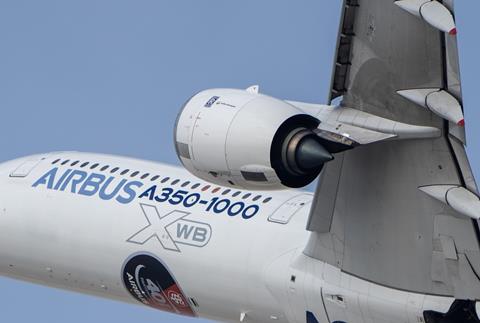
Additionally, the A350-1000 is powered by the Rolls-Royce Trent XWB-97, the most powerful engine ever installed on an Airbus aircraft. These engines generate significantly more thrust than the XWB-84 engines used on the A350-900, more than compensating for any slight increase in landing gear weight.
The result is an aircraft that remains remarkably fuel efficient, even while carrying more passengers and cargo than its smaller sibling.
Operational Safety and Redundancy
Another subtle advantage of the six-wheel landing gear is the increased margin of safety it provides during abnormal situations.
With twelve main tires supporting the aircraft, the A350-1000 has greater tolerance for individual tire failures. If one tire were to burst during the takeoff roll, the remaining tires on that gear assembly can more easily absorb the load.
This redundancy becomes especially valuable during operations at hot-and-high airports, where runway performance margins are tighter and aircraft often operate close to their maximum takeoff weight.
By incorporating more wheels, Airbus ensured that the aircraft maintains safe handling characteristics even under challenging operational scenarios.
A Platform for Future Variants
The engineering behind the A350-1000’s landing gear also laid the groundwork for future aircraft developments. One notable example is the Airbus A350F, a dedicated cargo variant scheduled to enter service later in the decade.
Freighter aircraft often carry extremely dense payloads, and the reinforced triple-axle landing gear of the A350-1000 provides an ideal foundation for handling such loads. The cargo version will support payloads exceeding 110 tonnes, making it one of the most capable long-range freighters ever built.
Engineers are also exploring future technologies such as fiber-optic sensors embedded in landing gear structures. These sensors could provide real-time monitoring of structural stress and hard landings, improving maintenance efficiency and safety.
Another potential innovation involves electric taxi systems integrated into the landing gear wheels. Such systems could allow aircraft to taxi without running their main engines, reducing fuel consumption and emissions at busy airports.
A Small Detail That Reveals a Big Engineering Story
The difference between four wheels and six wheels may appear minor at first glance, but it encapsulates the complexities of modern aircraft design. The A350-900 remains an efficient and versatile long-haul aircraft perfectly suited for many global routes. The A350-1000, however, pushes the boundaries of capacity and range, requiring a landing gear system capable of supporting far greater loads.
By adopting the six-wheel configuration, Airbus ensured that the larger aircraft could safely handle its additional weight while maintaining compatibility with airports worldwide. The change improved braking performance, enhanced stability, protected runway infrastructure, and provided operational redundancy for airlines.
Ultimately, the landing gear beneath the A350-1000 represents more than just additional tires. It embodies the careful balancing act of aerodynamics, structural engineering, airport infrastructure, and airline economics that defines modern aviation.
For those who look closely at aircraft on the runway, the extra wheels tell a story of how even the smallest design choices are shaped by the immense forces involved in flying hundreds of tonnes of metal across the sky.