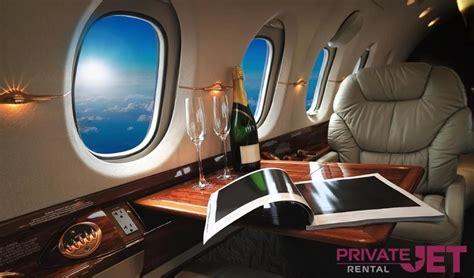
When it comes to luxury aviation, one of the most overlooked yet striking features is the design and engineering of private jet windows. Unlike the uniform, compact windows on commercial airliners, the windows on private jets are larger, more advanced, and aesthetically integral to the in-flight experience. These differences go far beyond simple cosmetic upgrades—they reflect fundamental disparities in purpose, engineering, and user expectations between private and commercial aircraft.
Private jet manufacturers such as Dassault Aviation, Gulfstream Aerospace, and Bombardier invest heavily in window innovation not just for comfort, but for physiological, psychological, and even operational reasons.
The Role of Natural Light in Private Jet Design
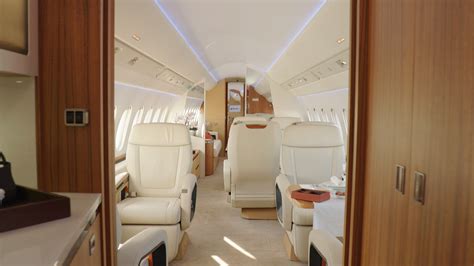
One of the most defining aspects of modern private jet windows is their role in regulating circadian rhythms. The effect of sunlight on melatonin production is a critical factor in long-haul travel. Larger windows allow passengers to maximize exposure to natural light, helping them align their internal clocks with new time zones and combat jet lag more effectively.
The Dassault Falcon 6X, for example, is equipped with 30 oversized windows and an exclusive galley skylight, setting a new standard in business aviation. The cabin measures over 40 feet in length and 8 feet 6 inches in width, and yet carries only up to 16 passengers. This means a remarkable glass-to-passenger ratio—nearly 5,000 square inches of window glass in total—transforming light from a utilitarian necessity to a wellness feature.
Why Bigger Isn’t Just Better—It’s Smarter
In commercial aviation, smaller, rounder windows are a necessity of structural efficiency and cost management. Airliners are pressurized metal tubes carrying hundreds of people across thousands of miles. The more and larger the windows, the more reinforcement the fuselage needs, which in turn means more weight, higher fuel burn, and increased maintenance.
Private jets, by contrast, are engineered with bespoke luxury and personal well-being as top priorities. The design philosophy is reversed—where commercial aircraft tolerate windows, private jets celebrate them.
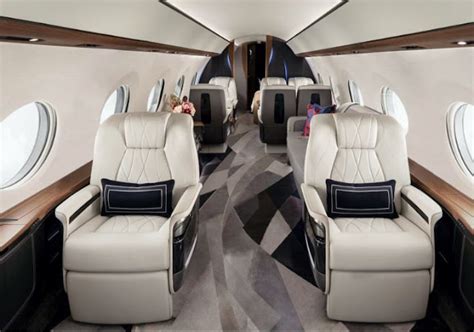
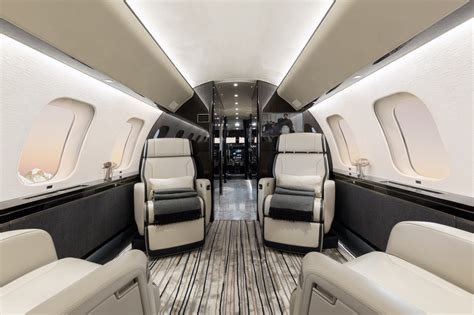
Consider the Gulfstream G700, which features windows that are 28.1 inches wide and 20.06 inches tall—the largest in the business aviation industry. These distinctive oval windows not only provide commanding panoramic views but are also spaced deliberately to offer uninterrupted light at every seat.
Technical Engineering Behind Private Jet Window Design
Large windows on private jets are not achieved simply by cutting bigger holes into the fuselage. They are the result of sophisticated structural integration and lightweight composite materials.
Private jet windows are often made with multi-layer acrylic or polycarbonate panels, sandwiched for both strength and insulation. Unlike the triple-pane designs in commercial jets (where one layer is even decorative), private jet windows integrate ultraviolet filtering, noise insulation, and even electrochromic dimming technology in high-end models.
The use of advanced alloys and carbon-fiber composites in airframe construction allows designers more flexibility with window shapes and placements without compromising safety or airworthiness. This kind of customization is almost impossible in the rigid, high-utilization environment of commercial airline manufacturing.
The Aesthetic and Psychological Edge
The experience of looking out of a floor-to-ceiling panoramic window while flying at 40,000 feet over mountain ranges or oceans is not just beautiful—it’s emotional. Private jet manufacturers understand that such experiences reinforce the luxury brand identity and provide clients with more than just travel—they deliver status, serenity, and spectacle.
The synergy between cabin architecture and window design is highly curated. Windows are often framed with recessed LED lighting, placed strategically for indirect illumination, and tinted automatically based on sun angle. These ambient lighting systems, coupled with oversized window design, contribute to a spacious, stress-reducing environment that is worlds apart from the confined experience in coach.
Cabin Pressure and Altitude: A Hidden Difference
Private jets also tend to fly at higher altitudes—sometimes up to 51,000 feet, compared to the 35,000 feet ceiling of most commercial aircraft. However, their cabins are pressurized to simulate lower altitudes, around 4,000 to 6,000 feet, while commercial airliners maintain cabin pressures closer to 6,000 to 8,000 feet.
Why does this matter for windows? A higher differential between outside and inside pressure means the windows need to be more robust. While commercial aircraft mitigate this with smaller windows, private jet manufacturers accept the engineering challenge and innovate around it. The result: windows that are not only larger but also engineered to withstand even greater stress—without sacrificing design or safety.
Weight and Maintenance Considerations
The argument for small windows in commercial aircraft also includes weight and maintenance. Windows add structural complexity, and each one is a potential point of failure. In fact, cargo variants of commercial aircraft often have no windows at all, because they add weight and reduce structural integrity.
Captain John Cox, in his “Ask the Captain” segment, noted that the framing and reinforcement needed around each window increases aircraft weight considerably. In the budget-sensitive airline industry, that weight translates to increased fuel consumption and higher operational costs. For private jets, where cost is a secondary consideration to comfort, designers are able to push the envelope with larger and more numerous windows without the same economic trade-offs.
Window Innovations in Luxury Aviation
The Boeing 787 Dreamliner—although a commercial aircraft—has adopted some features traditionally found in private jets, such as larger dimmable windows (18.4 inches tall by 10.7 inches wide) with no physical shutters. This crossover innovation underscores the growing demand for enhanced passenger experience in all forms of aviation.
But the real innovations remain in the private sector. Electrochromic dimming, once a novelty, is now commonplace in high-end jets. Embraer’s Praetor 600 integrates touch-controlled window dimming directly into its seating interface. Bombardier’s Global 7500 boasts ultra-quiet windows with quadruple-pane construction, offering soundproofing as well as visual luxury.
Privacy, Comfort, and the Clientele Factor
Privacy is another crucial reason for different window configurations. On private jets, window placement aligns with seating and sleeping zones, offering every traveler an unobstructed, private view. In commercial aircraft, windows are spaced uniformly without regard for seat configuration, which leads to odd alignments and obstructed views.
Moreover, private jet passengers are often high-net-worth individuals, celebrities, diplomats, or executives who may desire to control lighting and visibility—both in and out. With smart glass and adjustable tinting, window control becomes a luxury amenity, offering both privacy and comfort at the touch of a button.
The Future of Jet Windows: Beyond Transparency
Looking ahead, window design may even extend beyond physical openings. Concepts like virtual windows, seen on models such as the Emirates First Class Suite or future cabin designs from Lufthansa Technik, suggest that OLED panel walls, powered by external cameras, could one day offer immersive digital skylines without structural compromise.
Nonetheless, in the realm of private aviation, real glass remains a signature of opulence and personalization. The view, the light, and the elegance it brings are irreplaceable. Every square inch of window is another inch of elevated experience.
Conclusion
The stark contrast between private jet windows and those on commercial aircraft is not just a matter of size—it’s a reflection of differing philosophies in design, engineering, and passenger expectations. While commercial airliners focus on efficiency and safety within tight cost margins, private jets are laboratories of aeronautical innovation and human-centered luxury. From the Falcon 6X’s galley skylight to the G700’s panoramic ovals, each window is a lens into the art of flying refined to its most lavish form.
In the sky, as in life, how you see the world often depends on the window you’re looking through.