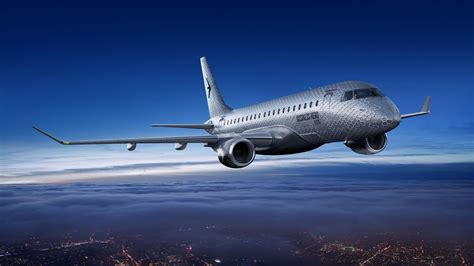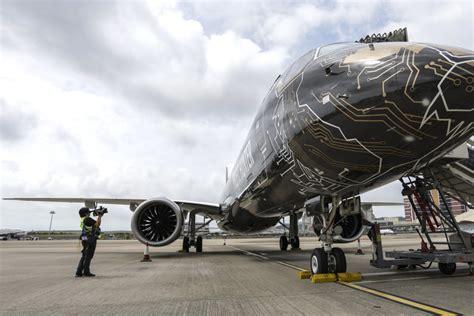
Brazilian aerospace giant Embraer is making headlines—not for launching a new aircraft, but for not rushing to build one. At a time when Airbus and Boeing continue to dominate the large commercial jet market, Embraer is signaling a firm commitment to strategic patience. According to Arjan Meijer, President and CEO of Embraer Commercial Aviation, the company will “take the time it needs” before deciding whether to enter the competitive landscape of larger aircraft, potentially positioning itself as a direct rival to Boeing’s 737 MAX and Airbus’s A320neo families.
This is not merely corporate hesitancy. Developing a new, larger commercial jet would require tens of billions of dollars, a risk that could not only jeopardize Embraer’s healthy financials but also interfere with its current backlog of over 200 aircraft. Meijer made clear during the Association of Asia Pacific Airlines (AAPA) summit in Bangkok that while market interest exists, a full-scale commitment to a new airplane is still “far away.”
Embraer’s Stronghold: Dominance in the Regional Market
Despite not entering the large-jet battlefield, Embraer is thriving. Its E-Jet family, especially the E175 and E195-E2, continues to perform robustly in the regional market. Operators such as SkyWest, Republic Airways, Mesa Airlines, and Envoy Air in the U.S., Virgin Australia, KLM Cityhopper, and Azul Linhas Aéreas globally, rely heavily on Embraer’s reliable and efficient platforms. Since the first delivery in 2004 to LOT Polish Airlines, the E-Jet has become synonymous with regional connectivity.
To date, Embraer has received 1,930 total orders, delivering 1,730 aircraft, leaving a robust backlog of over 200 units. The E175 remains the best-selling model, with nearly 1,000 orders, and 200 still pending delivery. This active production line reinforces Embraer’s financial stability and underpins its strategy of prudence.
Recent Orders Reinforce Market Confidence
Far from stagnation, Embraer is witnessing a steady inflow of new orders:
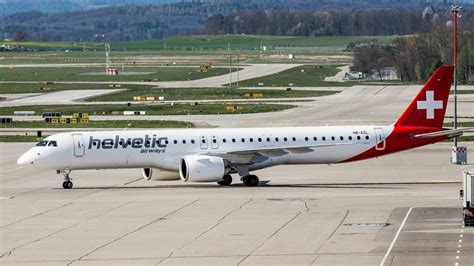
- Helvetic Airways, a Swiss regional carrier, placed a firm order for three E195-E2s, with five additional purchase rights. This will increase their fleet from 12 to 20 aircraft, all configured for 134 economy-class passengers. Deliveries are expected from late 2026.
- Air Côte d’Ivoire, the flag carrier of Ivory Coast, announced the purchase of four E175s with eight purchase rights. These jets will enter service in early 2027, configured with a dual-class layout accommodating 76 passengers.
These orders not only validate the ongoing relevance of the E-Jet program but also highlight Embraer’s competitive edge in fuel efficiency, operational economics, and fleet commonality.
Abandoning Turboprop Ambitions—For Now
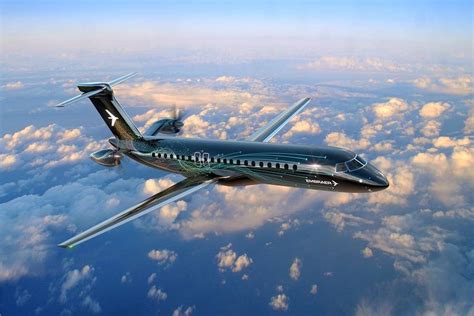
While all eyes are on whether Embraer will venture into the single-aisle large jet market, it quietly shelved another promising plan—the development of a next-generation turboprop aircraft. Initially unveiled in 2019, the turboprop was designed to accommodate 70 to 100 passengers and compete directly with ATR and former Bombardier Dash 8 platforms.
The conceptual design released in 2020 featured rear-mounted engines and aimed for 5–8% improved fuel efficiency over its rivals. It was envisioned as a short-haul workhorse with a range of 700 miles (1,130 km) and a launch originally targeted for 2022, followed by first deliveries by 2027 or 2028. However, market conditions and financial prudence led Embraer to pause this endeavor indefinitely.
The Strategic Calculation: Growth vs. Risk
While it may seem counterintuitive in a market driven by innovation, Embraer’s cautious approach is rooted in long-term stability and calculated risk-taking. The company understands that the global duopoly held by Airbus and Boeing comes with not only prestige but also immense capital risk, production complexity, and the burden of sustaining global support networks.
Embraer’s decision to defer entry into the large-jet category is a signal to investors and customers alike: it is prioritizing sustainable growth over ambitious overreach. Instead of spreading itself thin, Embraer continues to leverage its regional market leadership while keeping future options open for when market conditions—and balance sheets—are more favorable.
Conclusion: A Watchful Eye on the Skies
Embraer’s refusal to rush into competition with aerospace giants is not a sign of weakness, but rather a strategic act of discipline and foresight. With its solid E-Jet lineup, fresh orders streaming in, and a vigilant approach to new developments, Embraer remains a pivotal force in commercial aviation. Whether it eventually chooses to challenge Boeing and Airbus will depend not on ambition, but on a thorough calculation of value, risk, and market timing.