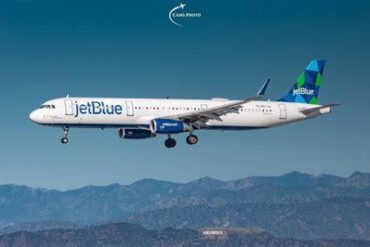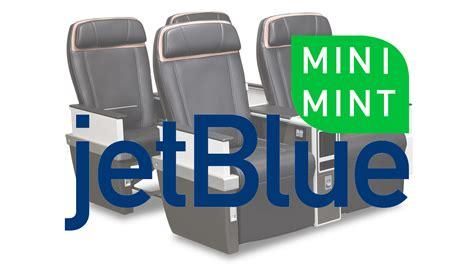
JetBlue Airways is officially shaking up the skies. In a move set to disrupt domestic air travel, the New York-based carrier is launching a domestic first-class product known internally as “Mini Mint”—a compact evolution of its highly acclaimed Mint service. This initiative will reshape passenger expectations, especially for those flying shorter-haul routes across the United States.
JetBlue’s Strategic Shift Into Domestic First Class
JetBlue has long held a reputation for offering one of the most spacious and customer-centric economy class experiences in the U.S., but its lack of a uniform premium cabin across all domestic routes left a clear gap. With the introduction of ‘Mini Mint,’ that gap is closing fast. Industry insider JonNYC revealed the plan via his X page, stating that JetBlue filed for certification of a new domestic first-class cabin layout. The project has been under wraps for years, often teased but never confirmed—until now.
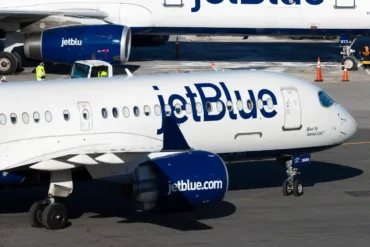
The airline intends to begin installations in August 2026, with retrofits starting on the Airbus A320, eventually expanding to the A220 and A321 fleets. The retrofit target is ambitious: 20 aircraft per month, indicating a serious investment in redefining JetBlue’s brand image and competitive reach.
Inside the ‘Mini Mint’ Experience: Elevating the Skies
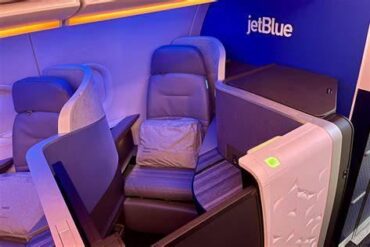
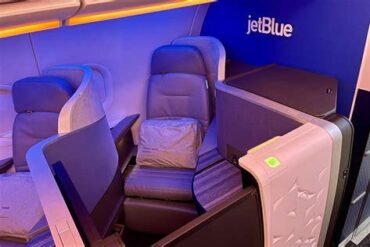
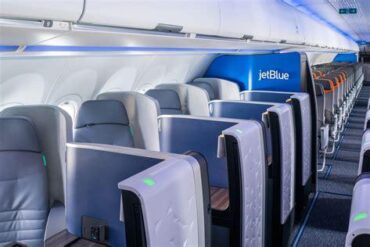
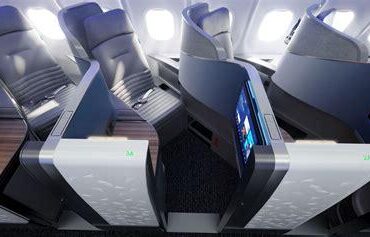
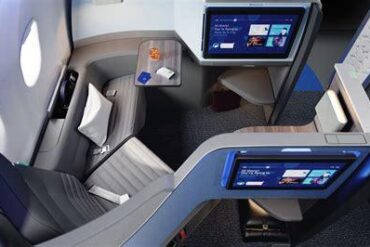
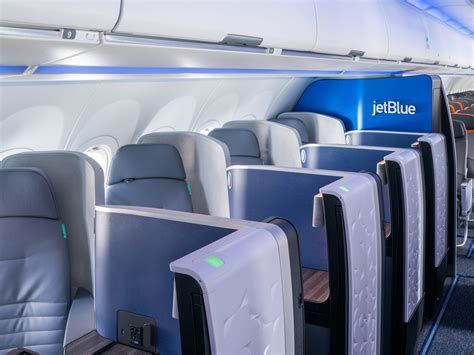
The new premium offering isn’t just a cosmetic upgrade—it represents a comprehensive redesign of JetBlue’s onboard experience for domestic travelers. Unlike its flagship Mint product, which boasts lie-flat seats and luxury suites, Mini Mint will focus on delivering top-tier comfort and exclusivity in a smaller format.
The seats, crafted by Collins Aerospace, will mimic the comfort standards seen in first-class cabins of legacy carriers like American Airlines, Delta, and United. This means plush recliner seats, more spacious configurations, and upscale service—but without the full suite experience of the original Mint.
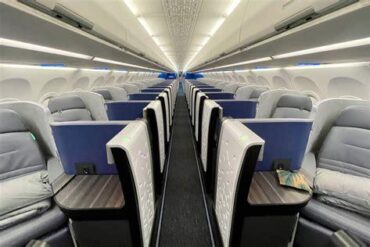
JetBlue plans the following configurations:
- Airbus A220: 8 first-class seats
- Airbus A320: 12 first-class seats
- Airbus A321ceo and A321neo: 12 first-class seats
Seat pitch for these first-class cabins will range between 35 to 37 inches (89 to 94 cm), offering a noticeable upgrade from standard coach. To create room for this configuration, JetBlue may slightly reduce economy seat pitch from 32 to 30 inches, a strategic trade-off that keeps the cabin efficient without alienating budget-conscious passengers.
A Historical Context: From Mint To Mini
JetBlue revolutionized premium flying in 2013 when it introduced Mint, its transcontinental and transatlantic luxury product. Launched to counter the Big Three’s dominance in premium routes, Mint featured lie-flat seats, privacy doors, elevated dining, and even spa-inspired amenities. It quickly became a favorite for bi-coastal business travelers and luxury seekers.
However, Mint’s reach remained limited—primarily serving JFK-LAX/SFO, London routes, and select Caribbean destinations. The rest of JetBlue’s domestic network still relied on its above-average economy and Even More Space offerings. That made JetBlue competitive—but not dominant.
With Mini Mint, JetBlue is now closing that gap, giving it a more powerful position in cities like Boston, Fort Lauderdale, and Orlando, and especially in New York, where it commands over 23% of operations at JFK.
Certification, Challenges, and the Road Ahead
Before the product can officially take flight, JetBlue must navigate the Federal Aviation Administration’s (FAA) rigorous certification process. Each new seat model and cabin configuration must be approved for safety and regulatory compliance. Given the airline’s clear timeline, it’s likely that much of the design and preliminary testing is already underway.
JetBlue’s current fleet includes over 170 aircraft without any form of premium seating, according to ch-aviation data. At a retrofit pace of 20 aircraft per month, it will take nearly a year to fully implement Mini Mint across its targeted fleet. Still, this timeline is aggressive enough to keep competitors watching closely.
Moreover, the new offering is expected to debut on key high-volume, high-yield routes, likely connecting major cities and business corridors. While the exact launch routes haven’t been announced, a focus on JFK, LGA, BOS, and LAX is all but guaranteed. These markets are saturated with premium travelers and loyalists of the Big Three—exactly the clientele JetBlue aims to attract.
Implications For the Domestic Aviation Market
JetBlue’s move into domestic first class is more than an upgrade—it’s a market disruptor. Until now, the legacy carriers maintained a firm grip on premium domestic flyers. Their business models, reliant on elite frequent flyer programs, corporate contracts, and tiered cabin service, left little room for newer players to compete at the top.
But JetBlue has never followed legacy playbooks. Its Mint cabin proved that high-end service could thrive without traditional business class trappings, and Mini Mint aims to do the same—this time for shorter flights and underserved markets.
This pivot also signals a deeper shift: JetBlue is betting big on product segmentation rather than sheer pricing wars. In an era where ultra-low-cost carriers dominate the bottom end, and legacy airlines dominate the top, JetBlue is carving out a powerful, premium middle ground.
Passenger Experience: What Flyers Can Expect
Passengers flying Mini Mint can expect:
- Priority boarding and check-in services
- Recliner seats with elevated pitch and width
- Enhanced in-flight meals and beverages
- Dedicated cabin crew for premium seating
- Improved entertainment options via larger screens and noise-canceling headsets
While details on lounges and loyalty integration remain under wraps, it’s reasonable to expect that TrueBlue Mosaic members will receive elevated perks tied to the new cabin class.
Why Now? JetBlue’s Competitive Urgency
This domestic expansion comes at a critical time for JetBlue. The carrier is facing growing competitive pressure after setbacks in its Northeast Alliance with American Airlines, and regulatory pushback on its attempted merger with Spirit. By refocusing on product innovation, JetBlue is doubling down on differentiation, playing to its brand strength as a customer-first airline.
Additionally, the push into first class aligns with broader industry trends: demand for premium leisure travel is soaring post-pandemic, with customers willing to pay for space, comfort, and reliability. The timing couldn’t be more advantageous.
Final Thoughts: A New Era for JetBlue—and Its Customers
JetBlue’s launch of Mini Mint in 2026 won’t just add a new cabin class—it will redefine what domestic first class can look like. Merging innovation, comfort, and efficiency, this move represents a confident evolution of JetBlue’s brand, aimed squarely at reclaiming its position as a disruptive force in American aviation.
By introducing an accessible, premium product on routes that typically lack such offerings, JetBlue is poised to attract a new class of loyal travelers, satisfy existing customers seeking more luxury, and challenge the conventional hierarchy of U.S. airlines.
The skies in 2026 will look very different—and JetBlue’s bold new cabin will help lead that transformation.