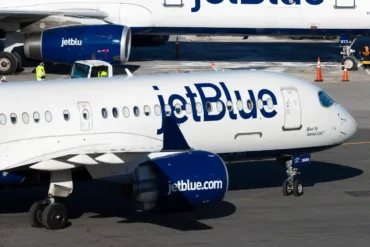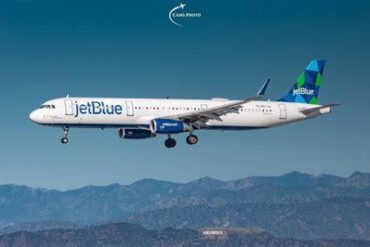
JetBlue has quietly rewritten the economics of transatlantic travel, not by adding more passengers—but by focusing intensely on fewer, higher-paying ones. At the heart of this strategy lies a striking reality: just 24 premium Mint seats can effectively bankroll an entire long-haul flight across the Atlantic. This is not a marketing myth or a simplified headline—it is a precise financial mechanism rooted in modern airline economics, aircraft efficiency, and evolving passenger demand.
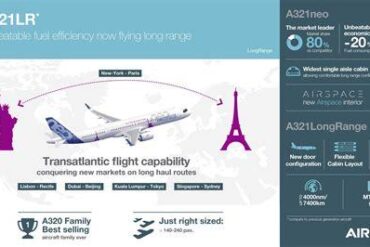
The introduction of the Airbus A321LR has enabled this transformation. Smaller, leaner, and far more flexible than traditional widebody jets, it allows JetBlue to deploy a premium-heavy configuration that extracts maximum revenue from a minimal footprint. The result is a model where quality of revenue outweighs quantity of passengers, and where a small group of travelers determines the profitability of an entire operation.
This is the story of how a boutique-style premium cabin reshapes the balance sheet of a transatlantic airline—and why the future of long-haul travel may belong to aircraft that carry fewer people, but earn far more per seat.
The Narrowbody Revolution Reshaping Transatlantic Economics
For decades, crossing the Atlantic meant one thing: large, widebody aircraft packed with hundreds of passengers. Airlines relied on scale—filling 250 to 350 seats—to dilute enormous operating costs. Profitability depended heavily on high load factors, often forcing carriers to discount economy fares just to fill the cabin.
The arrival of the A321LR disrupted this paradigm entirely.
With only 138 seats onboard, JetBlue’s configuration dramatically lowers the break-even threshold. Instead of chasing volume, the airline focuses on yield optimization—earning more per passenger rather than carrying more passengers overall. This shift is not subtle; it represents a fundamental rethinking of how long-haul routes can be structured.
The aircraft’s range—up to 4,500 nautical miles—enables direct connections between secondary cities that previously could not sustain widebody service. Routes like Boston to Milan or Barcelona become viable not because of mass demand, but because a smaller aircraft can profit from niche, high-value traffic.
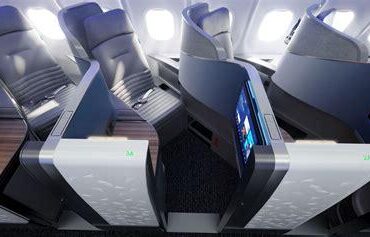
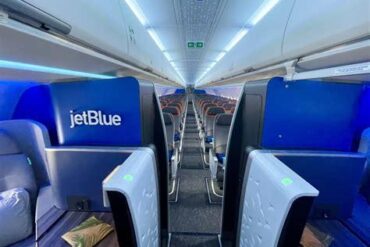
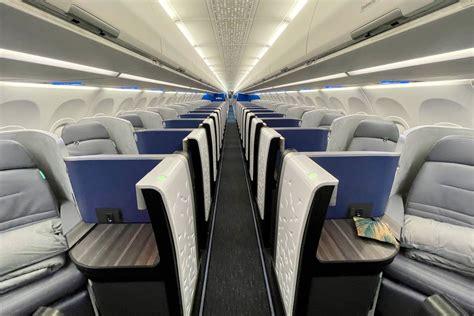
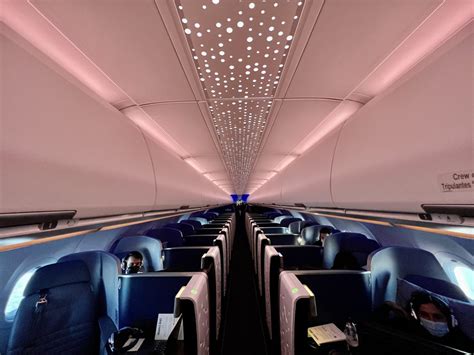
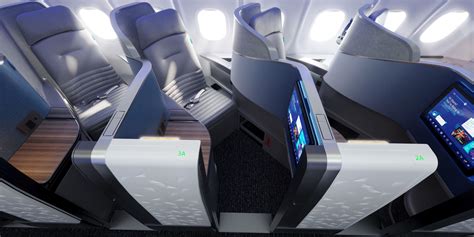
This is where the Mint cabin becomes central. By dedicating a significant portion of the aircraft’s forward section to premium suites, JetBlue transforms its most limited space into its most lucrative asset. Every square inch of the Mint cabin generates disproportionately high revenue, redefining how airlines measure efficiency—not in passengers carried, but in revenue per square foot.
Why 24 Seats Matter More Than 114
At first glance, it seems counterintuitive. How can just 17.4% of the cabin—24 seats—generate more financial impact than the remaining 82.6%?
The answer lies in pricing power.
A typical one-way Mint fare on a transatlantic route can reach $2,199, while economy tickets may start at $399. This creates a staggering disparity:
- One Mint passenger ≈ revenue of 5+ economy passengers
- 24 Mint passengers ≈ revenue equivalent of 120+ economy passengers
In practical terms, this means that the entire economy cabin can become secondary to profitability, acting more as incremental margin than core revenue.
What makes this even more compelling is cost efficiency. Premium passengers:
- Occupy more space but contribute exponentially higher revenue
- Require enhanced service, but not proportionally higher operational cost
- Add minimal incremental weight relative to revenue generated
This imbalance is the financial engine behind JetBlue’s strategy. The Mint cabin doesn’t just contribute to profit—it anchors the entire flight’s economic viability.
Even if economy load factors fluctuate, the airline can remain profitable as long as Mint demand holds strong. This reduces exposure to price-sensitive travelers and shields the airline from aggressive fare competition in the back of the cabin.
The Cost Advantage of the Airbus A321LR
The brilliance of this model would collapse without the right aircraft—and the A321LR is precisely engineered for this role.
Traditional widebody aircraft like the Boeing 787 or Airbus A350 offer massive capacity, but at a cost:
- Higher fuel burn
- Larger crew requirements
- Expensive landing and handling fees
- Greater risk if seats go unsold
In contrast, the A321LR delivers long-haul capability at narrowbody cost levels.
It burns approximately 900 to 1,000 gallons of fuel per hour, significantly less than older widebody jets. Its smaller size also reduces airport fees and simplifies operations, particularly at secondary European airports where widebody economics often struggle.
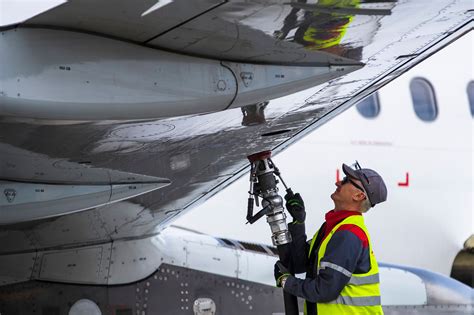
This efficiency enables JetBlue to operate flights where total trip cost is low enough to be covered largely by premium revenue alone. In effect, the Mint cabin pays for:
- Fuel
- Crew salaries
- Maintenance reserves
- Airport charges
Everything beyond that—especially economy revenue—becomes incremental profit.
This is a radically different equation from traditional airline models, where profitability requires high occupancy across all cabins. Here, profitability is concentrated, not distributed.
JetForward: Turning Premium Strategy Into Survival
JetBlue’s pivot toward this model was not purely opportunistic—it was necessary.
After reporting a $795 million net loss in 2024, the airline faced mounting pressure from rising fuel costs, intense domestic competition, and structural inefficiencies. The response was the JetForward strategy, a disciplined shift toward profitability driven by premium revenue and controlled capacity.
The A321LR and Mint cabin became the centerpiece of this recovery plan.
Rather than expanding aggressively, JetBlue began selectively deploying aircraft on high-yield routes, particularly those with strong leisure-premium demand. The focus shifted from market share to margin quality.
Even as losses persisted into 2026, the performance indicators told a different story:
- Revenue per available seat mile increased by 6.5%
- Premium cabin performance outpaced economy by nine percentage points
- Liquidity remained strong, exceeding $2.4 billion
These figures highlight a crucial truth: the Mint strategy is not just profitable—it is stabilizing the airline’s financial trajectory.
The Rise of Leisure-Premium Travel
One of the most underestimated forces behind this success is the rise of the leisure-premium traveler.
Unlike traditional business travelers, who rely on corporate contracts, this segment consists of individuals willing to pay for comfort during personal travel. They are:
- Affluent vacationers
- Experience-driven consumers
- Less price-sensitive
- Highly responsive to product quality
Routes like Boston to Milan or Barcelona are perfectly tailored to this demographic. These destinations attract travelers heading to:
- Luxury vacations
- Fashion events
- Mediterranean cruises
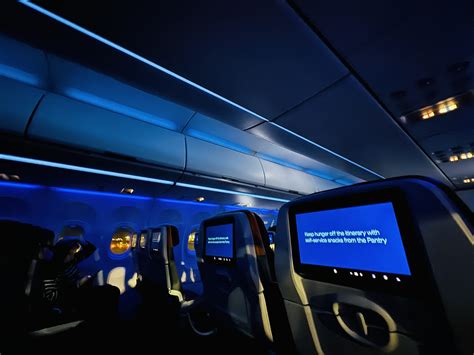
JetBlue’s Mint product—featuring lie-flat suites with direct aisle access—aligns perfectly with these expectations. It offers a premium experience without the scale or impersonality of large widebody cabins.
This allows JetBlue to command premium pricing without relying on corporate demand, a significant competitive advantage in markets dominated by legacy carriers.
Why Smaller Planes Are Winning Big
The success of JetBlue’s model reflects a broader industry shift. Since 2019, narrowbody transatlantic flights have increased by over 120%, signaling a structural transformation in long-haul aviation.
The advantages are clear:
- Lower financial risk per flight
- Greater route flexibility
- Ability to serve underserved city pairs
- Higher resilience during demand fluctuations
But the most important advantage is strategic: airlines can align capacity precisely with demand, rather than forcing demand to match capacity.
This eliminates the need for heavy discounting, protects yields, and ensures that every seat contributes meaningfully to profitability.
JetBlue has not just adopted this model—it has refined it to a level where a minority of seats dictate the success of the entire flight.
The Future: Scaling a Premium-Driven Network
Looking ahead, JetBlue’s strategy is poised to expand further with the introduction of the A321XLR, which will extend its reach deeper into Europe and beyond.
This next-generation aircraft will allow the airline to:
- Launch longer routes with the same cost efficiency
- Maintain its premium-heavy configuration
- Expand into underserved high-yield markets
The core principle will remain unchanged: maximize revenue from a small, high-value segment of passengers.
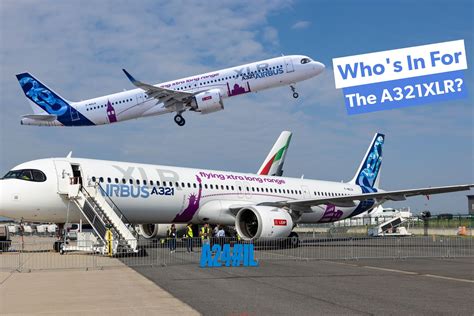
As fuel prices fluctuate and economic uncertainty persists, this model offers a level of resilience that traditional widebody operations struggle to match.
It is not dependent on filling hundreds of seats. It is not vulnerable to aggressive fare wars in economy cabins. Instead, it is anchored in a predictable, high-margin revenue stream driven by premium demand.
Conclusion: The Power of Precision Economics
The idea that 24 passengers can bankroll an entire transatlantic flight might sound improbable—but the numbers leave little room for doubt.
JetBlue has engineered a system where:
- Premium revenue covers core operating costs
- Economy revenue enhances margins rather than ensuring survival
- Smaller aircraft outperform larger ones in targeted markets
This is not just an operational tweak—it is a philosophical shift in how airlines approach long-haul travel.
By focusing on precision economics instead of scale, JetBlue has demonstrated that profitability does not require more passengers—only the right ones.
And in the evolving landscape of global aviation, that insight may prove more valuable than any fleet expansion or route network ever could.