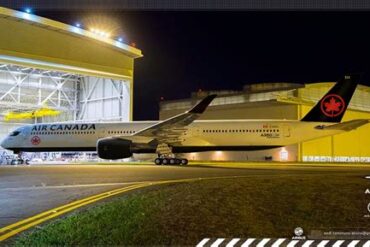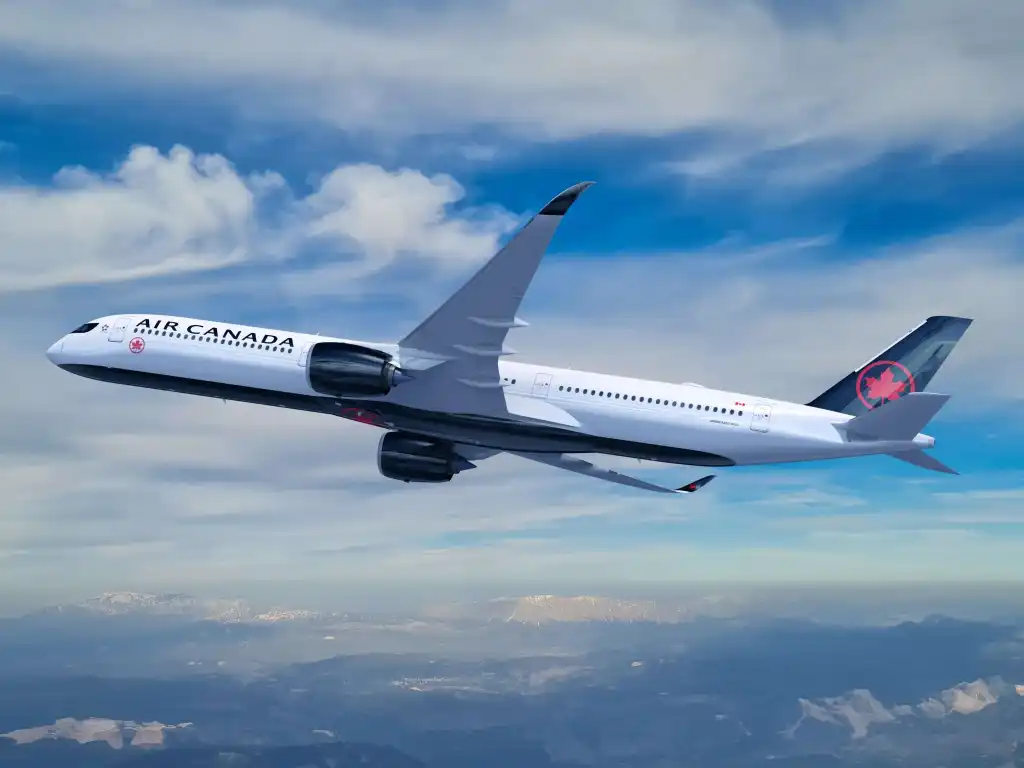
Air Canada’s decision to order the Airbus A350-1000 is not a routine fleet update. It is a calculated, forward-looking commitment to redefine the airline’s long-haul performance, economics, and passenger experience for the next generation. With deliveries scheduled to begin in 2030, this aircraft will not simply join the fleet; it will anchor Air Canada’s most ambitious intercontinental missions.
In the intensely competitive world of long-haul aviation, marginal advantages in fuel burn, range, and payload translate into strategic leverage. For an airline geographically positioned at the northern edge of North America, distance is both a challenge and an opportunity. The A350-1000 directly addresses that equation. It is built to stretch networks across oceans without compromise, offering the range to connect Canada’s major hubs to high-growth markets in Asia-Pacific, South Asia, and even Southern Africa—nonstop.
The significance of this move becomes even clearer when viewed against global fleet modernization trends. Airlines worldwide are retiring aging widebodies and replacing them with composite-structured, ultra-efficient aircraft. Air Canada’s choice signals alignment with that global pivot toward lighter materials, smarter aerodynamics, and next-generation propulsion systems. The A350-1000 is not merely newer; it is engineered around long-haul optimization from the ground up.
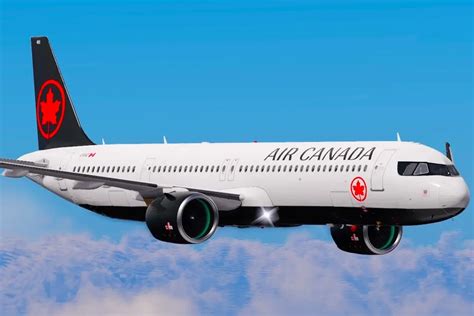
The Airbus A350-1000: Engineering for the Ultra-Long Haul Era
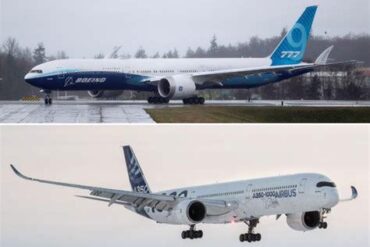
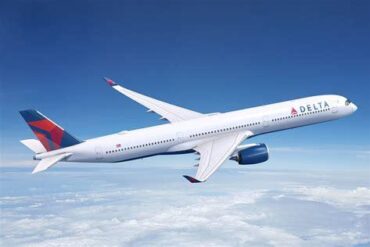
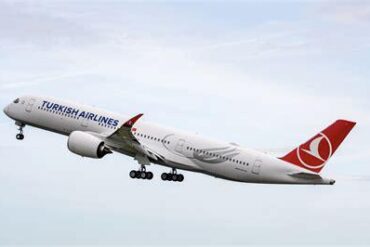
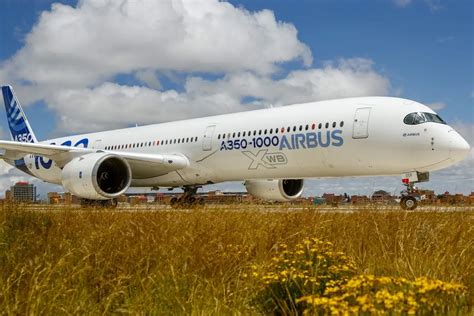
The Airbus A350-1000 stands as the largest and most capable member of the A350 family. Constructed primarily from carbon-fiber-reinforced polymer composites, its fuselage and wings are significantly lighter than previous-generation aluminum designs. Less weight means less fuel burn. Less fuel burn means lower operating costs and fewer emissions. The chain reaction is straightforward—and profoundly powerful.
Powering the aircraft are the Rolls-Royce Trent XWB-97 engines, among the most efficient large turbofans ever produced. These engines generate immense thrust while maintaining exceptional fuel efficiency, enabling the aircraft to operate routes approaching 10,300 miles (16,600 kilometers). That range figure is not marketing flair; it fundamentally changes route planning mathematics.
When Qatar Airways introduced the A350-1000 in 2018 on the Doha–London Heathrow route, it demonstrated the aircraft’s readiness for high-density, high-demand long-haul sectors. Since then, carriers such as Cathay Pacific, British Airways, Virgin Atlantic, and Japan Airlines have deployed the aircraft on critical intercontinental corridors. Airlines choose the A350-1000 because it delivers range without sacrificing payload—an essential factor for profitable long-haul operations.
For Air Canada, that payload capability is especially relevant. Operating from Toronto (YYZ), Montréal (YUL), and Vancouver (YVR), the airline must overcome geographic distance that sits between Canada and many emerging economic centers. The A350-1000 effectively compresses the globe.
Unlocking Nonstop Connectivity from Canada to the World
Geography defines Air Canada’s operational reality. From Toronto to Sydney is a punishingly long stretch of sky. Montréal to Singapore pushes into ultra-long-haul territory. Vancouver to Johannesburg spans hemispheres. These routes have historically required careful planning, weight restrictions, or technical stops.
The A350-1000 eliminates many of those constraints.
Nonstop service changes the value proposition in multiple dimensions. Eliminating an intermediate stop reduces block time, simplifies crew scheduling, lowers landing and handling fees, and enhances aircraft utilization. Most importantly, passengers overwhelmingly prefer nonstop flights—particularly premium travelers whose time carries a measurable financial cost.
Potential route expansions include:
- Toronto to Sydney
- Toronto to Mumbai
- Montréal to Manila
- Montréal to Singapore
- Vancouver to Johannesburg
These are not speculative fantasies; they are technically feasible missions within the A350-1000’s performance envelope. Each route represents access to high-growth markets, diaspora travel flows, and premium corporate demand.
In long-haul aviation, connectivity equals competitive advantage. The ability to offer direct service between global city pairs strengthens hub dominance and enhances Star Alliance feed. The A350-1000 becomes a strategic bridge, not just an aircraft.
Fuel Efficiency and the Economics of Modern Widebody Operations
Fuel is the single largest variable cost for most airlines. Even small percentage improvements ripple dramatically across annual operating budgets. The A350-1000 delivers approximately 25% lower fuel burn and emissions compared to previous-generation aircraft in its category. That number is not cosmetic. It is transformative.
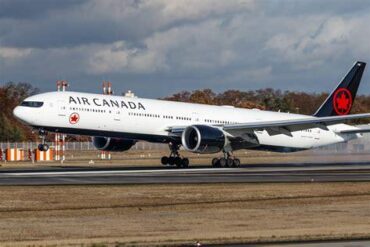
Air Canada’s fleet includes aircraft such as the Boeing 777-300ER and Airbus A330-300, both highly capable but less efficient by modern standards. Replacing or supplementing those aircraft with the A350-1000 preserves capacity while sharply improving unit economics.
Lower fuel consumption means:
- Reduced cost per available seat mile (CASM)
- Stronger margins on thin long-haul routes
- Improved resilience during fuel price volatility
- Enhanced sustainability credentials
In a regulatory environment increasingly focused on carbon reduction, fleet modernization is no longer optional. It is existential. The A350-1000’s efficiency not only protects profitability but positions Air Canada as a serious player in the decarbonization conversation.
From a network perspective, improved efficiency also allows experimentation. Routes that may have been economically marginal with older widebodies become viable. This flexibility is critical in emerging markets where demand matures gradually.
Cabin Innovation: Passenger Experience as a Competitive Weapon
Long-haul flights exceeding 14 or 16 hours test passenger endurance. Cabin design therefore becomes strategic, not aesthetic. The Airbus Airspace cabin concept embedded in the A350-1000 addresses fatigue through multiple engineering decisions.
Cabin altitude is kept lower than on older aircraft, typically around 6,000 feet equivalent rather than 8,000. That reduction decreases dehydration and travel fatigue. Humidity levels are improved. Noise is reduced through aerodynamic shaping and advanced insulation. The result is subtle but measurable comfort gains over ultra-long distances.
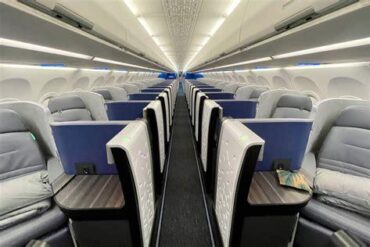
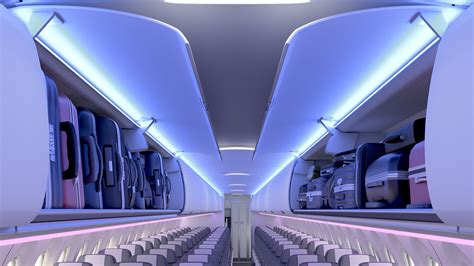
Air Canada has indicated that the A350-1000 will debut its next-generation cabin standard. Although final configurations remain forthcoming, industry precedent offers clues. Carriers such as Cathay Pacific deploy reverse-herringbone business class seats with direct aisle access, substantial privacy, and fully flat beds. Premium economy cabins on the A350-1000 often feature generous recline and enhanced legroom. Economy cabins benefit from higher ceilings, larger windows, and mood lighting systems designed to mitigate jet lag.
These details matter. On ultra-long-haul routes, customer loyalty hinges on comfort and perceived value. The A350-1000 provides the structural and environmental platform upon which Air Canada can build a world-class product.
Strategic Fleet Alignment and Operational Synergy
Air Canada’s broader fleet strategy reinforces why the A350-1000 fits seamlessly into its long-term plan. The airline operates a diverse mix of Airbus and Boeing aircraft, including the Airbus A220-300 for short-haul routes and the forthcoming Airbus A321XLR for long, thin international sectors.
The A350-1000 complements these aircraft at the top end of the capacity spectrum. While the Boeing 787 family serves mid-capacity long-haul missions efficiently, the A350-1000 provides greater seat count and superior payload capability for high-demand intercontinental routes.
This layered fleet architecture allows Air Canada to match aircraft precisely to route profiles:
- A220 for regional efficiency
- A321XLR for transatlantic and secondary markets
- 787 for flexible long-haul operations
- A350-1000 for flagship ultra-long-haul sectors
Such calibration minimizes waste and maximizes revenue potential. Fleet commonality with Airbus systems also simplifies training, maintenance, and parts logistics. Operational complexity decreases as efficiency increases—a rare and welcome pairing in commercial aviation.
Environmental Performance and Sustainable Aviation Fuel Compatibility
Environmental accountability is no longer peripheral to airline strategy. It is central. The A350-1000 is capable of operating with up to 50% Sustainable Aviation Fuel (SAF) today, and Airbus aims for full 100% SAF capability by 2030.
This compatibility provides Air Canada with a credible pathway toward emissions reduction targets. Beyond fuel flexibility, the aircraft’s composite construction resists corrosion, extends maintenance intervals, and reduces lifecycle environmental impact.
Modern aircraft also generate lower noise footprints during takeoff and landing. For major hubs like Toronto Pearson and Vancouver International, community noise concerns remain a constant factor. A quieter aircraft enhances airport relations and slot sustainability.
Over decades of service life, incremental efficiency gains accumulate into substantial environmental and financial dividends. The A350-1000 is designed not just for present compliance, but for future regulatory landscapes that will almost certainly demand even greater sustainability performance.
A350-1000 as a Defining Aircraft for Air Canada’s Next Era
Fleet decisions echo for generations. Aircraft ordered today shape route networks, brand perception, and financial resilience for decades. The Airbus A350-1000 represents more than expanded capacity; it symbolizes Air Canada’s intent to lead rather than follow in long-haul markets.
By combining ultra-long-range capability, exceptional fuel efficiency, next-generation cabin design, and strong sustainability alignment, the aircraft solves multiple strategic challenges simultaneously. It empowers Air Canada to connect distant continents nonstop, defend premium traffic, and operate with improved economic discipline.
As global aviation continues its post-pandemic evolution, airlines that invest in technological advantage will define the competitive landscape. The A350-1000 gives Air Canada a formidable tool: range without compromise, efficiency without sacrifice, and passenger comfort without apology.
When the Maple Leaf appears on the tail of the Airbus A350-1000 in 2030, it will mark the beginning of a new long-haul chapter—one engineered for distance, designed for performance, and calibrated for global ambition.