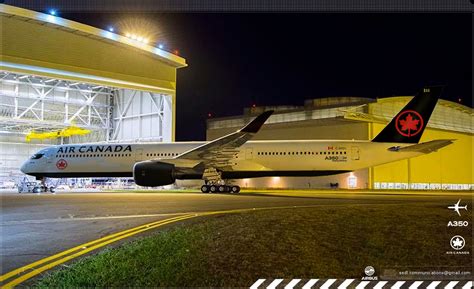
Air Canada is entering a pivotal decade in its long-haul evolution. The airline’s decision to order Airbus A350-1000 widebody aircraft signals more than a simple fleet addition—it represents a strategic shift toward greater efficiency, longer nonstop routes, and a modernized passenger experience. As global aviation rebounds and long-distance travel demand surges, the arrival of these aircraft beginning in 2030 will help redefine how Canada’s flag carrier connects North America with the rest of the world.
The announcement of eight firm orders, with options for eight more, places the A350-1000 at the center of Air Canada’s long-term strategy. These aircraft will not only replace aging jets but also expand the airline’s reach to emerging travel markets. Destinations across India, Southeast Asia, and Australia are expected to benefit from the aircraft’s impressive range and efficiency.
Airlines rarely invest billions in new aircraft without careful planning. Air Canada’s leadership views the A350-1000 as a platform for the next phase of global growth. Its combination of long range, strong passenger capacity, and exceptional fuel efficiency positions it as a critical asset for routes that stretch across the Pacific and beyond.
Air Canada’s Current Long-Haul Fleet and the Need for Renewal
Air Canada’s long-haul network is currently supported by a diverse fleet of Boeing and Airbus widebody aircraft, including the Boeing 777, Boeing 787 Dreamliner, and Airbus A330. While these aircraft have served the airline well, many are approaching the stage where replacement becomes both economically and operationally necessary.
The Airbus A330 fleet, for instance, averages more than 19 years in service. Although the aircraft remains a reliable workhorse for medium-to-long routes, advances in aircraft design have dramatically improved fuel efficiency and operating economics over the past two decades. Airlines that continue operating older aircraft inevitably face higher fuel consumption and maintenance costs.
Even more striking is the age of Air Canada’s Boeing 767-300 aircraft, which average over three decades in service. These jets were temporarily returned to passenger operations due to delivery delays of newer aircraft, illustrating how fragile fleet planning can become when supply chains slow down. In modern aviation, keeping aircraft in service for 30 years is not unusual, but it increasingly becomes inefficient compared with newer composite aircraft.
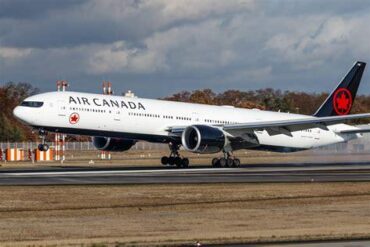
The backbone of Air Canada’s long-haul operations, however, remains the Boeing 777 fleet. With 25 aircraft in service and an average age exceeding 16 years, these jets are responsible for some of the airline’s busiest intercontinental routes. Yet the typical lifecycle of a widebody aircraft is roughly two decades before replacement becomes economically advantageous.
By the time Air Canada receives its first A350-1000 in 2030, many of its 777s will have crossed that threshold. The arrival of the new Airbus jet therefore aligns almost perfectly with the airline’s natural fleet renewal cycle.
Why the Airbus A350-1000 Is a Natural Successor to the Boeing 777
Replacing a flagship aircraft like the Boeing 777-300ER is no small decision. The aircraft has long been celebrated for its reliability, payload capacity, and ability to connect distant cities across continents. For nearly two decades it has served as one of the most successful long-haul aircraft ever built.
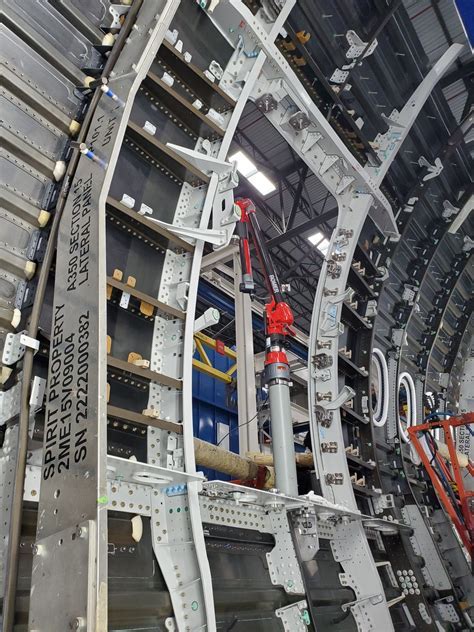
The Airbus A350-1000, however, represents the next generation of widebody technology. Designed with extensive use of carbon-fiber composite materials, the aircraft is significantly lighter than traditional aluminum airframes. More than 50 percent of the A350’s structure consists of composite materials, reducing weight while improving structural strength.
The size and capacity of the aircraft closely mirror those of the 777-300ER. Both aircraft stretch roughly 74 meters in length and feature wingspans exceeding 64 meters, allowing them to carry around 360 to 370 passengers depending on configuration. This similarity makes the A350-1000 a seamless replacement in terms of route capacity.
Where the new Airbus aircraft truly stands apart is fuel efficiency. Improvements in aerodynamics, lighter structural materials, and the advanced Rolls-Royce Trent XWB-97 engines contribute to an estimated 25 percent reduction in fuel burn compared with older aircraft of similar size.
Fuel is typically the single largest operating cost for airlines. A reduction of even 10 percent can dramatically affect profitability; therefore, a 25 percent improvement represents a transformative economic advantage.
The Economics Behind Air Canada’s Fleet Strategy
Operating economics are the quiet forces that shape airline decisions. Every flight involves an intricate balance of fuel costs, crew expenses, aircraft ownership payments, and maintenance requirements. Aircraft that reduce those costs while maintaining passenger capacity become highly attractive investments.
The A350 family is widely recognized for offering one of the lowest operating costs per seat among long-haul aircraft. Industry estimates suggest that the aircraft costs approximately $8,500 to $9,500 per flight hour when factoring in fuel, maintenance, and other operational expenses. This figure places it in the same range as the Boeing 787 Dreamliner while offering higher passenger capacity.
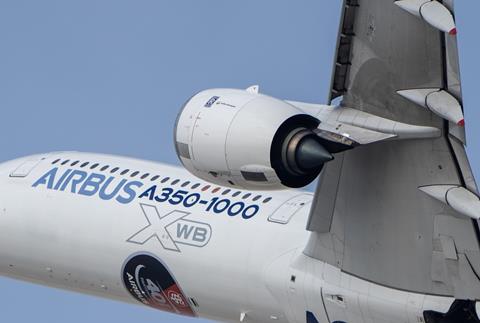
The aircraft also provides greater payload flexibility than many competitors. Airlines can carry heavier cargo loads alongside passengers, which is particularly valuable on long international routes where cargo revenue often plays a crucial role in profitability.
Passenger experience also contributes to the aircraft’s appeal. The A350 features lower cabin altitude, equivalent to roughly 6,000 feet above sea level, compared with the higher cabin pressure found in many older aircraft. Lower cabin altitude can reduce passenger fatigue and dehydration on ultra-long flights.
In addition, the aircraft is known for exceptionally quiet cabins, thanks to advanced sound insulation and engine design. For travelers spending more than ten hours in the air, these improvements make a noticeable difference.
Why Air Canada Chose Airbus Instead of Boeing’s 777X
One of the most intriguing aspects of Air Canada’s order is what it did not include. The airline ultimately decided against purchasing Boeing’s upcoming 777X, the successor to the 777 family.
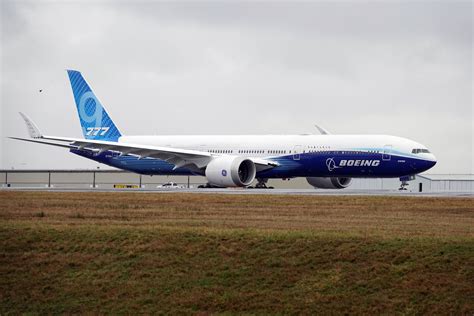
On paper, the Boeing 777-9, the largest variant of the 777X family, offers remarkable capacity—up to 426 passengers in high-density configurations. The smaller 777-8 promises extraordinary range, potentially reaching 8,745 nautical miles, making it one of the longest-range commercial aircraft ever designed.
However, the program has faced repeated development delays. Initially expected to enter service around 2020, the aircraft is now projected to debut closer to 2027 following technical and certification challenges. For airlines planning fleet renewals years in advance, uncertainty can become a significant risk.
The Airbus A350-1000, by contrast, has been in commercial service since 2016 and has accumulated extensive operational experience with airlines worldwide. By early 2026, more than 100 aircraft had already been delivered, giving airlines confidence in its performance and reliability.
For Air Canada, choosing the Airbus aircraft likely represented a preference for proven technology rather than waiting for a new program to mature.
Integration with Air Canada’s Growing Next-Generation Fleet
The A350-1000 will not arrive alone. Air Canada has already committed to a sweeping fleet modernization program that includes multiple aircraft types designed to optimize routes of different lengths and passenger demand.
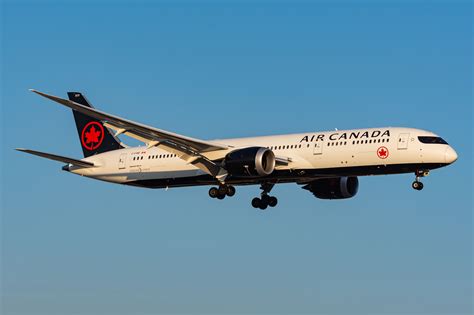
The airline is expecting deliveries of 14 Boeing 787-10 Dreamliners, the largest member of the Dreamliner family. These aircraft offer slightly lower range than the A350-1000 but provide excellent efficiency for high-demand long-haul routes.
Another major addition will be the Airbus A321XLR, a narrow-body aircraft capable of flying transatlantic routes previously reserved for widebodies. The A321XLR’s extended range allows airlines to open long, thin routes where passenger demand might not justify a larger aircraft.
Together, these aircraft types create a layered strategy:
- A350-1000 for ultra-long and high-capacity routes
- Boeing 787-10 for major long-haul corridors
- Airbus A321XLR for lower-demand intercontinental services
This diversified fleet allows Air Canada to match aircraft size and operating cost more precisely to passenger demand.
Potential Routes for the Airbus A350-1000
The real excitement surrounding the A350-1000 lies in the new routes it could enable. With a range approaching 8,000 nautical miles, the aircraft can connect Canada to nearly any major city in the world without refueling.
Air Canada has already hinted at several regions that could benefit from the aircraft’s capabilities. The Indian subcontinent, Southeast Asia, and Australia all represent growing markets with strong demand for nonstop travel.
The airline’s Vancouver hub is particularly well positioned for transpacific expansion. Flights from Vancouver to cities such as Bangkok, Manila, and Jakarta fall comfortably within the aircraft’s range, opening opportunities for routes that were previously challenging to operate profitably.
Meanwhile, Toronto Pearson International Airport and Montréal–Trudeau International Airport could see new direct services to Asia as well. These cities have experienced increasing demand for travel to destinations across Southeast Asia, driven by tourism, business travel, and large diaspora communities.
Passenger demand between Bangkok and Canada, for example, has surged in recent years, demonstrating the potential viability of direct flights.
Revisiting Long-Distance Routes from the Past
Fleet modernization often enables airlines to resurrect routes that were previously unprofitable. The A350-1000’s improved efficiency may allow Air Canada to reconsider destinations that were suspended during the pandemic or struggled with operating costs in earlier years.
One example frequently discussed in aviation circles is the possibility of restoring a nonstop route between Canada and Melbourne. Before the pandemic, passengers could travel between the two cities without connections, but operational challenges eventually led to the route’s suspension.
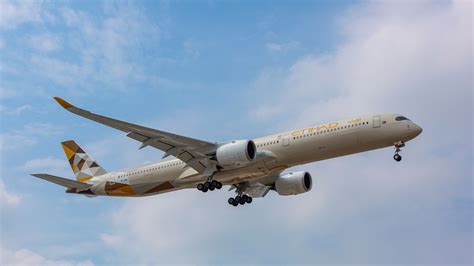
With the A350-1000’s lower fuel consumption and strong payload capacity, such a route could become economically viable once again. If reinstated, it would complement Air Canada’s existing services to Sydney and Brisbane, strengthening the airline’s footprint in Australia.
The aircraft’s efficiency also allows airlines to operate long routes with lower financial risk. If passenger demand fluctuates seasonally, the improved cost structure helps maintain profitability.
Will the Airbus A350-1000 Become a Major Part of the Fleet?
Air Canada’s initial order for eight aircraft is only the beginning. The agreement includes options for eight additional A350-1000s, potentially doubling the fleet size in the future.
Given the number of aircraft that will eventually need replacement—including older Boeing 777s and Airbus A330s—industry analysts widely expect the airline to expand its A350 fleet beyond the initial order.
Airlines benefit significantly from fleet commonality, which simplifies pilot training, maintenance procedures, and spare-parts logistics. Once a carrier commits to a new aircraft type, expanding that fleet often becomes the most economical path forward.
If Air Canada ultimately acquires the full sixteen aircraft permitted under its current agreement—or even more in future orders—the A350-1000 could become one of the airline’s defining long-haul aircraft well into the 2040s.
A Glimpse Into the Future of Air Canada’s Global Network
The arrival of the Airbus A350-1000 marks a turning point in the evolution of Canada’s largest airline. By combining advanced materials, efficient engines, and long-range capability, the aircraft represents the technological direction of modern long-haul aviation.
For Air Canada, the benefits extend far beyond lower fuel consumption. The aircraft offers strategic flexibility, enabling the airline to explore new markets, strengthen existing routes, and compete more effectively on a global scale.
As the first aircraft arrive in the early 2030s, passengers can expect quieter cabins, improved comfort, and more direct international connections. For aviation enthusiasts and industry observers alike, the A350-1000 will likely become a familiar sight on some of the world’s longest and most ambitious routes.
In the coming decade, the aircraft will not merely replace older jets—it will redefine how Air Canada connects North America to the rapidly expanding travel markets of Asia and the Pacific, ushering in a new chapter for the airline’s long-haul operations.