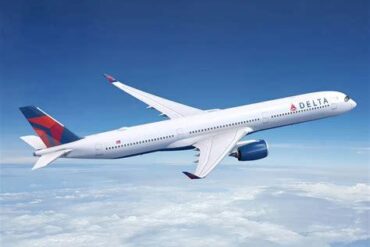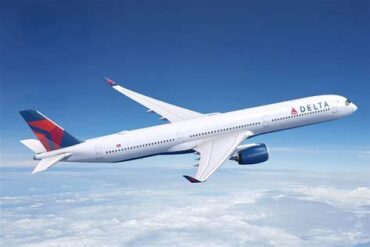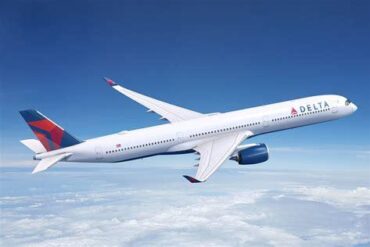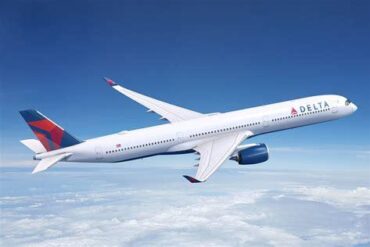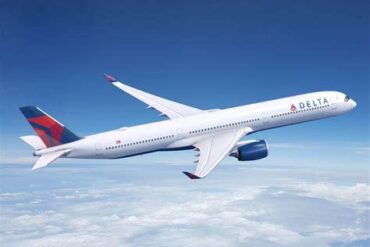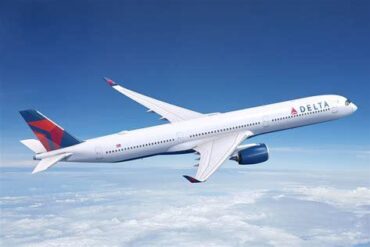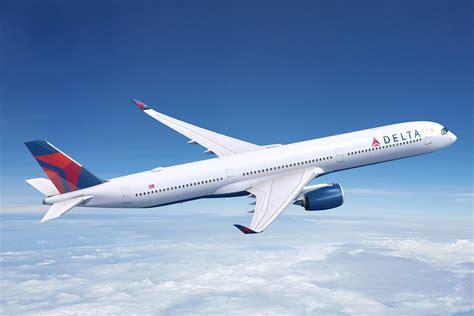
Delta Air Lines has spent years building one of the most disciplined and distinctive fleets in the airline industry. While major US rivals leaned heavily into Boeing widebodies, Delta steadily expanded its Airbus long-haul strategy. That decision now reaches a new phase with the arrival of the Airbus A350-1000, scheduled to join the fleet in 2027. This aircraft is not just another delivery. It is expected to become Delta’s largest and most capable twin-engine jet, replacing the symbolic space once occupied by the retired Boeing 747.
For Delta, the timing matters. International travel demand has recovered strongly, premium cabins remain highly profitable, and airlines are competing fiercely for passengers on routes to Asia, Europe, and the Middle East. The A350-1000 gives Delta a larger platform with more range, more premium seating potential, and lower fuel burn than older-generation aircraft. It also signals confidence in the carrier’s long-term global ambitions.
Unlike flashy fleet moves designed only for headlines, this order appears highly strategic. Delta already operates the smaller A350-900, so pilots, maintenance teams, and operational systems already understand the aircraft family. Adding the stretched -1000 variant creates growth without introducing unnecessary complexity. In airline economics, simplicity can be worth millions.
By 2027, travelers will likely see the A350-1000 not only as a new aircraft type, but as the next face of Delta’s premium international brand.
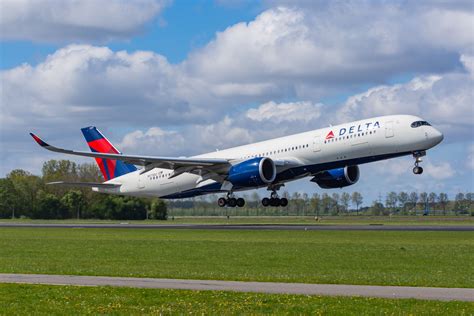
Delta’s Airbus A350-1000 Order Changes the Fleet Map
Delta ordered 20 Airbus A350-1000s, with options for 20 more. That is a serious commitment rather than a symbolic purchase. Combined with Delta’s existing A350-900 fleet and pending deliveries, the airline could eventually operate one of the largest A350 fleets in the world.
This matters because scale creates efficiency. Spare parts inventories become easier to manage. Crew scheduling improves. Maintenance training becomes more standardized. Fleet commonality often looks boring on paper, but it is where profitable airlines quietly win.
The A350-1000 is roughly comparable in length to the Boeing 777-300ER, a type used by both American Airlines and United Airlines as their flagship high-capacity long-haul jet. Delta has lacked a direct equivalent since retiring the 747 in 2017. The new Airbus finally fills that gap.
Yet Delta’s version of “bigger” is unlikely to mean cramming in the maximum number of seats. Delta traditionally prefers stronger yields, premium demand, and cabin comfort over absolute density. Expect the A350-1000 to be designed for revenue quality, not just passenger quantity.
Why the A350-1000 Is a Powerful Aircraft for Long-Haul Growth
The Airbus A350-1000 combines size with impressive performance. It features a stretched fuselage, upgraded landing gear, a larger wing, and powerful Rolls-Royce Trent XWB-97 engines. With range reaching approximately 9,000 nautical miles, it can connect city pairs that previously required compromises in payload or scheduling.
That gives Delta flexibility. The airline can deploy the aircraft in two different ways.
First, it can use the jet on ultra-long-haul missions where range is essential. Routes such as Atlanta to Delhi or Los Angeles to Singapore become more attractive when payload limits are reduced and premium cabins remain intact.
Second, Delta can use the aircraft on high-demand trunk routes where seat count matters more than raw range. Flights to Amsterdam, Paris, Seoul, or Tokyo can absorb heavy business and connecting traffic.
That dual capability is valuable because airline networks shift constantly. One year a route needs more premium seats. The next year it needs lower unit costs. The A350-1000 can adapt without Delta redesigning the schedule every season.
Likely Delta A350-1000 Routes in 2027 and Beyond
Delta’s long-haul hubs give strong clues about where the aircraft will debut. The most likely centers of operation are Atlanta, Los Angeles, Seattle, and possibly New York JFK.
Atlanta remains Delta’s fortress hub and one of the busiest airports in the world. Large volumes of domestic feed make it ideal for launching new international flights. An Atlanta to Delhi service would be a logical use of the aircraft’s range and premium appeal.
Los Angeles is crucial for Pacific growth. Delta has invested heavily there, and the A350-1000 could strengthen routes to Seoul, Sydney, or Singapore. In global aviation, Los Angeles is where airlines go to prove they belong.
Seattle already functions as Delta’s Pacific gateway. Flights to Taipei, Seoul, and other Asian destinations can benefit from the aircraft’s capacity and economics.
JFK offers premium-heavy demand, especially for business markets. If Delta expands New York to Seoul or other long-haul Asian service, the A350-1000 becomes a natural tool.
How Delta’s Asia Strategy Could Expand
Among the three major US legacy carriers, Delta has historically operated a smaller Asia network than United. That gap has not gone unnoticed. The A350-1000 appears designed to help close it.
Asia remains one of the world’s most important long-haul markets because it combines corporate traffic, leisure demand, cargo opportunities, and large diaspora travel flows. Cities like Seoul, Singapore, Manila, and Taipei each represent different revenue profiles.
Singapore is premium-heavy and corporate-rich. Manila tends to generate larger volumes with more price-sensitive traffic. Seoul is strategically important because of Delta’s partnership structure and connecting opportunities. One aircraft type serving all three tells you how versatile it is.
Expect Delta to continue using partner hubs intelligently rather than trying to brute-force every market alone. That approach is less glamorous than planting flags everywhere, but often smarter.
Inside the Cabin: New Delta One Suites Lead the Experience
Perhaps the most exciting part of the A350-1000 is not the wing or engine—it is the cabin.
Delta has confirmed that the aircraft will launch a new Delta One Suite, replacing the earlier generation introduced on the A350-900 in 2017. That older product was strong when launched, but premium competition has accelerated quickly. American and United are both introducing newer enclosed suites with doors, upgraded storage, and more refined finishes.
The A350-1000 gives Delta a chance to reset the benchmark.
Industry expectations suggest around 50 Delta One suites, a substantial Premium Select cabin, and a premium-heavy overall layout. Delta has indicated roughly 50% premium seat mix, showing clearly where the airline believes future profits sit.
That is no accident. Economy fills airplanes. Premium cabins often pay for them.
Passengers should expect:
- More privacy in business class
- Improved bedding and storage design
- Better screens and charging options
- Refined cabin lighting and quieter acoustics
- Larger Premium Select sections for premium economy demand
If executed well, the A350-1000 could become Delta’s most desirable long-haul aircraft overnight.

Expected Seating Layout and Capacity
While no final seating chart has been officially released, industry projections place the aircraft near 310 seats in a balanced premium configuration. That might include approximately:
- 50 Delta One suites
- 56 Premium Select seats
- Around 200+ Main Cabin seats
Compared with rival aircraft, that may seem conservative. United’s 777-300ER can seat around 350 passengers, while American is moving toward higher-density premium layouts on some 777s.
But Delta has long preferred a different formula: fewer total seats, stronger premium yield, and better customer perception. If each premium passenger generates significantly more revenue, lower density can still outperform packed cabins.
In simple terms, Delta may sell fewer seats while making more money from the right ones.
How It Competes With American and United
The arrival of the A350-1000 intensifies a fascinating three-way contest among US global airlines.
United Airlines has scale, a broad Asia network, and large 777 fleets.
American Airlines has strong premium upgrades underway and major Atlantic reach.
Delta Air Lines often competes through reliability, branding, and customer experience.
The A350-1000 strengthens Delta in every one of those areas. It offers a flagship-size aircraft, a modern premium product, and efficient operating economics. It also helps Delta avoid relying on older aircraft types that become expensive over time.
No airline wins every category. United may still lead in network breadth. American may push harder on some premium retrofits. But Delta’s A350-1000 could become the most balanced package of the three.
That is usually how durable winners are built—not with one flashy advantage, but with many solid ones.
Why 2027 Matters for Delta’s Future
Airline fleet decisions echo for decades. A jet arriving in 2027 can still be flying passengers in the 2040s. That means the A350-1000 is not merely about next summer’s route map—it is about Delta’s long-term identity.
Will Delta remain a premium-focused global carrier? This aircraft says yes.
Will Delta continue backing Airbus for widebody growth? This aircraft says yes.
Will Delta push harder into Asia and ultra-long-haul markets? This aircraft strongly suggests yes.
The 2027 introduction also comes at a moment when travelers increasingly notice onboard products again. Seats, privacy, Wi-Fi, food quality, and cabin design now influence airline choice more than they did a decade ago. The days of “just get me there” are fading, especially among high-value customers.
Final Outlook: Delta’s Biggest Jet Since the 747 Era
When the first Delta A350-1000 enters service, it will mark the airline’s largest aircraft since the Boeing 747 left the fleet. That alone makes it historic. But the bigger story is strategic rather than nostalgic.
This jet gives Delta more range, more premium revenue potential, more competitive strength, and more flexibility across global markets. It can launch new routes, reinforce profitable ones, and modernize the brand at the same time.
For passengers, it likely means a better onboard experience. For competitors, it means Delta just brought a sharper tool to the fight. For aviation watchers, it means 2027 just became much more interesting.