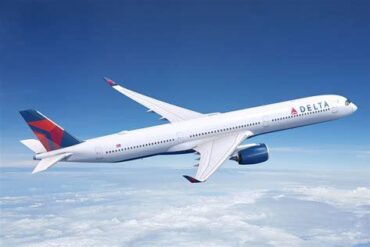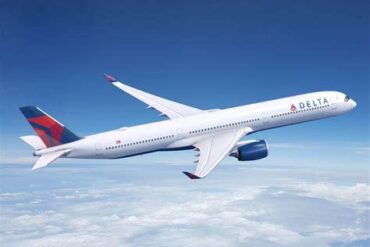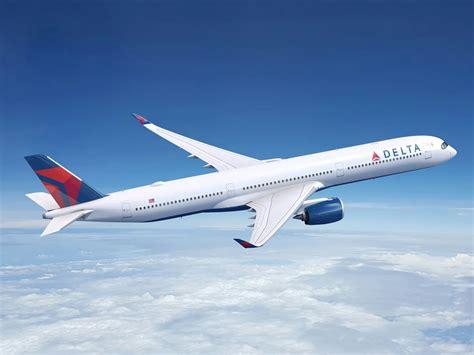
Delta Air Lines is entering a new long-haul era as it prepares to welcome the Airbus A350-1000 into its fleet beginning in 2026. This aircraft will not only become the largest twin-aisle jet in Delta’s modern history but will also realign the airline’s global network strategy, international capacity, and premium-product philosophy. The arrival of the A350-1000 marks the first time since the retirement of the iconic Boeing 747 in 2017 that Delta will field an aircraft of this size and range capability, opening new possibilities that stretch far beyond incremental route adjustments.
Delta’s shift toward Airbus for its future widebody needs has been a bold one, especially in contrast to American Airlines and United Airlines, both of which maintain Boeing 777-300ER fleets as their primary long-range flagships. With the A350-1000 joining Delta’s lineup, the airline is taking deliberate steps to scale up its global ambitions and match the capacity advantages enjoyed by its two major competitors.
Scaling Up Delta’s Fleet With Purposeful Precision
In 2024, Delta placed an order for 20 Airbus A350-1000s, along with 20 optional frames should the airline choose to expand even further. These aircraft will join an already robust A350-900 fleet consisting of 39 in service and five additional units pending delivery. Should Delta eventually exercise all options, the airline would operate 84 A350-family aircraft, positioning it as the world’s third-largest operator of the type.
The A350-1000 is a substantial step up from the A350-900. While both aircraft share the same design lineage, the -1000 variant introduces a fuselage extension, revised landing gear, higher-capacity wings, and the more powerful Rolls-Royce Trent XWB-97 engines. With a maximum takeoff weight of 322 tons and a range approaching 9,000 nautical miles, the A350-1000 enables Delta to connect its hubs to deep-long-haul markets it previously could not address effectively.
This aircraft will be the backbone for future global expansion, giving Delta the scale and reach United has long enjoyed and the premium market competitiveness American is aggressively pursuing.
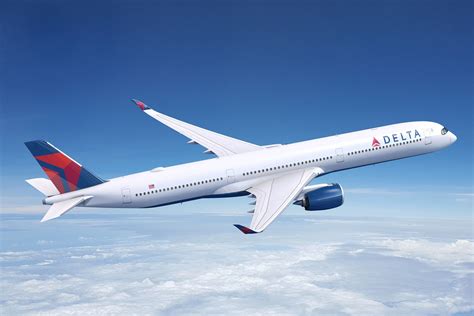
New Horizons: Where Delta Plans To Deploy The A350-1000
Delta maintains A350 pilot domiciles at important coastal and inland hubs—Atlanta, Detroit, Los Angeles, and Seattle. These locations shape where the A350-1000 will be most strategically positioned; however, the aircraft’s ultimate route assignments will hinge on whether Delta prioritizes capacity-driven markets, ultra-long-haul range, or high-yield premium corridors.
Delta has signaled strong ambition in Asia. The airline seeks to expand beyond its historically limited presence and tap into high-demand flows that United currently dominates. Early strategy outlines show potential service to Singapore (SIN) and Manila (MNL). Singapore’s premium-heavy demand aligns perfectly with an aircraft configured with more Delta One and Premium Select seats, while the Manila market’s volume-driven demand plays to the A350-1000’s increased capacity.
The A350-1000’s superior range also makes new ultra-long-haul missions feasible, including the planned Atlanta (ATL) to Delhi (DEL) route. This flight pushes the limits of the A350-900 but falls squarely within the -1000’s operational comfort zone.
Additional likely destinations include partner hubs such as Amsterdam, Paris, and Seoul. These markets benefit from joint-venture connectivity, allowing Delta to funnel passengers onto partner airlines for onward travel. At the start, the aircraft will likely rotate between new long-haul launches and high-density trunk routes, giving Delta maximum flexibility during initial deployment.
Strengthening Delta’s Long-Haul Strategy and JV Network
The A350-1000 is more than a larger plane; it is a network amplifier. Delta’s international expansion has historically depended heavily on joint-venture partners like Korean Air, Air France, and KLM. The airline’s current A350-900 seating layouts—275 seats in the 35H configuration and 306 seats in the 359 layout—limit expansion capacity where demand is increasingly connecting through partner hubs.
United frequently deploys high-capacity 318-seat Boeing 787-10s and 350-seat 777-300ERs. American operates 304-seat 777-300ERs today and plans to retrofit these aircraft to accommodate 330 seats. Delta’s A350-900s fall well below these totals, and the airline has been eager to close the gap.
The A350-1000, likely seating just over 300 passengers, will finally give the airline the volume required to compete more evenly in strategic connecting markets. As these aircraft enter service, the A350-900s they replace can be reassigned to new, thinner long-haul routes where a smaller widebody is more appropriate—Atlanta to Riyadh being a prime example.
Inside the Aircraft: A New Flagship Cabin For Delta’s Future
Delta has not yet released an official interior configuration for the A350-1000, but industry expectations—and credible reporting—suggest the aircraft will introduce a new chapter for the Delta One business-class product.
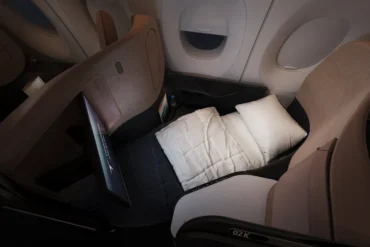
Aviation insider reports indicate that the A350-1000 will feature 50 Delta One suites, an expansion over the 40-seat Delta One cabin on the 35H-configured A350-900. Delta tends to maintain more modest premium cabin footprints compared to American and United, but the A350-1000’s larger fuselage permits a meaningful expansion without compromising economy capacity.
Given Delta’s preference for spacious Premium Select cabins—40 to 48 seats on current A350s—it is reasonable to project that the A350-1000 will offer 48 to 56 Premium Select seats. With thoughtful galley placement, particularly near the third set of doors, the remaining space could accommodate roughly 200–210 Main Cabin seats, producing a total around 310 seats.
A Next-Generation Delta One: Thompson VantageNOVA
The current Delta One suite, based on the Thompson Vantage XL+ platform, debuted in 2017. As elegant as it remains, competitors have leaped ahead with next-generation seating, most notably American’s and United’s adoption of the Adient Ascent suite—a reverse herringbone seat with full privacy doors.
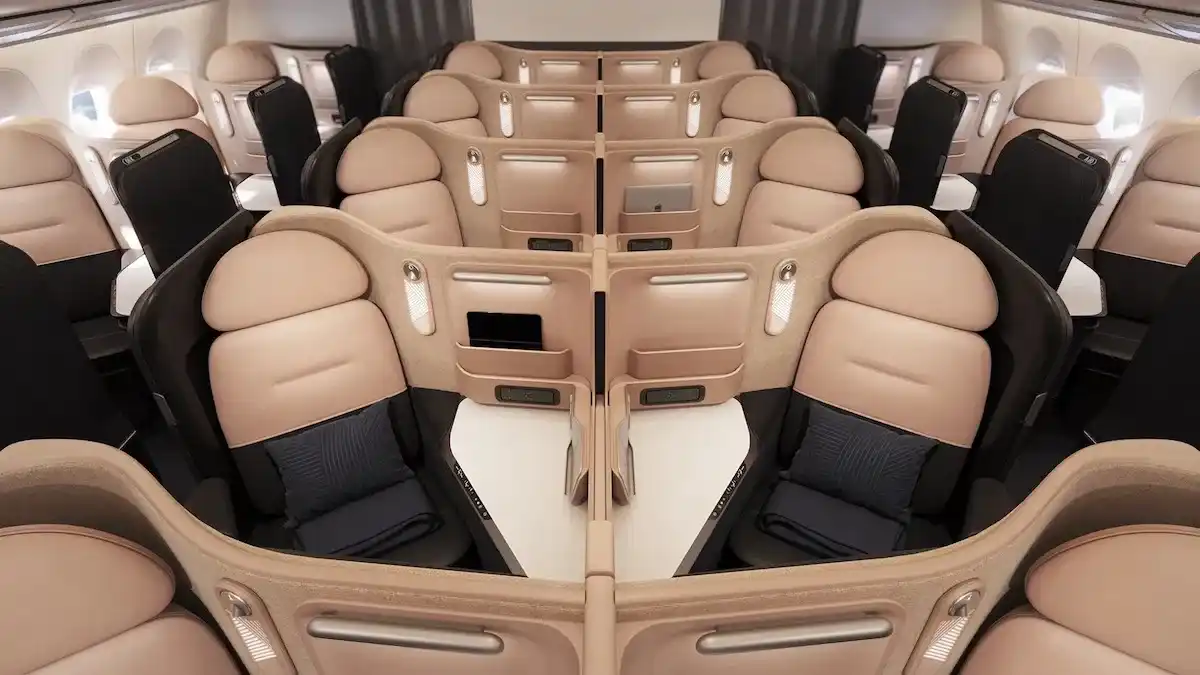
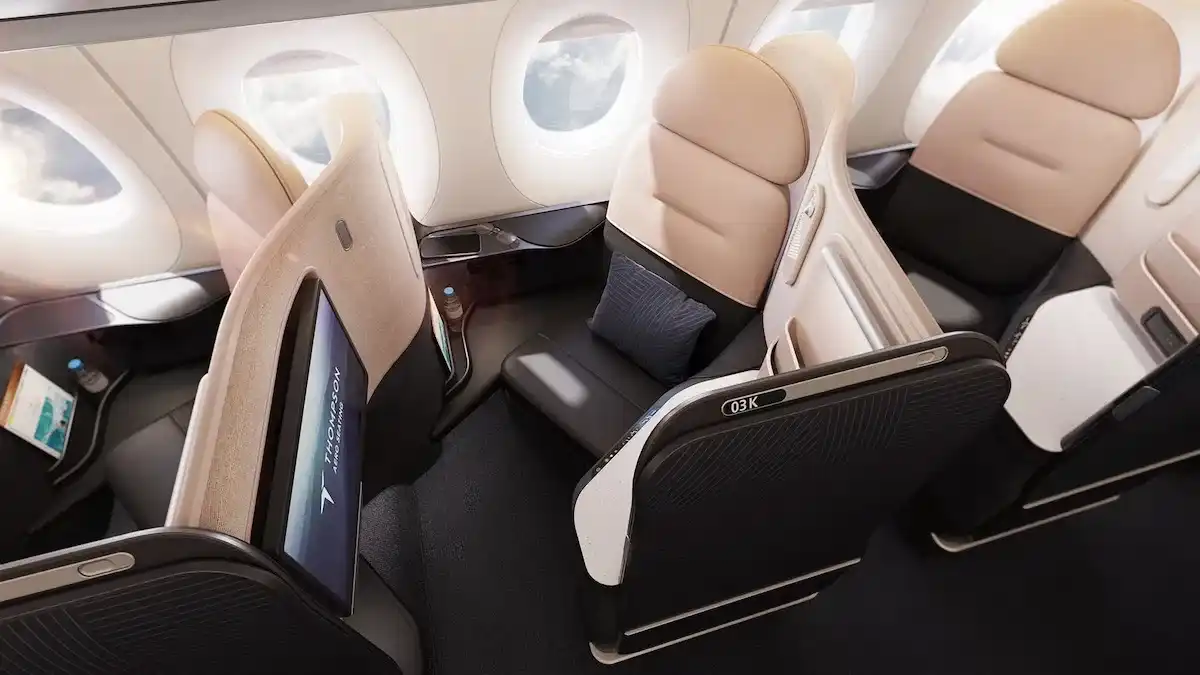
Delta is expected to introduce a modern successor based on Thompson VantageNOVA, a reverse-herringbone layout that includes sliding doors, improved privacy, and refined ergonomics. This platform also offers an optional front-row business-class-plus product, which Delta could use to differentiate the most spacious seats, appealing to high-value travelers.
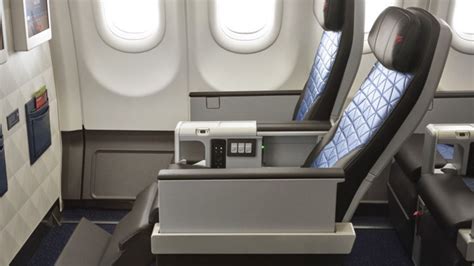
Premium Select is expected to be refreshed as well, likely with a new hard product incorporating upgraded privacy elements, larger IFE screens, and fixed-shell recline mechanics similar to those found on leading global competitors.
Positioning Delta Against Competitors in the Flagship Race
The A350-1000 will allow Delta to challenge American’s and United’s flagship 777-300ER operations more directly. But the comparison is nuanced.
United’s 777-300ERs feature 60 Polaris business-class seats, while American’s reconfiguration plan will eventually install 70 Flagship Suite seats. Delta’s likely 50-seat Delta One cabin will be smaller, reflecting Delta’s conservative approach to premium capacity. However, Delta maintains the largest premium economy cabins among U.S. carriers, and the A350-1000 is expected to reinforce that advantage.
Where Delta’s new flagship will truly distinguish itself is through the quality and modernity of the cabin experience. With a fresh hard product built around the latest Thompson seating, enhanced cabin pressure and humidity, wider fuselage contours, and whisper-quiet cruising thanks to the A350 platform, Delta is positioning the A350-1000 as a more comfortable and forward-looking experience than the Boeing 777-300ERs its competitors rely on.
A Forward-Looking Investment In Delta’s Long-Haul Future
The introduction of the A350-1000 in 2026 reflects Delta’s broader strategy to modernize its long-haul fleet, deepen its partnerships, and expand global connectivity. With unmatched efficiency, exceptional cabin comfort, and substantial range, the aircraft is poised to become the backbone of Delta’s international network for the next two decades.
The airline’s emphasis on a balanced seating configuration—robust Delta One, a large Premium Select cabin, and competitive economy capacity—signals an intent to compete not just with American and United, but with the best global carriers across Asia, Europe, and the Middle East.
As Delta prepares to usher in its most capable long-haul aircraft in years, the A350-1000 becomes more than new hardware; it becomes the flagship symbol of Delta’s next era of global aviation leadership.