A Bold Premium Pivot by Delta Air Lines
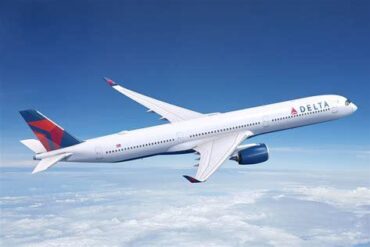
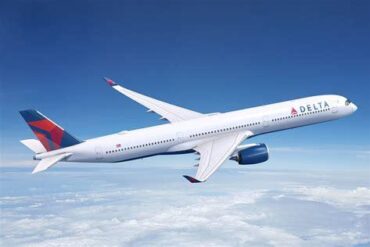
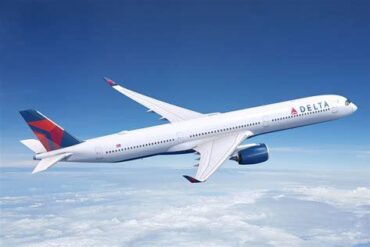
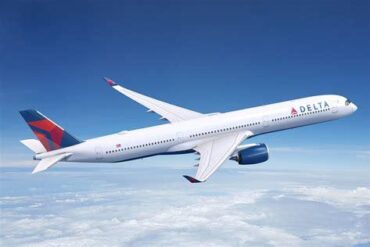
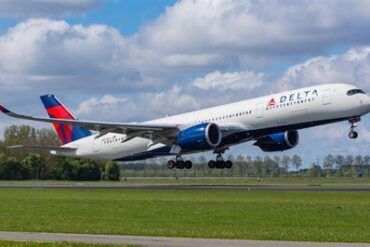
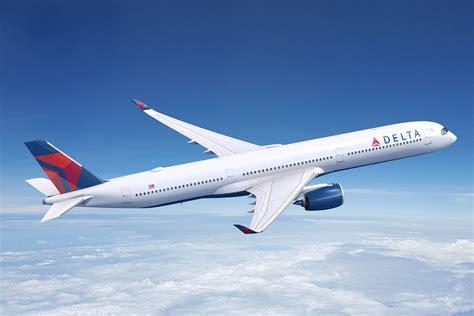
The aviation industry is no stranger to strategic pivots, but few moves signal intent as clearly as a fleet decision anchored in premium dominance. With its firm order for the Airbus A350-1000, Delta Air Lines is not merely upgrading capacity—it is redefining how long-haul profitability is engineered.
This isn’t a marginal adjustment. It is a calculated escalation into the high-yield battleground of intercontinental travel, where margins are driven not by how many passengers sit onboard, but by who those passengers are willing to pay for comfort, privacy, and exclusivity.
Delta’s order for 20 aircraft, with options for 20 more, represents a multi-billion-dollar commitment to premium-led growth. More importantly, it positions the airline as the first U.S. carrier to adopt the A350-1000, signaling confidence not only in the aircraft’s capabilities but in a future where premium cabins define competitive advantage.
The implications are profound: fewer seats, higher yields, and a reimagined onboard hierarchy that elevates experience over volume.
Why the Airbus A350-1000 Is the Perfect Strategic Weapon
The Airbus A350-1000 is not just a larger aircraft—it is a platform optimized for modern airline economics. Compared to the A350-900 already in Delta’s fleet, the -1000 variant offers greater range, higher passenger capacity, and superior efficiency per seat.
But the real advantage lies in flexibility.
This aircraft enables Delta to:
- Operate ultra-long-haul routes without payload penalties
- Maintain fuel efficiency despite premium-heavy layouts
- Deliver consistent onboard experiences across global routes
Powered by the Rolls-Royce Trent XWB-97, the A350-1000 delivers exceptional fuel burn performance, reducing operating costs while supporting environmental targets increasingly demanded by regulators and passengers alike.
Yet, the aircraft’s technical superiority is only half the story. Its real power lies in how airlines choose to configure it—and this is where Delta diverges sharply from the competition.
15% More Premium: A Structural Shift in Cabin Economics
At the heart of Delta’s strategy is a 15% increase in premium seating, a figure that may sound incremental but represents a fundamental rebalancing of revenue streams.
Instead of maximizing seat count, Delta is maximizing revenue density.
This shift translates into:
- More Delta One Suites (business class)
- Expanded Premium Select (premium economy)
- Enhanced Comfort+ offerings
- Reduced standard economy footprint
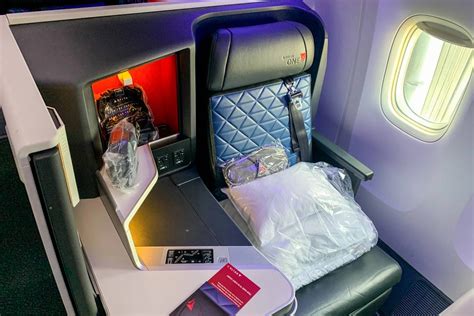
The flagship Delta One Suites sits at the top of this hierarchy, delivering fully enclosed suites with sliding doors, lie-flat beds, and direct aisle access. These are not incremental upgrades—they are direct competitors to international first-class products.
Beneath it, Delta Premium Select plays a critical role. This cabin has emerged as one of the fastest-growing revenue segments in global aviation, bridging the gap between affordability and luxury.
The genius of Delta’s approach lies in recognizing a simple truth:
the middle market is no longer economy—it is premium economy.
Cabin Density vs Revenue Optimization: Delta’s Calculated Trade-Off
Most airlines treat the A350-1000 as a high-capacity workhorse, often exceeding 350 seats. Carriers like Qatar Airways and Cathay Pacific prioritize volume and slot efficiency, especially on congested global routes.
Delta, however, is playing a different game.
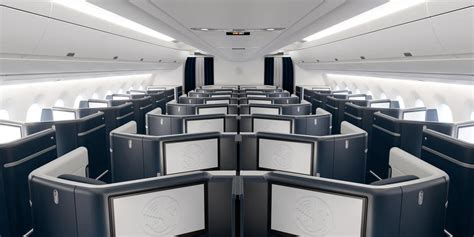
Early projections suggest its A350-1000 could carry as few as 287 passengers, making it one of the lowest-density configurations in the world for this aircraft type.
At first glance, this seems counterintuitive. Fewer passengers typically mean lower total revenue. But Delta is betting on a more powerful equation:
Higher yield per seat × strong premium demand = superior profitability
This model requires precision. It demands:
- Careful route selection
- Strong corporate travel demand
- Consistent premium product quality
If executed correctly, the payoff is substantial:
higher margins, stronger brand positioning, and reduced reliance on price-sensitive economy travelers.
Passenger Experience: Engineering Comfort at 35,000 Feet
The A350 platform is already regarded as one of the most passenger-friendly aircraft in the sky, and Delta is poised to amplify those strengths.
Passengers can expect:
- Higher cabin humidity to reduce dehydration
- Lower cabin altitude to minimize fatigue
- Quieter engines and cabin acoustics
- Larger panoramic windows
These features may sound subtle, but on flights stretching 12 to 15 hours across the Pacific, they become decisive differentiators.
Combined with Delta’s premium-heavy layout, the result is an experience that feels less like mass transport and more like curated travel.
Fleet Synergy and Airbus-Centric Efficiency
Delta’s investment in the A350-1000 is not an isolated move—it is part of a broader fleet transformation strategy centered around Airbus platforms.
Alongside its A350 orders, Delta has expanded its widebody portfolio with:
- Airbus A330-900neo
- Additional Airbus A350-900 units
This fleet commonality strategy delivers tangible benefits:
- Reduced pilot training costs
- Simplified maintenance operations
- Consistent onboard product design
Interestingly, Delta has also ordered the Boeing 787-10, suggesting a balanced approach rather than total manufacturer reliance. However, the Airbus ecosystem clearly forms the backbone of its long-haul premium strategy.
How Delta Stacks Up Against Global Rivals
The global competitive landscape is fierce, and Delta’s A350-1000 must contend with some of the most refined premium products in aviation.
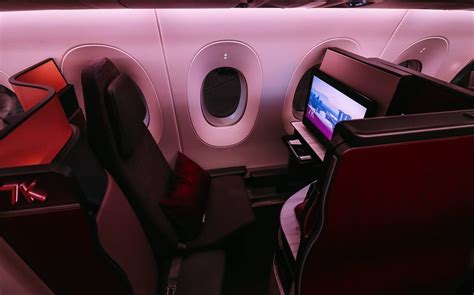
Airlines like Virgin Atlantic and Qatar Airways have invested heavily in:
- Next-generation business class suites
- High-end onboard dining experiences
- Luxury branding and service culture
Yet Delta’s differentiation lies not in excess, but in consistency and scalability.
Unlike competitors that operate multiple business-class configurations, Delta has standardized its Delta One Suites across its fleet. This creates a predictable, reliable premium experience, a factor that frequent travelers value more than novelty.
In essence, Delta is not trying to be the most extravagant—it is aiming to be the most dependable premium airline in the U.S. market.
Transpacific Dominance: Where the A350-1000 Will Shine
The true battlefield for Delta’s A350-1000 strategy lies across the Pacific.
Routes connecting the United States to Asia are among the longest, most demanding, and most lucrative in global aviation. These routes require aircraft that can deliver:
- Extreme range
- High payload capacity
- Premium-heavy configurations
Operating from hubs like Seattle-Tacoma International Airport and Los Angeles International Airport, Delta can deploy its A350-1000s to capture business and high-end leisure traffic traveling to key Asian markets.
The aircraft’s performance enables nonstop routes that were previously marginal, opening opportunities for network expansion while maintaining profitability.
This is where Delta’s premium-heavy configuration becomes a force multiplier—maximizing returns on routes where every seat must generate value.
The Economics of Premium: Why This Strategy Works
At its core, Delta’s A350-1000 strategy is built on a simple but powerful principle:
Not all seats are created equal.
A single Delta One Suite can generate multiple times the revenue of an economy seat, meaning airlines can afford to carry fewer passengers while still increasing overall profitability.
This shift reflects broader industry trends:
- Corporate travel budgets prioritizing comfort and productivity
- Leisure travelers trading up for experience
- Airlines seeking resilience against economic volatility
By increasing premium capacity, Delta is effectively future-proofing its revenue model, reducing exposure to price-sensitive segments while strengthening its appeal to high-value customers.
A Defining Move in the Next Era of Long-Haul Aviation
Delta Air Lines’ embrace of the Airbus A350-1000 is more than a fleet upgrade—it is a declaration of intent.
It signals a future where:
- Quality outweighs quantity
- Experience defines brand loyalty
- Premium cabins drive profitability
As deliveries begin later this decade, the A350-1000 will become a cornerstone of Delta’s global operations, reshaping not only its network but its identity.
In an industry where margins are razor-thin and competition relentless, Delta is making a bold bet:
that the future of long-haul travel belongs not to the airline that carries the most passengers—but to the one that delivers the most value per seat.
And if this strategy succeeds, it won’t just redefine Delta’s position in the market—it may well reset the competitive blueprint for airlines worldwide.