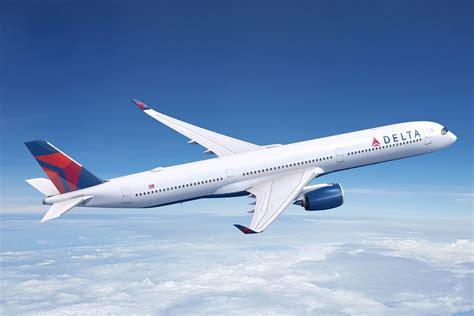
Delta Air Lines is making a decisive move at the top end of the long-haul market, unveiling its Airbus A350-1000 alongside a newly refined Delta One suite designed to redefine comfort, privacy, and onboard sophistication. This is not a routine fleet update or a cosmetic cabin refresh—it is a calculated, large-scale repositioning aimed squarely at the most lucrative segment of global air travel: high-yield premium passengers.
The timing is deliberate. As long-haul demand rebounds and premium cabins outperform economy in profitability, airlines are racing to elevate their offerings. Delta’s answer is both bold and methodical: introduce a new flagship aircraft optimized for premium density while simultaneously upgrading older widebodies to ensure consistency across the network.
What emerges is a cohesive strategy that blends innovation with scale—one that signals Delta’s intent to lead, not follow, in the evolving premium aviation landscape.
A350-1000: Designed for Premium Demand, Not Maximum Capacity
Delta’s Airbus A350-1000 is not configured to carry the most passengers—it is configured to carry the most valuable ones. With 304 seats onboard, the aircraft actually sacrifices main cabin capacity to significantly expand its premium footprint. This is a subtle but powerful shift in airline economics, where fewer seats can generate more revenue when those seats are positioned at the high end.
The aircraft features 53 Delta One suites and 48 Premium Select seats, alongside 51 Delta Comfort seats. Together, these premium and semi-premium categories account for a substantial portion of the cabin, leaving just 152 seats for the main economy cabin. The message is unmistakable: Delta is prioritizing yield over volume.
This configuration aligns with the airline’s focus on ultra-long-haul routes—missions exceeding 12 hours where passengers are more willing to pay for comfort, privacy, and rest. Destinations like India and Saudi Arabia are specifically cited as future targets, underscoring the aircraft’s role in opening high-value international corridors.
A Cabin Built Around Experience, Not Just Transportation
The A350-1000’s cabin philosophy reflects a broader industry evolution. Flying is no longer just about getting from point A to point B—it is about how the journey feels, especially for premium travelers. Delta’s design choices emphasize this experiential shift, blending spatial awareness, lighting, and tactile comfort into a cohesive onboard environment.
Passengers will notice the difference immediately upon boarding. The cabin feels less crowded, more intentional. Sightlines are cleaner, transitions between cabins smoother, and the overall ambiance more refined. This is not accidental—it is engineered to reduce stress and elevate perception, two critical factors in customer satisfaction.
Delta One Suite: A Precision Upgrade in Comfort and Privacy
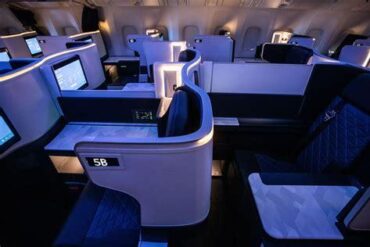
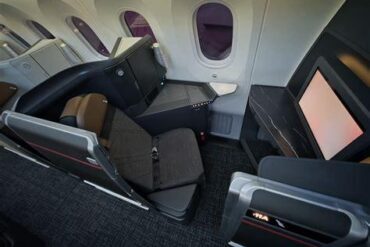
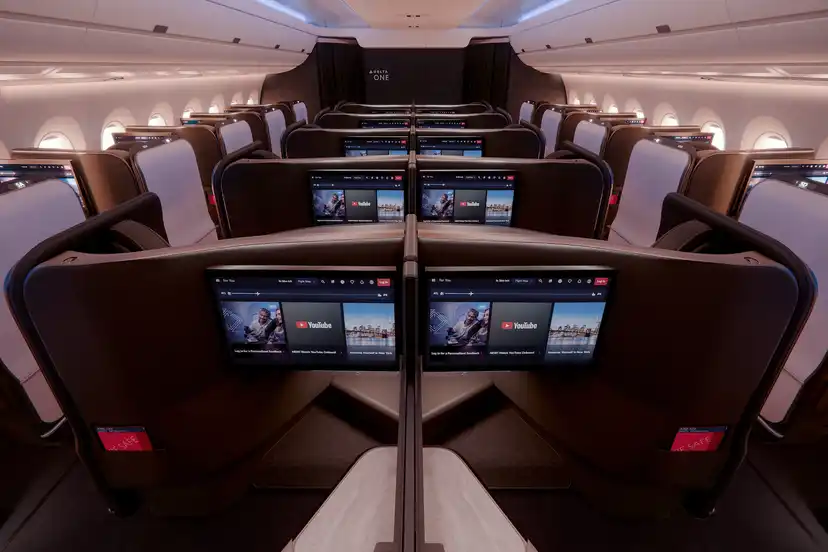
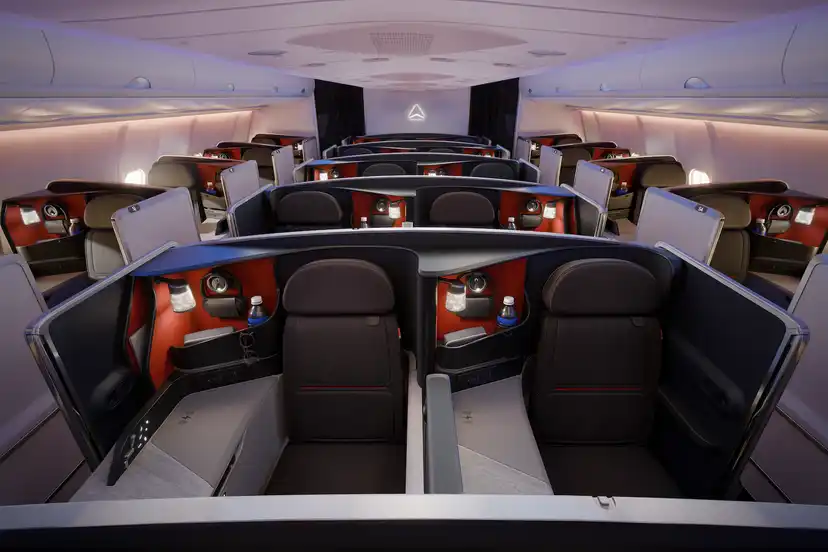
At the center of Delta’s premium push is the next-generation Delta One suite, a product shaped by years of feedback and evolving passenger expectations. While the overall reverse-herringbone layout remains familiar, the refinements are precise and meaningful.
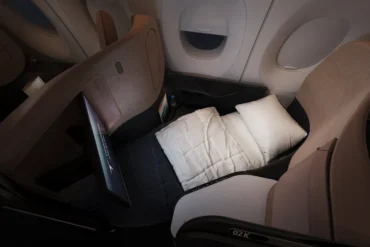
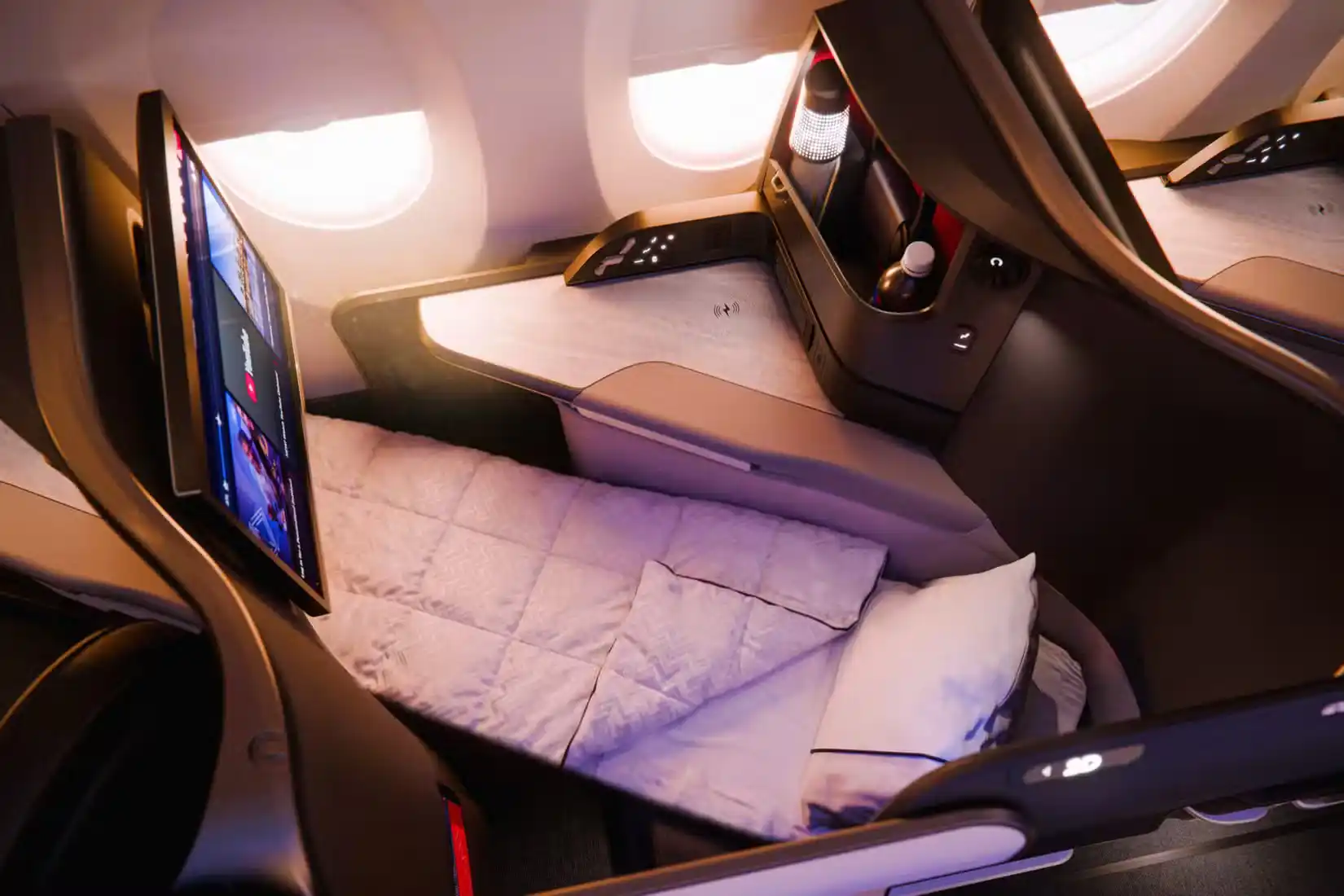
The fully flat bed now extends to 83 inches, offering more room for restful sleep on long-haul journeys. This seemingly modest increase translates into a noticeably improved experience, especially for taller passengers. The addition of a pillow-top cushion further enhances comfort, creating a softer, more residential feel.
Technology plays a central role in the upgrade. A 24-inch 4K display—the largest in Delta’s fleet—delivers a more immersive entertainment experience, while Bluetooth connectivity allows passengers to pair personal headphones seamlessly. Charging options have been expanded to include wireless charging, USB-C, and traditional power outlets, reflecting the modern traveler’s device-heavy reality.
Storage and usability have also been carefully considered. Small but impactful additions—such as a dedicated shoe cubby, a glasses hook, and a reachable tray for personal items—reduce clutter and improve day-to-day convenience within the suite.
Privacy as the New Luxury Standard
Privacy has become one of the defining metrics of premium travel, and Delta’s latest suite leans into this expectation. Each seat features a sliding door, creating a personal cocoon that shields passengers from the surrounding cabin.
The reverse-herringbone layout enhances this effect by angling seats away from the aisle, particularly for window passengers. Meanwhile, center suites offer a flexible divider that can be opened for companions or closed for complete isolation. This dual-purpose design acknowledges that premium travelers are not a monolith—some seek connection, others solitude.
Lighting further contributes to the sense of privacy and control. Adjustable ambient lighting allows passengers to tailor their environment, whether preparing for sleep or working during the flight. The result is a space that feels less like a seat and more like a personal suite in the sky.
Why Delta Skips the “Business-Plus” Arms Race
Interestingly, Delta has chosen not to introduce an ultra-exclusive sub-cabin within business class, a trend seen among competitors offering oversized front-row suites with additional amenities. While these products command higher fares, Delta appears to be betting on consistency rather than segmentation.
This decision reflects a broader philosophy: elevate the entire business class experience rather than create tiers within it. By ensuring that every Delta One passenger receives a high-quality, private suite, the airline avoids diluting its premium brand while maintaining operational simplicity.
It is a strategic restraint that may resonate with travelers who value reliability and uniformity over incremental upgrades.
The Quiet Revolution: A330 Fleet Transformation
While the A350-1000 captures headlines, the more transformative aspect of Delta’s announcement lies in its retrofit program. Beginning in September, the airline will overhaul 42 Airbus A330-200 and A330-300 aircraft, bringing them closer in line with its newest flagship.
These aircraft, many inherited from earlier mergers, have long been among the oldest in Delta’s long-haul fleet. Their modernization represents a significant leap forward, particularly with the introduction of Delta One suites featuring sliding doors—something previously absent on these jets.
Passengers can expect upgraded interiors, enhanced seating materials, improved in-flight entertainment systems, and the same thoughtful touches seen on the A350-1000, including memory-foam cushioning and self-service snack stations.
Bridging the Gap Between Old and New
The A330 retrofit program is not about achieving perfect uniformity—it is about narrowing the experience gap. While these aircraft will not receive the exact same suite as the A350-1000, the upgrades are substantial enough to create a more cohesive brand experience across Delta’s long-haul network.
This matters more than it might seem. For frequent travelers, inconsistency is one of the biggest pain points in airline loyalty. By standardizing key elements—privacy doors, improved bedding, modern technology—Delta ensures that customers know what to expect, regardless of aircraft type.
The airline’s long-term goal is ambitious: by 2030, 90% of Delta One seats will feature suite-style configurations with sliding doors. That level of standardization would place Delta among the most consistent premium carriers globally.
A Strategic Bet on Long-Haul Profitability
At its core, Delta’s A350-1000 debut and A330 retrofit program represent a calculated bet on the future of long-haul travel. The airline is aligning its fleet, cabin design, and service philosophy around a single premise: premium passengers drive profitability.
This is particularly relevant in an era where economy fares remain highly competitive and operational costs continue to rise. By focusing on passengers willing to pay for comfort and exclusivity, Delta is positioning itself to maintain strong margins even in volatile market conditions.
The emphasis on routes exceeding 12 hours further reinforces this strategy. These are flights where the difference between a standard seat and a premium suite is most pronounced—and most valuable.
Redefining the Competitive Landscape
Delta’s move does not exist in isolation. Competitors are also investing heavily in premium cabins, introducing new seat designs and reconfiguring aircraft to increase high-end capacity. However, Delta’s approach stands out for its scale and integration.
Rather than launching a single standout product, the airline is executing a fleet-wide transformation that touches both new and existing aircraft. This dual approach amplifies its impact, ensuring that the premium experience is not confined to a handful of flagship routes.
The result is a more resilient and competitive network—one that can deliver a consistent, high-quality experience across multiple markets and aircraft types.
The New “Suite Spot” in Global Aviation
Delta’s A350-1000 and next-generation Delta One suite represent more than incremental improvements—they signal a shift in how airlines define value in long-haul travel. The focus is no longer on sheer capacity or even incremental luxury upgrades, but on creating a holistic, premium-first experience that resonates with modern travelers.
By combining a high-density premium configuration with thoughtful design and fleet-wide upgrades, Delta is carving out what could be described as a new “suite spot”—a balance between exclusivity, consistency, and operational scale.
For passengers, this translates into a more predictable and elevated journey. For Delta, it represents a strategic alignment with the most profitable segment of the market. And for the industry, it sets a new benchmark in the ongoing race to win the skies at 35,000 feet.