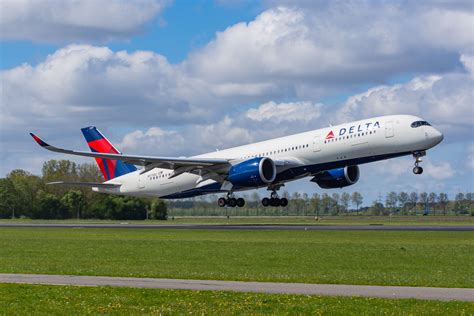
The competitive race among U.S. airlines to redefine long-haul premium travel is accelerating, and Delta Air Lines is preparing its most ambitious leap yet. With the upcoming delivery of its Airbus A350-1000 fleet, Delta plans to introduce an all-new Delta One Business Class Suite that signals a decisive shift toward higher density, advanced technology, and refined privacy. This move positions Delta squarely alongside — and in some respects ahead of — its primary rivals as premium cabins become a central battleground for customer loyalty and brand prestige.
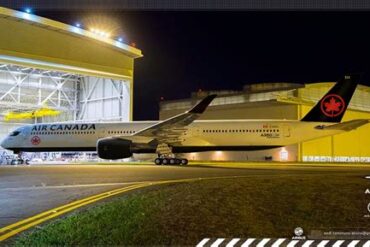
The A350-1000 is not merely another widebody addition. It is set to become Delta’s largest and most premium-configured aircraft, designed to anchor the airline’s most important intercontinental routes. While deliveries are not expected until 2027, early details and leaked renderings already provide a clear picture of Delta’s strategic intent: maximize premium real estate while delivering a modern, suite-based experience that aligns with evolving traveler expectations.
By tying its next-generation business class to a new aircraft type rather than retrofitting older jets, Delta is signaling a long-term commitment to efficiency, scalability, and future-proof cabin design rather than short-term visual upgrades.
A350-1000s to Feature Thompson Aero VantageNOVA Suites
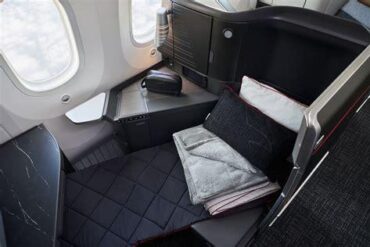
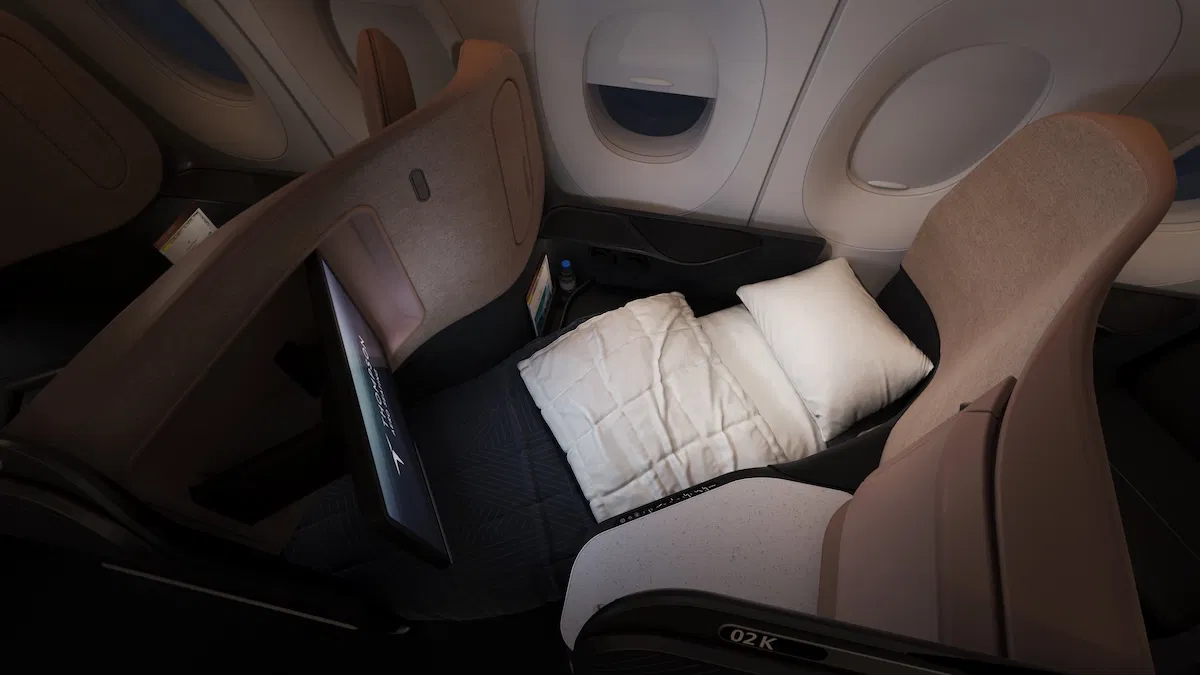
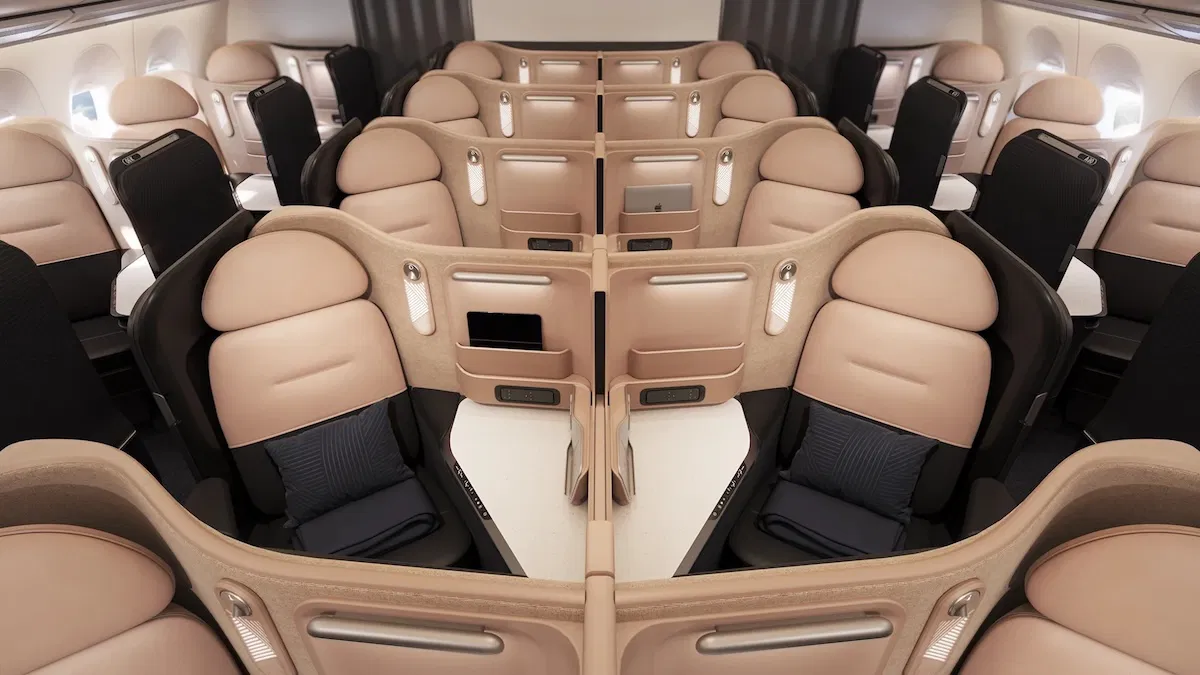
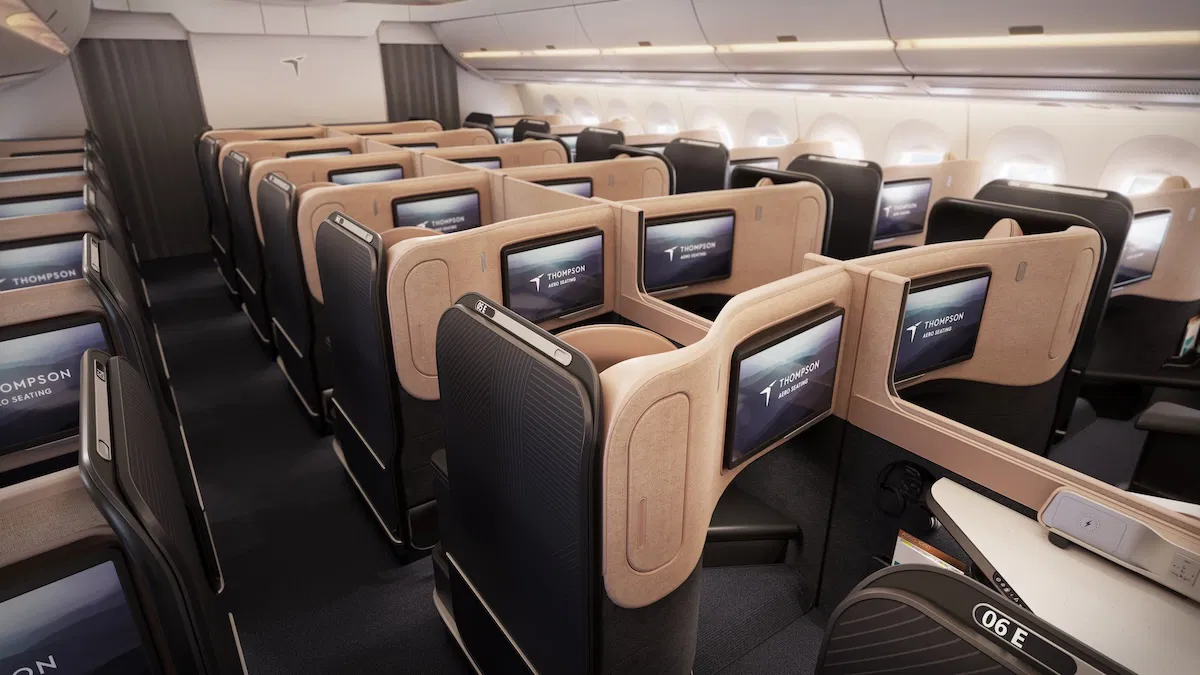
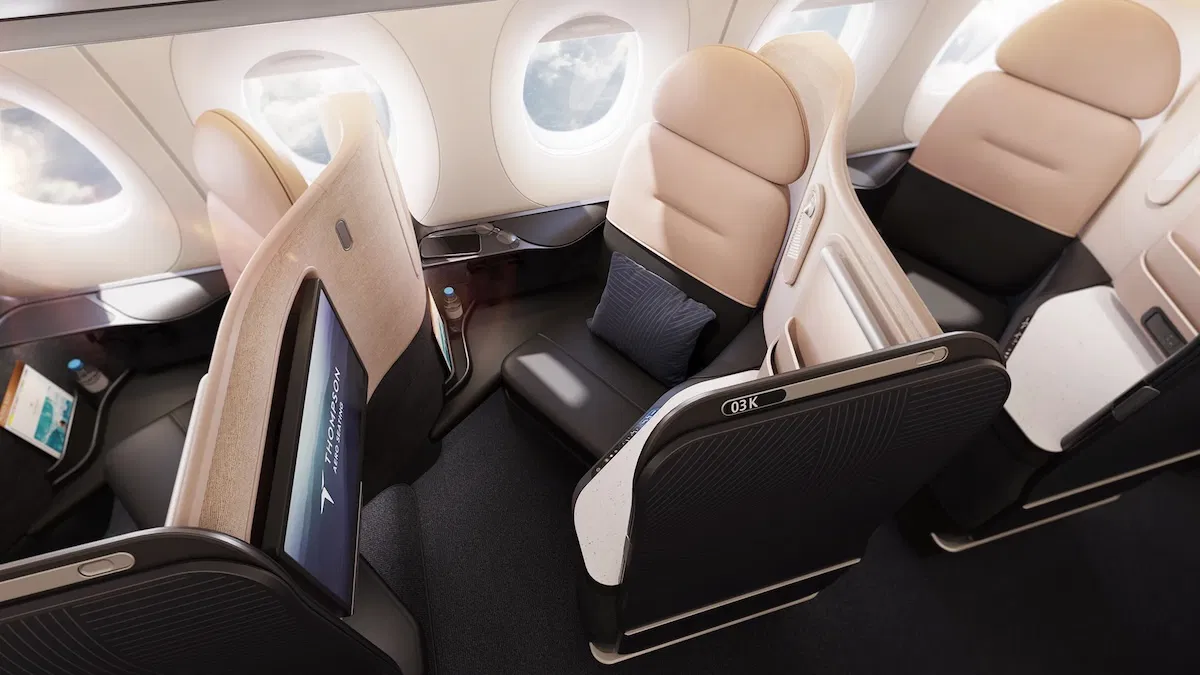
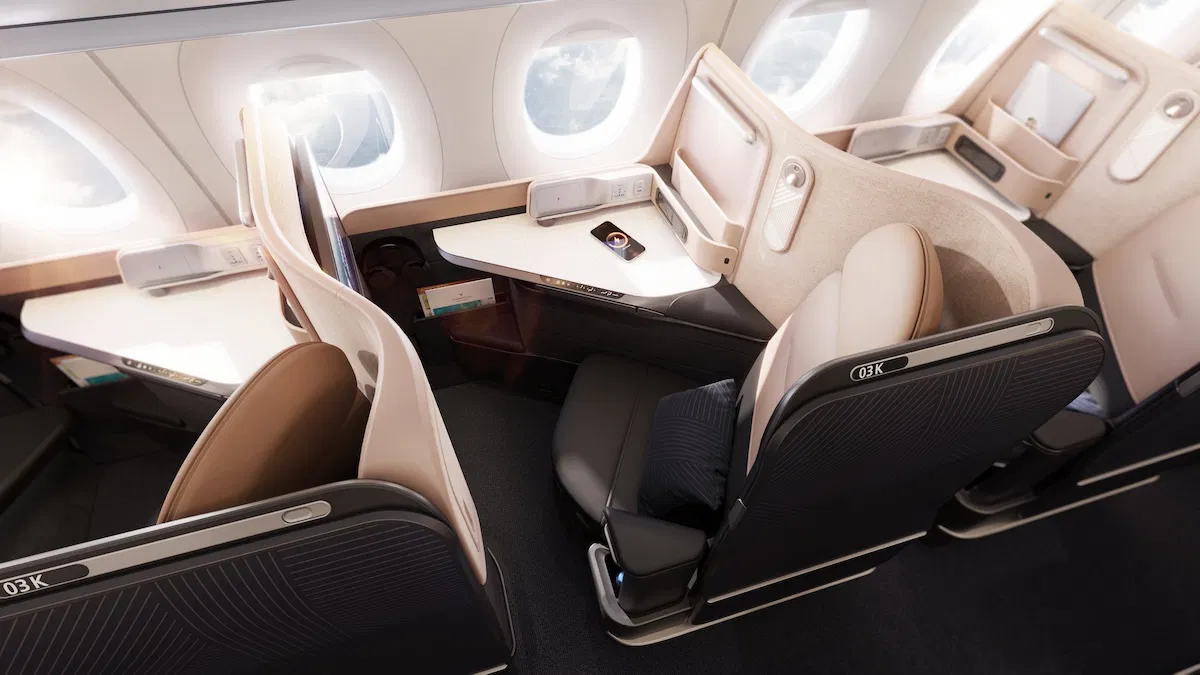
At the heart of Delta’s upcoming Delta One experience is the Thompson Aero VantageNOVA seat, a newly unveiled business class platform that emphasizes flexibility, density, and next-generation cabin architecture. Delta has 20 Airbus A350-1000s on order, and these aircraft are expected to debut with 50 to 53 Delta One suites, marking the highest number of business class seats Delta has ever installed on a single aircraft.
This choice reflects Delta’s deepening partnership with Thompson Aero, a relationship already established through the Vantage XL seats currently flying on Delta’s A350-900 fleet. The VantageNOVA builds on that foundation while introducing a more space-efficient footprint, with some configurations requiring as little as 40 inches of seat pitch without sacrificing the core features premium travelers demand.
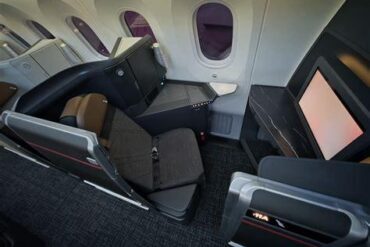
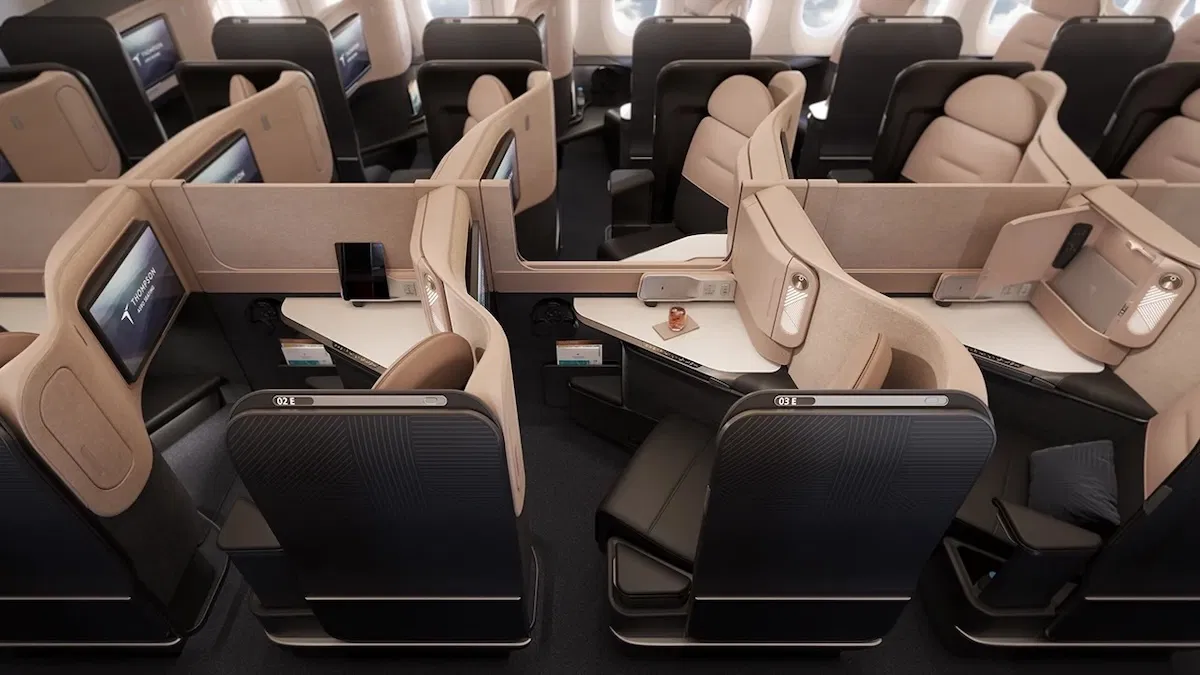
Crucially, the VantageNOVA platform supports multiple cabin layouts, all within a 1-2-1 configuration that ensures direct aisle access for every passenger. Airlines can opt for a full reverse herringbone layout, where window seats angle toward the windows and center seats angle inward, or a hybrid design that blends traditional herringbone window seats with reverse herringbone center pairs. Market feedback overwhelmingly favors the fully reverse herringbone approach, which maximizes privacy and minimizes foot traffic near window passengers.
Density Meets Design in Delta’s New Business Class Vision
The decision to install more than 50 business class suites on the A350-1000 underscores Delta’s belief that premium demand will continue to grow, even as aircraft economics become more constrained. Rather than increasing seat width or pitch, the new Delta One Suites focus on smart spatial engineering, refined materials, and immersive technology to deliver perceived luxury without operational inefficiency.
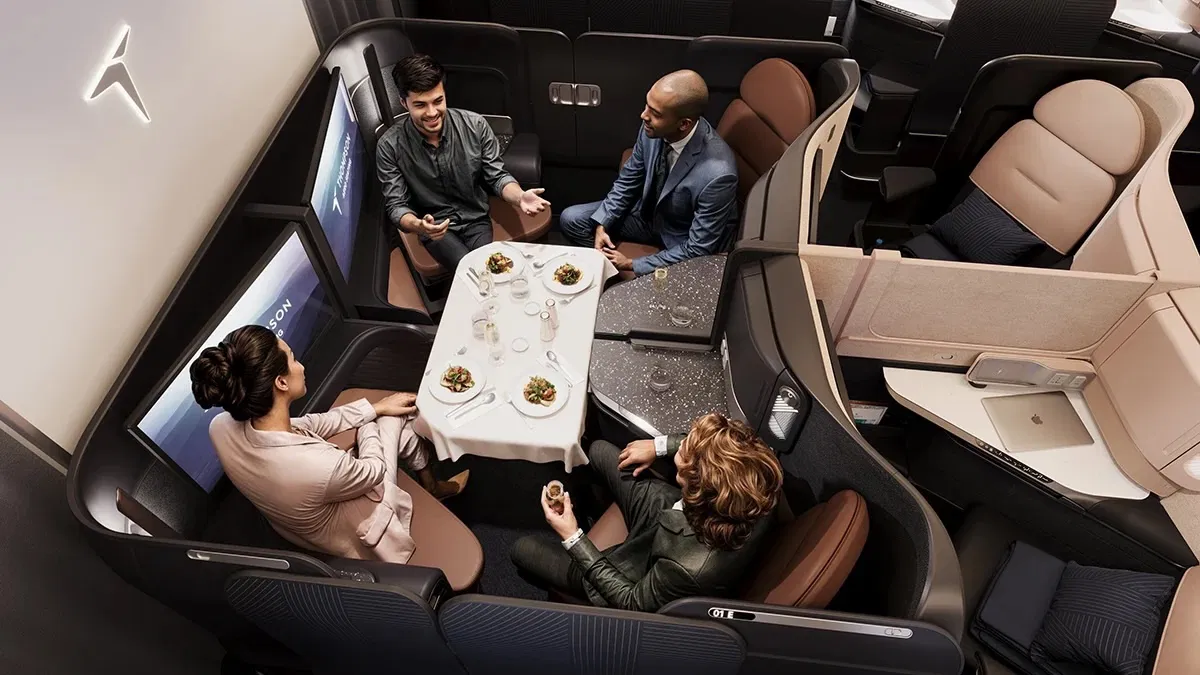
A notable highlight of the VantageNOVA design is the introduction of a “business class plus” front-row product. By leveraging the additional space at the bulkhead, these seats offer enhanced legroom, expanded surfaces, and a greater sense of openness. While not officially branded as a separate cabin, these seats are likely to command higher fares or elite prioritization, subtly introducing tiering within the business class cabin itself.
The seat’s modular architecture also allows Delta to customize finishes, lighting, and storage solutions to align with its brand identity. Expect full-height sliding doors, generous privacy partitions, and a visual language that complements Delta’s existing premium lounges and onboard soft product.
Technology and Privacy Take Center Stage
In today’s premium cabins, comfort is no longer defined solely by cushioning or recline angles. Instead, privacy and technology have become the dominant differentiators, and Delta’s upcoming Delta One Suites are clearly designed with this reality in mind.
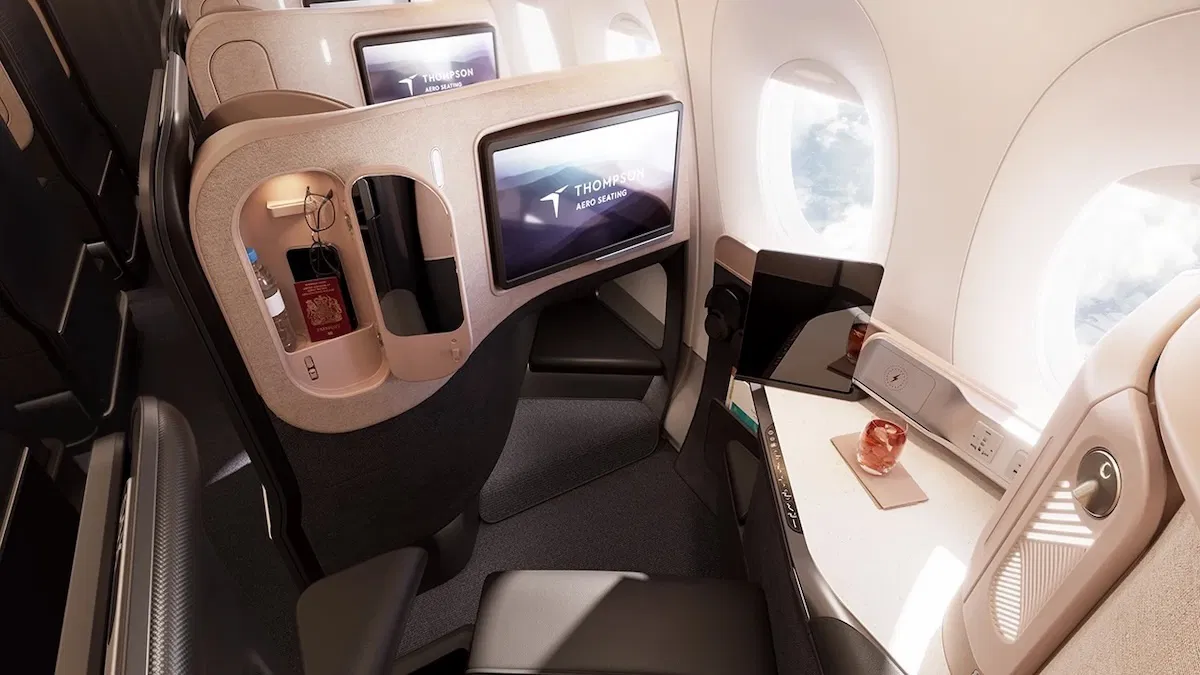
Passengers can expect large, high-resolution entertainment screens, likely exceeding 20 inches, paired with Bluetooth audio connectivity, multiple charging options including USB-C and wireless charging, and intuitive seat controls. These features have become baseline expectations among premium travelers, but execution quality increasingly separates leaders from laggards.
The inclusion of a suite door remains a critical psychological marker of luxury. While seats across the industry are converging in terms of physical comfort, the sense of a personal, enclosed space continues to influence traveler perception and booking behavior. Delta’s embrace of this trend ensures that its flagship product remains competitive against the latest offerings from both U.S. and international carriers.
How Delta’s Strategy Compares With American and United
Delta’s approach diverges subtly but meaningfully from its competitors. American Airlines and United Airlines have both selected the Adient Ascent seat for their next-generation business class cabins, emphasizing customization within a shared platform. Delta, by contrast, is charting a parallel path with the VantageNOVA, achieving similar goals through a different supplier ecosystem.
The result is a market where business class seats are increasingly alike in core dimensions, but differentiated through branding, rollout speed, and fleet penetration. This last factor may prove decisive. A cutting-edge seat installed on only a handful of aircraft does little to shift customer perception at scale.
Delta’s decision to reserve its newest product for the A350-1000 suggests a slow but deliberate deployment strategy, prioritizing new deliveries over costly retrofits. While this limits near-term exposure, it avoids the operational complexity and inconsistent experience that often accompany partial fleet upgrades.
A Flagship Product With a Long-Term Horizon
The Delta One Suites planned for the Airbus A350-1000 represent a measured evolution rather than a radical departure. They reflect an industry that has reached maturity in seat ergonomics and is now refining the details that matter most: privacy, technology integration, and cabin density efficiency.
Although passengers will need to wait until 2027 to experience this product firsthand, the strategic signals are already clear. Delta is betting that a well-executed, scalable premium cabin — even if introduced gradually — will deliver stronger long-term returns than rapid but fragmented upgrades.
As more details emerge, including final layouts, branding elements, and service enhancements, the A350-1000 is poised to become the definitive expression of Delta’s premium ambitions for the next decade.