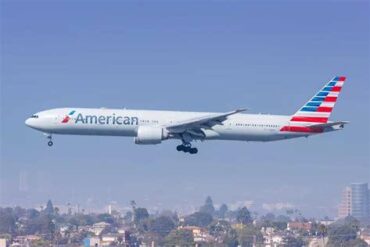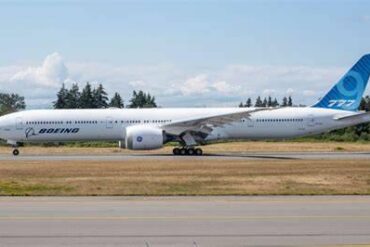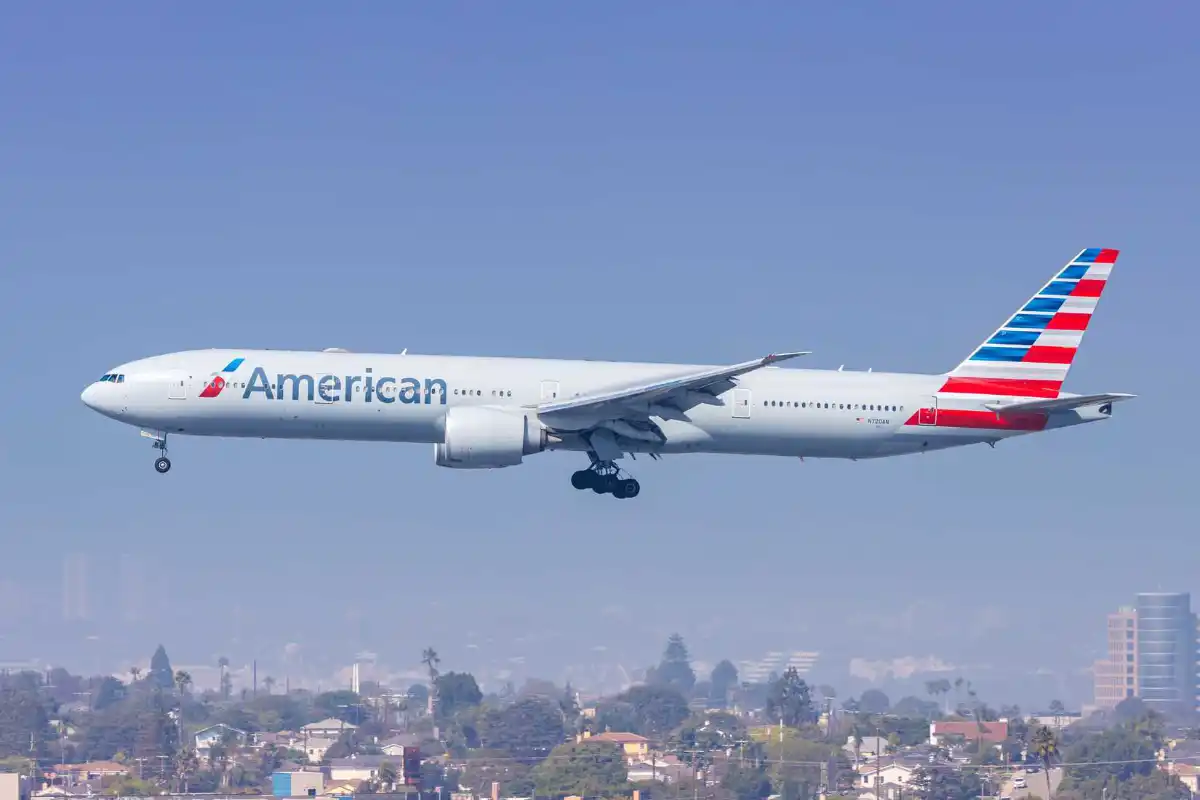
American Airlines is reportedly preparing to introduce its first retrofitted Boeing 777-300ER into commercial service as early as next month, marking the beginning of one of the carrier’s most ambitious long-haul cabin modernization efforts in years. After spending months undergoing a comprehensive interior transformation in Hong Kong, the aircraft is now believed to be approaching the final stages of testing before returning to the airline’s network. If current timelines remain intact, passengers could experience the redesigned flagship aircraft in early or mid-August, finally bringing a project first announced several years ago into revenue service.
The aircraft involved, registered N718AN, departed for Hong Kong in December 2025 to undergo an extensive cabin reconstruction rather than a conventional refurbishment. Unlike cosmetic refreshes that replace fabrics, carpets, or cabin finishes, this project fundamentally changes the aircraft’s premium offering. American Airlines is eliminating its international First Class cabin, dramatically expanding Business Class, increasing Premium Economy capacity, installing entirely new seating products throughout the aircraft, and redesigning the passenger experience around today’s premium travel expectations.
The lengthy modification reflects the scale of the work involved. Every premium cabin is being rebuilt, multiple structural cabin elements are being reconfigured, and new seating systems must be integrated with updated inflight entertainment, electrical systems, monuments, and certification requirements. Aviation observer JonNYC has indicated the aircraft could depart Hong Kong before the middle of July, positioning it for entry into passenger operations shortly afterward.
Project Olympus Represents American Airlines’ Biggest Premium Cabin Investment
The Boeing 777-300ER retrofit forms a central part of Project Olympus, American Airlines’ long-term initiative to modernize its international fleet and restore competitiveness in the increasingly lucrative premium travel market. First unveiled in 2022, the program was designed to equip all twenty Boeing 777-300ER aircraft with an entirely new cabin concept centered around Flagship Suites, expanded Premium Economy seating, and upgraded Economy accommodations.
American’s objective extends far beyond introducing newer seats. The airline is attempting to reshape how passengers perceive its long-haul product after years of falling behind competitors in cabin consistency and premium innovation. Travelers increasingly expect privacy, direct aisle access, larger entertainment displays, wireless charging capabilities, improved storage, and more refined personal space. Airlines that fail to provide these amenities risk losing high-value corporate and premium leisure customers.
Julie Rath, American Airlines’ Vice President of Customer Experience, previously described the redesign as a significant leap forward for the carrier’s international offering, emphasizing that the customized Flagship Suite concept would deliver a far more private and premium experience across the airline’s long-haul fleet.
Although American initially expected installations to begin during late 2024, widespread supply chain disruptions significantly delayed the project. Industry-wide shortages involving aircraft seating, monuments, certification components, and interior suppliers pushed the program back by roughly a year. The first aircraft ultimately entered HAECO’s Hong Kong facility toward the end of 2025, illustrating how challenging large-scale cabin retrofits have become across the aviation industry.
Why Hong Kong Was Selected For The Extensive Cabin Conversion
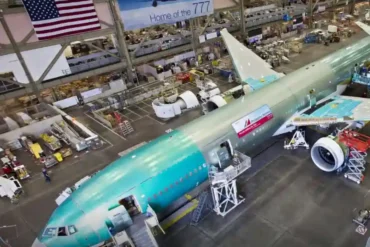
The retrofit work is being performed by HAECO, one of the world’s leading specialists in widebody aircraft maintenance, engineering, and cabin modification. Converting a Boeing 777-300ER from one premium cabin configuration to another is an extraordinarily complex engineering undertaking requiring extensive structural work, systems integration, regulatory certification, and months of testing before returning the aircraft to airline service.
Rather than replacing seats individually, technicians remove significant portions of the cabin before rebuilding the aircraft with new monuments, redesigned galleys, revised lavatory arrangements, upgraded wiring, inflight entertainment infrastructure, lighting systems, seating tracks, and premium cabin architecture. Every modification must satisfy strict regulatory certification standards before passengers can board the aircraft.
Flagship First Disappears As Business Class Takes Center Stage
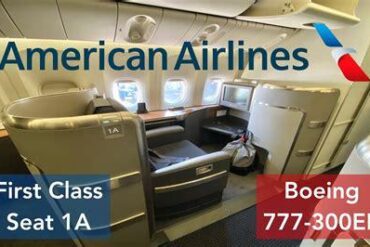
Perhaps the most significant change is the complete elimination of Flagship First, ending an era for American Airlines’ international premium product.
The current Boeing 777-300ER configuration includes eight Flagship First suites, fifty-two Business Class seats, twenty-eight Premium Economy seats, and 216 Economy seats for a total capacity of 304 passengers.
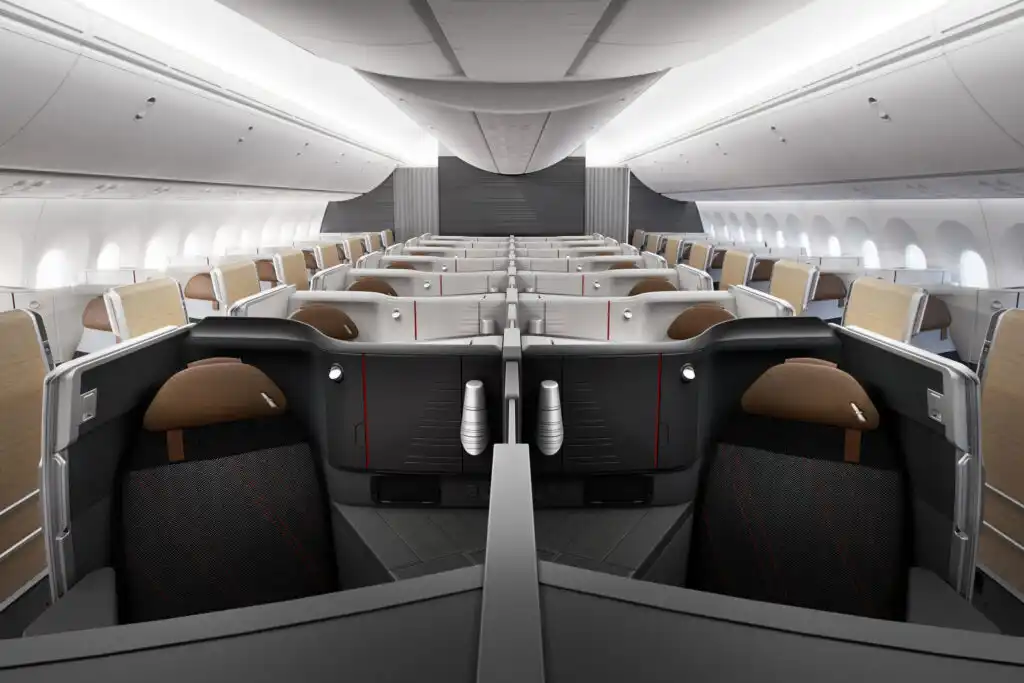
Following the retrofit, the aircraft will carry 330 passengers. While Economy capacity remains unchanged at 216 seats, premium seating expands substantially. Business Class increases from 52 to 70 seats, while Premium Economy grows from 28 to 44 seats. Removing First Class and reducing the number of lavatories allows American Airlines to create thirty-four additional premium seats while increasing total aircraft capacity by twenty-six passengers.
This shift reflects changing market economics. International First Class has steadily disappeared across much of the airline industry as modern Business Class products have become increasingly luxurious. Privacy doors, fully flat beds, direct aisle access, larger entertainment screens, premium dining, and elevated onboard service have narrowed the gap between Business and First Class while generating stronger financial returns for airlines.
New Seating Products Modernize Every Cabin
Beyond increasing seat numbers, the retrofit introduces entirely new seating across every cabin.
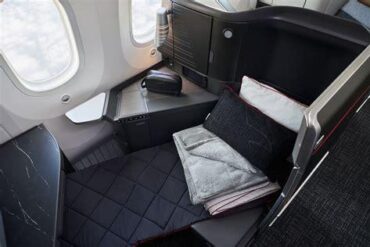
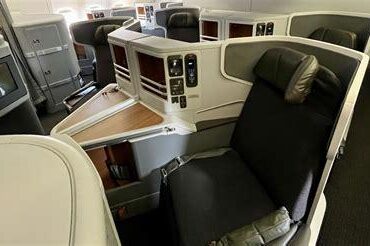
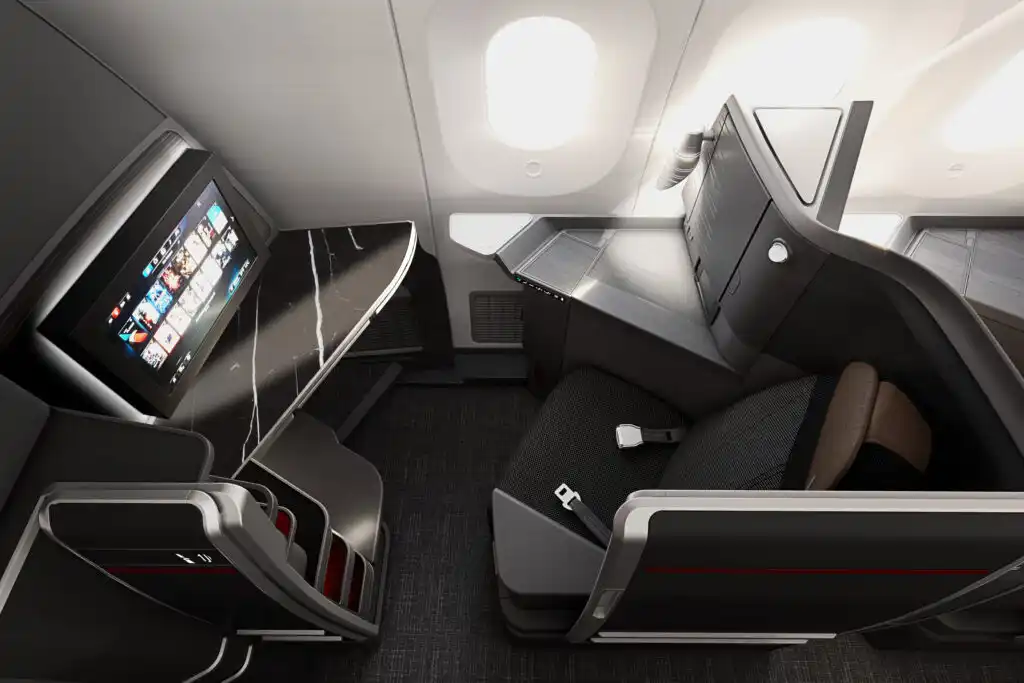
The centerpiece is the Adient Ascent reverse herringbone suite, which becomes American Airlines’ new Flagship Suite product. Each suite features sliding privacy doors, significantly improved storage, larger entertainment displays, wireless charging, and enhanced workspace functionality designed for long-haul travelers.
The aircraft will also include eight Flagship Preferred Suites positioned in the front row of the Business Class cabin. These premium suites provide additional personal space and enhanced comfort while creating a differentiated product for travelers willing to pay for an even more exclusive Business Class experience.
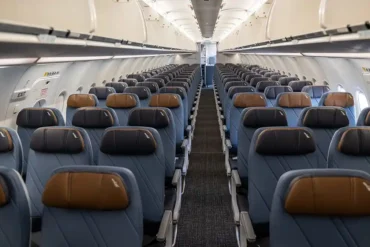
Premium Economy also receives a meaningful upgrade through the installation of Safran Z535i seats, featuring improved ergonomics, enhanced privacy wings around the headrest, and larger entertainment screens. Meanwhile, Economy passengers will benefit from the introduction of Collins Aspire seats that modernize the cabin while maintaining the existing seat count.
Collectively, these upgrades transform the Boeing 777-300ER from one of American’s older premium products into an aircraft capable of matching contemporary passenger expectations across every cabin.
London Heathrow Appears The Most Likely Debut Route
American Airlines has not officially announced where the retrofitted aircraft will first operate, but industry observers believe Dallas/Fort Worth to London Heathrow stands out as the strongest candidate.
The route represents one of the airline’s most strategically important international markets while also serving as American’s flagship transatlantic operation from its largest hub. The carrier currently schedules three daily Boeing 777-300ER flights between Dallas/Fort Worth and London Heathrow, providing operational flexibility during the aircraft’s initial introduction.
Another realistic possibility would be New York John F. Kennedy to London Heathrow, where premium competition among global airlines is exceptionally intense. Deploying the newest cabin on one of the world’s most competitive business travel corridors would immediately showcase American’s redesigned premium product against rival offerings.
Regardless of the initial route, passengers are expected to closely monitor aircraft assignments as aviation enthusiasts and frequent flyers seek opportunities to experience the long-awaited Flagship Suites.
Closing The Premium Gap With United And Delta
American Airlines’ retrofit arrives after several years in which both United Airlines and Delta Air Lines have aggressively enhanced their premium international cabins.
United completed the rollout of its Polaris Business Class across the long-haul fleet before introducing its latest Elevated Boeing 787-9 aircraft featuring next-generation Polaris Suites, larger Polaris Studio accommodations, privacy doors, larger entertainment displays, and expanded premium seating. Rather than retrofitting existing aircraft, United has initially focused these improvements on newly delivered Dreamliners.
Delta Air Lines has taken an approach more comparable to American’s strategy by retrofitting existing Airbus A330-200 and A330-300 aircraft with Delta One Suites featuring sliding privacy doors. The airline is simultaneously preparing its next-generation Delta One Suite for the Airbus A350-1000 while targeting privacy doors across approximately ninety percent of its Delta One seats by the end of the decade.
For American Airlines, Project Olympus represents an opportunity to narrow a competitive gap that has become increasingly apparent in recent years. By replacing an aging premium configuration with seventy modern Flagship Suites, substantially expanding Premium Economy, introducing upgraded seating throughout the cabin, and delivering a far more contemporary passenger experience, the airline is making one of its strongest statements yet about the future of its international network.
If the first retrofitted Boeing 777-300ER enters passenger service next month as expected, it will mark not only the beginning of a long-awaited fleet modernization program but also an important milestone in American Airlines’ effort to re-establish itself among the leading premium long-haul carriers in the United States.