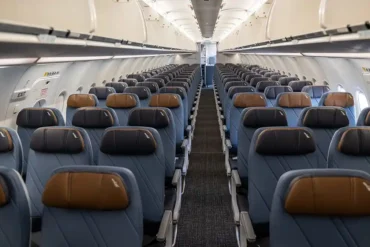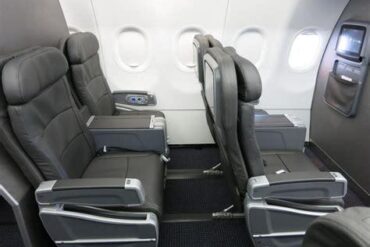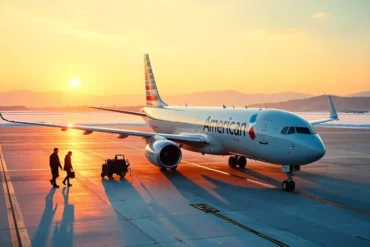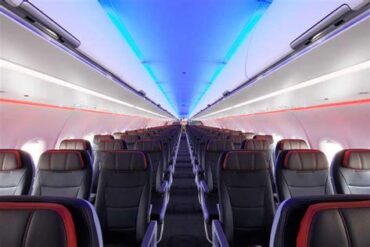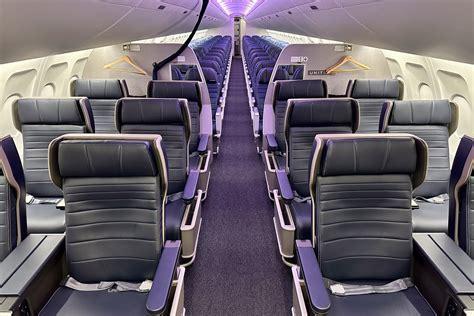
American Airlines is preparing to introduce a newly retrofitted Airbus A319 into commercial service this weekend, marking a significant step in the carrier’s strategy to increase premium capacity across its narrowbody fleet. The Fort Worth-based airline has spent months redesigning the aircraft’s interior, focusing on improved passenger comfort, modern cabin finishes, and enhanced operational efficiency. The project reflects a broader shift across the airline industry, where carriers are prioritizing high-yield premium seating while simultaneously reducing aircraft weight and maintenance complexity.
The retrofit program specifically targets American’s legacy A319 subfleet, many of which were built in the late 1990s and early 2000s. American currently operates 133 Airbus A319 aircraft across three main variants, including aircraft inherited from America West Airlines and US Airways, along with newer units delivered directly to American beginning in 2013. The airline’s decision to modernize these aircraft allows it to extend fleet lifespan while aligning cabin layouts with newer narrowbody aircraft currently operating in its network.
The first aircraft scheduled to enter service is registered as N9002U. Aviation tracking data shows the aircraft was removed from active service in early September before being ferried to a maintenance facility in El Salvador, which serves as a major hub for aircraft maintenance, repair, and overhaul (MRO) work for several global carriers. The aircraft recently returned to Dallas/Fort Worth International Airport, positioning it for imminent entry into scheduled passenger operations.
Fleet Modernization Strategy Focuses On Premium Demand Growth
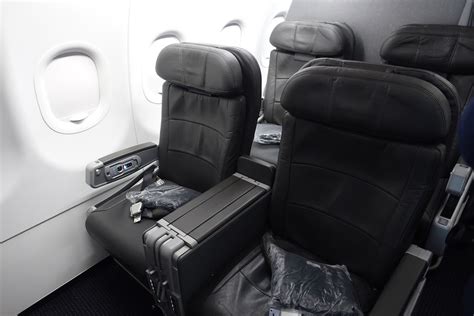
American Airlines has increasingly emphasized premium passenger revenue as competition intensifies across domestic and transcontinental markets. The retrofitted A319 introduces an additional row of first class seating, increasing capacity from eight to twelve premium seats. This shift is designed to capture higher-margin bookings, particularly on routes with strong business travel demand and premium leisure traffic.
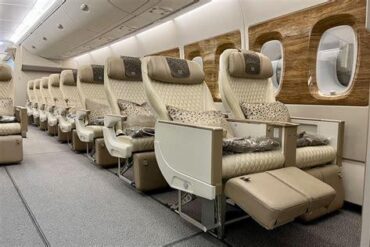
Beyond the first class cabin expansion, the retrofit includes redesigned overhead storage bins capable of holding more carry-on luggage, power outlets at every seat, and updated cabin materials that improve the overall passenger experience. The refreshed design mirrors the airline’s newer narrowbody interiors, creating a consistent brand experience regardless of aircraft type.
Removal Of Seatback Screens Signals Weight And Efficiency Gains
One of the most notable changes in the retrofit is the removal of traditional seatback entertainment systems. Instead, American is continuing its transition toward personal device streaming entertainment, allowing passengers to access content through onboard WiFi using their own smartphones, tablets, or laptops. Eliminating seatback screens reduces aircraft weight, which directly improves fuel efficiency and lowers maintenance costs over time.
The decision reflects broader industry trends, as airlines balance passenger expectations with operational economics. Modern streaming systems allow airlines to update content more frequently while eliminating heavy hardware installations. For passengers, the shift places greater emphasis on reliable onboard connectivity and power availability, both of which are central to the A319 retrofit design.
El Salvador Facility Plays Central Role In Aircraft Conversion Programs
The retrofit work was performed at a specialized facility in El Salvador, which has become a key location for American Airlines’ heavy maintenance and cabin modification projects. The same facility has handled conversions for other aircraft types, including American’s premium-heavy Airbus A321 Transcontinental fleet. As American continues taking delivery of new Airbus A321XLR aircraft, additional cabin conversion projects are expected to move through the El Salvador operation.
This centralized approach allows American to standardize retrofit procedures, reduce turnaround times, and maintain quality consistency across fleet modification programs. For large airlines managing hundreds of aircraft, dedicated retrofit pipelines have become essential for executing multi-year modernization strategies.
Network Deployment Expected Across Major Domestic Hubs
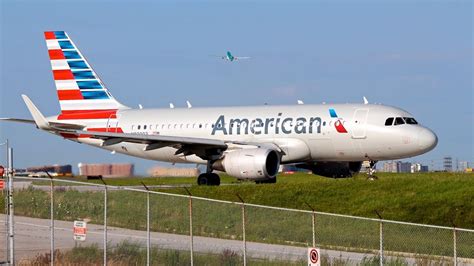
Once in service, the retrofitted A319 is expected to operate from major American Airlines hubs, including Dallas/Fort Worth, Charlotte, and Miami. These aircraft typically serve routes across the East Coast, Midwest, and Rocky Mountain regions. Aviation enthusiasts often recognize American’s legacy A319 fleet due to their sharklet wingtip devices, which improve aerodynamic efficiency and reduce fuel burn.
Operational flexibility remains a key advantage of the A319 platform. The aircraft’s size allows it to serve both high-frequency business routes and thinner markets where larger aircraft would be less economical. With upgraded cabins, American can now deploy these aircraft on routes where premium demand is strong without sacrificing operating efficiency.
Broader Cabin Investment Signals Long-Term Competitive Positioning
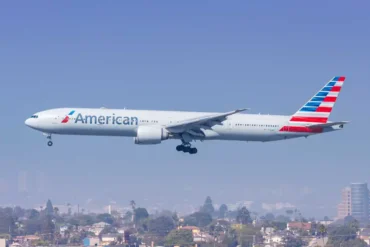
The A319 retrofit is part of a larger fleet investment initiative that includes plans to retrofit Airbus A320 aircraft with additional premium seating and upgrade Boeing 777 widebody cabins. American has also introduced customer-facing enhancements such as earlier boarding options and expanded connectivity partnerships, including free WiFi access for AAdvantage loyalty members through a partnership with AT&T.
These upgrades highlight the airline’s effort to balance cost discipline with revenue optimization. By standardizing cabin configurations and expanding premium capacity across multiple aircraft types, American can simplify maintenance, streamline crew training, and deliver a more predictable passenger experience.
As the first retrofitted A319 enters service, it represents more than a single aircraft upgrade. It demonstrates how legacy narrowbody fleets can remain competitive in an era where passenger expectations, fuel efficiency demands, and premium revenue opportunities are reshaping airline economics. The program is expected to continue across the remaining legacy A319 fleet, reinforcing American Airlines’ long-term commitment to fleet modernization and premium product growth across its domestic network.